Skip to content
There are few street food experiences as universally loved as the savory, sweet, and tangy delight of Thai Chicken Satay with Peanut Sauce. The aroma alone transports you to the bustling markets of Thailand, where juicy, perfectly grilled skewers are an irresistible treat. In my kitchen, I have perfected a recipe for Thai Chicken Satay with Peanut Sauce that not only captures those authentic flavors but also introduces a unique twist to elevate your homemade experience.
This comprehensive guide will provide you with a foolproof recipe, expert tips, and answers to all your common questions, ensuring you can master this iconic dish. Get ready to create tender, flavor-packed chicken skewers and a velvety peanut dipping sauce, complete with a special aromatic technique that will make your satay unforgettable.
Why You’ll Love This Recipe
I am so excited for you to try this Thai Chicken Satay because it is truly special. My secret technique takes an already delicious dish to a whole new level, infusing it with an authentic Thai fragrance that will impress everyone.
Aromatic Smoke Infusion: During the last few minutes of grilling the chicken skewers, I add fresh lemongrass and kaffir lime leaves directly onto the charcoal or grill grates. The heat releases their essential oils, creating a subtle, fragrant smoke that clings to the chicken. This isn’t just a flavor enhancer; it is an experience, deepening the “Thai” profile of the dish beyond what any marinade alone could achieve.
Unforgettable Flavor Profile: Every bite of this Thai Chicken Satay is a symphony of juicy, tangy, creamy, nutty, savory, and sweet notes. The chicken is incredibly tender from the marinade, and the Peanut Sauce provides a rich, umami-packed counterpoint that balances everything perfectly.
Versatile Cooking Options: Whether you prefer to grill, bake, or pan-fry, this recipe is incredibly adaptable. You can achieve fantastic results with whatever equipment you have in your kitchen, making it accessible for everyone.
Perfect for Any Occasion: From a quick weeknight dinner to an impressive appetizer for guests or even part of your meal prep, this Thai Chicken Satay is a guaranteed crowd-pleaser. It is satisfying, flavorful, and always a hit!
Ingredients Needed
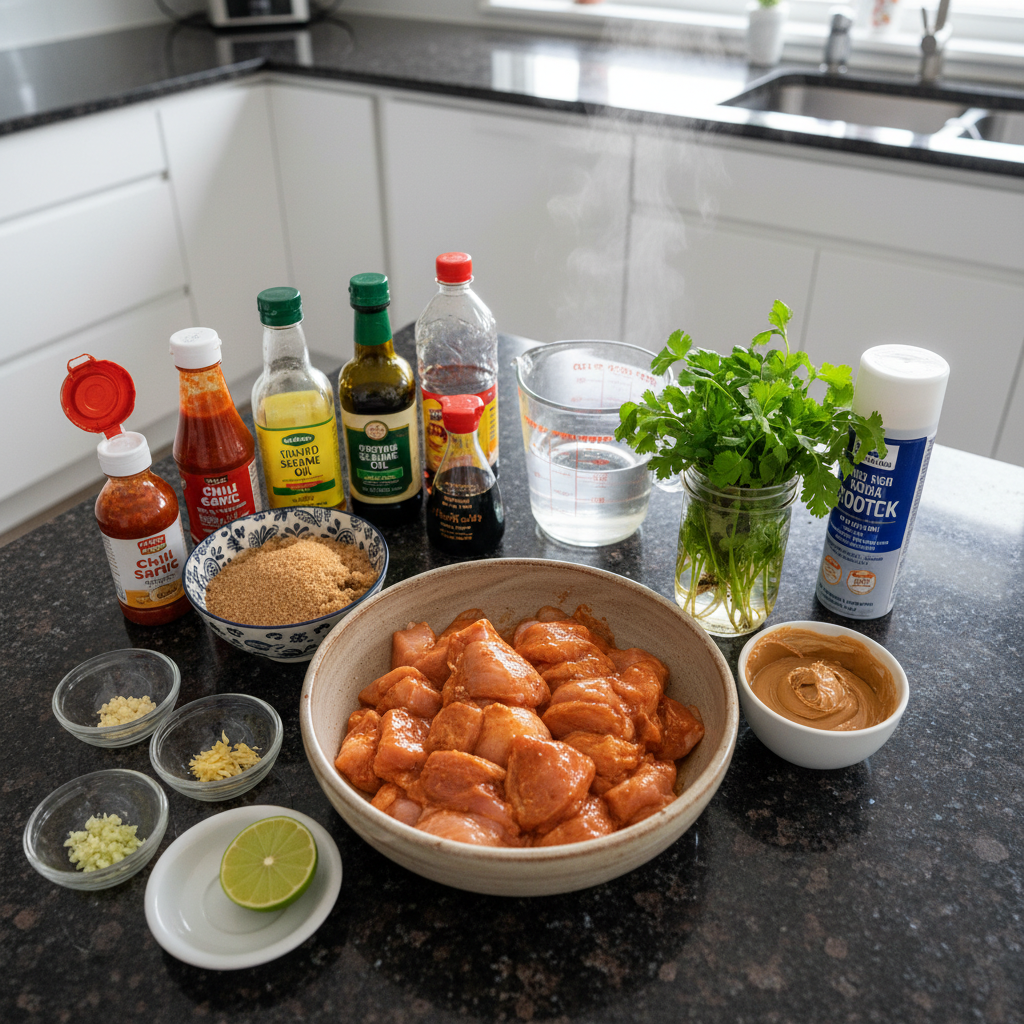
- 2 pounds chicken breasts or thighs* (sliced into 1 1/2″ wide strips by 3-5″ long )
- 3 tablespoons olive oil
- 1/4 cup coconut milk plus more as needed ((may sub water))
- 1/3-1/2 cup smooth peanut butter
- 12-15 skewers
- 1/4 cup low sodium soy sauce
- 1/4 cup packed brown sugar
- 1 tablespoon chili paste ((like Sambal Oelek))
- 1 1/2 tablespoons lime juice
- 1 1/2 tablespoons fish sauce
- 1 teaspoon dried basil
- 1 teaspoon ground coriander
- 1/2 teaspoon ground ginger
- 1/2 teaspoon garlic powder
- 1/2 teaspoon ground turmeric
Ingredient Notes & Substitutions
Chicken: For this Thai Chicken Satay, you can use either chicken breasts or chicken thighs. Chicken breasts will give you a leaner result, while chicken thighs offer a juicier, more tender texture thanks to their higher fat content. Both work beautifully, so choose what you prefer for your Satay.
Coconut Milk: For the richest, creamiest Peanut Sauce, I highly recommend using full-fat canned coconut milk. While the recipe mentions you may substitute water, full-fat coconut milk contributes significantly to the luxurious consistency and depth of flavor. Look for it in the international aisle of your grocery store.
Peanut Butter: Stick to a good quality smooth peanut butter for the sauce. Natural, unsweetened varieties are often best as they give you more control over the final sweetness and saltiness. You can adjust the quantity of smooth peanut butter from 1/3 to 1/2 cup depending on how thick and nutty you like your Peanut Sauce.
Soy Sauce & Fish Sauce: For authentic Thai Chicken Satay flavor, these are crucial. I always opt for a good quality low sodium soy sauce to manage the salt levels. For fish sauce, brands like Red Boat or Tiparos are excellent and widely available in the US, offering a rich, umami depth without being overly pungent. These entity keywords are essential for the marinade.
Chili Paste: The recipe calls for chili paste, and Sambal Oelek is my go-to. It is a vibrant, fresh chili paste that adds a lovely kick without being overwhelmingly spicy. You can find it in most grocery stores in the Asian foods section.
Brown Sugar: The packed brown sugar in the marinade for Thai Chicken Satay does more than just add sweetness. It contributes to a beautiful caramelization on the chicken during cooking and helps tenderize the meat, making your skewers even more irresistible.
Dietary Swaps: This recipe is naturally dairy-free. To make your Thai Chicken Satay gluten-free, simply ensure you use a gluten-free soy sauce (like tamari) and check that your fish sauce is also gluten-free. Most brands are, but it is always good to double-check the label.
How to Make Thai Chicken Satay with Peanut Sauce
Creating this Thai Chicken Satay with Peanut Sauce is a rewarding culinary journey. Follow these steps carefully to ensure every skewer is packed with flavor and perfectly cooked.
Prepare the Marinade and Sauce Base:
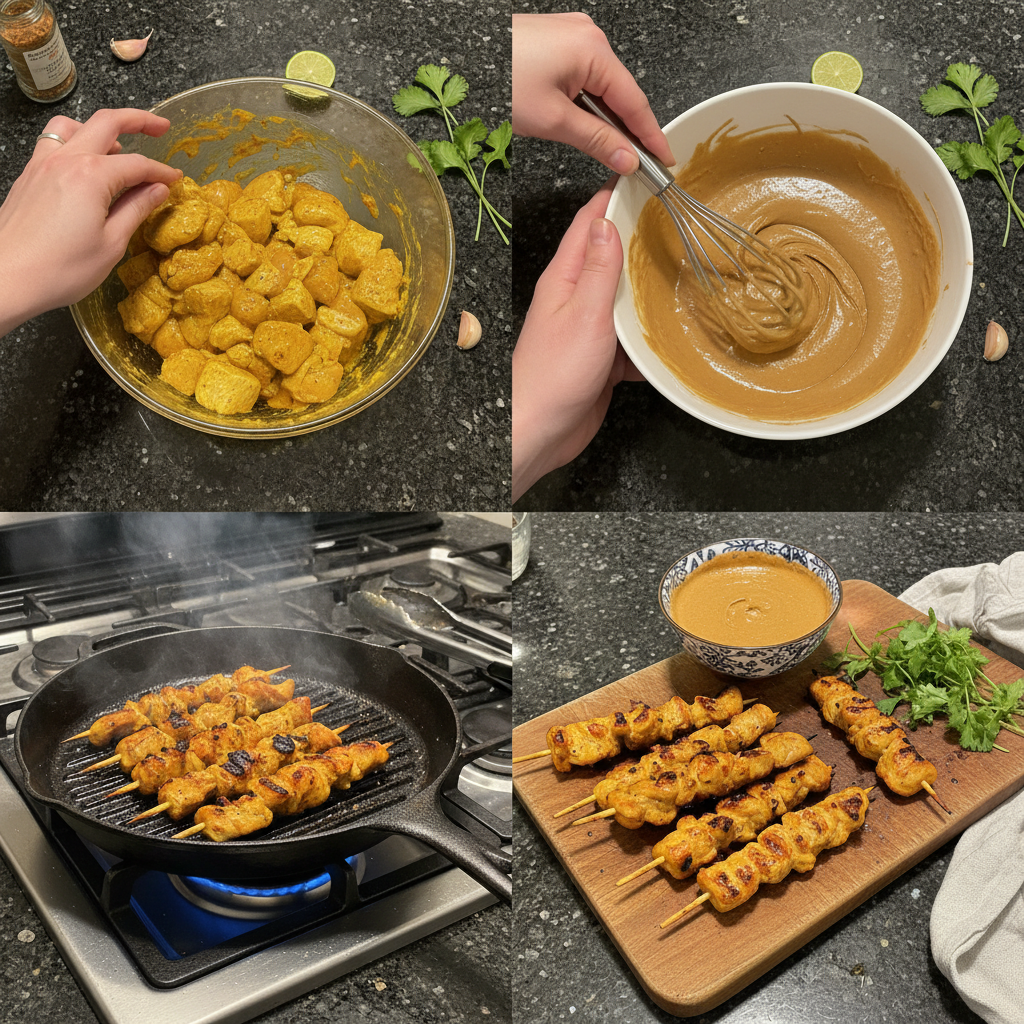
- In a medium bowl, whisk together the low sodium soy sauce, packed brown sugar, chili paste (like Sambal Oelek), lime juice, fish sauce, dried basil, ground coriander, ground ginger, garlic powder, and ground turmeric until well combined and fragrant.
- Measure out 1/3 cup of this mixture and transfer it to a freezer-size bag. Whisk in 3 tablespoons of olive oil into this portion. This will be your Marinade for the chicken.
- Refrigerate the remaining marinade/sauce separately. This is your reserved Sauce, which will become the delicious base for your finished Peanut Sauce.
Marinate the Chicken:
- Add your sliced chicken breasts or thighs to the bag with the Marinade. Toss thoroughly to ensure every strip is evenly coated.
- Press out any excess air, seal the bag, and refrigerate for a minimum of 6 hours, or ideally, up to overnight, to allow the chicken to absorb all the wonderful flavors and tenderize. This marination time is key for juicy, flavorful Thai Chicken Satay.
Prepare for Cooking:
- When you are ready to cook, begin by soaking your wooden skewers in water for at least 30 minutes. This prevents them from burning during cooking.
- Remove the marinated chicken from the refrigerator and let it sit at room temperature for about 30 minutes. This ensures more even cooking.
- Thread the chicken strips onto the soaked skewers. For best results, weave the chicken accordion-style rather than just straight through. This helps prevent pieces from falling off and promotes even cooking. Lightly dab off any excess marinade with paper towels from the skewered chicken.
Cooking Methods:
Oven Method:
- Preheat your oven to 350 degrees F (175 degrees C).
- Line two baking sheets with foil and lightly spray with nonstick cooking spray.
- Evenly divide the chicken skewers between the prepared baking sheets.
- Bake for 15-20 minutes, or until the chicken is cooked through and reaches an internal temperature of 165 degrees F (74 degrees C). Be careful not to overcook, as this can result in dry chicken.
Grill Method:
- Grease an indoor or outdoor grill and preheat it to high heat.
- Once hot, add the chicken skewers to the grill. Reduce the heat to medium, cover, and grill for 3-4 minutes per side, or until the chicken is cooked through to an internal temperature of 165 degrees F (74 degrees C).
- For the unique aromatic smoke infusion: During the last 2-3 minutes of grilling, carefully place fresh lemongrass stalks and kaffir lime leaves directly onto the grill grates or charcoal. The heat will release their fragrant essential oils, imparting a subtle, authentic Thai aroma directly onto your Thai Chicken Satay.
Skillet Method:
- Heat 1 1/2 tablespoons of olive oil in a large non-stick skillet over medium-high heat.
- Working in batches to avoid overcrowding the pan, add the skewers and cook for 2-3 minutes per side until the chicken is cooked through and reaches an internal temperature of 165 degrees F (74 degrees C).
Finish the Peanut Sauce:
- While the chicken cooks, transfer the reserved Sauce (from step 1) to a small saucepan. Add 1/4 cup of coconut milk (or 3 tablespoons of water if preferred).
- Bring the mixture to a boil, then reduce heat and simmer gently for 1 minute.
- Remove the saucepan from the heat. Stir in 1/3 cup of smooth peanut butter until it is completely combined and the sauce is glossy and emulsified.
- For a thicker, nuttier Peanut Sauce, add additional peanut butter, 1 tablespoon at a time. For a thinner sauce, whisk in additional coconut milk or water, 1 tablespoon at a time, until your desired consistency is reached.
- Taste and adjust the spice level by adding more chili paste (like Sambal Oelek) if you desire a spicier Peanut Sauce.
Serve:
Serve the warm Thai Chicken Satay immediately with the creamy, aromatic Peanut Sauce for an appetizer. You can also serve it as a main course with jasmine rice or cauliflower rice and stir-fried vegetables.
Health-Conscious Swaps & Dietary Considerations
I believe in enjoying delicious food while also being mindful of our health. This Thai Chicken Satay with Peanut Sauce is already a relatively balanced dish, but there are ways to tailor it to specific dietary needs.
For a detailed nutritional breakdown, remember that exact figures will vary based on brands and precise quantities used. However, you can estimate that chicken (especially chicken breasts) provides lean protein. The Peanut Sauce contributes healthy fats from the smooth peanut butter and coconut milk, along with some carbs and natural sugars. To get a precise estimate, you can use online nutritional calculators by inputting the exact ingredients and quantities from your finished dish.
Low-Sugar Alternatives: If you are watching your sugar intake, you can certainly adjust the amount of brown sugar in the marinade. While the brown sugar aids in tenderization and caramelization, you can reduce it by half or even use a touch of a natural sweetener like maple syrup, or a sugar substitute designed for cooking, though this may alter the caramelization slightly.
Low-Sodium Modifications: To reduce the sodium content, ensure you are using a low sodium soy sauce. You can also slightly reduce the amounts of low sodium soy sauce and fish sauce in both the marinade and the Peanut Sauce. To compensate for any perceived lack of flavor, amp up the fresh ingredients: a generous squeeze of fresh lime juice and an abundance of fresh herbs like cilantro and basil will add brightness and depth.
Gluten-Free & Dairy-Free: Good news! This Thai Chicken Satay with Peanut Sauce recipe is naturally dairy-free. To make it completely gluten-free, simply swap out regular soy sauce for tamari or a certified gluten-free soy sauce. Always double-check your fish sauce label as well, as most are naturally gluten-free, but it is always best to confirm.
Expert Skewer Prep & Food Safety
Crafting perfect Thai Chicken Satay involves not just great flavors but also smart preparation and strict food safety.
Perfectly Threaded Skewers: To ensure your chicken cooks evenly and stays securely on the skewers, I recommend threading the chicken strips accordion-style. This means weaving the strip back and forth along the skewer, creating a series of “S” shapes. This method helps prevent smaller pieces from overcooking or falling off, ensuring uniform exposure to heat for beautifully tender chicken.
Preventing Chicken Sticking: Even with soaked wooden skewers, chicken can sometimes stick. To prevent this, ensure your grill or skillet is properly greased and heated to the correct temperature before adding the skewers. For grilling, make sure the grates are clean. Do not overcrowd your cooking surface, as this lowers the temperature and can lead to steaming instead of searing. Also, resist the urge to flip too early; let the chicken develop a slight sear before turning it.
Safe Chicken Handling: Working with raw chicken requires diligent food safety practices to prevent cross-contamination. Always use separate cutting boards, knives, and utensils for raw chicken and any other ingredients. Wash your hands thoroughly with soap and warm water for at least 20 seconds after handling raw chicken and before touching other food items. It is crucial to never reuse marinade that has touched raw chicken as a serving sauce. Our recipe cleverly addresses this by having you reserve a portion of the sauce before it ever touches raw chicken. Finally, always cook chicken to an internal temperature of 165 degrees F (74 degrees C) to ensure it is safe to eat. Use a meat thermometer inserted into the thickest part of the chicken to verify doneness.
Pro Tips & Troubleshooting
Pro Tips
- Optimal Marination: For the most tender and flavorful Thai Chicken Satay, aim for a marination time of 6 to 24 hours. This allows the chicken to fully absorb all the aromatic spices and tenderizing agents.
- Room Temperature Chicken: Always bring your marinated chicken to room temperature for about 30 minutes before cooking. This simple step ensures the chicken cooks more evenly and prevents the outside from drying out before the inside is done.
- Sauce Consistency: Achieving the perfect Peanut Sauce consistency is key. If your sauce is too thick, gradually whisk in a tablespoon of coconut milk or water at a time until it reaches your desired pourable, creamy texture. If it is too thin, you can simmer it gently for a minute or two to thicken, or whisk in a cornstarch slurry (1 tsp cornstarch mixed with 1 tsp cold water) and heat until thickened.
- The Unique Twist Reinforcement: When adding lemongrass and kaffir lime leaves to the grill, place them on the cooler side of the grill or directly on the grates during the last few minutes of cooking. This timing prevents burning while still maximizing that incredible aromatic smoke infusion.
- Garnishing for Impact: Elevate your presentation by garnishing your Thai Chicken Satay platter with fresh chopped cilantro, a sprinkle of crushed peanuts, and a few lime wedges. For an extra kick, a swirl of Sriracha over the Peanut Sauce adds visual appeal and a customizable spice element.
- Best Peanut Butter: For the best Peanut Sauce, I always reach for natural, unsweetened smooth peanut butter. It allows you to control the sweetness and saltiness precisely, leading to a more balanced and authentic flavor.
- Spice Level Control: Easily adjust the spice level of your Peanut Sauce by adding more or less chili paste (like Sambal Oelek). You can also offer Sriracha on the side for individual preference.
Common Mistakes to Avoid
- Overcooking Chicken: This is the most common pitfall with any chicken dish, leading to dry, tough skewers. Always use a meat thermometer to ensure your chicken reaches an internal temperature of 165 degrees F (74 degrees C) and remove it from the heat immediately.
- Insufficient Marination: Not marinating the chicken long enough will result in less flavorful and less tender Thai Chicken Satay. Give it at least 6 hours, or ideally, overnight, for the best results.
- Unsoaked Skewers: Forgetting to soak wooden skewers before grilling or baking will lead to them charring or burning, potentially causing your chicken to fall off or giving an unpleasant smoky taste.
- Sauce Breaking: If your Peanut Sauce appears oily or separates, it might have been cooked at too high a heat or for too long. Gently warm the sauce and whisk vigorously to emulsify it again. Adding a touch more coconut milk while whisking can also help.
- Overcrowding the Pan/Grill: When cooking, resist the urge to cram too many skewers onto your cooking surface. Overcrowding lowers the temperature, preventing a proper sear and causing the chicken to steam instead of developing those delicious caramelized edges. Cook in batches if necessary.
Serving & Storage
Serving Ideas
Thai Chicken Satay with Peanut Sauce is incredibly versatile and can be enjoyed in many ways.
Traditional Pairings: I love serving it alongside fluffy jasmine rice or fragrant coconut rice. For a lighter, lower-carb option, cauliflower rice works wonderfully. A side of crisp, stir-fried vegetables like bok choy, bell peppers, or broccoli completes the meal beautifully.
Creative Meal Transformations: Get creative! Turn leftover Thai Chicken Satay into a delicious Chicken Satay Rice Bowl with fresh veggies and extra Peanut Sauce. It is also fantastic in Chicken Satay Tacos with a vibrant pineapple salsa, or even as a unique topping for Chicken Satay Pizza.
Garnishing & Presentation: Don’t forget the finishing touches! A sprinkle of fresh cilantro, chopped peanuts, and a few lime wedges not only make your dish look stunning but also add fresh bursts of flavor and texture. A drizzle of Sriracha on top of the Peanut Sauce adds a lovely visual and spicy kick for those who like it.
Storage and Make-Ahead
This recipe is fantastic for meal prep and can be made in advance, saving you time during busy weeknights.
Make-Ahead: The marinade (the reserved portion before chicken is added) and the Peanut Sauce can both be prepared up to 3-4 days in advance and stored separately in airtight containers in the refrigerator. You can also marinate the chicken overnight for maximum flavor. This makes assembly and cooking much quicker.
Refrigeration: Store cooked Thai Chicken Satay skewers and any leftover Peanut Sauce in separate airtight containers in the refrigerator for up to 3-4 days.
Freezing: You can freeze raw marinated chicken (without the skewers) in a freezer-safe bag for up to 2-3 months. Thaw completely in the refrigerator before threading onto skewers and cooking. Cooked skewers can also be frozen in an airtight container for up to 2-3 months; wrap them well to prevent freezer burn. The Peanut Sauce can be frozen separately in an airtight container for up to 2-3 months. Thaw overnight in the refrigerator.
Reheating: To reheat cooked chicken skewers, you can gently warm them in the oven at 300 degrees F (150 degrees C) until heated through, or briefly in a skillet over medium heat. Microwaving is also an option, but be careful not to overcook, as this can dry out the chicken. For the Peanut Sauce, gently warm it in a small saucepan over low heat, whisking occasionally. If it has thickened too much, add a splash of coconut milk or water to reach the desired consistency.
Conclusion
I truly hope you enjoy making and savoring this authentic Thai Chicken Satay with Peanut Sauce as much as I do. With its juicy, tender chicken and rich, creamy sauce, this recipe is a testament to the incredible flavors of Thai cuisine. My unique aromatic smoke infusion, using fresh lemongrass and kaffir lime leaves, truly elevates this dish, transforming it into a restaurant-quality experience right in your own home.
Even if you are a beginner cook, you now have all the tips, tricks, and detailed instructions to master this incredible recipe. So go ahead, gather your ingredients, and bring the vibrant tastes and aromas of Thailand into your kitchen. I encourage you to try it, share your delicious creations, and explore more fantastic Thai recipes!
FAQ
Is Thai Chicken Satay with Peanut Sauce healthy, gluten-free, or dairy-free?
Thai Chicken Satay can be a healthy option, especially when made with lean chicken breasts. This recipe is naturally dairy-free. To make it gluten-free, simply ensure you use a gluten-free soy sauce (such as tamari) and confirm your fish sauce is also gluten-free.
How do you pronounce ‘Satay’ and is it typically spicy?
Satay is pronounced “sah-TAY.” While the base recipe for Thai Chicken Satay is typically mild to moderately spicy, you can easily adjust the heat level to your preference by adding more or less chili paste (like Sambal Oelek) to the marinade and Peanut Sauce.
What does Thai Chicken Satay and its Peanut Sauce taste like?
Thai Chicken Satay offers a complex flavor profile: the chicken is juicy, savory, sweet, and tangy, with aromatic hints from the marinade and a subtle smoke infusion from the lemongrass and kaffir lime leaves. The Peanut Sauce is rich, creamy, nutty, sweet, and savory, with a delightful umami depth and a touch of spice, making for an incredibly balanced and addictive combination.
What are the best cooking methods for Chicken Satay (grill, oven, or skillet)?
Each method yields delicious results for Thai Chicken Satay. Grilling provides a fantastic smoky flavor and beautiful char marks, especially with the aromatic smoke twist. Oven baking is great for hands-off cooking and even results. Skillet cooking is perfect for a quick stovetop option. Choose the method that best suits your equipment and preference!
How can I prepare, store, reheat, and freeze Chicken Satay and Peanut Sauce?
You can prepare the marinade and Peanut Sauce several days in advance. Marinate the chicken overnight for best flavor. Store cooked Thai Chicken Satay and Peanut Sauce in separate airtight containers in the refrigerator for 3-4 days. You can also freeze raw marinated chicken, cooked skewers, and the sauce separately for up to 2-3 months. Reheat skewers in the oven, skillet, or microwave, and gently warm the sauce, adjusting consistency as needed.
What are popular serving suggestions and meal pairings for Chicken Satay?
Thai Chicken Satay is traditionally served with jasmine rice, coconut rice, or stir-fried vegetables. For creative meal pairings, consider making Chicken Satay Rice Bowls, Chicken Satay Tacos with pineapple salsa, or even Chicken Satay Pizza. Garnish with fresh cilantro, chopped peanuts, and lime wedges for an authentic touch.
Do I have to use Chicken? What about vegetarian options?
While chicken is traditional for Thai Chicken Satay, you definitely do not have to use it! The marinade and sauce work wonderfully with other proteins like pork or steak. For vegetarian or vegan options, you can easily adapt this recipe by using firm tofu or tempeh, cut into strips or cubes, and marinating them just as you would the chicken. Ensure to press extra moisture out of tofu for best results.
Why soak wooden skewers?
Soaking wooden skewers in water for at least 30 minutes before use is crucial to prevent them from burning, charring, or breaking apart during grilling, baking, or pan-frying. This ensures your chicken stays securely on the skewers and prevents any unpleasant burnt wood flavor from transferring to your delicious Thai Chicken Satay.
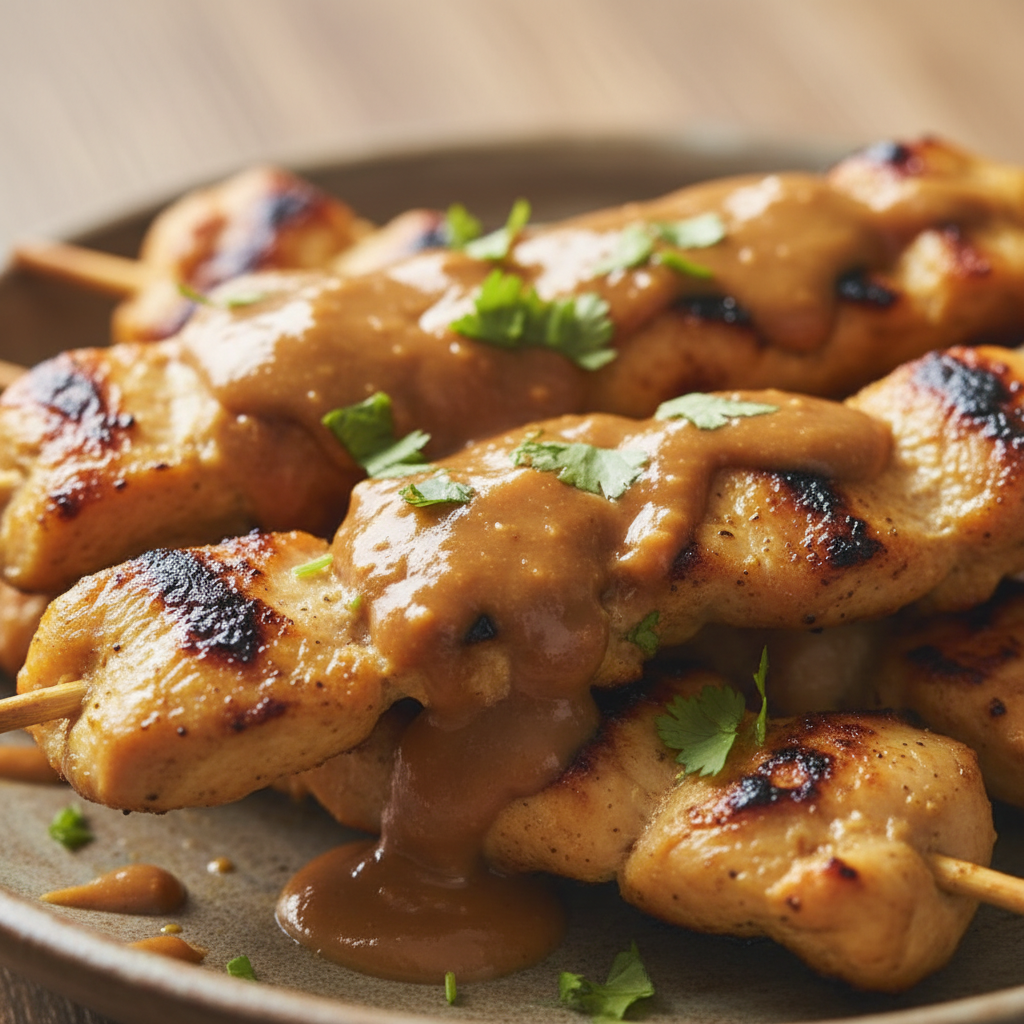
Authentic Thai Chicken Satay with Aromatic Peanut Sauce
Ingredients
Equipment
Method
- In a medium bowl, whisk together the low sodium soy sauce, packed brown sugar, chili paste (like Sambal Oelek), lime juice, fish sauce, dried basil, ground coriander, ground ginger, garlic powder, and ground turmeric until well combined and fragrant.
- Measure out 1/3 cup of this mixture and transfer it to a freezer-size bag. Whisk in 3 tablespoons of olive oil into this portion. This will be your Marinade for the chicken.
- Refrigerate the remaining marinade/sauce separately. This is your reserved Sauce, which will become the delicious base for your finished Peanut Sauce.
- Add your sliced chicken breasts or thighs to the bag with the Marinade. Toss thoroughly to ensure every strip is evenly coated.
- Press out any excess air, seal the bag, and refrigerate for a minimum of 6 hours, or ideally, up to overnight, to allow the chicken to absorb all the wonderful flavors and tenderize.
- When you are ready to cook, begin by soaking your wooden skewers in water for at least 30 minutes.
- Remove the marinated chicken from the refrigerator and let it sit at room temperature for about 30 minutes.
- Thread the chicken strips onto the soaked skewers. For best results, weave the chicken accordion-style rather than just straight through. Lightly dab off any excess marinade with paper towels from the skewered chicken.
- Preheat your oven to 350 degrees F (175 degrees C).
- Line two baking sheets with foil and lightly spray with nonstick cooking spray.
- Evenly divide the chicken skewers between the prepared baking sheets.
- Bake for 15-20 minutes, or until the chicken is cooked through and reaches an internal temperature of 165 degrees F (74 degrees C). Be careful not to overcook, as this can result in dry chicken.
- Grease an indoor or outdoor grill and preheat it to high heat.
- Once hot, add the chicken skewers to the grill. Reduce the heat to medium, cover, and grill for 3-4 minutes per side, or until the chicken is cooked through to an internal temperature of 165 degrees F (74 degrees C).
- For the unique aromatic smoke infusion: During the last 2-3 minutes of grilling, carefully place fresh lemongrass stalks and kaffir lime leaves directly onto the grill grates or charcoal. The heat will release their fragrant essential oils, imparting a subtle, authentic Thai aroma directly onto your Thai Chicken Satay.
- Heat 1 1/2 tablespoons of olive oil in a large non-stick skillet over medium-high heat.
- Working in batches to avoid overcrowding the pan, add the skewers and cook for 2-3 minutes per side until the chicken is cooked through and reaches an internal temperature of 165 degrees F (74 degrees C).
- While the chicken cooks, transfer the reserved Sauce (from step 1) to a small saucepan. Add 1/4 cup of coconut milk (or 3 tablespoons of water if preferred).
- Bring the mixture to a boil, then reduce heat and simmer gently for 1 minute.
- Remove the saucepan from the heat. Stir in 1/3 cup of smooth peanut butter until it is completely combined and the sauce is glossy and emulsified.
- For a thicker, nuttier Peanut Sauce, add additional peanut butter, 1 tablespoon at a time. For a thinner sauce, whisk in additional coconut milk or water, 1 tablespoon at a time, until your desired consistency is reached.
- Taste and adjust the spice level by adding more chili paste (like Sambal Oelek) if you desire a spicier Peanut Sauce.
- Serve the warm Thai Chicken Satay immediately with the creamy, aromatic Peanut Sauce for an appetizer. You can also serve it as a main course with jasmine rice or cauliflower rice and stir-fried vegetables.