Skip to content
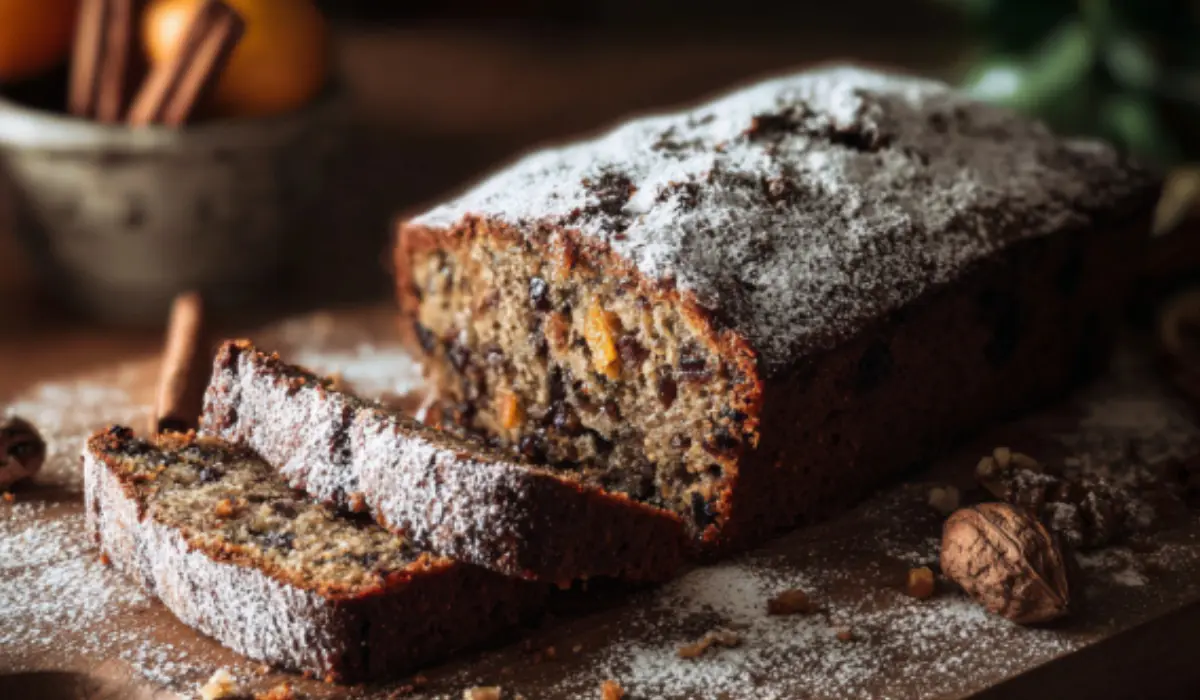
A traditional Christmas cake is the heart of every holiday table rich, spiced, and packed with soaked fruits that melt in every bite. This version keeps the classic depth of flavor but gives you two paths: a quick no-soak option for busy bakers and a classic mature-ahead method for purists who love feeding their cake over weeks. Moist, fragrant, and endlessly customizable, this Christmas cake recipe guarantees that your kitchen smells like celebration long before the first slice is cut.
Why You’ll Love This Recipe
- Two methods, one perfect cake: Choose between a same-day bake or the traditional soak-and-feed approach.
- Deep, festive flavor: Every slice bursts with spiced fruit, warm brandy notes, and buttery richness.
- Make-ahead friendly: It keeps beautifully for weeks, developing flavor over time.
- Flexible and forgiving: Works with or without alcohol, gluten-free flour, or nuts.
- Showstopper appeal: Gorgeous when glazed, marzipaned, or simply dusted with sugar.
This Christmas cake recipe stands out because it balances old-fashioned flavor with modern ease. Whether you’re baking it for gifting, a holiday party, or a quiet winter evening, it brings comfort, nostalgia, and just the right touch of indulgence.
Christmas Cake Recipe
A rich, spiced Christmas cake loaded with soaked fruit, nuts, and warm flavor. Choose a classic soak-and-feed version or a same-day quick bake for a festive showstopper.
16
slices25
minutes2
hours15
minutes395
kcalIngredients
- Fruit Mixture
1 ½ cups dried pineapple, diced
1 ½ cups raisins (golden or regular)
1 cup dried apricots, chopped
1 ½ cups dates, chopped
1 cup candied red cherries, halved
⅓ cup crystallized ginger, chopped (optional)
¾ cup brandy, rum, or fruit juice
- Cake Batter
1 cup unsalted butter, softened
2 cups packed dark brown sugar
4 large eggs, room temperature
3 cups all-purpose flour
1 teaspoon baking powder
1 teaspoon cinnamon
¼ teaspoon nutmeg
¼ teaspoon allspice
¼ teaspoon salt
2 tablespoons molasses or dark corn syrup
½ cup apple juice or water
2 cups chopped toasted nuts (almonds, pecans, or walnuts)
- Optional Glaze or Feed
Brandy, rum, or simple syrup for brushing
Directions
- Soak the Fruit: Combine all dried fruits and soaking liquid. Let sit overnight or warm and rest for 1 hour.
- Preheat Oven: Set oven to 300°F (150°C). Line an 8-inch round or 9×5-inch loaf pan with parchment and grease lightly.
- Cream Batter: Beat butter and brown sugar until smooth. Add eggs one at a time.
- Mix Dry Ingredients: In another bowl, combine flour, baking powder, salt, and spices.
- Combine: Add dry mix to the wet mixture, alternating with molasses and apple juice. Stir until just combined.
- Fold & Fill: Gently fold in soaked fruit (and any leftover liquid) plus nuts. Spoon into the pan.
- Bake: Bake for 2 hours 10–15 minutes, or until a skewer inserted comes out clean.
- Cool & Brush: Cool for 10 minutes, then brush warm cake with brandy or syrup.
- Store or Feed: Wrap tightly and store. If maturing, brush weekly with a tablespoon of liquid for up to 4 weeks.
Notes
- Store or Feed: Wrap tightly and store. If maturing, brush weekly with a tablespoon of liquid for up to 4 weeks.
- For gluten-free: Substitute a 1:1 GF flour blend + ½ tsp xanthan gum.
- For nut-free: Replace nuts with dried cherries or figs.
- To prevent fruit sinking: Dust soaked fruit with flour before folding in.
- Keeps for weeks when wrapped tightly and stored in a cool place.
Nutrition Facts
- Calories: 395kcal
- Fat: 14g
- Saturated Fat: 6g
- Sodium: 150mg
- Carbohydrates: 63g
- Fiber: 2g
- Sugar: 45g
- Protein: 5g
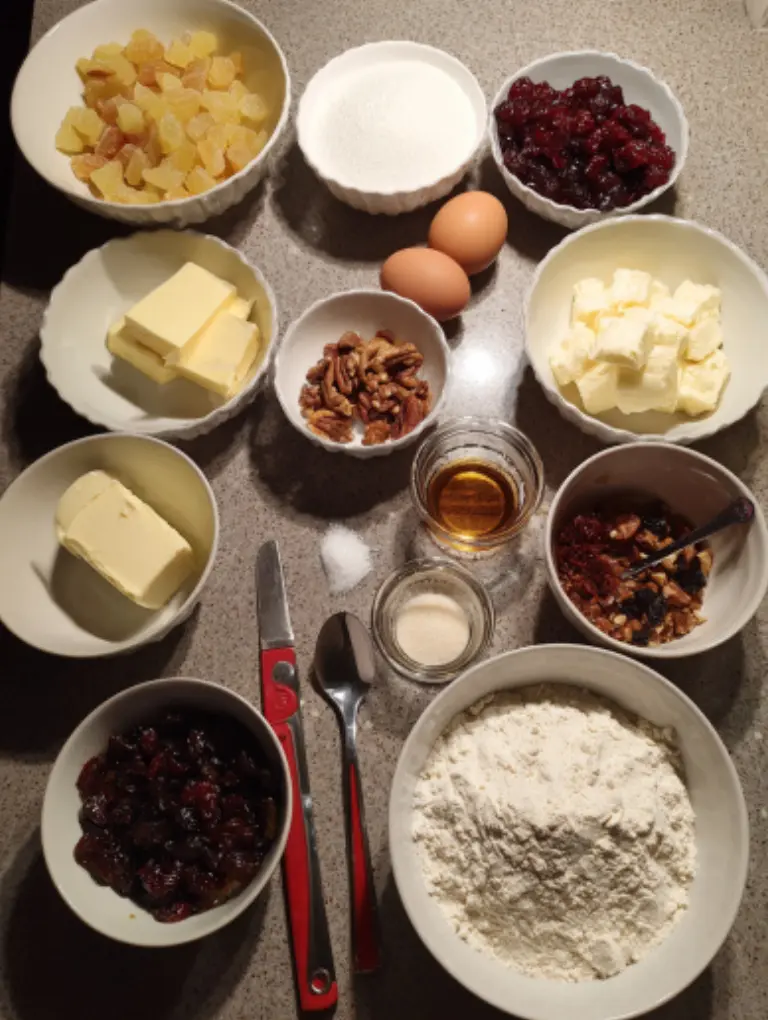
Ingredients Needed
For the Fruit Mixture
- 1 ½ cups dried pineapple, diced
- 1 ½ cups raisins (golden or regular)
- 1 cup dried apricots, chopped
- 1 ½ cups dates, chopped
- 1 cup candied red cherries, halved
- ⅓ cup crystallized ginger, finely chopped (optional)
- ¾ cup brandy, rum, or fruit juice (for soaking)
Tip: For a non-alcoholic version, soak fruit in warm apple or cranberry juice.
For the Cake Batter
- 1 cup (2 sticks) unsalted butter, softened
- 2 cups packed dark brown sugar
- 4 large eggs, room temperature
- 3 cups all-purpose flour
- 1 teaspoon baking powder
- 1 teaspoon cinnamon
- ¼ teaspoon nutmeg
- ¼ teaspoon allspice
- ¼ teaspoon salt
- 2 tablespoons molasses or dark corn syrup
- ½ cup apple juice or water
- 2 cups chopped toasted nuts (almonds, pecans, or walnuts)
Optional Glaze or Feed
- Rum, brandy, or simple syrup for brushing
Notes & Substitutions
- Gluten-free: Use a 1:1 gluten-free flour blend and add ½ teaspoon xanthan gum.
- Nut-free: Replace nuts with equal amounts of chopped dried figs or extra cherries.
- Alcohol-free: Use fruit juice throughout and brush with vanilla syrup after baking.
- Dark color: Add 1 tablespoon cocoa powder for a richer hue.
Each ingredient adds depth and moisture from the molasses’ caramel notes to the fruit’s natural sweetness. Soaking and balance are key to getting that perfect dense-but-tender crumb.
How to Make Christmas Cake
Step 1: Prepare the Fruit
- Soak the fruit. Combine pineapple, raisins, apricots, dates, cherries, and ginger in a bowl. Pour in the brandy, rum, or juice and mix well.
- Quick Method: Warm the mixture in the microwave until hot, then cover and rest for 1 hour.
- Classic Method: Cover the bowl and let it sit overnight so the fruit fully absorbs the liquid.
Why it matters: Soaked fruit bakes up plump and juicy instead of chewy.
Step 2: Preheat and Prep
- Preheat the oven to 300°F (150°C).
- Line an 8-inch round or 9 × 5-inch loaf pan with parchment and lightly grease the sides.
- For taller cakes, add a parchment collar around the pan to protect the top from over-browning.
Step 3: Make the Batter
- In a large bowl, cream butter and brown sugar until smooth and slightly fluffy.
- Beat in the eggs one at a time, scraping down the bowl after each.
- In a separate bowl, whisk together flour, baking powder, salt, and spices.
- Add the dry ingredients to the creamed mixture in two parts, alternating with the molasses and apple juice. Mix just until combined overmixing makes the cake heavy.
- Fold in the soaked fruit (with its liquid) and nuts until evenly distributed. The batter should be thick and glossy.
Step 4: Bake the Cake
- Spoon the batter into the prepared pan, smoothing the top.
- Bake on the center rack for about 2 hours 10 – 2 hours 15 minutes, or until a skewer inserted in the center comes out clean.
- If the top browns too quickly, loosely cover it with parchment halfway through baking.
Visual cue: The cake should be dark brown, firm on top, and pull slightly away from the sides.
Step 5: Cool and Feed
- Let the cake cool in the pan for 10 minutes, then turn it out onto a rack.
- While still warm, brush the top with brandy or syrup to seal in moisture.
- Once cool, wrap tightly in plastic wrap and then foil. Store at room temperature.
- For maturing: Every week, unwrap the cake, brush with a tablespoon of brandy or juice, and rewrap.
- For quick version: Skip feeding; simply glaze once before serving.
Mini-tip: The longer it rests, the deeper the flavor. A well-fed cake keeps beautifully for up to six weeks.
Pro Tips & Troubleshooting
Expert Tips
- Use room-temperature ingredients. Cold butter or eggs make the batter split, which can lead to dense spots.
- Weigh your fruit. Measuring by weight keeps sweetness balanced and prevents an overly heavy mix.
- Don’t rush the soak. Even a one-hour soak improves texture and flavor. Overnight is ideal for the classic version.
- Bake low and slow. Christmas cake needs gentle heat to stay moist inside and evenly brown outside.
- Wrap while slightly warm. This traps residual steam and keeps the crumb soft.
Common Mistakes to Avoid
- Overmixing the batter: Stir just until combined to avoid a tough texture.
- Skipping parchment lining: It protects the sides from burning during long baking.
- Opening the oven too soon: Wait at least 90 minutes before checking; premature opening causes sinking.
- Feeding too much alcohol: One to two tablespoons weekly is enough too much makes it soggy.
- Uneven fruit distribution: Toss fruit in a tablespoon of flour before folding it in to keep it from sinking.
Creative Trick
For a rich, bakery-style shine, warm 2 tablespoons apricot jam with a splash of water, strain, and brush it over the cooled cake before serving. It gives a professional finish and locks in moisture.
Serving, Storage & Variations
Serving Ideas
- Classic presentation: Brush the cooled cake with warm apricot glaze, then cover it with a thin layer of marzipan and smooth royal icing.
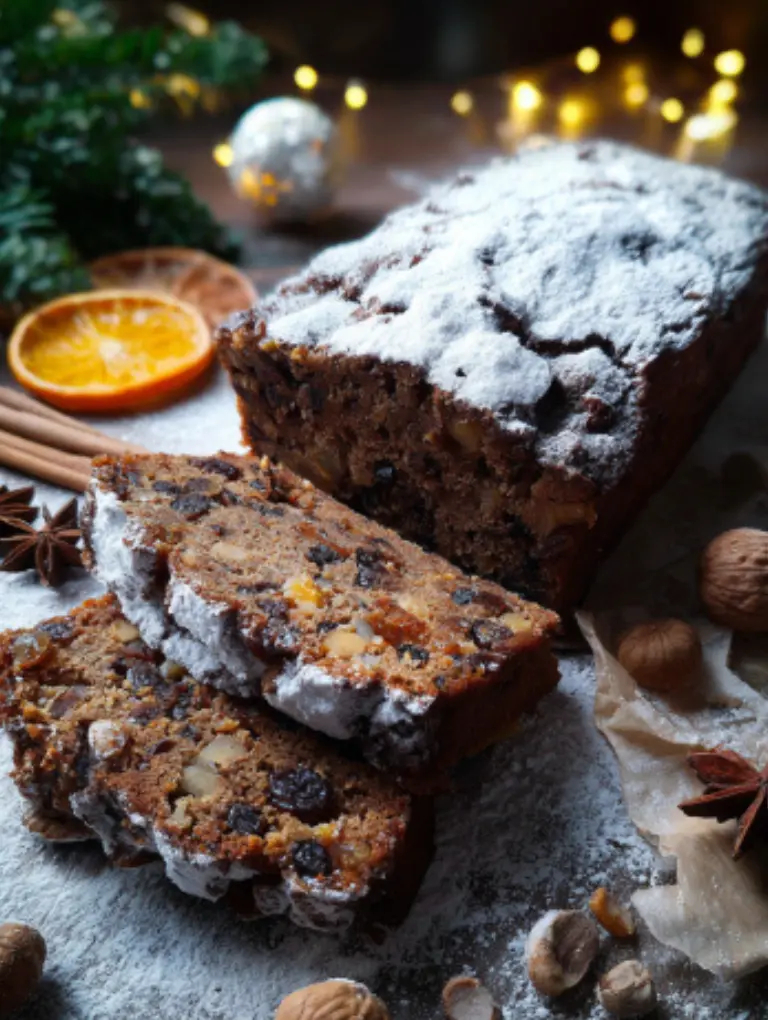
- Simple and rustic: Dust with powdered sugar and top with dried orange slices or whole almonds, or slice some stollen alongside the cake.
- Festive touch: Serve with whipped cream, brandy butter, or a scoop of vanilla ice cream for a warm contrast, or add a chocolate yule log to your dessert spread.
- Gift-ready option: Wrap small loaf versions in parchment and ribbon perfect for holiday gifting.
Storage & Freezing Guide
| Storage Method | Duration | Instructions |
|---|---|---|
| Room temperature | Up to 4 weeks | Wrap tightly in parchment and foil; store in a cool, dark place |
| Refrigerator | 6–8 weeks | Keep in an airtight container at or below 40°F; brush lightly with brandy or syrup every 10 days (safe cold-storage temperature per the FDA)* |
| Freezer | Up to 6 months | Wrap in double layers of plastic wrap and foil; thaw overnight at room temperature |
Feeding schedule: If aging the cake, unwrap once a week, brush with a tablespoon of brandy or juice, then rewrap. The flavor deepens with time, so resist cutting too early!
For longer storage context, USDA guidance cited by NC State notes fruitcake keeps two to three months in the refrigerator and maintains quality for up to a year in the freezer.
Recipe Variations
- Alcohol-Free: Replace brandy with orange or cranberry juice, and consider serving a Christmas pudding for guests who love classic British traditions.
- Gluten-Free: Substitute a 1:1 gluten-free flour blend and add ½ teaspoon xanthan gum.
- Nut-Free: Skip nuts and add extra dried cherries or figs for texture.
- Cranberry Twist: Swap half the raisins for dried cranberries and add a pinch of orange zest for brightness, or try baking panettone for a lighter holiday loaf.
- Spiced Choco Fruitcake: Mix in 1 tablespoon cocoa powder and a handful of dark chocolate chips for a richer profile.
Tip: Pair this cake with black tea or mulled wine the spices echo beautifully.
Nutritional Information
Each serving (based on 16 slices from one 8-inch cake):
| Nutrient | Amount per serving |
|---|---|
| Calories | 395 kcal |
| Protein | 5 g |
| Total Fat | 14 g |
| Saturated Fat | 6 g |
| Carbohydrates | 63 g |
| Sugars | 45 g |
| Fiber | 2 g |
| Sodium | 150 mg |
Values are estimated using standard ingredient data for butter, dried fruits, and nuts. Actual results may vary based on substitutions and portion size.
Nutrition Highlights:
- Dried fruits add natural sugars, potassium, and fiber, as documented in USDA’s FoodData Central; NIH research links higher fiber intake with broad metabolic and cardiovascular benefits.
- Nuts supply healthy fats and a bit of protein for balance, and Harvard Health notes that nuts deliver protein, fiber, and unsaturated fats that support overall health.
- Using fruit juice instead of alcohol slightly reduces calories.
If you modify the ingredients, use tools like MyFitnessPal or Cronometer to recalculate and confirm your exact nutrition values.
Conclusion
This Christmas cake recipe delivers everything a holiday dessert should warmth, spice, and a touch of tradition in every bite. Whether you bake the quick version or let it mature for weeks, the result is a rich, fruit-packed cake that gets better with time. It’s the perfect blend of old-fashioned comfort and modern simplicity, ideal for gifting or centerpiece-worthy celebrations.
If you tried this recipe, leave a star rating and comment below to share how yours turned out. Did you use brandy, juice, or a special twist? We’d love to hear your version.
And if you know someone who loves holiday baking, share this recipe on Pinterest or Facebook it might just become their new seasonal favorite.
Frequently Asked Questions
Can I make this Christmas cake without alcohol?
Yes. Swap the brandy or rum for apple, orange, or cranberry juice. You’ll get the same moist texture and bright fruit flavor. Brush the finished cake with a bit of warm vanilla syrup to keep it glossy.
How long should I soak the fruit and how often should I feed the cake?
For the best results, soak the fruit overnight before baking. If you’re maturing the cake, brush it with one tablespoon of brandy or juice each week for up to four weeks. Always rewrap it tightly afterward.
What pan size works best and can I use a loaf or bundt pan?
An 8-inch round or 9 × 5-inch loaf pan works beautifully. A bundt pan can be used too just reduce the baking time by 10–15 minutes since the heat circulates faster.
How do I stop the top from over-browning or cracking?
Keep the oven at a steady 300 °F and add a parchment collar that rises an inch above the pan. If the top darkens early, cover it loosely with parchment for the last hour of baking.
How can I make this gluten-free without changing the texture?
Use a 1:1 gluten-free baking flour blend plus ½ teaspoon xanthan gum. Avoid overmixing that keeps the crumb light instead of dense.
Does this cake freeze well and for how long?
Absolutely. Wrap the fully cooled cake tightly in plastic wrap and foil, then freeze for up to six months. Thaw overnight at room temperature before serving.
Why did my fruit sink and how can I prevent it next time?
Coat your soaked fruit in a tablespoon of flour before folding it into the batter. This helps it “grip” the mixture and stay evenly distributed while baking.