Skip to content

There’s something magical about rolling out a soft, buttery batch of Christmas cookies while the kitchen fills with the scent of vanilla and sugar. This christmas cookie dough recipe gives you perfectly shaped cut-outs that stay crisp at the edges and tender in the center. With a simple no-spread technique and easy-to-follow steps, this dough rolls smoothly, bakes evenly, and holds every festive shape you dream up. Whether you’re baking for friends, family, or a cookie swap, this recipe promises results that look as good as they taste.
Why You’ll Love This Recipe
- Quick and reliable: The dough comes together fast and rolls like a dream, even for beginners.
- No spread, perfect shape: Cookies bake true to size and hold crisp, clean edges every time.
- Simple pantry ingredients: You probably already have everything you need in your kitchen.
- Make-ahead friendly: The dough chills beautifully for up to two days, or you can freeze it weeks ahead for stress-free holiday baking.
- Decorating made easy: Its smooth, firm surface works perfectly for royal icing, glaze, or a sprinkle of festive sugar.
This recipe keeps the spirit of homemade Christmas cookies alive, without the hassle or mess.
christmas cookie dough recipe
Buttery, no-spread Christmas cut-out cookies with crisp edges and a tender center. The dough rolls smoothly, chills well, and bakes evenly, perfect for decorating with royal icing or glaze.
36
cookies25
minutes10
minutes210
kcalIngredients
340 g (1 ½ cups) unsalted butter, room temperature
397 g (2 cups) granulated sugar
2 large eggs + 2 egg yolks, room temperature
4 tsp vanilla extract
2 tsp almond extract
600 g (5 cups) all-purpose flour
1 tsp table salt
1 tsp baking powder
- For decorating (optional)
Royal icing or simple powdered sugar glaze
Gel food coloring and sprinkles
Directions
- Beat butter and sugar until very light and fluffy, about 2 to 3 minutes.
- Add eggs and yolks one at a time. Mix in vanilla and almond extract until glossy.
- Whisk flour, salt, and baking powder. Add to the bowl on low speed. Mix just until no dry spots remain.
- Divide dough in two. Flatten into discs, wrap, and chill at least 2 hours or overnight.
- Preheat oven to 325°F. Line baking sheets with parchment.
- Roll one disc at a time to ¼ inch. Cut shapes and place on sheets.
- Bake 10 to 12 minutes, until edges look set and centers lose their sheen.
- Cool 5 minutes on the sheet, then move to a rack. Decorate when fully cool.
Notes
- Use a kitchen scale for precise texture.
- If dough softens while rolling, chill it for 10 minutes and continue.
- For gluten-free, use a 1:1 GF baking blend and add ½ tsp xanthan gum.
- For dairy-free, use plant-based baking sticks, not tubs.
- Flavor options: add ½ tsp orange zest or ¼ tsp nutmeg to the dry mix.
Nutrition Facts
- Calories: 210kcal
- Fat: 10g
- Saturated Fat: 6g
- Cholesterol: 40mg
- Sodium: 90mg
- Carbohydrates: 27g
- Sugar: 14g
- Protein: 2g
Ingredients Needed
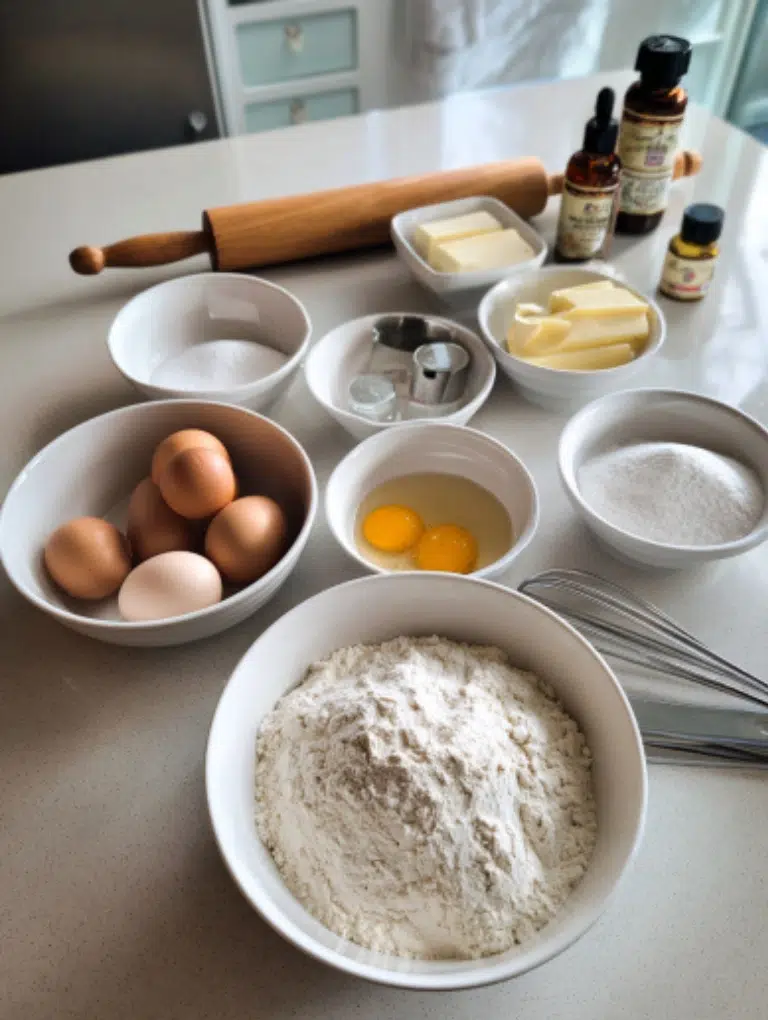
For the Cookie Dough
- 340 g (1 ½ cups) unsalted butter, softened to room temperature
- 397 g (2 cups) granulated sugar
- 2 large eggs + 2 egg yolks, room temperature
- 4 teaspoons pure vanilla extract
- 2 teaspoons almond extract (optional, but adds a festive note)
- 600 g (5 cups) all-purpose flour, measured accurately
- 1 teaspoon table salt
- 1 teaspoon baking powder
For Decorating (Optional)
- Royal icing, glaze, or powdered sugar
- Gel food coloring for detail work
- Festive sprinkles or colored sugar
Notes & Substitutions
- Flour type: Use unbleached all-purpose flour for stability. For a softer texture, substitute 10% of the flour with cake flour.
- Gluten-free option: Replace flour with a 1:1 gluten-free baking blend and add ½ teaspoon xanthan gum.
- Dairy-free: Swap butter for plant-based sticks (avoid spreads), and reduce bake time by one minute.
- Flavor twist: Add ½ teaspoon orange zest or ¼ teaspoon nutmeg for a Christmas aroma that stands out.
- Chill tip: Always chill the dough before rolling, cold dough prevents spreading and helps maintain shape.
How to Make Christmas Cookie Dough
Before You Start
- Chill time: Plan at least 2 hours for the dough to rest before rolling.
- Preheat: When ready to bake, set your oven to 325°F (165°C) and line two baking sheets with parchment paper.
- Prep workspace: Lightly flour your surface and keep extra flour nearby for rolling.
Step 1: Cream Butter and Sugar
In a large bowl, beat butter and sugar until light, pale, and fluffy. This step traps air, giving your cookies a soft bite and even texture. Use a stand mixer or hand mixer on medium speed for about 2–3 minutes.
Step 2: Add Eggs and Flavor
Add eggs and egg yolks one at a time, mixing after each addition. Stir in the vanilla and almond extract until the mixture looks glossy and uniform. These ingredients build flavor and structure.
Step 3: Combine Dry Ingredients
In a separate bowl, whisk flour, salt, and baking powder together. Gradually add this dry mix to your wet ingredients on low speed. Stop mixing as soon as no streaks of flour remain, overmixing toughens the dough.
Step 4: Divide and Chill
Split the dough into two portions. Flatten each into a disc, wrap in plastic, and chill for at least 2 hours or overnight. Cold dough firms up the butter, which keeps cookies from spreading, as the University of Arkansas Cooperative Extension recommends chilling dough to control spread and skipping greased pans for cleaner edges.
Step 5: Roll and Cut
Work with one disc at a time on a lightly floured surface. Roll the dough to ¼ inch (6 mm) thick. Use cookie cutters dipped in flour to prevent sticking. For consistent shapes, lift cookies with a flat spatula onto your baking sheet.
Step 6: Bake to Perfection
Bake for 10–12 minutes, or until the edges turn light golden and the centers look dry but not brown. Remember, cookies continue to bake slightly on the sheet after removal.
Step 7: Cool and Decorate
Allow cookies to cool on the sheet for 5 minutes before transferring them to a wire rack. Once fully cool, decorate with royal icing for Christmas cookies, a quick glaze, or sprinkles. Let icing dry completely before stacking or packaging.
Pro Tips & Troubleshooting
Expert Tips for Best Results
- Measure precisely: For perfect structure, use a kitchen scale rather than scooping cups. Accuracy prevents overly dry or sticky dough.
- Chill strategically: If your kitchen is warm, chill dough for 10 minutes between rolling sessions to keep butter firm.
- Perfect texture: Stop beating as soon as flour disappears, soft dough means tender cookies.
- Even baking: Rotate sheets halfway through baking for balanced color and crisp edges.
- Flavor depth: A 24-hour chill in the fridge lets the vanilla and butter flavors bloom beautifully.
Common Mistakes to Avoid
- Overmixing: Mix only until the flour disappears; longer mixing changes dough structure and spreadability, as peer-reviewed research on cookie dough rheology shows in the National Library of Medicine.
- Skipping the chill: Warm dough spreads and blurs edges, never skip refrigeration.
- Too much flour on the surface: Excess flour toughens cookies and dulls color. Use parchment for easier rolling.
- Overbaking: Remove cookies before they look “done.” They finish baking on the sheet.
Creative Shortcut
Short on time? Roll the dough between two sheets of parchment before chilling. It firms faster and rolls evenly without extra flour, ready to cut straight from the fridge.
Serving, Storage & Variations

Serving Ideas
- Serve these cookies plain with a light dusting of powdered sugar for an elegant, classic look, or mix in red velvet crinkle cookies for a pop of color.
- For a festive table, decorate with royal icing and colorful sprinkles once cooled completely, or add chocolate thumbprint cookies to your dessert board.
- Pair with hot cocoa, peppermint lattes, or eggnog for a cozy holiday treat, and serve alongside Italian Christmas cookies for variety.
- Stack them in clear bags or tins tied with ribbon for easy edible gifts, or add snowball cookies to round out the tin.
Storage Guidelines
- Room Temperature: Store cookies in an airtight container for peak texture up to one week, though the USDA notes that cookies may keep at room temperature for two to three weeks.
- Refrigerator: Keeps dough fresh for 2–3 days before baking.
- Freezer: Freeze dough discs or cut shapes for up to two months, a window that matches Cooperative Extension guidance for holiday cookies. Thaw overnight in the fridge before rolling or baking.
- Decorated Cookies: Allow icing to dry completely, then layer cookies between sheets of wax paper to prevent smudging.
Reheating Tips
If you like warm cookies, heat them in a 300°F oven for 3–4 minutes. Avoid microwaving, moisture softens the texture.
Recipe Variations
- Almond-Vanilla Twist: Replace ½ teaspoon vanilla with almond extract for a nutty aroma.
- Orange Zest Holiday Blend: Add ½ teaspoon finely grated orange zest for bright citrus notes.
- Light Spice Version: Mix ¼ teaspoon nutmeg or cinnamon into the flour for a subtle Christmas flavor.
- Gluten-Free Adaptation: Swap flour for a 1:1 gluten-free blend with xanthan gum.
- Vegan Option: Use dairy-free butter and a flax egg (1 tbsp flaxseed meal + 3 tbsp water).
High-Altitude Adjustments
Reduce the sugar by 1 tablespoon and bake at 335°F (168°C) instead of 325°F, which aligns with Colorado State University Extension advice to raise oven temperature slightly and trim sugar to limit spread.
Nutritional Information
Below values are based on one cookie (about 35 g), assuming the recipe yields approximately 36 cookies.
| Nutrient | Per Serving |
|---|---|
| Calories | 210 kcal |
| Total Fat | 10 g |
| Saturated Fat | 6 g |
| Cholesterol | 40 mg |
| Sodium | 90 mg |
| Total Carbohydrates | 27 g |
| Dietary Fiber | 0 g |
| Total Sugars | 14 g |
| Protein | 2 g |
How it’s calculated:
Values are estimated using the USDA Food Database for the listed ingredients in this christmas cookie dough recipe. Actual results may vary depending on ingredient brands, portion size, and added decorations.
Nutritional Notes:
- Butter provides rich flavor and structure.
- Sugar ensures tenderness and light crispness.
- Eggs contribute protein and a soft bite.
- Using high-quality flour with balanced protein keeps cookies from spreading.
Tip: Use tools like Cronometer or MyFitnessPal to double-check nutrition if you adjust ingredients or portion sizes.
Conclusion
This christmas cookie dough recipe brings together everything you love about holiday baking, flavor, fun, and foolproof results. The cookies hold their shape, taste buttery and light, and offer a perfect base for creative decorating. Whether you’re baking with kids, prepping for a cookie exchange, or making gifts for loved ones, this dough makes it easy to share something special.
If you try this recipe, leave a comment and a star rating below to let others know how it turned out for you. We’d love to see your festive creations, share your photos on Pinterest or Facebook and tag your favorite variations.
What’s your go-to holiday twist? Almond? Orange zest? Tell us in the comments so we can feature your version next season.
Frequently Asked Questions
How do I keep Christmas sugar cookies from spreading?
Make sure the dough is well chilled before baking. Soft butter causes cookies to lose shape, so refrigerate cut-outs for at least 15 minutes before baking. Use parchment-lined sheets instead of greased pans, which can encourage spreading.
How thick should I roll the dough for cut-outs?
Roll your dough to ¼ inch (6 mm) thickness. This ensures cookies bake evenly, hold clean edges, and have the perfect balance of crispness and chew.
Can I make the dough ahead and freeze it?
Yes. Wrap dough discs tightly in plastic and freeze for up to two months. Thaw overnight in the refrigerator before rolling and cutting. You can also freeze cut-out cookies before baking, just add 1–2 minutes to the bake time.
Why is my dough sticky or cracking when I roll it?
Sticky dough means it’s too warm, chill it for 15 minutes. Cracking means it’s too cold or dry, let it rest for 5 minutes at room temperature or knead gently until pliable.
What icing works best for decorating sugar cookies?
Royal icing gives a crisp, glossy finish and dries hard for stacking or gifting. For a quicker option, use a simple powdered sugar glaze with milk or lemon juice for a soft, shiny look.
How long do decorated cookies stay fresh?
Decorated cookies stay fresh for up to one week in an airtight container. For longer storage, freeze them undecorated, then ice them after thawing.
What changes do I make for high-altitude baking?
Reduce the sugar by 1 tablespoon and bake at 335°F (168°C) instead of 325°F. This slight adjustment prevents over-spreading and keeps cookies tender.