Skip to content
There is truly nothing quite like a warm slice of homemade cornbread to bring comfort to your kitchen. It is the ultimate comfort food, capable of completing any meal from a hearty bowl of chili to a festive holiday spread. I am so excited to share my favorite super moist cornbread recipe, promising a tender crumb and rich, nuanced flavor that stands out from the rest. This guide will walk you through every step to bake the best homemade cornbread you have ever tasted.
Why You’ll Love This Super Moist Cornbread Recipe
I have a special twist for this cornbread recipe that I know you are going to adore. My secret for an incredibly moist cornbread with amazing depth of flavor is to brown the butter before adding it to the batter, and to use buttermilk instead of regular milk. These two changes make all the difference.
The browned butter undergoes the Maillard reaction, developing a wonderfully nutty, caramelized aroma and taste that elevates the entire cornbread experience. It is a simple step but the flavor payoff is immense.
Buttermilk, with its pleasant tang and acidity, reacts beautifully with the baking powder, ensuring a superior rise and an incredibly tender, soft texture. The higher fat content in buttermilk also contributes to that coveted super moist crumb. This recipe is surprisingly easy to prepare, making it a perfect family-friendly comfort food for any occasion.
Ingredients Needed for the Best Homemade Cornbread

Here is everything you will need to create this delightful cornbread recipe:
- 2 cups flour
- 1 cup cornmeal
- 1 cup sugar
- 1 ½ tablespoons baking powder
- 1 teaspoon salt
- ½ cup (8 tablespoons) butter (melted)
- ½ cup oil
- 1 ¼ cups milk
- 3 large eggs
- honey and extra butter for serving (optional)
Ingredient Notes & Substitutions
Let’s talk a bit more about the star ingredients and how they contribute to our super moist cornbread.
Cornmeal: The type of cornmeal you choose affects the final texture. I recommend a medium grind cornmeal for the best balance of texture – it gives a pleasant bite without being too gritty or too fine. A fine grind will yield a more cake-like texture, while coarse will be more rustic.
Buttermilk: This is a critical swap in my recipe! Buttermilk, replacing the original milk, is essential for a tender crumb and incredible moistness. Its acidity reacts with the baking powder, helping the cornbread rise beautifully and stay incredibly soft due to its fat content.
Butter: Browning the butter is where so much of the flavor comes from. The Maillard reaction creates a nutty, caramelized depth that plain melted butter just cannot achieve. I always use unsalted butter for better control over the saltiness in the final dish.
Oil: Along with butter, oil (such as vegetable or canola) plays a crucial role in keeping the cornbread moist and tender. It contributes to the overall richness.
Flour: All-purpose flour provides the structure. Remember that overmixing can develop gluten, leading to a tougher cornbread, so a light hand is key.
Sweetness: The recipe includes sugar, which can be adjusted. If you prefer a less sweet cornbread, you can easily reduce the amount, as I will explain further below.
Substitutions: For gluten-free cornbread, you can use a 1:1 gluten-free flour blend. If you need a dairy-free option, look for dairy-free buttermilk alternatives and dairy-free butter substitutes.

How to Make Our Brown Butter Buttermilk Cornbread
Follow these steps closely, and you will have the most delicious homemade cornbread.
1. Prepare Your Pan & Preheat Oven
First, preheat your oven to 350 degrees F (175 C). Thoroughly grease a 9×13 inch pan. You want to see every inch of the pan gleaming with a light coat of grease to prevent sticking.
2. Brown the Butter
This is the secret step! In a light-colored saucepan, melt the butter over medium heat. Watch it carefully as it melts and starts to foam. The milk solids will separate and begin to turn golden brown, then amber. You will notice a wonderfully nutty aroma as the Maillard reaction takes place. Once it reaches a beautiful golden-brown color and smells fragrant, immediately remove it from the heat to prevent burning. Let the browned butter cool slightly before proceeding.
3. Whisk Dry Ingredients
In a large bowl, whisk together the flour, cornmeal, sugar, baking powder, and salt. Make sure everything is evenly distributed; the mixture should look uniform.
4. Combine Wet Ingredients
In a separate medium bowl, combine the slightly cooled brown butter, oil, buttermilk (remember, this replaces the milk in the original recipe for our twist!), and eggs. Whisk them until the eggs are fully incorporated and the mixture is smooth.
5. Combine Batter
Pour the wet ingredients into the dry ingredients. Mix until just combined. It is crucial not to overmix the batter, as this can develop gluten and lead to a tough or dry cornbread. A few small lumps are perfectly fine and even desirable.
6. Bake the Cornbread
Transfer the batter evenly to your prepared 9×13 inch pan. The batter should spread easily. Bake for 35-45 minutes. Your cornbread is ready when the top is beautifully golden brown, and a toothpick inserted into the center comes out clean or with only a few moist crumbs attached, but no wet batter. You will also notice a delightful aroma filling your kitchen, and the edges will start to pull away slightly from the pan.
7. Cool & Serve
Allow the cornbread to cool in the pan for 15-20 minutes before cutting it into squares. This cooling time is important for the cornbread to set and maintain its structural integrity, preventing it from crumbling. I highly recommend serving it warm with a generous dollop of extra butter and a drizzle of honey to fully appreciate its tender crumb and moistness.
Mastering Your Cornbread Bake: Pan Choices & Customization
Let’s explore how different pans can impact your cornbread and how you can customize the sweetness to your liking.
Choosing the Right Baking Pan
The type of pan you use can really change your cornbread’s texture, especially the crust.
Cast-Iron Skillet: For a truly exceptional crispy crust, a cast-iron skillet is my top recommendation. To use one, preheat your 10-inch cast iron skillet in the oven with a little oil while the oven preheats. Once hot, carefully pour in the batter. You might need to slightly increase the oven temperature to 400°F (200°C) and reduce the bake time slightly compared to a 9×13 inch pan, typically 25-35 minutes.
Muffin Tin: If you love individual portions, making cornbread muffins is a fantastic idea. Prepare the batter as directed, then fill greased muffin cups about two-thirds full. Bake at 400°F (200°C) for approximately 18-25 minutes, or until golden and a toothpick comes out clean.
Glass or Standard Baking Dish: For this recipe, a 9×13 inch pan (glass or metal) works perfectly. If using a glass dish, sometimes a slight temperature reduction (by about 25°F) or a slightly increased bake time might be needed, as glass heats differently than metal.
Adjusting Sweetness & Regional Variations
One of the beauties of homemade cornbread is how easily you can customize it.
Less Sweet Cornbread: This recipe has a lovely balance of sweetness, but if you prefer a less sweet, more savory cornbread, you can easily adjust the sugar levels. Try reducing the sugar by ¼ to ½ cup, or even more if you want a truly savory version. This will slightly alter the overall flavor but will not significantly impact the texture.
Northern vs. Southern Cornbread: The debate between Northern and Southern cornbread is a fun one! Traditional Southern cornbread often uses less sugar (or none at all) and more cornmeal, resulting in a denser, sometimes crumblier texture. Northern versions, like this one, typically include more flour and sugar for a softer, sweeter, cake-like consistency. My recipe offers a delicious, moist blend with a touch of sweetness that is easily customizable to your preference.
Pro Tips & Troubleshooting for Perfect Cornbread
Let me share some of my favorite tips and help you avoid common pitfalls so your cornbread turns out perfect every time.
Pro Tips for Success
The Power of Brown Butter & Buttermilk: Do not skip the brown butter and buttermilk! This combination is truly the secret to this recipe’s superior moisture and complex flavor. It is worth the extra step.
Perfectly Measured Ingredients: Accurate measurements for flour and cornmeal are crucial. Too much of either can lead to a dry or crumbly texture. Use a kitchen scale for precision if possible, or the scoop and level method for flour.
Do Not Overmix: I cannot stress this enough. Overmixing develops gluten, resulting in tough, dense cornbread. Mix just until the ingredients are combined; a few lumps are fine.
Cooling is Crucial: Allowing the cornbread to cool for 15-20 minutes in the pan before cutting gives it time to set and ensures structural integrity, preventing it from crumbling.
Doubling the Recipe: If you are feeding a crowd, this recipe doubles beautifully. Just use two 9×13 inch pans.
Cornmeal Grind: Experiment with different cornmeal grinds. Medium grind gives a balanced texture, fine for a cake-like crumb, and coarse for a rustic feel. Choose what you like best!
Common Mistakes to Avoid
Dry or Crumbly Cornbread: This is a common complaint. Often, it is due to too much flour, excessive cornmeal (which hinders gluten development), or sometimes even ironically, too much fat can make it crumbly. Omitting eggs can also lead to a fragile texture. My recipe is designed to prevent this with the perfect ratio of wet to dry ingredients and the magic of buttermilk.
Too Dense or Gummy Texture: This almost always comes from overmixing the batter. When you overmix, you overdevelop the gluten in the flour, which leads to a dense, gummy texture. Remember to mix gently until just combined.
Uneven Baking: If your cornbread is baking unevenly, it could be due to oven hotspots or incorrect pan placement. Try rotating your pan halfway through the bake time to ensure even cooking.
Under or Overbaked: Know your cues! Your cornbread should be golden brown on top, and a toothpick inserted into the center should come out clean or with only a few moist crumbs. An uncooked middle or dry edges are signs of incorrect bake time.
Serving & Storage
Now that you have baked a perfect batch, let us talk about how to enjoy and store your delicious cornbread.
Creative Serving Ideas
Cornbread is incredibly versatile!
Classic Pairings: My absolute favorite way to serve it is warm, with a generous dollop of extra butter and a drizzle of honey. It melts right into the tender crumb.
Savory Companions: It is the perfect accompaniment to hearty meals like chili, roast chicken, turkey, pork, warming soups, or stews. It soaks up all those delicious flavors.
Sweet Treats: For breakfast or a sweeter snack, it pairs wonderfully with various jams and jellies.
Delicious Add-ins & Toppings: Get creative! You can mix in ingredients like shredded cheddar cheese, diced jalapenos (fresh or pickled), green chilies, roasted red peppers, whole kernel corn, minced garlic, fresh chives, rosemary, thyme, or crumbled bacon. For a sweeter touch, consider orange zest and dried cranberries.
Storage & Reheating Tips
Proper Storage: To keep your cornbread fresh, store it in an airtight container at room temperature for up to 3 days. If you need it to last longer, you can store it in the fridge for up to 1 week.
Freezing: Cornbread freezes beautifully! Wrap individual slices or the entire cooled loaf well in plastic wrap, then in foil. It can be frozen for up to 3 months. Thaw it in the refrigerator overnight or on the counter before reheating.
Reheating Leftovers: To maintain moisture when reheating, I suggest wrapping leftover cornbread in foil and warming it gently in a preheated oven (around 300°F/150°C) until heated through. You can also microwave individual slices, but be careful not to overheat, as this can dry it out.
Your New Go-To Cornbread Recipe (Conclusion)
I am so thrilled for you to try this super moist cornbread recipe! The unique combination of brown butter and tangy buttermilk creates a texture and flavor profile that is truly next level. Even if you are a beginner baker, my detailed instructions and expert tips will guide you to fantastic results. I hope this becomes your new go-to cornbread recipe, whether you enjoy it with chili, a roast, or as a sweet treat. Feel free to experiment with the suggested variations or serving ideas to make it uniquely yours. Enjoy, and do not forget to print this recipe for future use!
Cornbread FAQ
What makes this cornbread moist and prevents it from crumbling?
Our unique use of browned butter for flavor depth and buttermilk for acidity and richness creates an incredibly moist and tender crumb. Proper ingredient ratios (flour, cornmeal, eggs, fat) and avoiding overmixing are also key to preventing crumbling.
What are popular add-ins and flavor variations for cornbread?
Popular additions include cheddar cheese, diced jalapenos (fresh or pickled), whole kernel corn, green chilies, or roasted red peppers. For savory notes, consider garlic, chives, rosemary, or bacon. Sweet variations can include orange zest and cranberries.
What kind of pan should I use for cornbread (e.g., cast iron, glass, baking dish)?
A 9×13 inch pan is standard for this recipe. A preheated cast iron skillet will yield a superb crispy crust. You can also make cornbread muffins in a muffin tin. Glass baking dishes work but might require slight adjustments to bake time or temperature.
How do I store homemade cornbread to keep it fresh?
Store homemade cornbread in an airtight container at room temperature for up to 3 days, or in the fridge for 1 week. For longer storage, it can be well-wrapped and frozen for up to 3 months.
What are the best side dishes to serve with cornbread?
Cornbread is a versatile side dish. It is a classic accompaniment to chili, roast chicken, turkey, pork, hearty soups, and stews. It also pairs well with jams and jellies for breakfast or a sweet treat.
How do I know when my cornbread is done baking?
Your cornbread is done when the top is golden brown and a toothpick inserted in the middle comes out clean or with only a few moist crumbs, but no wet batter. The edges might also start to pull away slightly from the pan.
Can I make this cornbread recipe into muffins?
Yes! Prepare the batter as directed, then divide it among greased muffin tin cups, filling them about two-thirds full. Bake at 400°F (200°C) for approximately 18-25 minutes, or until golden brown and a toothpick comes out clean.
Can I make this recipe less sweet?
Absolutely. You can reduce the sugar in the recipe by ¼ to ½ cup, or even more for a truly savory version, depending on your preference. This will adjust the sweetness without significantly altering the texture.
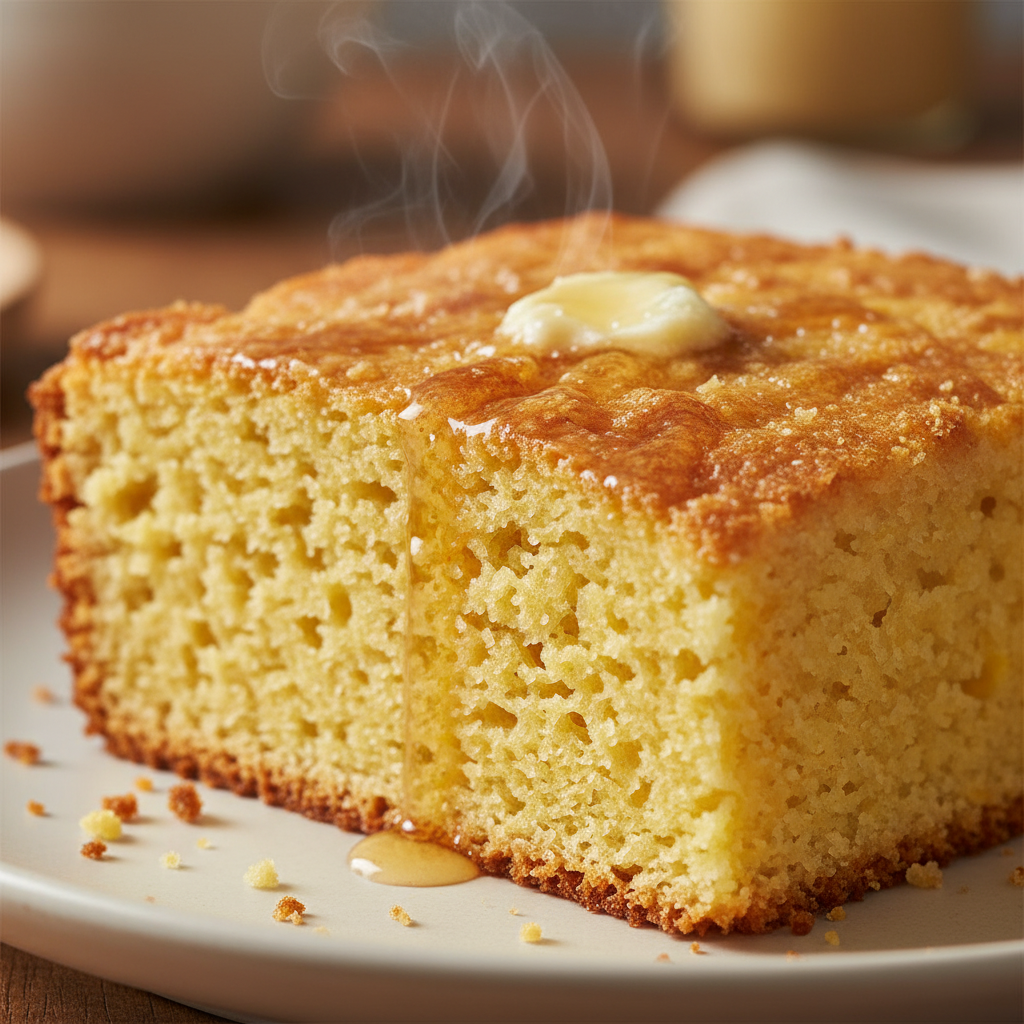
Super Moist Cornbread Recipe with Brown Butter & Buttermilk
Ingredients
Equipment
Method
- First, preheat your oven to 350 degrees F (175 C). Thoroughly grease a 9×13 inch pan, ensuring every inch gleams with a light coat of grease to prevent sticking.
- In a light-colored saucepan, melt the butter over medium heat. Watch carefully as it melts and starts to foam. The milk solids will separate and begin to turn golden brown, then amber. Notice the wonderfully nutty aroma as the Maillard reaction occurs. Once it reaches a beautiful golden-brown color and smells fragrant, immediately remove it from the heat to prevent burning. Let the browned butter cool slightly.
- In a large bowl, whisk together the flour, cornmeal, sugar, baking powder, and salt. Ensure everything is evenly distributed and the mixture looks uniform.
- In a separate medium bowl, combine the slightly cooled brown butter, oil, buttermilk, and eggs. Whisk until the eggs are fully incorporated and the mixture is smooth.
- Pour the wet ingredients into the dry ingredients. Mix until just combined. Do not overmix, as this develops gluten and can lead to tough or dry cornbread. A few small lumps are perfectly fine.
- Transfer the batter evenly to your prepared 9×13 inch pan; it should spread easily. Bake for 35-45 minutes. The cornbread is ready when the top is golden brown, a toothpick inserted into the center comes out clean (or with only a few moist crumbs), and the edges start to pull away slightly from the pan.
- Allow the cornbread to cool in the pan for 15-20 minutes before cutting into squares. This cooling time is important for the cornbread to set and maintain its structural integrity, preventing crumbling. Serve warm.