Skip to content
Imagine biting into a pillowy soft, subtly sweet roll, its tender brioche-like dough giving way to a creamy, dreamy cottage cheese filling. Then, a delicate, almost ethereal floral note graces your palate, a whisper of orange blossom water that transforms a simple pleasure into an unforgettable experience. This is the magic of my Cottage Cheese Stuffed Rolls, lovingly known as Vatrushka in Eastern Europe, a beloved dessert that I’ve elevated with a unique aromatic twist. Whether you’re a seasoned baker or just starting, I promise to guide you through every step to achieve these perfect, fluffy buns, unveiling insights into traditional techniques and my secret ingredient for an extraordinary finish. Get ready to bake an elevated version of this comforting classic!
Why You’ll Love These Cottage Cheese Stuffed Rolls
The unique twist in my Cottage Cheese Stuffed Rolls is what truly sets them apart. I love incorporating a subtle hint of orange blossom water into the creamy cottage cheese filling, or sometimes a light glaze over the warm, baked buns. This floral note introduces a bright, aromatic lift that beautifully complements the existing lemon zest and vanilla, creating a more complex and refined flavor profile. It’s a nod to authentic regional influences, making this Vatrushka recipe truly gourmet and memorable.
You will also adore these rolls for several other reasons:
Incredibly Fluffy Texture: Achieved through my special no-knead brioche dough and crucial rising times, these buns are exceptionally tender.
Creamy, Flavorful Filling: The perfectly smooth cottage cheese filling is already delicious, but it’s truly enhanced by the floral twist, bright lemon zest, and warm vanilla.
Elevated Comfort Food: I believe this recipe transforms a traditional dessert into a sophisticated treat, perfect for any occasion, from a cozy Sunday brunch to a special gathering.
Authentic Yet Modern: This recipe stays true to the beloved Vatrushka’s Eastern European roots while offering a fresh, appealing flavor that will impress everyone.
Ingredients Needed
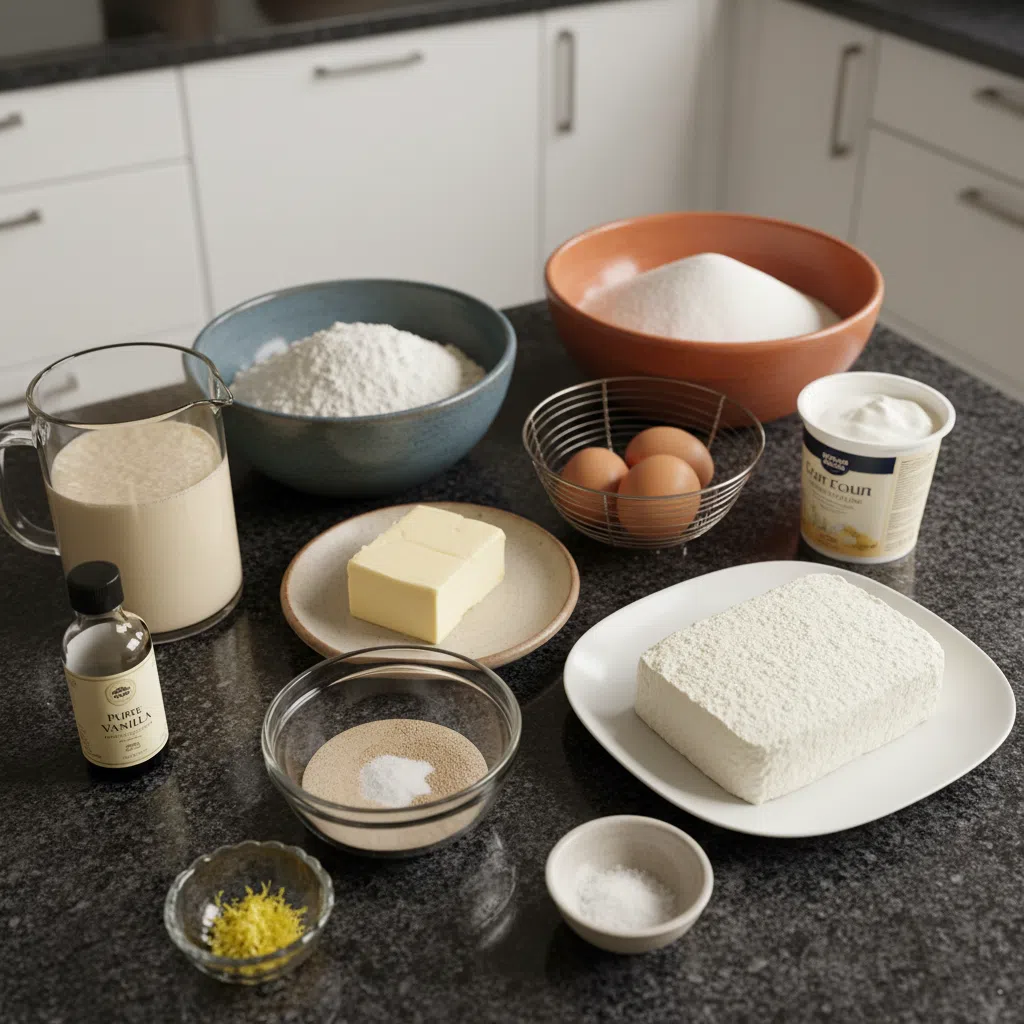
Here are the ingredients you will need to create these delightful Cottage Cheese Stuffed Rolls:
For the Dough:
½ cup milk (warm)
1 teaspoon sugar
3 g yeast (1/2 packet, about 1 teaspoon)
3 ¼ cup all purpose flour (390g)
¼ cup granulated sugar
½ teaspoon sea salt
2 large eggs (room temperature)
¼ cup sour cream
½ cup unsalted butter (softened)
1 tablespoon pure vanilla extract
For the Filling:
1 lb pressed cottage cheese (Can be found as farmers cheese, tvorog, twarog, Ukrainian cottage cheese, Russian cottage cheese)
½ cup granulated sugar (add ¼ cup sugar if not adding the streusel topping)
1 tablespoon grated lemon zest (from about 1 lemon)
1 tablespoon potato starch (or cornstarch in a pinch)
1 large egg yolk
3 tablespoons sour cream
1 tablespoon pure vanilla extract
¼ teaspoon sea salt
For the Streusel Topping (Optional):
½ cup all purpose flour (60g)
2 tablespoons granulated sugar
2 tablespoons butter (softened)
¼ teaspoon sea salt
For the Egg Wash:
1 large egg
1 tablespoon milk
Ingredient Notes & Substitutions
Cottage Cheese: For this recipe, using pressed cottage cheese is absolutely crucial. You might find it labeled as farmer’s cheese, tvorog, twarog, Ukrainian cottage cheese, or Russian cottage cheese in specialty stores or the international aisle. Regular, wet cottage cheese will be too liquidy and will make your filling runny, potentially seeping out during baking. In the US, Friendship Dairies Farmer Cheese is a reliable brand. If you can’t find pressed cottage cheese, you can make your own by placing regular cottage cheese in a cheesecloth-lined colander over a bowl and letting it drain in the fridge overnight. Quark cheese and firm ricotta cheese can also work as alternatives, though quark cheese might require a bit more starch due to its moisture content. If you’re a fan of baking with this versatile ingredient, you might also enjoy our cottage cheese blueberry muffins.
Flour Measurement: I always recommend measuring all-purpose flour accurately with a kitchen scale for the best and most consistent results. If you don’t have a scale, use the scoop and level method: lightly spoon the flour into your measuring cup until overflowing, then level it off with a straight edge.
Eggs and Butter: It’s important to use room temperature eggs and softened butter for your brioche dough. The science behind this is fascinating: room temperature ingredients emulsify better, meaning they blend together more smoothly. This creates a more uniform dough, aids in proper gluten development, and ultimately contributes to the tender, fluffy crumb of your brioche buns.
Potato Starch vs. Cornstarch: While cornstarch works in a pinch, I prefer potato starch for the filling. Potato starch generally provides a slightly silkier, smoother texture and can handle higher temperatures without breaking down as much, which is ideal for a creamy filling.
Sour Cream: The sour cream in the dough is a wonderful addition. It helps tenderize the dough and adds a subtle richness that enhances the overall flavor of these Cottage Cheese Stuffed Rolls.
Vanilla Extract & Lemon Zest: These two ingredients are flavor powerhouses. The vanilla extract provides warmth and sweetness, while the fresh lemon zest adds a bright, zesty note that beautifully complements the floral twist from the orange blossom water, creating a truly harmonious flavor profile in the cottage cheese filling. If you enjoy a bright, zesty note in your baked goods, our lemon rosemary yogurt cake offers another delightful citrus-infused experience.
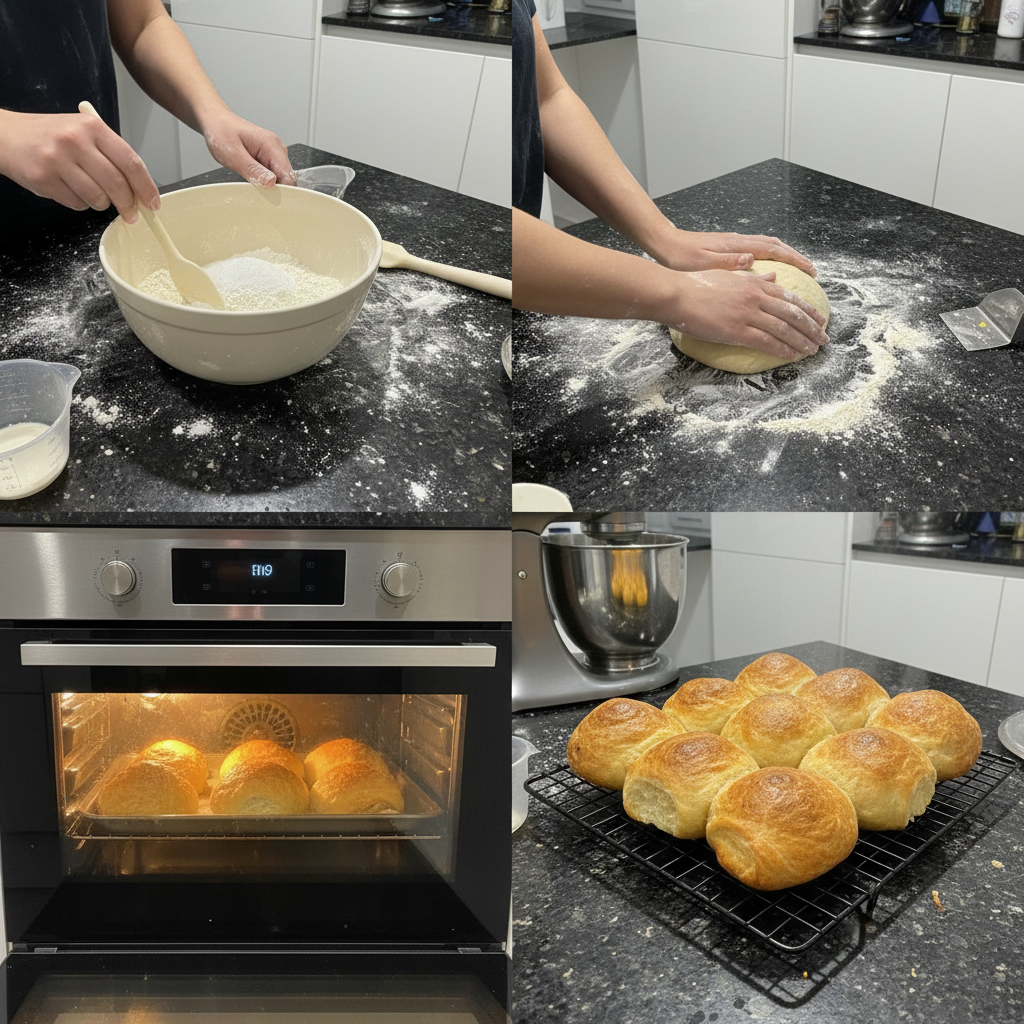
How to Make Cottage Cheese Stuffed Rolls (Vatrushka)
Let’s get baking! Follow these steps to create beautiful, fluffy Cottage Cheese Stuffed Rolls:
Activate the Yeast
First, pour the warm milk into a medium bowl. Add the yeast and 1 teaspoon of sugar. Whisk them together gently to dissolve the yeast completely. Set this mixture aside for about 10 minutes. You’ll know your yeast is active and ready when a lovely foam forms on top. If you don’t see any foam, your yeast isn’t active, and you’ll need to try a new batch or packet.
Prepare the Dough
Sift the all-purpose flour into a separate, large bowl. Make a clear well in the center of the flour. Into this well, add the remaining granulated sugar, sea salt, room temperature eggs, sour cream, softened unsalted butter, pure vanilla extract, and your bloomed yeast-milk mixture. Stir all these ingredients together until they form a cohesive dough ball. It will be soft and pliable.
First Rise
Cover the bowl with a clean kitchen towel and let the dough rise in a warm place for 45-50 minutes. I usually aim for a spot around 70-75°F (21-24°C). This first rise is crucial for allowing the yeast to do its work, developing flavor and gluten. The dough should become visibly puffed and approximately doubled in size.
First Stretch & Fold
After the first rise, it’s time for our first stretch and fold. Using your fingers, gently lift up one edge of the dough and pull it over the dough ball towards the other side. Repeat this process six times, working your way around the dough. You’ll notice the dough deflating slightly as you do this. This technique builds strength and elasticity in the dough without traditional kneading. Gently form the dough into a smooth ball again and place it back into the bowl. Cover it with the towel.
Second Rise
Let the dough rise in a warm place again for 25-30 minutes, until it’s puffed and doubled in size once more. While the dough enjoys its second rise, you can start preparing the cheese filling, streusel topping, and egg wash.
Prepare the Cottage Cheese Filling
Combine the pressed cottage cheese, granulated sugar, grated lemon zest, potato starch, egg yolk, sour cream, pure vanilla extract, and sea salt in a large bowl. For a super smooth filling, I love to blend the mixture with an immersion blender. You can also transfer it to a regular blender. The goal is a thick and mostly smooth consistency. Make sure to scrape down the sides to get it as uniform as possible.
Note: If you prefer a slightly grainier texture, you can simply mix all the filling ingredients together with a spoon. It will still be delicious!
Now, for my secret twist: add a few drops of orange blossom water (or rose water, if you prefer) to the filling mixture and stir well. Start with a small amount, as its flavor is potent, and add more to taste. This will give your Cottage Cheese Stuffed Rolls an exquisite aromatic lift!
Prepare the Streusel Topping (Optional)
In a flat dinner plate, combine the all-purpose flour, granulated sugar, softened butter, and sea salt. Use the back of a fork to flatten the butter into the flour until the mixture resembles crumbles without any dry bits of flour. It’s ready when it looks like a coarse meal. If you love a good crumble topping, consider trying our blueberry muffins with streusel for another delightful baked treat.
Prepare the Egg Wash
Crack the large egg into a medium bowl, add the tablespoon of milk, and whisk them together until well combined. Set this aside in the fridge until you’re ready to use it later.
Second Stretch & Fold
Once the dough has completed its second rise, repeat the stretch and fold process. Lift one edge of the dough and fold it over the rest, repeating another five times. By now, the dough should feel beautifully stretchy, buttery, and should not stick to your fingers.
Divide and Shape the Dough
Lightly grease a clean work surface with some neutral oil. Gently dump the dough out onto the prepared surface. Use a knife to cut the dough ball in half. Roll out each half into a log, then cut each log into 5 equal pieces, giving you a total of 10 pieces of dough.
Now, shape each piece of dough into a smooth ball. Start by rolling them lightly on the work surface. Then, place your hand over the ball and drag the bottom on the work surface in a circular motion. This creates a tight, tense surface on the dough, which helps to create a beautiful, smooth, and perfectly round bun.
Third Rise & Oven Preheat
Place the dough balls, smooth side up, onto large, parchment-lined baking sheets. Make sure to space them out with about 4 inches of space in between each, as they will spread significantly during the final rise and baking. I typically use two large baking sheets for this amount. Let the dough balls rise on the baking sheets for 15 minutes. In the meantime, preheat your oven to 355°F (180°C).
Create Filling Wells
Find a glass with a flat bottom that’s approximately 2.5 inches in diameter. Lightly grease the bottom of the glass with neutral oil, such as light olive oil or vegetable oil. Once the dough has completed its 15-minute rise, gently but firmly push the bottom of the greased glass into the middle of each dough ball. Press down hard to create a nice, deep well for the filling.
Egg Wash Application
Using a pastry brush, gently brush the prepared egg wash over the surface and edges of each bun. This will give them that beautiful golden crust as they bake.
Fill the Buns
Divide the cottage cheese filling evenly amongst the dough balls, placing generous scoops of it into the center of each well. It might seem like you are overfilling the buns, but don’t worry! The dough will expand around the filling as it rises further and bakes, creating a perfect balance.
Optional: For even more flavor, you can add about a teaspoon of jam or lemon curd into the center of the filled buns and swirl it gently into the cottage cheese filling with a toothpick. You can also dot the filling with fresh or frozen berries, like my favorite, raspberries!
Bake the Vatrushka
If you’re using the streusel, sprinkle the crumbles onto the edges of the buns now; it will stick nicely to the egg wash. Bake the buns in the center of your preheated oven for 17 to 20 minutes. The Cottage Cheese Stuffed Rolls are ready when they have a beautiful golden brown crust, and a toothpick inserted into the crust comes out clean. Another way to apply the floral twist is to make a light glaze with powdered sugar and a few drops of orange blossom water or rose water, and drizzle it over the buns immediately after they come out of the oven.
Mastering No-Knead Brioche Dough Techniques
Baking with no-knead dough might seem simple, but understanding a few key techniques can truly elevate your Cottage Cheese Stuffed Rolls. I’ll share some insights into the science behind a perfect brioche-like dough.
The Science Behind Room Temperature Ingredients
Why do I insist on room temperature eggs and softened butter for this brioche dough? It’s all about emulsion and texture. When eggs are at room temperature, their proteins are more relaxed, allowing them to blend seamlessly with other ingredients, especially fats like butter. This creates a stable emulsion, which is crucial for a smooth, homogenous dough. Softened butter, on the other hand, means it’s pliable but not melted. This allows it to incorporate uniformly into the dough, creating tiny pockets of fat. These pockets contribute to the dough’s rich, tender structure and aid in proper gluten development, which gives the buns their signature soft, fluffy texture. If your butter is too cold, it will create lumps; if it’s melted, it will make the dough greasy and difficult to work with.
Decoding the ‘Warm Place’ for Perfect Proofing
When I say “warm place” for dough rises, I’m referring to a specific environment for your yeast to thrive. The ideal temperature range for yeast activity and optimal gluten development is usually between 70-75°F (21-24°C). In this range, the yeast ferments at a steady pace, producing carbon dioxide that makes the dough rise, and simultaneously developing complex flavors. If the temperature is too cold, the yeast will be sluggish, leading to a very slow or stalled rise. If it’s too hot, the yeast can over-ferment rapidly, producing off-flavors, or even die, resulting in a dense, flat dough. Practical warm spots in your home kitchen can include an oven with just the light on (not the heat!), near a sunny window (but avoid direct scorching sun), or even a dedicated proofing box if you have one.
The “Stretch and Fold” Demystified
The stretch and fold technique is a brilliant alternative to traditional kneading, especially for a no-knead brioche dough like this. It’s how we develop gluten, which is the network of proteins that gives dough its strength, elasticity, and ability to trap gas, resulting in a light and airy texture. To perform a stretch and fold, simply dampen your hands slightly. Reach under one side of the dough, lift it gently, and stretch it upwards as far as it will go without tearing. Then, fold that stretched portion over the rest of the dough. Rotate the bowl a quarter turn and repeat this lifting, stretching, and folding action. I do this about six times in total. This process aligns the gluten strands, builds structure, and makes the dough strong, stretchy, and pliable, which is essential for our fluffy brioche buns.
Pro Tips & Troubleshooting for Perfect Vatrushka
I’ve learned a few things in my kitchen over the years that I want to share to help you achieve perfect Cottage Cheese Stuffed Rolls every time.
Pro Tips
Accurate Measurement: I cannot stress this enough: always use a kitchen scale to measure your all-purpose flour. This eliminates common measuring errors and ensures consistent, reliable results, preventing a dry or dense dough.
Yeast Check: Before you commit all your ingredients, make sure your yeast is active! Always let it bloom in warm milk with a little sugar until it forms a foamy layer. If there’s no foam, your yeast is likely dead, and it’s best to start with a fresh packet.
Pressed Cottage Cheese is Key: As I mentioned, selecting the correct type of cottage cheese (pressed, farmer’s, tvorog) is paramount. This low-moisture cheese prevents the filling from becoming runny and ensures it stays put inside your buns.
Don’t Rush the Rises: Both dough rises are incredibly important for developing a truly fluffy, soft, and stretchy dough in this no-knead recipe. Patience is a virtue here; resisting the urge to shorten the rising times will pay off immensely in texture.
Perfect Shaping: When you’re shaping your dough balls, focus on creating a tight, tense surface. This can be achieved by rolling the ball on your work surface and then dragging the bottom gently with your hand. This technique creates smooth, beautiful buns that hold their shape beautifully during baking.
Floral Integration: If you’re adding orange blossom water, start with just a few drops and taste. Its flavor is quite potent, and a little goes a long way. Alternatively, for a more delicate finish, you can incorporate it into a light glaze after the buns are baked.
Common Mistakes to Avoid
Using Wet Cottage Cheese: This is the most common pitfall! Using regular, wet cottage cheese will lead to a filling that is too liquidy and will likely seep out of your buns, making them soggy and difficult to manage.
Skipping Salt: Salt isn’t just for flavor; it’s also essential for proper gluten development. Skipping it or reducing it too much can result in a dough that lacks structure and a final bun that isn’t as fluffy.
Insufficient Proofing: Not allowing your dough sufficient time for both rises will result in dense, heavy buns. The yeast needs time to work, creating gas and developing the gluten structure that gives the brioche its characteristic airy texture.
Over-flouring: Resist the temptation to add too much flour during shaping. Excessive flour can make your buns dry and tough. Instead, use a minimal amount of neutral oil to grease your work surface and hands.
Overfilling the Wells: While I encourage generous filling, make sure the wells you create in the dough are deep enough. The dough will expand around the filling as it rises and bakes, but if the well is too shallow, the filling might spill over, though it will still taste wonderful!
Serving & Storage
Once your Cottage Cheese Stuffed Rolls are out of the oven, I have some recommendations for enjoying them at their best and keeping them fresh.
Serving Suggestions
I always recommend serving these delicious buns warm or at room temperature on the day they are made for optimal softness and flavor. They are absolutely delightful alongside a fresh cup of coffee or a comforting cup of tea, making them a perfect morning treat or light dessert. If you opted for a floral glaze with orange blossom water, a sprinkle of crushed pistachios adds a beautiful pop of color and a lovely textural contrast. For a simple finish without streusel or glaze, a light dusting of powdered sugar makes them look extra inviting.
Storage & Make-Ahead Tips
Room Temperature: Once your buns are completely cooled, you can store them in an airtight container at room temperature for up to 2 days. This will keep them wonderfully soft and fresh.
Refrigeration: For longer storage, place your Cottage Cheese Stuffed Rolls in an airtight container in the fridge for up to 3-4 days. Just be aware that refrigeration can sometimes dry them out slightly.
Freezing: These cottage cheese buns freeze beautifully! Once they are completely cooled, wrap each bun individually in plastic wrap, then place them in a freezer-safe bag or container. They will keep well in the freezer for up to 1-2 months. When you’re ready to enjoy them, simply thaw them at room temperature.
Unbaked Dough (Overnight Dough): If you like to plan ahead, my no-knead dough is perfect for an overnight option. You can make the dough through its first or second rise, then refrigerate it overnight in an oiled, covered bowl. Just be sure to bring it back to room temperature for about 30-60 minutes before you proceed with shaping and baking.
Reheating Instructions
For the best experience, I recommend reheating your Cottage Cheese Stuffed Rolls gently.
Oven: Reheat cooled or thawed frozen buns in a preheated oven at 300°F (150°C) for about 5-10 minutes, or until they are warmed through and soft. This helps restore their fresh-baked texture.
Microwave: For individual buns, a quick reheat in the microwave works well. Microwave for 15-30 seconds until warm and soft. Be careful not to overheat, as this can make them tough.
Conclusion
There you have it—my recipe for Cottage Cheese Stuffed Rolls, a truly special Vatrushka with a unique floral twist. I know you’ll love the unmatched soft, fluffy texture of these brioche buns combined with the creamy, fragrant cottage cheese filling, especially with that delicate hint of orange blossom water. This no-knead dough recipe makes baking these beautiful Eastern European desserts approachable for all skill levels, allowing everyone to experience the joy of homemade goodness.
I encourage you to try some of the suggested variations, perhaps with a dollop of your favorite jam, a swirl of lemon curd, or a handful of fresh berries. Savor the delightful experience of freshly baked Vatrushka in your own kitchen. If you appreciate elevated twists on classic treats, you might also love our recipe for homemade Starbucks cake pops with a secret twist. I hope you’ll print this recipe, share your beautiful creations with me, and explore other comforting recipes on my blog!
FAQ
I’ve gathered some common questions about making Cottage Cheese Stuffed Rolls to help you on your baking journey.
What kind of cottage cheese is best for Vatrushka and why?
For Vatrushka, pressed cottage cheese is essential. It’s also known as farmer’s cheese, tvorog, or twarog. This type of cheese has a much lower moisture content than regular wet cottage cheese, which is crucial for preventing a runny filling that could seep out during baking. You can also use Quark cheese or firm ricotta cheese as alternatives, although Quark might require a little extra starch.
Why is a no-knead dough preferred over traditional kneading for these rolls?
A no-knead dough, especially for brioche-like rolls, is fantastic because it achieves a wonderfully fluffy and tender texture with significantly less effort than traditional kneading. The stretch and fold technique used in this recipe efficiently develops the gluten structure, providing strength and elasticity to the dough without the intensive physical work of kneading.
Can Vatrushka buns be made ahead or frozen?
Absolutely! You can store cooled, baked buns in an airtight container at room temperature for up to 2 days, or in the fridge for 3-4 days. For longer storage, freeze completely cooled buns individually wrapped in plastic, then in a freezer-safe bag for 1-2 months. Thaw at room temperature. You can also prepare the no-knead dough as an overnight dough by refrigerating it after the first or second rise, then bringing it to room temperature before shaping.
What are some delicious variations for the cottage cheese filling?
Beyond the delightful orange blossom water twist, you can customize your filling with various additions. I love adding a teaspoon of jam, a swirl of lemon curd, or fresh or frozen berries like raspberries. You can also explore savory options, but that’s a different adventure!
How can I ensure my no-knead brioche dough is soft and fluffy?
To achieve soft and fluffy no-knead brioche dough, focus on a few key things: accurate all-purpose flour measurement (preferably with a kitchen scale), ensuring your yeast is active and blooming, allowing for sufficient dough rises in a warm place (around 70-75°F / 21-24°C), and consistently performing the stretch and fold technique to develop gluten effectively.
What are the cultural origins and significance of Vatrushka?
Vatrushka are a beloved and iconic Eastern European dessert with deep Slavic origins. Traditionally made with tvorog or farmer’s cheese, these sweet, round buns are often enjoyed at celebratory occasions, family gatherings, or simply as a comforting treat with tea or coffee, embodying a taste of home and tradition.
Why does this no knead dough need two rises before shaping?
Both rises are crucial for this no-knead dough. The first rise allows the yeast to kickstart fermentation and begin the gluten development process, making the dough flavorful and pliable. The second rise (after the first stretch and fold) further develops gluten, enhances the dough’s airy, fluffy texture, and makes it much easier to handle and shape into beautiful brioche buns.
How to measure flour accurately for baking?
For the most accurate flour measurement, I always recommend using a kitchen scale. If you don’t have one, use the scoop and level method: gently spoon the all-purpose flour into your measuring cup until it’s overflowing, then use a straight edge (like a knife or ruler) to level it off. Never pack the flour down or scoop directly from the bag, as this can add too much flour and result in a dry dough.
What is the ideal oven temperature for baking vatrushka?
The ideal baking temperature for Vatrushka is 355°F (180°C). I find that baking them for 17-20 minutes in the center of the oven yields a perfect golden brown crust and ensures the buns are thoroughly baked through and wonderfully soft.
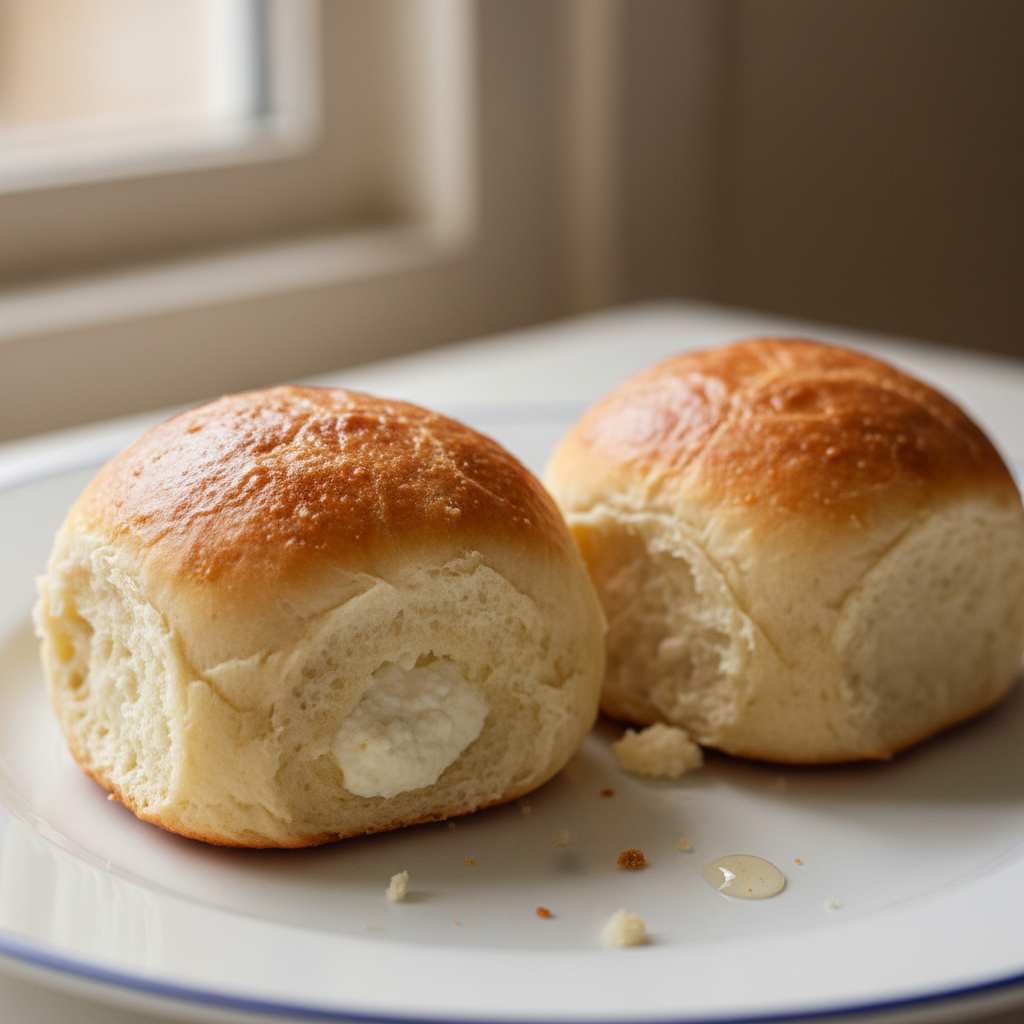
Cottage Cheese Stuffed Rolls: Our Secret Floral Twist Vatrushka
Ingredients
Equipment
Method
- Pour the warm milk into a medium bowl. Add the yeast and 1 teaspoon of sugar. Whisk them together gently to dissolve the yeast completely. Set this mixture aside for about 10 minutes, until a lovely foam forms on top.
- Sift the all-purpose flour into a separate, large bowl. Make a well in the center. Into this well, add the remaining granulated sugar, sea salt, room temperature eggs, sour cream, softened unsalted butter, pure vanilla extract, and your bloomed yeast-milk mixture. Stir all these ingredients together until they form a cohesive, soft, and pliable dough ball.
- Cover the bowl with a clean kitchen towel and let the dough rise in a warm place (around 70-75°F / 21-24°C) for 45-50 minutes. The dough should become visibly puffed and approximately doubled in size.
- Using your fingers, gently lift up one edge of the dough and pull it over the dough ball towards the other side. Repeat this process six times, working your way around the dough. The dough will deflate slightly. Gently form the dough into a smooth ball again and place it back into the bowl. Cover it with the towel.
- Let the dough rise in a warm place again for 25-30 minutes, until it's puffed and doubled in size once more. While the dough rises, prepare the cheese filling, streusel topping, and egg wash.
- Combine the pressed cottage cheese, granulated sugar, grated lemon zest, potato starch, egg yolk, sour cream, pure vanilla extract, and sea salt in a large bowl. For a super smooth filling, blend the mixture with an immersion blender (or regular blender) until thick and mostly smooth, scraping down the sides as needed. If you prefer a slightly grainier texture, simply mix with a spoon.
- Add a few drops of orange blossom water (or rose water, if you prefer) to the filling mixture and stir well. Start with a small amount and add more to taste.
- In a flat dinner plate, combine the all-purpose flour, granulated sugar, softened butter, and sea salt. Use the back of a fork to flatten the butter into the flour until the mixture resembles crumbles without any dry bits of flour (a coarse meal).
- Crack the large egg into a medium bowl, add the tablespoon of milk, and whisk them together until well combined. Set this aside in the fridge.
- Once the dough has completed its second rise, repeat the stretch and fold process. Lift one edge of the dough and fold it over the rest, repeating another five times. The dough should feel stretchy and buttery and should not stick to your fingers.
- Lightly grease a clean work surface with some neutral oil. Gently dump the dough out onto the prepared surface. Use a knife to cut the dough ball in half. Roll out each half into a log, then cut each log into 5 equal pieces, giving you a total of 10 pieces of dough.
- Shape each piece of dough into a smooth ball by rolling them lightly on the work surface. Then, place your hand over the ball and drag the bottom on the work surface in a circular motion to create a tight, tense surface for a smooth, perfectly round bun.
- Place the dough balls, smooth side up, onto large, parchment-lined baking sheets, spacing them about 4 inches apart. Let the dough balls rise on the baking sheets for 15 minutes. In the meantime, preheat your oven to 355°F (180°C).
- Find a glass with a flat bottom approximately 2.5 inches in diameter. Lightly grease the bottom of the glass with neutral oil. Once the dough has completed its 15-minute rise, gently but firmly push the bottom of the greased glass into the middle of each dough ball, pressing down hard to create a deep well for the filling.
- Using a pastry brush, gently brush the prepared egg wash over the surface and edges of each bun.
- Divide the cottage cheese filling evenly amongst the dough balls, placing generous scoops into the center of each well. The dough will expand around the filling as it rises further and bakes.
- Optional: Add about a teaspoon of jam or lemon curd into the center of the filled buns and swirl it gently with a toothpick. You can also dot the filling with fresh or frozen berries, like raspberries.
- If using the streusel, sprinkle the crumbles onto the edges of the buns now (it will stick to the egg wash). Bake the buns in the center of your preheated oven for 17 to 20 minutes, until they have a golden brown crust and a toothpick inserted into the crust comes out clean. Another way to apply the floral twist is to make a light glaze with powdered sugar and a few drops of orange blossom water or rose water, and drizzle it over the buns immediately after they come out of the oven.