Skip to content
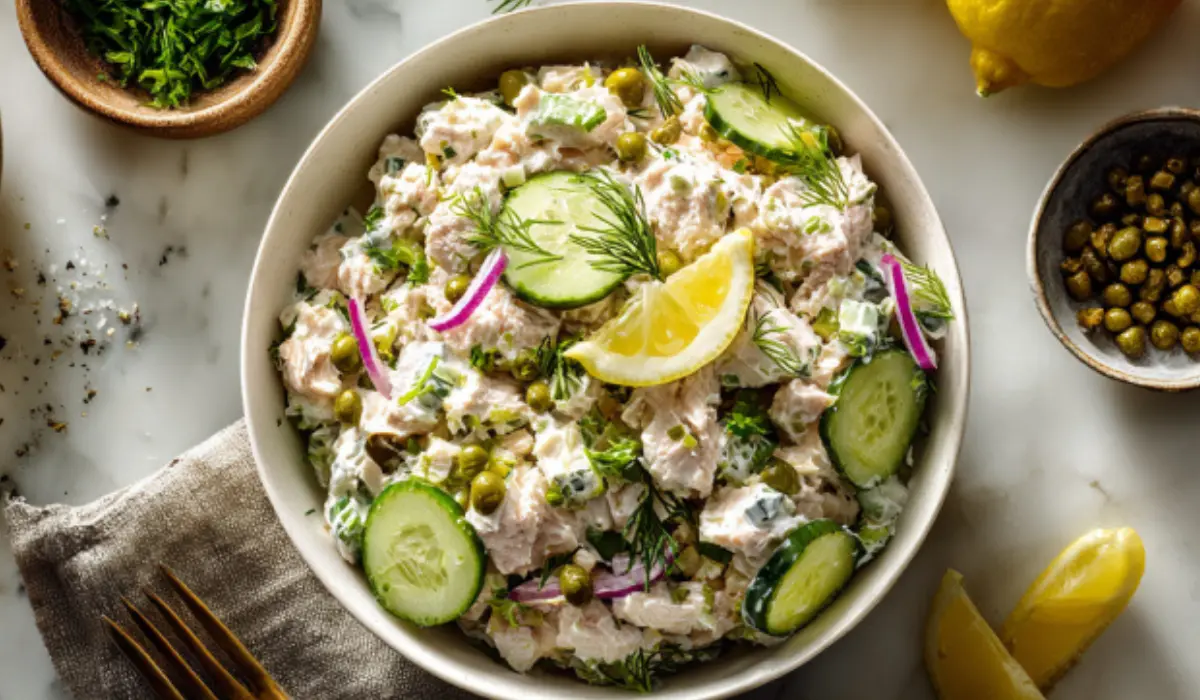
If you think tuna salad needs mayo to be creamy, this cottage cheese tuna salad will change your mind. It’s light, packed with protein, and surprisingly rich thanks to blended cottage cheese that gives every bite a smooth, tangy flavor. This version is quick to make, full of crunch from celery and pickles, and satisfying enough for lunch or a post-workout snack. You’ll love how simple it is to whip up in minutes no fancy tools, just clean ingredients and great taste.
Why You’ll Love This Recipe
- Quick and easy. You mix a handful of pantry staples and you get lunch in about 10 minutes.
- Creamy without mayo. Blended cottage cheese makes a silky base that coats the tuna and keeps the salad light.
- Big flavor, fresh crunch. Lemon, pickles, capers, celery, and red onion deliver zing and texture in every bite.
- Meal prep friendly. The salad holds well for a few days, so you can pack sandwiches, wraps, or snack boxes ahead.
- Feel-good comfort. It tastes like classic deli tuna salad, only lighter, so you finish satisfied instead of weighed down.
Cottage Cheese Tuna Salad
A creamy, high-protein cottage cheese tuna salad made without mayo light, tangy, and ready in minutes for the perfect healthy lunch or meal prep staple.
2
servings10
minutes0
minutes498
kcalIngredients
3 cans (5 oz each) albacore tuna, drained
1 cup cottage cheese
1 tablespoon fresh lemon juice
½ teaspoon salt
¼ teaspoon black pepper
¼ teaspoon dried dill
¼ teaspoon garlic powder
2 celery stalks, finely chopped
¼ cup red onion, finely minced
¼ cup dill pickles, diced
2 tablespoons capers, chopped
1 tablespoon Greek yogurt (optional, for extra creaminess)
Pinch of Old Bay or cayenne (optional, for spice)
1 teaspoon olive oil (optional, for richness)
Directions
- Drain the tuna thoroughly to prevent a watery salad.
- Blend the cottage cheese for 30–45 seconds until smooth for a creamy, mayo-like base.
- Mix the base: In a large bowl, combine cottage cheese, lemon juice, salt, pepper, dill, and garlic powder.
- Add tuna and veggies: Fold in tuna, celery, onion, pickles, and capers until evenly coated.
- Adjust seasoning: Add lemon or spices to taste.
- Chill for 30 minutes to allow flavors to develop.
- Serve cold on toast, lettuce wraps, or with whole-grain crackers.
Notes
- Texture Tip: Blending cottage cheese gives a smooth, creamy texture.
- Low-Sodium Option: Use no-salt-added tuna and rinse pickles.
- Dairy-Free Swap: Replace cottage cheese with mashed avocado or vegan yogurt.
- Meal Prep: Lasts up to 3 days in the fridge in an airtight container.
Nutrition Facts
- Calories: 498kcal
- Fat: 10g
- Cholesterol: 101mg
- Sodium: 1892mg
- Carbohydrates: 30g
- Fiber: 3g
- Sugar: 5g
- Protein: 69g
- Calcium: 149mg
- Iron: 4mg
Ingredients Needed

For the Base
- 3 cans (5 oz each) albacore tuna, drained well firm texture and mild flavor hold up perfectly.
- 1 cup cottage cheese the creamy binder that replaces mayo while adding protein.
- 1 tablespoon fresh lemon juice brightens and balances the richness.
- ½ teaspoon salt and ¼ teaspoon black pepper adjust to taste.
- ¼ teaspoon dried dill and ¼ teaspoon garlic powder light herbs that give it that deli-style finish.
For Crunch and Flavor
- 2 celery stalks, finely chopped adds bite and freshness.
- ¼ cup red onion, finely minced a little sharpness for balance.
- ¼ cup dill pickles, diced tangy and salty for contrast.
- 2 tablespoons capers, roughly chopped briny pop in each bite.
Optional Boosts
- 1 tablespoon Greek yogurt for extra creaminess.
- Pinch of Old Bay or cayenne if you like a hint of spice.
- 1 teaspoon olive oil rounds out the flavor and softens the texture.
Notes & Substitutions
- Tuna: Albacore gives firm chunks; light tuna offers a milder, softer texture. Either works. Light canned tuna is very high in protein and contains virtually no carbohydrates, according to USDA-based data from MyFoodData.
- Dairy-free option: Try lactose-free cottage cheese or swap in mashed avocado for creaminess.
- Low-sodium version: Choose no-salt-added tuna and skip the added salt capers and pickles bring enough flavor.
- Budget tip: Use store-brand tuna and cottage cheese taste stays the same.
- Flavor tweak: A spoon of Dijon mustard or chopped herbs like parsley or chives keeps things bright.
How to Make Cottage Cheese Tuna Salad
- Drain the tuna thoroughly.
Press out excess liquid with the lid or a fine mesh strainer. Dry tuna helps the salad stay creamy instead of watery. - Blend the cottage cheese (optional but recommended).
Add cottage cheese to a blender or food processor and pulse for 30–45 seconds until smooth and thick. This step gives the salad a mayo-like texture and ensures a consistent, silky base. - Mix the base.
In a large mixing bowl, combine the blended cottage cheese, lemon juice, salt, pepper, dried dill, and garlic powder. Stir until everything looks uniform and fluffy. - Fold in the mix-ins.
Add the drained tuna, celery, red onion, pickles, and capers. Use a spatula to fold gently so the tuna stays chunky and the mix-ins distribute evenly. - Taste and adjust.
Add more lemon juice for brightness, a pinch of salt for depth, or a bit of Old Bay for spice. The flavor should be clean, savory, and slightly tangy. - Chill before serving.
Cover and refrigerate for at least 30 minutes to let the flavors blend and the texture firm up. - Serve and enjoy.
Scoop onto toast, stuff into lettuce wraps, or serve with cucumber slices for a fresh, protein-rich meal.
Pro Tips & Troubleshooting
Expert Tips
- Blend for creaminess: Blending the cottage cheese first gives your salad that smooth, mayo-like base without adding fat.
- Go easy on salt: Both tuna and pickles contain sodium, so taste before adding more.
- Add crunch last: If you’re prepping ahead, keep celery and onion separate until right before serving to maintain their bite.
- Chill for flavor: A short rest in the fridge lets the tangy and savory notes meld beautifully.
- Make it your way: Add a spoonful of Dijon mustard or chopped herbs like dill or chives to tweak the flavor balance.
Common Mistakes to Avoid
- Overmixing the tuna: It breaks down and turns mushy; fold gently instead.
- Skipping the drain: Waterlogged tuna ruins the texture and flavor balance.
- Adding veggies too early for meal prep: Moisture from onions and celery can dilute the salad over time.
- Using low-fat cottage cheese only: It can separate slightly; blend it for a thicker texture.
Bonus Trick
Freeze a small batch of blended cottage cheese in ice cube trays. You can thaw a cube anytime to mix with canned tuna for a quick single-serve protein snack.
Serving, Storage & Variations
Serving Ideas
- Classic Sandwich: Pile the salad between two slices of whole grain or sourdough bread with crisp lettuce and tomato, and try Sonoma chicken salad for a tasty change of pace.
- Lettuce Wraps: Spoon the mixture into large romaine or butter lettuce leaves for a low-carb option, or roll it into a cottage cheese wrap for a grab-and-go lunch.
- Snack Box: Pair a scoop of the salad with cucumber rounds, whole-grain crackers, or boiled eggs, or add a cottage cheese breakfast bowl for an easy protein duo.
- Stuffed Tomatoes: Hollow out ripe tomatoes and fill them for a colorful, protein-packed meal.
Storage
- Store tuna salad in the refrigerator for 3 to 4 days, and skip freezing because these salads do not freeze well, per FoodSafety.gov.
- Stir before serving again to refresh the texture.
- Freezing isn’t recommended; the cottage cheese may separate once thawed.
Reheating
This salad is best cold, but if you prefer it warm, briefly heat it in a skillet over low heat for 1–2 minutes. Don’t overheat it’s meant to be creamy, not dry.
Variations
- Mediterranean: Add olives, chopped sun-dried tomatoes, and a drizzle of olive oil.
- Spicy: Mix in diced jalapeños or a sprinkle of cayenne pepper for extra kick.
- Avocado Blend: Replace half the cottage cheese with mashed avocado for a richer, dairy-light version.
- Greek Yogurt Mix: Combine cottage cheese and Greek yogurt for added creaminess and tang.
- Low-Sodium Version: Use unsalted tuna, rinse pickles before adding, and season with herbs instead of salt; browse more cottage cheese recipes for weight loss for smart meal ideas.
Nutritional Information
| Nutrient (per serving) | Amount |
|---|---|
| Calories | 498 kcal |
| Protein | 69 g |
| Fat | 10 g |
| Saturated Fat | 3 g |
| Carbohydrates | 30 g |
| Fiber | 3 g |
| Sugar | 5 g |
| Cholesterol | 101 mg |
| Sodium | 1892 mg |
| Potassium | 710 mg |
| Calcium | 149 mg |
| Iron | 4 mg |
Nutrition values are estimates based on the recipe ingredients above. Actual values may vary depending on brands and portion sizes.
Why it’s good for you:
Tuna supplies omega-3 fats that support heart health, and regularly eating fish is linked to lower cardiovascular risk, according to the American Heart Association. Cottage cheese is a protein-rich dairy food and a source of calcium, as shown in USDA-based data from MyFoodData. The veggies provide fiber and micronutrients that keep you full longer.
Tip: If you adjust ingredients, use online tools like Cronometer or MyFitnessPal to double-check your nutrition totals.
Conclusion
This cottage cheese tuna salad is the kind of recipe that makes healthy eating feel effortless. It’s creamy, tangy, and packed with lean protein perfect for meal prep, a light lunch, or even a post-workout snack. The blended cottage cheese gives it that smooth, indulgent texture without any mayo in sight.
If you try it, let us know how it turned out! Leave a star rating and share your favorite twist in the comments below maybe you added a spicy kick or went Mediterranean-style?
And don’t forget to share this recipe with friends on Pinterest or Facebook so they can give it a try too.
Frequently Asked Questions
How do I make cottage cheese tuna salad taste creamy without mayo?
Blend the cottage cheese before mixing it in. That simple step transforms the texture, giving you the same creamy mouthfeel as mayo but with more protein and less fat.
What type of tuna works best for this recipe?
Albacore tuna gives firm, meaty flakes and mild flavor, while light tuna offers a softer texture and slightly stronger taste. Choose based on your preference both work perfectly here.
Can I make this gluten-free or dairy-free?
Yes. The salad is naturally gluten-free as long as you skip the bread or use gluten-free wraps. For a dairy-free version, swap cottage cheese for mashed avocado or a thick vegan yogurt alternative, or try a cottage cheese smoothie bowl if you use a lactose-free option.
How do I keep the salad from turning watery in the fridge?
Drain the tuna thoroughly and use finely chopped, dry veggies. If you’re prepping ahead, stir before serving to bring back the creamy consistency.
Is cottage cheese tuna salad freezer-friendly?
Freezing isn’t ideal because cottage cheese can separate once thawed. It’s best stored chilled for up to three days.
How many calories and how much protein are in one serving?
Each serving has about 498 calories and 69 grams of protein, making it an excellent high-protein meal for muscle recovery or sustained energy.
Can I use Greek yogurt with cottage cheese for extra creaminess?
Absolutely. Mix equal parts cottage cheese and Greek yogurt for a slightly tangier, thicker texture that works great in sandwiches or wraps.