Skip to content
There’s something incredibly comforting about traditional Irish food, isn’t there? It often takes humble ingredients and transforms them into something truly special, something that evokes a sense of home and history. Today, I am so excited to share my absolute favorite recipe for Irish Potato Farls, a beloved staple that brings warmth to any table, especially as part of a hearty full Irish breakfast.
These savory potato cakes, also known as Potato Fadge, Potato Cakes, or even Boxty in some regions, are more than just a side dish; they are a taste of tradition. In this article, I will guide you through making authentic, incredibly flavorful, and perfectly crispy-on-the-outside, fluffy-on-the-inside Irish Potato Farls. We will use a special technique I have perfected over the years, along with all my best tips, variations, and serving suggestions to make sure your farls are nothing short of spectacular.
Why You’ll Love This Recipe
My kitchen has seen countless batches of Irish Potato Farls, and I am thrilled to share the subtle yet impactful tweaks that make this recipe truly stand out. You will fall in love with these for several reasons, but it all comes down to a few key secrets.
Enhanced Flavor: My unique twist begins with a small amount of finely grated yellow onion. The trick is to squeeze out any excess moisture before gently folding it into the potato dough. This simple addition infuses the farls with a delicate, aromatic depth without making the dough wet or sticky, creating a savory foundation that is simply irresistible.
Improved Texture: Unlike some denser versions, my recipe incorporates a tiny pinch of baking powder into the dry ingredients. This acts as a subtle leavening agent, creating small air pockets within the farls as they cook. The result? A lighter, airier, and more wonderfully tender interior that beautifully contrasts with the crispy exterior.
Superior Frying Method: Forget just butter or just oil. For that ultimate golden-brown color and irresistible crispness, I use a 50/50 mix of unsalted butter and a high smoke point neutral oil like canola oil or vegetable oil. The butter contributes its unparalleled flavor and aids in the beautiful Maillard reaction for browning, while the oil’s higher smoke point prevents the butter from burning too quickly. This dynamic duo ensures your farls achieve that perfect crispy finish every time.
Unbeatable Taste & Texture: These Irish Potato Farls deliver the best of both worlds—a divinely crispy exterior giving way to a light, fluffy interior, all with a unique savory depth that sets them apart.
Versatility: While they are a non-negotiable component of a traditional Irish breakfast, these farls are incredibly versatile. They make a fantastic side dish to various meals or a delightful snack on their own.
Frugal & Comforting: This recipe is a testament to the magic of simple, budget-friendly ingredients. It is a wonderfully comforting dish that cleverly makes the most of leftover mashed potatoes, turning them into something extraordinary.
Ingredients Needed
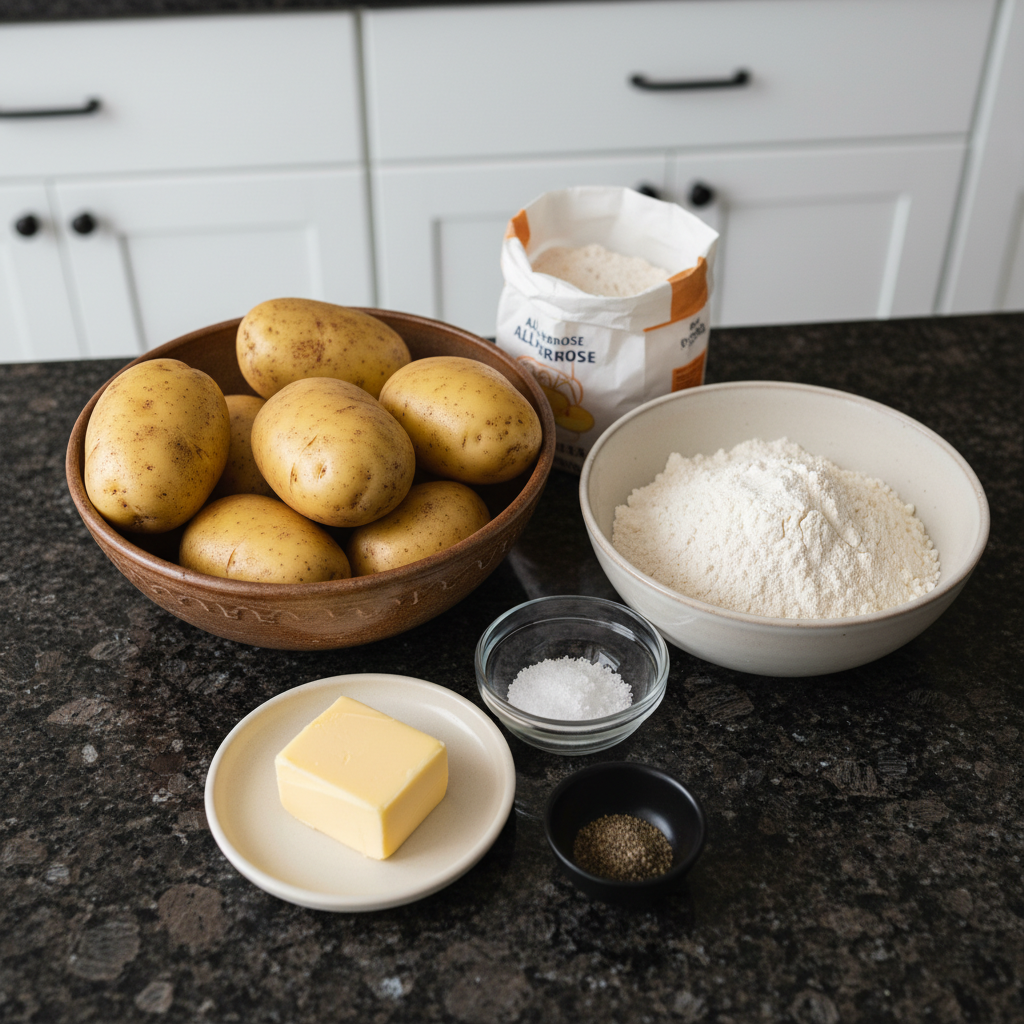
To make these delightful Irish Potato Farls, here is what you will need:
- 4 cups (650g/1lb 7oz) 3 medium potatoes ((Russet, Maris Piper, Roosters))
- ¾ cup (4oz/115g) all-purpose flour
- 1 ½ teaspoons sea salt
- ½ teaspoon black pepper
- 2 tablespoons (1oz/28g) butter ((plus more for cooking))
Ingredient Notes & Substitutions
Selecting the right potatoes is key for fluffy Irish Potato Farls. I always recommend using floury varieties such as Russet potatoes, Maris Piper, or Roosters potatoes, as they mash beautifully and create that desirable light texture.
All-purpose flour is your go-to for binding the dough and contributing to the overall texture. If you are looking for a gluten-free option, a good quality gluten-free flour blend can be used, though the texture might vary slightly. Sea salt and black pepper are essential for seasoning, bringing out the natural flavors of the potato.
Butter provides richness and flavor both in the dough and for cooking. Now, let us talk about those special additions for our unique twist. We are using a small amount of finely grated yellow onion, which must be squeezed of excess moisture to ensure it adds only aromatic depth without impacting the dough’s consistency. Additionally, a pinch of baking powder, incorporated with the dry ingredients, works wonders to create a lighter, airier texture. For frying, we will use a combination of butter and a neutral, high smoke point oil like canola oil or vegetable oil. This duo ensures superior browning and crispness, as the oil prevents the butter from burning too quickly while still harnessing its flavor for that perfect Maillard reaction.
For those who love to experiment, feel free to add other flavor enhancers. A little onion powder can boost savoriness, and fresh chopped parsley, dried chives, or even thinly sliced spring onions can add a lovely freshness. For an extra rich flavor, some even like to fry their farls in a bit of bacon fat.
How to Make Irish Potato Farls
Making Irish Potato Farls is a joyful process, and with my step-by-step guide, you will master them in no time. Let us get cooking!
Prepare the Potatoes
First, peel and chop your potatoes. It is crucial to weigh them after chopping to ensure accuracy for the recipe. I always use floury potatoes like Roosters, Maris Pipers, or Russet varieties for the best fluffy result.
Cook the Potatoes
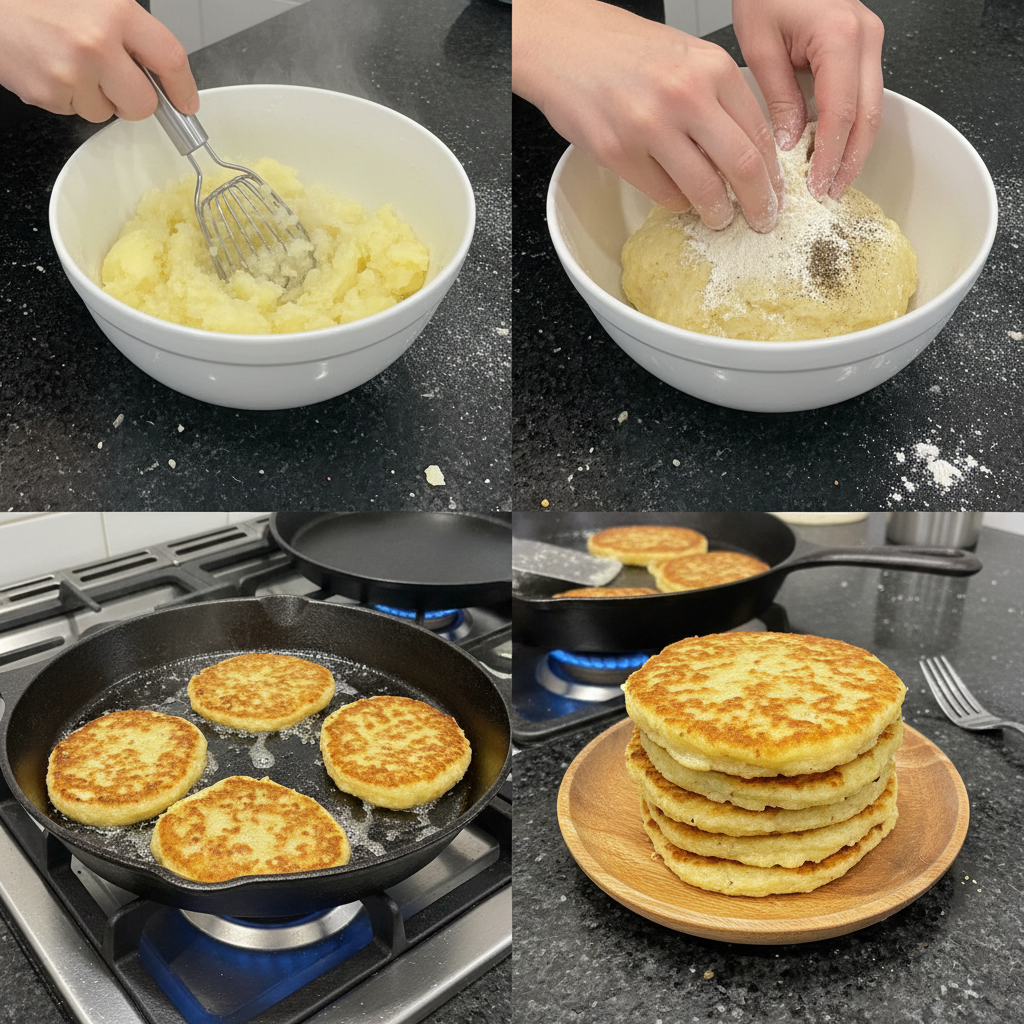
Steam or boil the cubed potatoes in a medium pot until they are fork-tender. This usually takes roughly 20-25 minutes. You want them very soft, almost falling apart.
Dry the Potatoes
Once tender, remove the potatoes from the pot and place them in a sieve over a bowl. Let them dry off slightly for about 5 minutes. This step is important for preventing a gluey texture later on.
Mash the Potatoes
While the potatoes are still hot, pass them through a sieve. This creates incredibly light, fluffy potatoes, helping to avoid any gluey texture. If you do not have a sieve, a potato ricer or even a sturdy potato masher will work beautifully to mash the potatoes.
Mix the Dough
Into the hot, mashed potatoes, add the all-purpose flour, sea salt, black pepper, and melted butter. This is also the point to gently fold in the finely grated, squeezed yellow onion and the pinch of baking powder, as we discussed in Section 2, ensuring they are well distributed but avoiding overmixing. Stir the dough together until it just forms a soft ball. Be gentle to prevent gluten development and starch hydration from making the dough tough.
Shape the Farls
Turn the dough out onto a lightly floured surface. Gently flatten it into an 8-inch round disc. Using a large knife, cut the disc into 6 pieces, typically triangles, which is the traditional farl shape.
Fry the Farls
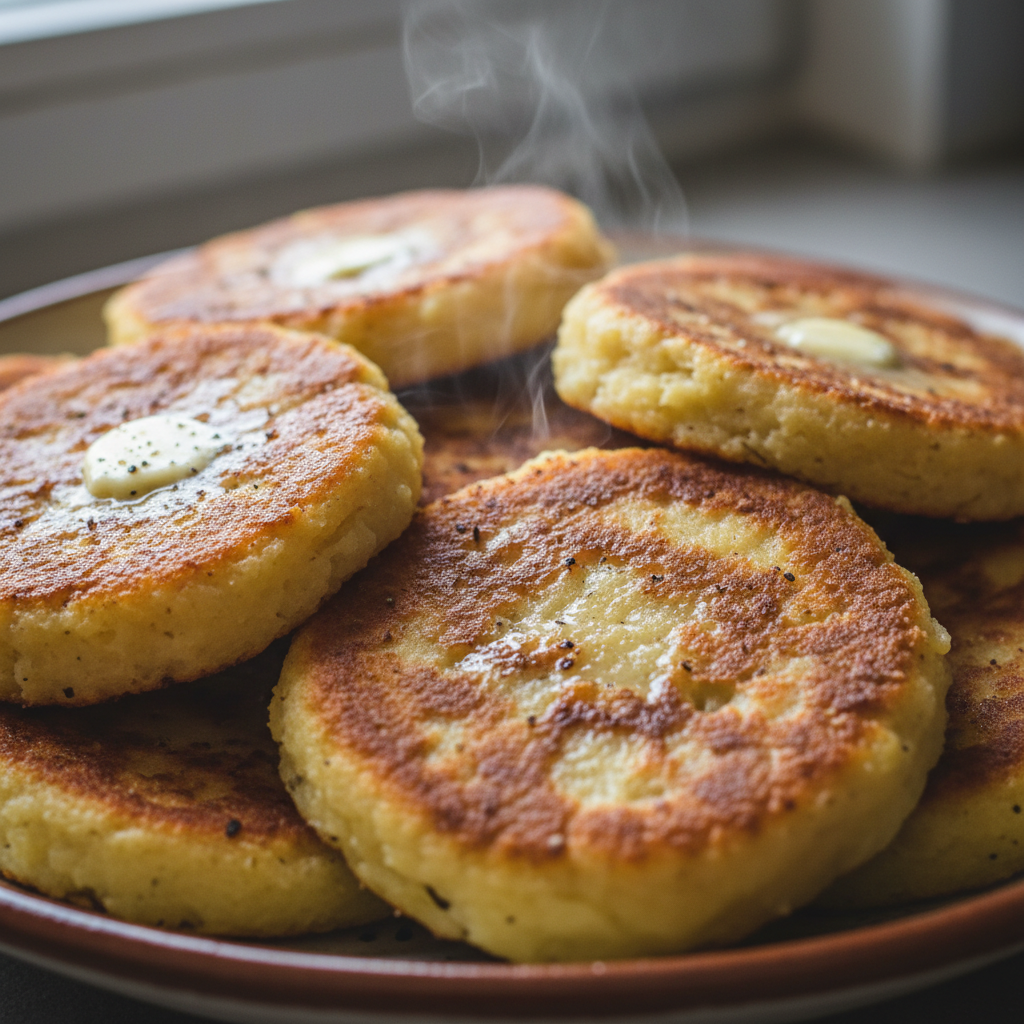
Heat a large frying pan or skillet over medium heat. This is where our unique frying twist comes in: add a generous 50/50 mix of unsalted butter and neutral oil (like canola or vegetable oil) to the pan until it is bubbling gently. Carefully add the potato farls to the hot pan. Cook them over medium heat for about 5 minutes or until they achieve a lovely golden brown color and a crispy exterior. Flip them over and cook for another 4-5 minutes on the other side until they are equally golden and crispy. They should be wonderfully crispy on the outside and perfectly fluffy in the middle.
Serve Immediately
Serve your Irish Potato Farls immediately while hot. They are perfect as part of a traditional Irish breakfast or simply enjoyed on their own as a comforting snack.
Mastering Your Frying Pan & Shaping Techniques
Achieving the perfect Irish Potato Farls means paying attention to a couple of crucial elements: your cooking vessel and how you shape the dough. Let me share some of my expert insights.
Choosing Your Pan and Frying Temperature
The type of pan you use can significantly impact the outcome of your farls. A cast iron frying pan is fantastic for even heat distribution and creates an excellent, deep browning. Just ensure it is well-seasoned to prevent sticking. Non-stick pans are easier to clean and require less fat, but they might not give you quite the same intense golden-brown crust. For cooking multiple farls at once, a griddle is a traditional and highly efficient option.
When frying, maintaining a consistent medium heat is essential. This allows the farls to cook through and develop that beautiful golden-brown color without burning the butter and oil mixture. If you have a thermometer, aim for an oil temperature range of around 325-350 degrees F (160-175 degrees C) for even cooking and crispness. Visually, look for a rich golden hue that indicates a crispy exterior, typically after about 5 minutes per side. The butter in our mix will bubble gently, not aggressively smoke, indicating the right temperature.
Achieving Even Thickness
Even thickness is vital for consistent cooking and a uniform texture in your farls. When you turn the dough onto a lightly floured surface, use a rolling pin or the heel of your hand to flatten it. Apply even pressure across the entire surface to create a disc that is roughly the same thickness all around. For beginners, you can even place the dough between two sheets of parchment paper and use a ruler to help guide you to that consistent 8-inch disc. This ensures that each farl cooks evenly, resulting in every piece being perfectly crispy on the outside and fluffy in the middle.
Pro Tips & Troubleshooting
Here are my top tips to ensure your Irish Potato Farls are always a success, along with how to avoid common pitfalls.
Pro Tips
- Accurate Potato Measurement: Always peel and chop your potatoes first, and then measure them. This ensures the correct quantity for the best dough consistency.
- Mash While Hot: For the fluffiest farls, pass the potatoes through a sieve or ricer while they are still hot. This prevents them from becoming gluey.
- Choose the Right Potatoes: Floury varieties like Roosters, Maris Pipers, or Russet potatoes are your best friends for this recipe, yielding that desired light texture.
- Leftover Mashed Potatoes: This recipe is excellent for using firm, leftover mashed potatoes. Just make sure they are not overly wet or already enriched with too much cream or butter.
- Freezing Uncooked Farls: For meal prep, make and cut the potato farls, then freeze them uncooked. You can then cook them directly from frozen whenever you are ready.
- Superior Frying Technique: Remember our butter and oil mix for frying. It is the secret to a perfectly golden and crispy exterior.
- Gentle Mixing: Avoid overmixing the dough. Overworking it can develop too much gluten, resulting in dense rather than fluffy farls.
Common Mistakes to Avoid
- Overmixing the Dough: This is a common culprit for dense farls. Mix only until the ingredients are just combined and the dough forms a ball.
- Cold Potatoes: Do not let your potatoes cool too much before mashing. Cold potatoes are harder to mash smoothly and are more prone to becoming gluey.
- Too Much Moisture: If your potatoes are too wet, or if you do not squeeze the excess moisture from the grated onion, your dough can become overly sticky and the farls might fall apart while frying. If this happens, try adding a tiny bit more flour, a teaspoon at a time, until the dough is manageable.
- Burning Butter: Using butter alone at too high a heat can cause it to burn quickly, imparting a bitter taste. This is why our butter and neutral oil mix is so beneficial.
- Uneven Frying: Avoid overcrowding your frying pan. This lowers the temperature of the oil, leading to uneven cooking and preventing your farls from achieving that beautiful golden-brown crispness. Cook in batches if necessary.
Serving & Storage
Once you have mastered the art of making Irish Potato Farls, knowing how to serve and store them properly will elevate your experience even further.
Serving Ideas
These crispy and fluffy Irish Potato Farls are incredibly versatile. My absolute favorite way to enjoy them is as an integral part of a traditional Irish breakfast, alongside perfectly fried eggs, crispy bacon, and grilled tomatoes. They are also delicious simply topped with a dollop of sour cream and a dash of ketchup. Beyond breakfast, consider serving them alongside roasted meats, as a creative base for smoked salmon and crème fraîche, or even as a comforting accompaniment to a hearty savory stew. For a fresh finish, a sprinkle of fresh parsley or finely chopped spring onions makes a lovely garnish.
Storage and Make-Ahead
Cooked Irish Potato Farls can be safely stored in an airtight container in the refrigerator for 2-3 days. When it comes to reheating, to best maintain their crispness, I recommend briefly pan-frying them again over medium heat, warming them in a toaster oven, or even reheating them in an an air fryer until heated through and crispy once more.
For brilliant meal prep, you can freeze uncooked farls. Simply make and cut them into their traditional triangles, then flash freeze them on a baking sheet until solid. Once frozen, transfer them to a freezer bag or airtight container. They will keep well for up to 3 months. You can cook them directly from frozen, adding a few extra minutes to the cooking time. While cooked farls can also be frozen, their texture might soften slightly upon reheating compared to those cooked from fresh or frozen uncooked.
Conclusion
There you have it—my secret to truly exceptional Crispy Irish Potato Farls. With their beautifully crispy exterior, fluffy interior, and enhanced savory flavor thanks to our unique onion and butter twist, these farls are a delicious nod to traditional Irish food. I promise you, this recipe is incredibly achievable for home cooks of all skill levels, inviting you to bring a delightful piece of Irish cuisine into your kitchen.
I encourage you to try this recipe, experiment with your favorite variations, and explore the many serving ideas. Do not be shy about trying other Irish cuisine or breakfast recipes on my site. Enjoy the process, and most importantly, savor every bite of these comforting and flavorful Irish Potato Farls!
FAQ
Here are some of the most common questions I get about Irish Potato Farls, answered to help you on your culinary journey.
What are Irish Potato Farls and their other names?
Irish Potato Farls are traditional Irish griddle cakes made primarily from mashed potatoes, flour, and butter. They are often served as a staple part of an Irish breakfast. You might also hear them referred to as Potato Fadge, Potato Cakes, or Boxty, depending on the region.
What kind of potatoes are best for making potato farls?
For the best fluffy texture, I highly recommend using floury potato varieties like Russet potatoes, Maris Piper, or Roosters potatoes. These break down beautifully when mashed, creating a light and airy base for your farls.
Can I use leftover mashed potatoes for this recipe?
Yes, absolutely! Leftover mashed potatoes can be used, but make sure they are firm and not overly creamy or wet. If your mashed potatoes are already very seasoned, you may want to adjust the salt and pepper in the recipe accordingly.
How do you prevent potato farls from becoming gluey?
To prevent gluey farls, there are a few key steps. First, mash your potatoes while they are still hot, ideally by passing them through a sieve or potato ricer. Ensure the potatoes are well-dried after cooking. Lastly, avoid overmixing the dough once the flour is added; mix only until just combined.
How do I store and reheat potato farls for best results?
Cooked farls can be stored in an airtight container in the refrigerator for 2-3 days. For reheating, to maintain their crispness, I suggest pan-frying them briefly over medium heat, using a toaster oven, or an air fryer until they are heated through and crispy again. Uncooked farls can be frozen for up to 3 months; flash freeze them on a baking sheet before transferring to a freezer bag.
What are some popular variations and serving suggestions for potato farls?
Beyond the traditional Irish breakfast, you can add onion powder, fresh spring onions, chopped parsley, or chives to the dough for extra flavor. They are also delicious served with sour cream, ketchup, or even alongside roasted meats or stews.
What’s the difference between potato farls and potato pancakes/cakes/boxty?
The terms “potato farls,” “potato cakes,” and “potato pancakes” are often used interchangeably, generally referring to griddle cakes made from mashed potatoes. “Boxty” is a specific type of Irish potato pancake that often incorporates a mix of raw grated potato and cooked mashed potato, giving it a slightly different texture and flavor profile.
Can I bake potato farls instead of frying them?
While potato farls are traditionally fried to achieve their signature crispy texture, you can bake them. However, they will not develop the same crispness as fried farls. If baking, brush them with melted butter or oil to encourage some browning.
Crispy Irish Potato Farls Recipe: Our Secret Onion & Butter Twist
Ingredients
Equipment
Method
- Peel and chop your potatoes. Weigh them after chopping to ensure accuracy. Use floury potatoes like Roosters, Maris Pipers, or Russet varieties for the best fluffy result.
- Steam or boil the cubed potatoes in a medium pot until fork-tender, roughly 20-25 minutes. They should be very soft, almost falling apart.
- Once tender, remove the potatoes from the pot and place them in a sieve over a bowl. Let them dry off slightly for about 5 minutes to prevent a gluey texture.
- While the potatoes are still hot, pass them through a sieve for incredibly light, fluffy potatoes and to avoid a gluey texture. A potato ricer or sturdy potato masher can also be used.
- Into the hot, mashed potatoes, add the all-purpose flour, sea salt, black pepper, and melted butter. Gently fold in the finely grated, squeezed yellow onion and the pinch of baking powder, ensuring they are well distributed. Stir until the dough just forms a soft ball, avoiding overmixing.
- Turn the dough out onto a lightly floured surface. Gently flatten it into an 8-inch round disc. Using a large knife, cut the disc into 6 triangular pieces, the traditional farl shape.
- Heat a large frying pan or skillet over medium heat. Add a generous 50/50 mix of unsalted butter and neutral oil (like canola or vegetable oil) to the pan until bubbling gently. Carefully add the potato farls to the hot pan.
- Cook over medium heat for about 5 minutes or until golden brown and crispy. Flip them over and cook for another 4-5 minutes on the other side until equally golden and crispy.
- Serve your Irish Potato Farls immediately while hot. They are perfect as part of a traditional Irish breakfast or enjoyed on their own as a comforting snack.