Skip to content
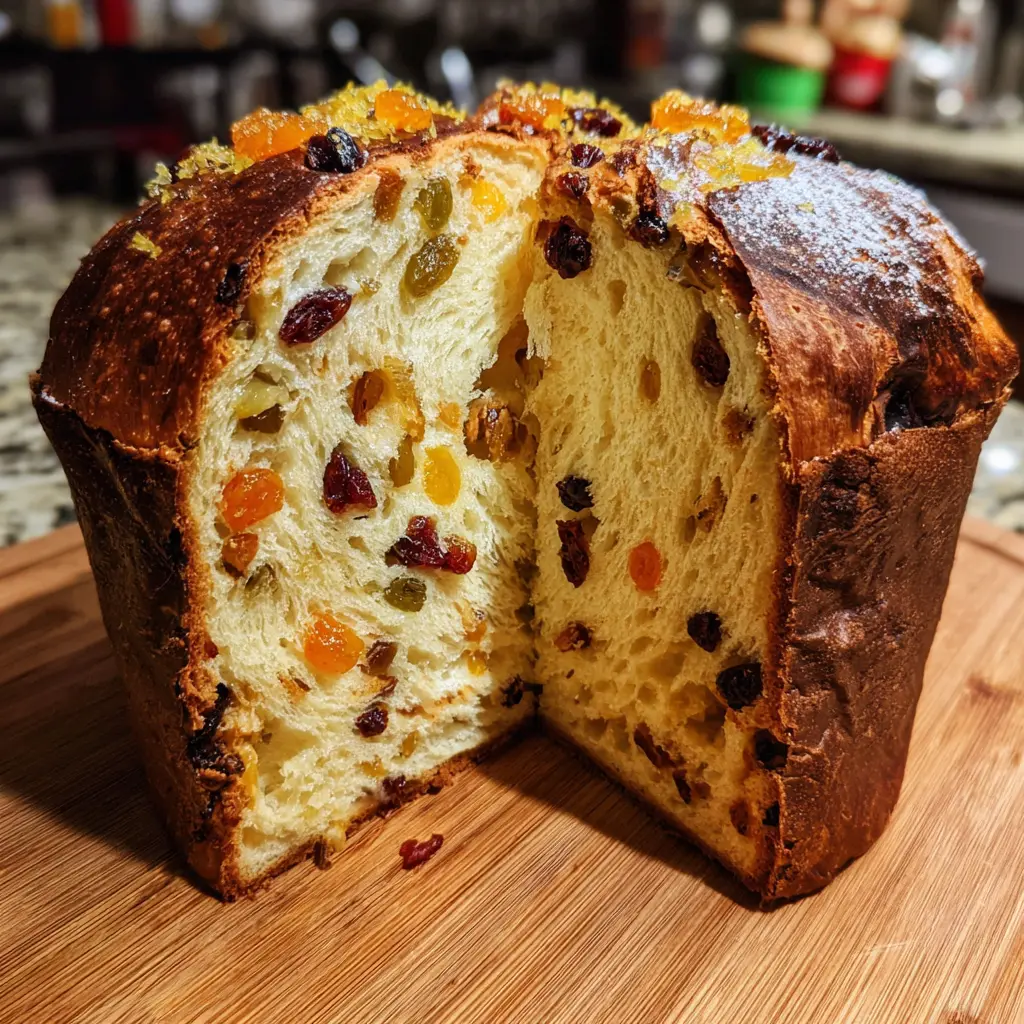
Unveiling the magic of homemade Panettone is easier than you think. This sweet, soft, and buttery Italian Christmas bread, traditionally enjoyed during the holiday season, brings festive cheer to any table. Our Easy Panettone Recipe (Italian Christmas Bread) simplifies the process significantly. While it requires minimal active work, mostly inactive proofing time, the delicious result is well worth the wait. Get ready to bake a truly special treat that will impress everyone!
According to Italian tradition, Panettone originated in Milan and is a cherished part of Christmas and New Year’s celebrations across Western, Southern, and Southeastern Europe, as well as in South America, Eritrea, Australia, the United States, and Canada.
Why You’ll Love This Easy Panettone Recipe
You will adore making this beautiful Italian bread at home! Our Easy Panettone Recipe (Italian Christmas Bread) is perfect for both beginners and experienced bakers seeking a straightforward approach.
- Simple Process: You only need about 20 minutes of active prep time over two days. The dough does most of the hard work on its own.
- Authentic Flavor: A long, slow fermentation, starting with an overnight sponge, develops an incredibly deep and complex flavor profile. This step elevates your homemade Panettone.
- Versatile Serving: This impressive bread is perfect for Christmas and New Year’s, but also wonderful for brunches or any special occasion. It makes a thoughtful homemade gift.
- Impressive Results: Despite the minimal effort, you will create a showstopping loaf that looks and tastes like it came from a professional bakery. Prepare for compliments!
- Adaptable: This recipe works beautifully for individual mini loaves, which are delightful for sharing, or you can scale it up for larger, traditional Panettone breads.
Ingredients
Crafting this delightful Italian Christmas bread begins with quality ingredients. Ensure your dairy and eggs are at room temperature for the best emulsion and a tender crumb.
For the Sponge:
- 8 ounces water (around 70°F/21°C)
- 15 grams instant yeast
- 10 ounces bread flour
For the Dough:
- 8 ounces butter, softened (room temperature)
- 4 ounces honey
- 1 teaspoon salt
- 2 eggs (room temperature)
- 2 egg yolks (room temperature)
- 1 teaspoon vanilla extract
- 12 ounces bread flour
- 3 ounces raisins
- 2 ounces candied orange peel
- 3 ounces dried cranberries
- 2 ounces dried currants
- 1 tablespoon lemon zest
Notes & Substitutions
Achieving the perfect texture for your Panettone recipe relies on a few key details. Always use room temperature butter and eggs for better incorporation and a smoother dough. This creates a lighter, fluffier result. Instant yeast works directly in the dough without proofing, but if you use active dry yeast, proof it in a small amount of warm water first. Feel free to customize the dried fruits; mixed peel, chopped apricots, or dried cherries are excellent alternatives. You can also swap lemon zest for orange zest for a slightly different citrus note.
Equipment
You only need a few essential tools to make this wonderful Easy Panettone Recipe (Italian Christmas Bread).
- Stand mixer with paddle and dough hook attachments for efficient mixing and kneading.
- Large mixing bowls for the sponge and the main dough.
- Measuring cups and spoons, or ideally, a kitchen scale for precise ingredient measurements.
- Plastic wrap to cover bowls during proofing.
- Mini Panettone wrappers (2.75 inches tall) or larger paper molds, depending on your preference.
- Baking sheet to hold the Panettone wrappers while baking.
- Instant-read thermometer to check the internal temperature for doneness.
Instructions
This Easy Panettone Recipe (Italian Christmas Bread) breaks down into simple steps across two days, making it manageable for any home baker.
Day 1: Preparing the Sponge
Start your Panettone journey with this foundational step.
- In a large mixing bowl, combine the 15 grams of instant yeast with 10 ounces of bread flour. Mix these dry ingredients together thoroughly.
- Gradually add 8 ounces of 70°F water to the yeast-flour mixture. Stir everything until it forms a smooth, shaggy paste. Avoid overmixing.
- Cover the bowl tightly with plastic wrap to prevent the sponge from drying out.
- Refrigerate the covered sponge overnight, allowing it to ferment for 12 to 15 hours. This slow, cold fermentation builds incredible flavor.
Day 2: Making the Dough
This is where your Panettone recipe truly comes to life.
- About 30 minutes before you begin, remove the sponge, eggs, and butter from the refrigerator. Let them come to room temperature.
- In a separate medium bowl, whisk together the remaining 12 ounces of bread flour and 1 teaspoon of salt. Set this aside.
- In the bowl of your stand mixer fitted with the paddle attachment, cream the 8 ounces of softened butter and 4 ounces of honey on medium speed until light and fluffy.
- Gradually add the 2 eggs and 2 egg yolks one at a time, mixing well after each addition. Stir in the 1 teaspoon of vanilla extract until almost combined. Scrape down the sides of the bowl as needed.
- Add the prepared sponge to the butter-egg mixture. Mix on low speed until it is uniformly incorporated and no large lumps remain.
- Slowly add the flour mixture to the wet ingredients, mixing on low speed until just combined, about 3 minutes. The dough will be very soft.
- Switch to the dough hook attachment. Knead the dough on medium-low speed for about 8 minutes. This develops the gluten, crucial for the Panettone’s characteristic texture.
- Perform the windowpane test: pull a small piece of dough and stretch it. If it stretches thin enough to see light through without tearing, the gluten is developed. If it tears, knead for another 1-2 minutes.
- Add the 3 ounces of raisins, 2 ounces of candied orange peel, 3 ounces of dried cranberries, 2 ounces of dried currants, and 1 tablespoon of lemon zest to the dough. Mix gently on low speed until the fruits are evenly distributed.
- Cover the bowl with plastic wrap and let the dough rise at room temperature for 30 minutes.
- Optional: For even deeper flavor and convenience, refrigerate the dough overnight again at this stage. This allows for a slower fermentation and means you can bake later.
Day 2: Shaping and Baking Panettone
Finish your delicious Panettone with careful shaping and baking.
- Lightly flour your work surface. Divide the dough into 3-ounce balls for mini Panettone (this recipe yields 24 mini loaves).
- Gently roll each dough portion into a smooth ball, tucking the edges underneath to create tension on the surface.
- Place each dough ball into individual Panettone paper wrappers. Arrange the filled wrappers on a baking sheet.
- Lightly cover the Panettone with plastic wrap or a clean kitchen towel. Proof at room temperature until the dough has doubled in size and looks puffy, approximately 30 minutes to 1 hour, or longer if the dough was refrigerated.
- Preheat your oven to 375°F (190°C).
- Prepare an egg wash by whisking one egg or egg yolk with a pinch of salt. Gently brush the tops of the proofed Panettone with this mixture.
- Bake for 20-25 minutes, or until the tops are golden brown and an instant-read thermometer inserted into the center of a loaf registers 200°F (93°C).
- Cool the Panettone slightly on a wire rack before enjoying warm. This Easy Panettone Recipe (Italian Christmas Bread) is ready!
Pro Tips & Troubleshooting
Mastering your homemade Panettone recipe ensures a perfect bake every time. Keep these expert tips in mind.
- Achieving Perfect Rise: Ensure your instant yeast is fresh and active. Proper kneading for sufficient gluten development is crucial; it traps the gases that create a high, airy crumb.
- Room Temperature Ingredients: Always use room temperature butter, eggs, and sponge. This allows ingredients to emulsify properly, leading to a smooth, cohesive dough and a tender final product.
- The Windowpane Test: To perform, gently stretch a small piece of dough between your fingers. If you can stretch it thin enough to see light through it without tearing, your gluten is perfectly developed.
- Cooling Larger Loaves: If you scale up to larger Panettone, immediately after baking, skewer them upside down to cool. This prevents the rich, tender crumb from collapsing under its own weight.
- Preventing Dry Panettone: Overbaking is the enemy of moist Panettone. Always use an internal thermometer to ensure it reaches 200°F (93°C) and then remove it promptly from the oven.
- Flavor Enhancement: The cold rise, particularly for the sponge and the optional overnight dough refrigeration, significantly deepens the flavor profile, giving your Panettone a more complex and authentic taste.
Serving, Storage & Variations
This delightful Easy Panettone Recipe (Italian Christmas Bread) offers versatile serving options and stores well. You can also get creative with flavor variations!
Serving Suggestions
- Serve your warm Panettone with a smear of good quality butter, your favorite fruit jam, or a dollop of creamy mascarpone cheese.
- Pair slices with a strong cup of coffee, a sweet dessert wine like Moscato d’Asti, or a mug of rich hot cocoa.
- Leftover Panettone makes an incredible French toast or a luxurious bread pudding. These are fantastic ways to enjoy any extra pieces.
Storage
- Room Temperature: Tightly wrap individual slices or the entire loaf in plastic wrap, then place it in an airtight container or a heavy-duty freezer bag. It stays fresh for up to 7 days.
- Freezing: For longer storage, wrap slices or a whole loaf securely in plastic wrap, then in aluminum foil. Freeze for up to 3 months. Thaw in the refrigerator overnight before serving.
Variations
- Pistachio Cranberry Panettone: Swap some dried fruits for pistachios and use only dried cranberries for a vibrant color and nutty flavor.
- Chocolate Orange Panettone: Replace the mixed dried fruits with high-quality dark chocolate chunks and extra orange zest. This combination is a classic for a reason.
- Black Forest Panettone: Incorporate dried cherries, dark chocolate pieces, and a hint of almond extract for a dessert-inspired twist on this Italian Christmas bread.
- Other Fruit/Nut Combinations: Feel free to experiment with your favorite dried fruits like apricots, figs, or even candied ginger, along with toasted nuts such as almonds or pecans.
Nutrition Information
Enjoying this Easy Panettone Recipe (Italian Christmas Bread) is a delicious treat. Here is a general breakdown of the nutritional content per serving.
This information is an estimate and may vary based on specific ingredients and portion sizes. The rich ingredients like butter, eggs, and dried fruits contribute to the overall calorie and fat content. Panettone is a special occasion bread, meant for savoring and enjoying as part of a balanced diet.
| Nutrient | Amount Per Serving (1 mini roll) |
|---|---|
| Calories | 214 kcal |
| Carbohydrates | 32g |
| Protein | 4g |
| Fat | 8g |
| Saturated Fat | 5g |
| Trans Fat | 1g |
| Cholesterol | 20mg |
| Sodium | 169mg |
| Fiber | 1g |
| Sugar | 10g |
| Unsaturated Fat | 3g |
| Vitamin A | 239 IU |
| Vitamin C | 1mg |
| Calcium | 11mg |
| Iron | 1mg |
Frequently Asked Questions (FAQ)
- Is Panettone a bread or a cake? Panettone is technically an enriched sweet bread. It shares characteristics with brioche, featuring a light, airy texture with rich ingredients, making it feel cake-like.
- How is Panettone traditionally eaten? Traditionally, people enjoy Panettone simply sliced, often with coffee or a sweet wine. Some spread it with mascarpone cheese or a sweet liqueur for an extra treat.
- Why is Panettone enjoyed around Christmas? Its rich ingredients and long preparation time made it a special indulgence reserved for holidays. It symbolized celebration and abundance during the Christmas season.
- What does Panettone taste like? It tastes like a rich, buttery brioche, with bright notes from citrus zest and sweetness from dried and candied fruits. The flavor is complex and utterly delicious.
- How do you pronounce Panettone? You pronounce it “pah-neht-TOHN.” This simple pronunciation helps you order it like a pro.
- Can I use sourdough starter instead of yeast for this Panettone recipe? Yes, you absolutely can use a sourdough starter. Be aware that sourdough Panettone will require significantly longer proofing times compared to yeast-leavened versions.
For more detailed information on traditional Panettone ingredients and their minimum percentages, you can consult the product specification that has regulated its tradition since 2003.
Conclusion
Baking this homemade Panettone is a rewarding experience. Our Easy Panettone Recipe (Italian Christmas Bread) guides you through each step, ensuring a delicious outcome without the intimidation of traditional methods. This festive bread, with its soft crumb and sweet, fruity flavor, perfectly embodies holiday cheer. Share this special Italian Christmas bread with your loved ones, creating cherished memories around the table. We encourage you to try this recipe; leave a comment below or share your baking experiences with us!