Skip to content
There’s something incredibly satisfying about a simple cake that delivers extraordinary flavor and texture. In my kitchen, this easy yogurt cake has become a true favorite. It’s wonderfully moist, perfectly tender, and carries a delightful tang from the Greek yogurt that makes it versatile enough for dessert, breakfast, or an afternoon snack. What really sets this recipe apart is my unique twist: a zesty Lemon-Rosemary Simple Syrup. This sophisticated addition takes a classic yogurt cake to a whole new level, infusing it with bright citrus and a subtle herbaceous note, while ensuring every bite is incredibly tender. You are going to love how effortlessly this comes together for such a delicious result.
Why You’ll Love This Recipe
This Yogurt Cake with Lemon-Rosemary Simple Syrup isn’t just another cake; it’s an experience. Here’s why it stands out from the crowd:
The unique twist: The zesty lemon in the syrup brightens the yogurt’s natural tang beautifully, creating a vibrant flavor profile. The fresh rosemary adds an unexpected, sophisticated herbaceous note that elevates the cake without overpowering it.
Enhanced moisture and texture: The warm cake absorbs the simple syrup, which prevents any dryness and ensures an incredibly tender crumb even as it cools. This infusion creates a subtly glistening, aromatic crust that’s simply irresistible.
Gourmet taste, easy effort: This recipe offers a surprisingly easy way to achieve a gourmet taste. You get a show-stopping cake with complex flavors, but without any complicated techniques or extra effort.
Perfect for any occasion: Whether you’re looking for an elegant dessert, a lovely brunch item, or a delightful snack, this moist, tender cake fits the bill perfectly.
Ingredients Needed
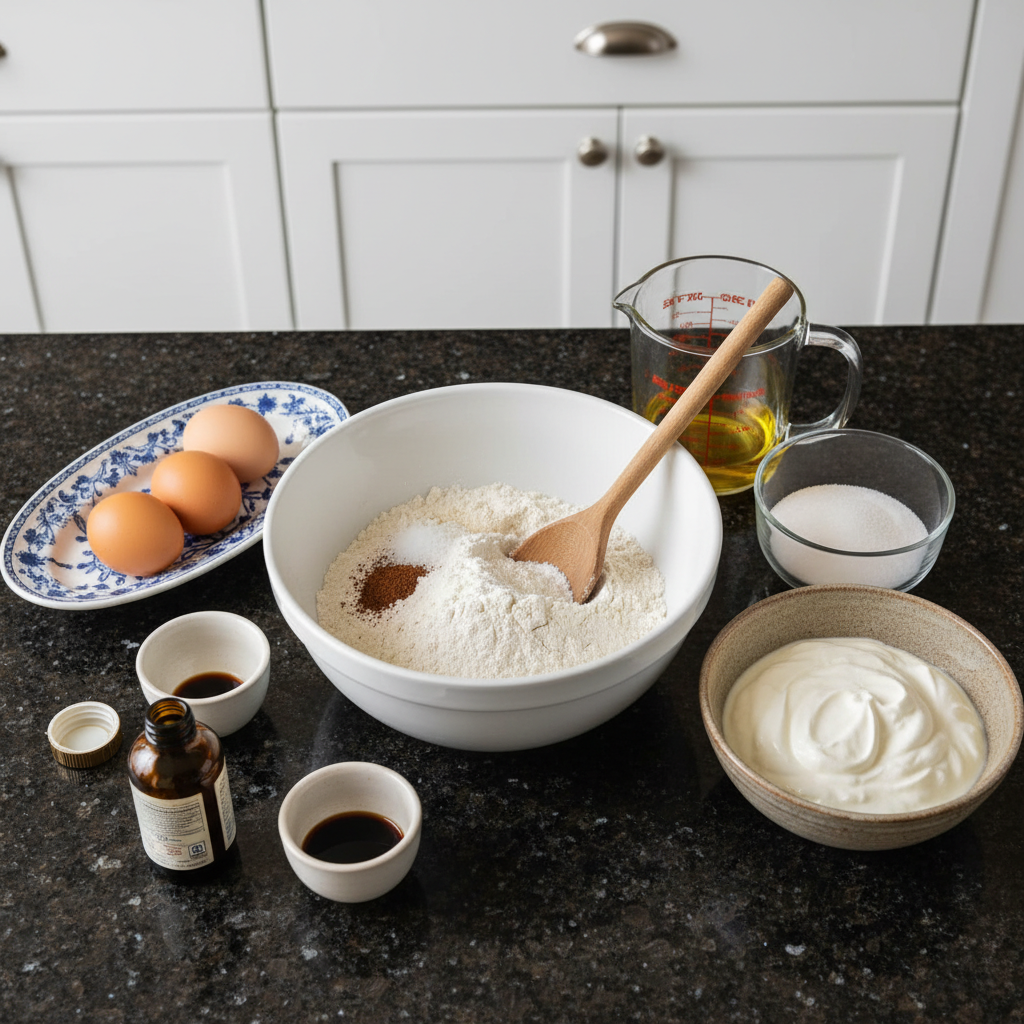
Here’s everything you’ll need to create this delicious Yogurt Cake:
- 1 3/4 cups (248g) all-purpose flour ((scoop and level to measure))
- 2 tsp baking powder
- 1/4 tsp baking soda
- 1/2 tsp salt
- 1 cup (200g) granulated sugar*
- 1 1/4 cups (304g) whole plain Greek yogurt, (brought to room temperature)
- 2/3 cup (155ml) olive oil**
- 3 large eggs, (brought to room temperature)
- 2 tsp vanilla extract
Ingredient Notes & Substitutions
Paying attention to your ingredients can make all the difference in your Yogurt Cake.
Greek Yogurt: I always recommend using whole milk plain Greek yogurt for the richest flavor and most moist result. Brands like Chobani can yield a fluffier cake, while Fage might create a slightly denser texture, both delicious in their own way. I advise against using low-fat yogurt unless you specifically prefer a lighter, less rich texture. Remember to bring your Greek yogurt to room temperature by letting it sit on the counter for 30 minutes to an hour. This helps it emulsify better with the other ingredients, leading to a smoother batter and a better rise.
Olive Oil: Olive oil is a star in this recipe, contributing to a wonderfully moist crumb and a subtle, fruity flavor that distinguishes it from butter-based cakes. I recommend using a regular or light olive oil. If you use extra virgin olive oil, be aware that it has a stronger, more pronounced flavor which some might find too dominant for a cake. For a neutral flavor, you can always substitute vegetable oil or canola oil.
Eggs: For optimal rise and a beautiful, tender cake texture, it is crucial to use large eggs that are at room temperature. Just like the yogurt, room temperature eggs emulsify better with the other wet ingredients. Let them sit on the counter for 30 minutes to an hour before mixing.
Flavor Boosters: Vanilla extract provides a classic warmth. If you want an even more intense vanilla flavor, consider using vanilla bean paste as a delightful alternative.
How to Make Your Moist Yogurt Cake
Let’s get baking! Here’s my step-by-step guide to creating your wonderfully moist Yogurt Cake with Lemon-Rosemary Simple Syrup.
Prepare Your Pan
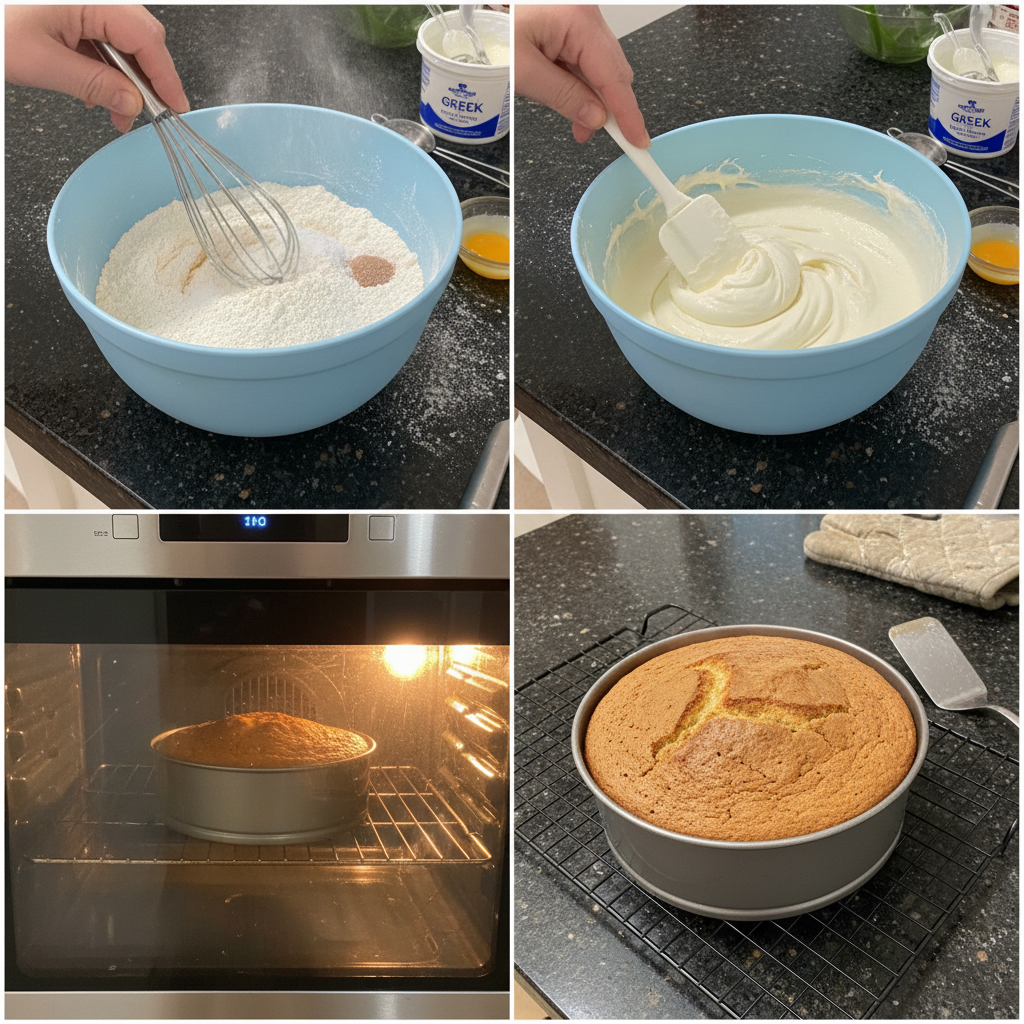
Begin by preheating your oven to 350 degrees F (175°C). Take a 9-inch springform pan and spray it thoroughly with non-stick spray. Then, line the bottom with a round of parchment paper and spray the parchment paper again. This preparation ensures your cake will release easily from the pan, preventing any sticking or tearing that can happen if the pan isn’t properly prepped.
Combine Dry Ingredients
In a medium mixing bowl, whisk together the all-purpose flour, baking powder, baking soda, and salt. Whisk until these dry ingredients are well combined and lump-free. This step is important for ensuring that the leavening agents are evenly distributed throughout the batter, which contributes to an even rise in your cake.
Mix Wet Ingredients
In a separate, larger mixing bowl, whisk together the granulated sugar, room temperature Greek yogurt, olive oil, room temperature large eggs, and vanilla extract. Continue whisking until the mixture is completely smooth and well blended. You’ll notice the sugar should be mostly dissolved, and the mixture will look slightly pale and creamy.
Combine Wet and Dry
Gradually pour the flour mixture into the yogurt mixture. Stir gently with a whisk or a spatula until just combined. This is a critical step: be careful not to overmix the batter, as this can develop gluten and lead to a tough, dense cake. A few small lumps are perfectly fine; overmixing is not. Your goal is a smooth, yet still slightly lumpy, cohesive batter.
Bake the Cake
Pour the batter into your prepared springform pan and use a spatula to spread it into an even layer. Bake for approximately 33 to 36 minutes. To check for doneness, insert a toothpick into the center of the cake. When it comes out clean, or with just a few moist crumbs attached, your cake is ready. This is my reliable toothpick test for perfect doneness.
Make the Lemon-Rosemary Simple Syrup
While your cake is baking and filling your kitchen with a delicious aroma, prepare the simple syrup. In a small saucepan, combine 1/4 cup lemon juice, 1/4 cup granulated sugar, and 1 sprig of fresh rosemary. Bring this mixture to a simmer over medium heat, stirring gently until all the sugar has dissolved. Once simmering, remove the pan from the heat and let the rosemary infuse in the syrup for 10-15 minutes. Afterward, discard the rosemary sprig, leaving you with a beautifully aromatic syrup.
Syrup the Warm Cake
Once baked, remove the cake from the oven and let it cool slightly in the pan for about 5-10 minutes. While it is still warm, generously brush the prepared Lemon-Rosemary Simple Syrup over the top of the cake. The warm cake will readily absorb the syrup, infusing it with bright lemon and subtle rosemary flavor, while also adding crucial moisture and creating a beautiful, glistening top.
Cool & Serve
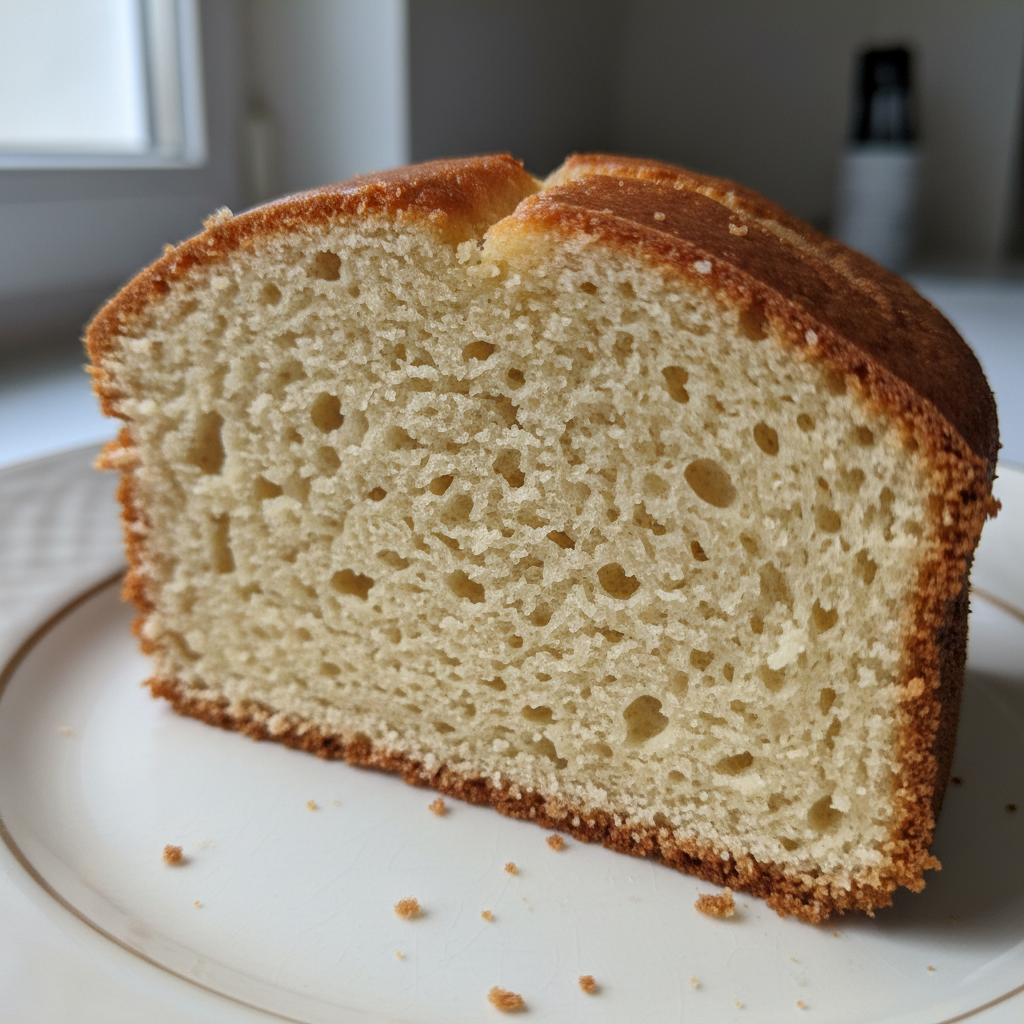
Let the cake continue to cool in the pan on a wire rack for at least 30 minutes before gently releasing the springform ring. Allowing it to cool further on the rack ensures the syrup sets properly and the cake’s texture fully develops. Once cooled, slice and serve this moist crumb and tender cake. You’ll love every aromatic bite!
Customizing Your Yogurt
Cake: Variations &
Pan Adjustments
This Yogurt
Cake recipe
is incredibly versatile!
Here’s how
you can adapt it
to different pan sizes
and
explore
exciting
flavor variations.
>
B
aking Adjustments for
Different Pan Sizes
Lo
af Pan (9
x5 inch):
If you prefer
a
loaf
cake
, prepare your loaf
pan by greasing
it
,
lightly flouring it
, and then creating
a parchment paper
sling that hangs
over the sides.
This will make it
easy to lift the
cake out after baking
. Your baking
time will be longer
, typically around
45-5
5 minutes. Always
use the toothpick test
to confirm
doneness.
>
8-inch
Round Cake Pan:
For
an
8-inch
round cake pan,
prepare it by gre
asing the
sides, lining the
bottom with a round
of parchment paper,
and lightly flouring
.
The baking time will
be similar to the
springform pan,
roughly
35-
40 minutes,
but always
keep an eye on
it and adjust as
needed, using the
toothpick test.
>
Cupcakes:
To
make individual
Yogurt
Cake cupcakes, line
a standard 1
2-cup muffin
tin with paper liners
. Fill each liner
about two
-thirds full with
batter
. The baking
time will be much
shorter, usually
20-2
5 minutes. Cup
cakes are done when
a toothpick inserted into
the center comes out
clean.
Creative Flavor
Variations
Blueberry
Yogurt Cake: To
make
a delightful blueberry yogurt cake, gently
fold in about
1 1/
4 cups of fresh
blueberries into the batter
just before pouring it
into your prepared
pan. A
pro
tip to
prevent fruit
from sinking to
the bottom is
to first
toss the blueberries with
1 tablespoon of
all-purpose flour
. This light
coating helps them stay
suspended evenly
throughout the cake.
Lemon Yogurt
Cake: If you
love lemon, you
can intensify
the lemon flavor in this yogurt
cake.
Replace 2 tablespoons
of the
Greek yogurt with
2 tablespoons of fresh
lemon juice, and
add 2 tablespoons
of fresh lemon zest
to the wet
ingredients. You might
also want to slightly
increase the granulated sugar
by
a
tablespoon or two to
balance the extra
tartness.
>
Other Fruit Add
itions: Feel free
to experiment with other
fresh berries like raspberries
or diced peaches.
Just
remember
to toss them in
a
little flour if they
are particularly
juicy
or
heavy.
Vanilla Bean Paste:
For an even more
profound vanilla experience
, substitute
the vanilla extract with
an
equal amount of vanilla
bean paste. It
adds beautiful
specks of vanilla
bean
and a richer
, more complex vanilla
flavor.
Pro Tips
& Troubleshooting for Perfect
Yogurt Cake
Ach
ieving a perfectly moist
and
tender yogurt
cake is
entirely
within your
reach. Here are
my
best tips and common
mistakes to watch out
for.
Pro Tips
for Success
Room
Temperature Ingredients are Key
: This is a
golden
rule in my
kitchen! Always ensure
your eggs and Greek
yogurt are at room
temperature. This allows
them to emulsify
better
with the olive
oil and sugar,
creating a smoother,
more homogenous
batter. For more on why room temperature ingredients are crucial for baking success, refer to our detailed guide. The
result?
Better
gluten development,
a higher,
more even rise,
and that
beautiful
tender crumb we
all love.
>
Choose the Right
Olive Oil: Use
a regular or light
olive oil for
this recipe to
avoid an overpowering flavor
. Save your premium
extra virgin olive oil
for dressings
,
where
its robust
flavor can
truly shine!
>
Don’t
Overmix: Once
you
combine the dry and
wet ingredients, stir
until
just combined. Over
mixing is
the enemy of a
tender cake;
it develops gluten excessively
, which can lead
to a tough,
dense cake rather than
a
light and
tender
crumb.
Perfect Cooling Practices:
After baking, let
the
cake cool in the
springform pan for
10-
15 minutes before
releasing
the sides. This
crucial
resting
period
allows the cake to
set properly and prevents
it from cracking or
sinking. Then
, transfer it
to a cooling
rack to cool completely
.
This ensures the best
texture and allows the
Lemon-Rosemary
Simple Syrup to fully
absorb and set.
<
p>Immediate Baking
: Unlike some batters
that
benefit
from resting, this
yogurt cake batter should
be baked immediately after
mixing. Delay
ing can actually cause
the leavening
agents to lose their
potency, affecting
the cake’s
rise.
Common Mistakes
to Avoid
Using
Cold Ingredients: Using
cold eggs or yogurt
can lead to a
less cohesive batter because
they don’
t emulsify properly
.
This impacts
the cake’s
rise and can
result in a less
tender crumb.
>
Too Much Mixing
: As I
mentioned, overmixing
the batter is one
of the most common
culprits
for a tough cake
. Resist
the urge to keep
stirring once
the
ingredients
are just combined.
<
p>Incorrect Pan
Preparation: Not properly
greasing and lining
the
pan can
lead to disaster
. The cake might
stick, tear,
or be incredibly difficult
to remove, ruining
your beautiful
creation
.
Using
Low-Fat Yogurt
: While you technically
can
use low-fat
yogurt, I
really
don
‘t recommend it
. Using whole milk
Greek yogurt provides essential
fat
and moisture
,
which are
critical for the
optimal texture reliability
and a
truly
rich, moist cake
.
Low-fat alternatives
will result
in a drier
,
less flavorful
cake.
Cake Sinking in
the Middle: This
frustrating
issue can be
caused by a
few things: under
baking, opening
the oven door too
early during
baking, or incorrect
leavening.
Ensure your oven temperature
is accurate and always
bake until the toothpick
test comes out clean
to
prevent sinking.
>
Serving
& Storage
Here
are
my
favorite ways to serve
and store your delicious
Yogurt Cake, ensuring
you
can enjoy its
moist
crumb
and
tangy
flavor for days
.
Serving Ideas
Classic
Toppings: For
a simple yet elegant
presentation
, serve slices of
this
Yogurt cake
with
a dollop of
sweetened whipped cream or
even
sweetened
Greek yogurt (just
mix
a touch of powdered
sugar into plain
Greek yogurt).
<
p>Fresh Fruit
: A
generous
garnish
of fresh berries like
strawberries, raspberries,
or blueberries adds
a beautiful burst of
color
and complements
the tangy flavor of
the cake wonderfully
.
Fruit
Curd: For
an extra layer of
bright
,
creamy
flavor, add
a dollop of
lemon curd or your
favorite berry curd alongside
your
slice.
Sweet Drizzles
: A little
extra honey drizz
led over the top
can
add a touch of
natural sweetness that
perfectly balances
the cake’
s tang.
>
Elevated Dess
erts: For a
richer dessert
experience, serve a
warm slice with
a scoop of vanilla
ice cream and a
drizzle of caramel or
chocolate sauce.
>
Breakfast or Snack
: With
its muffin-like
texture and balanced sweetness
, this cake
is perfectly suited as
a breakfast cake or a
light snack alongside a cup of coffee or tea.
>
Storage
and Make-Ahead
Room Temperature:
You
can store the yogurt
cake tightly covered at
room temperature for up
to 2-
3 days. The
Lemon-Rosemary
Simple Syrup helps to
keep it wonderfully
moist.
<
p>Refriger
ation: For longer
storage, wrap
the cake tightly in
plastic wrap or aluminum
foil and refrigerate
for
up to 5
-7 days.
For
the best flavor and
moist crumb, bring
it
back to room temperature
before serving.
>
Freezing:
This Yogurt cake freezes
beautifully! Once
the
cake is completely cooled
, you
can wrap individual slices
or the whole cake
tightly in plastic wrap
, then add
a
layer
of aluminum foil.
It
will
keep
well
in the freezer for
up to 3
months. To thaw
, simply
place the frozen cake
overnight in the refrigerator
,
then bring it to
room temperature before serving
. You can also
gently warm individual slices
in the microwave for
a few seconds if
desired
.
Enjoy Your Homemade
Yogurt Cake!
I hope you truly
enjoy making
and
sharing this incredible Yogurt
Cake. It’
s a testament to
how
simple ingredients,
when
combined with a little
love
and a unique twist
like my
Lemon-Rosemary
Simple Syrup, can
create something truly special
. Even if you
‘re a beginner
baker, you can
achieve that perfectly moist
, tender crumb with
this recipe. Don
‘t be afraid
to experiment with the
suggested variations and serving
ideas to make it
your very
own. Happy
baking, and I
encourage
you to share your
delicious
creations on social media
!
Frequently Asked Questions (
FAQ)
<
p>Q:
What kind of yogurt
and oil are best
for this cake?
<
p>A:
We highly recommend whole
milk plain Greek yogurt
for the richest,
most moist result.
For the oil,
regular or light olive
oil is best to
impart a subtle fruit
iness without being overpowering
. Avoid extra virgin
olive oil unless you
want a very distinct
olive flavor.
>
Q: How
do I store,
refrigerate, and
freeze yogurt cake?
<
p>A:
This yogurt cake can
be stored tightly covered
at room temperature for
2-3
days, or refrigerated
for up to a
week. To freeze
cake, wrap cooled
slices or the whole
cake tightly in plastic
wrap then foil for
up to 3
months. Thaw
in the fridge overnight
before enjoying.
>
Q: Can
I bake this yogurt
cake in a different
pan, like a
loaf pan or as
cupcakes?
A: Yes,
absolutely! This recipe
is versatile. For
a standard 9
x5 inch loaf
pan, bake for
approximately 45
-55 minutes
. For cupcakes,
bake for 2
0-25
minutes. Always test
for doneness with
a toothpick test.
<
p>Q:
What are some popular
variations and serving suggestions
for yogurt cake?
<
p>A:
Popular variations include lemon
yogurt cake (add
zest and juice)
and blueberry yogurt cake
(toss berries
in flour to prevent
sinking). For serving
, options range from
sweetened whipped cream and
fresh berries to fruit
curd, honey,
or even a scoop
of vanilla ice cream
.
Q
: Is it necessary
to bring ingredients like
eggs and yogurt to
room temperature?
>
A: Yes
, it is highly
recommended! Room temperature
ingredients (large eggs
, Greek yogurt)
emulsify better with
the olive oil and
sugar, leading to
a smoother batter,
better rise, and
a more tender cake
texture. Plan to
let them sit out
for 30
minutes to an hour
.
Q
: How can I
ensure my yogurt cake
is perfectly moist and
doesn’t sink
in the middle?
<
p>A:
To ensure a perfectly
moist crumb, use
whole milk Greek yogurt
and avoid overmixing
the batter. To
prevent cake
sinking, ensure room
temperature ingredients, accurately
measure leavening
agents (baking
powder/soda
), avoid opening the
oven door during baking
, and ensure the
cake is fully baked
(toothpick test
comes out clean).
<
p>Q:
What makes a cake
‘French-style
‘
?
A
: A French yogurt
cake is characterized by
its simplicity, often
using yogurt (trad
itionally in the pot
it comes in,
as a measurement tool
) and olive oil
as primary ingredients.
It’s known
for its incredibly moist
crumb and tender cake
texture, often resembling
a pound cake,
and less sweet than
traditional American cakes,
making it versatile for
dessert or breakfast cake
.
Q
: Can I substitute
butter for olive oil
in this recipe?
<
p>A:
While you can substitute
melted butter for olive
oil, it will
change the cake’
s flavor and texture
profile. Olive oil
contributes to the moist
crumb and tender cake
with a subtle fruit
iness characteristic of a
French yogurt cake.
Butter will result in
a denser cake with
a more traditional buttery
flavor, making it
less distinctly a French
yogurt cake.
>
Q: Is
yogurt cake a healthy
dessert option?
>
A: Compared
to many other cakes
, yogurt cake can
be a relatively lighter
option due to the
use of yogurt and
olive oil instead of
large amounts of butter
. Using whole milk
Greek yogurt also adds
protein. While it
still contains granulated sugar
and flour, mindful
portioning can make
it a satisfying dessert
or snack option.
Easy Yogurt Cake with Lemon-Rosemary Simple Syrup: Moist & Tangy
Ingredients
Equipment
Method
- Begin by preheating your oven to 350 degrees F (175°C).
- Take a 9-inch springform pan and spray it thoroughly with non-stick spray.
- Then, line the bottom with a round of parchment paper and spray the parchment paper again.
- In a medium mixing bowl, whisk together the all-purpose flour, baking powder, baking soda, and salt.
- Whisk until these dry ingredients are well combined and lump-free.
- In a separate, larger mixing bowl, whisk together the granulated sugar, room temperature Greek yogurt, olive oil, room temperature large eggs, and vanilla extract.
- Continue whisking until the mixture is completely smooth and well blended.
- Gradually pour the flour mixture into the yogurt mixture.
- Stir gently with a whisk or a spatula until just combined. Be careful not to overmix the batter; a few small lumps are perfectly fine.
- Pour the batter into your prepared springform pan and use a spatula to spread it into an even layer.
- Bake for approximately 33 to 36 minutes.
- To check for doneness, insert a toothpick into the center of the cake. When it comes out clean, or with just a few moist crumbs attached, your cake is ready.
- While your cake is baking, prepare the simple syrup.
- In a small saucepan, combine 1/4 cup lemon juice, 1/4 cup granulated sugar, and 1 sprig of fresh rosemary.
- Bring this mixture to a simmer over medium heat, stirring gently until all the sugar has dissolved.
- Once simmering, remove the pan from the heat and let the rosemary infuse in the syrup for 10-15 minutes.
- Afterward, discard the rosemary sprig.
- Once baked, remove the cake from the oven and let it cool slightly in the pan for about 5-10 minutes.
- While it is still warm, generously brush the prepared Lemon-Rosemary Simple Syrup over the top of the cake.
- Let the cake continue to cool in the pan on a wire rack for at least 30 minutes before gently releasing the springform ring.
- Once cooled, slice and serve.