Skip to content
There’s a certain kind of magic that happens when you combine humble ingredients with the ancient art of fermentation. In my kitchen, few concoctions rival the versatility and potency of fermented garlic honey. Traditionally revered as a natural immune system booster, especially during cold and flu season, this golden elixir offers remarkable medicinal benefits. Today, I’m thrilled to share an elevated version of this popular home remedy, perfect for both health enthusiasts and culinary adventurers. This recipe isn’t just about crafting a delicious pantry staple; it’s a deep dive into the fascinating world of lacto-fermentation, packed with insights into its benefits, safety, and countless uses. Get ready to transform simple garlic and honey into a gourmet delight!
Why You’ll Love This Recipe
What sets my fermented garlic honey apart? It’s all in the unique twist: I lightly roast the whole garlic cloves before peeling and fermenting them. This seemingly small step makes a monumental difference.
- Deep, Complex Flavors: Roasting initiates the Maillard reaction, developing profound, sweet, and caramelized notes in the garlic. This process significantly mellows the pungent raw garlic bite upfront, resulting in a richer, less harsh initial flavor profile for the honey, and a wonderfully soft, almost jammy texture for the garlic cloves themselves.
- Effortless Immune Support: Beyond its incredible taste, this is an incredibly easy way to create a powerful immune system booster. Just a spoonful a day can be a game-changer, especially when cold and flu season hits.
- Culinary Versatility: You’ll be amazed at the range of culinary applications for this ferment. From sweet to savory, it adds a unique depth to countless dishes.
- Simple & Shelf-Stable: Despite its gourmet appeal, this recipe is surprisingly simple to prepare. Once fermented, it becomes a shelf stable pantry staple that lasts for months, always ready to elevate your meals or boost your wellness.
Ingredients Needed

Making fermented garlic honey requires just two core ingredients, but their quality is paramount.
- 1 cup whole garlic cloves (peeled and slightly crushed)
- 1 cup raw honey (or more, as needed to cover garlic)
Ingredient Notes & Substitutions
Choosing the right ingredients is key to successful and delicious fermentation.
Garlic: I always opt for whole garlic cloves. While you might be tempted to chop it, keeping the cloves whole (or slightly bruised, as we’ll do) generally ensures more consistent fermentation and helps prevent potential spoilage, as less surface area is exposed. The unique twist of roasting prior to fermentation truly enhances both flavor and texture. Lightly bruising garlic (after roasting and peeling) helps release its flavorful juices, giving the fermentation a helpful kickstart. For the best results, I recommend using organic garlic to avoid any potential preservatives or sprout inhibitors that could interfere with the delicate fermentation process. While organic is preferred for optimal benefits, non-organic garlic can still work if it’s what you have on hand.
Honey: This is where you absolutely cannot compromise: you must use raw honey. Pasteurized honey, found in most supermarkets, has been heated, killing off the vital wild yeast and bacteria necessary for fermentation. Raw honey, on the other hand, is teeming with these beneficial microbes, which are essential for converting sugars and creating the magic of fermented garlic honey. Without raw honey, your fermentation simply won’t happen properly.

How to Make Roasted Fermented Garlic Honey
Follow these steps to create your own batch of this sweet, savory, and wonderfully potent fermented garlic honey.
The secret to my favorite version begins with a simple, transformative step: roasting.
Step 1: Lightly Roast the Garlic
Preheat your oven to 375°F (190°C). Toss the unpeeled whole garlic cloves with just a tiny drizzle of olive oil. Spread them on a baking sheet and roast for 10-15 minutes, or until they are slightly softened, fragrant, and just beginning to show a hint of color. This step initiates a beautiful caramelization that will significantly mellow and deepen the flavor of your fermented garlic honey. Let them cool completely, then peel and lightly crush each clove to expose more surface area without completely breaking them apart.
Step 2: Prepare Garlic & Jar
Carefully place your now roasted, peeled, and slightly crushed whole garlic cloves into a clean wide-mouth pint sized mason jar. This size works perfectly for the quantities listed.
Step 3: Add Honey
Pour your raw honey over the garlic, ensuring it completely covers the garlic cloves. You’ll notice the honey is quite thick at first, slowly enveloping the cloves in its golden embrace. Add more honey if needed to ensure all garlic is submerged.
Step 4: Initial Sealing & Placement
Place the lid loosely on the jar. This is important as gases will build up during fermentation and need to escape. Tuck your jar into a dark place, like a pantry or cupboard, where the temperature is relatively consistent.
Step 5: Daily Care (Burping & Flipping)
This is a crucial daily ritual! Every day or so, tighten the lid on the jar. Then, flip it upside down to ensure all the garlic cloves are thoroughly coated in honey. This prevents any exposed garlic from molding and promotes even fermentation process. Immediately upon returning it to the upright position, loosen the lid again. This “burping” allows built-up gases to escape, preventing pressure buildup within the jar.
Step 6: Observation for Fermentation
Patience is a virtue in fermentation! Within a few days to a week, you should start to see small bubbles forming on the surface of the honey. This is a wonderful visual cue that your fermentation process is active and thriving. You might also notice the honey starting to thin out.
Step 7: Patience & Flavor Development
The honey garlic will ferment for about a month to reach its peak flavor, but you can certainly begin to enjoy it at any time. The longer it ferments, the more the flavor will continue to develop, the garlic will mellow further, and the honey will become much runnier, transforming into a syrup-like consistency.
Step 8: Long-Term Storage
Once your fermented garlic honey has reached your desired flavor, store it in a cool, dark place. It will last for many months, or even a year, if not longer, becoming a truly shelf stable staple in your pantry.
Optimizing Your Fermentation: Temperature & Spoilage Signs
Understanding the nuances of fermentation conditions and recognizing the difference between normal activity and spoilage is key to a successful and safe batch of fermented garlic honey.
Optimal Fermentation Environment
For most ferments, including fermented garlic honey, an optimal fermentation temperature range is between 60-75°F (15-24°C). Temperatures on the warmer side of this range will speed up the fermentation process, sometimes leading to a quicker result but potentially a less complex flavor profile. Cooler temperatures will slow things down, but often allow for richer, more nuanced flavors to develop over a longer period. Always store your ferment in a dark place, away from direct sunlight, to maintain a consistent temperature and protect the beneficial microbes. While not strictly necessary, some advanced fermenters use a pH test strip to monitor acidity; a pH below 4.5 indicates a safe, properly fermented product.
Understanding Normal vs. Spoilage
It’s easy to get nervous when you see your ferment changing, but most visual and aromatic shifts are completely normal. Here’s how to tell the difference:
Normal Signs:
- Bubbling: This is the most obvious sign of active fermentation process. You’ll see tiny bubbles rising to the surface, especially after disturbing the jar.
- Runny Honey: As the wild yeasts and bacteria break down sugars, the honey will become significantly thinner and more syrupy.
- Softening Garlic: The garlic cloves will soften over time, taking on a texture similar to roasted garlic.
- Garlic Turning Blue/Green: Don’t panic! This is a common and completely harmless chemical reaction. Sulfur compounds in the garlic can react with trace minerals in the water or honey, causing the cloves to turn a vibrant blue or green. It’s actually a sign of healthy probiotics at work, not spoilage.
- Sweet-Pungent Aroma: The smell will evolve from raw garlic and sweet honey to a more complex, tangy, sweet-pungent aroma. It might even have a slightly alcoholic smell initially; this is a harmless byproduct of the wild yeast activity and usually dissipates.
Signs of Spoilage (When to Discard):
- Visible Mold: This is the big one. If you see fuzzy, black, green, or white mold growing on the surface of the honey (not just a blue tint on the garlic itself), it’s time to discard the batch.
- Foul or Rancid Smell: While a slightly alcoholic or pungent aroma is normal, a truly rotten, putrid, or rancid smell is a clear sign of spoilage. Trust your nose!
- Extreme Sliminess: Beyond the normal thinning of the honey, if the texture becomes excessively slimy or ropey, this could indicate unwanted bacterial growth.
- Lack of Activity: If, after a week or two, you see no bubbles or thinning of the honey, and the garlic doesn’t soften, it might mean the fermentation has stalled or never started. While not necessarily spoiled, it won’t have the desired benefits or flavor.
Many people worry about botulism concern with honey ferments. However, the low pH created by raw honey‘s natural acidity and the active fermentation process (which produces more acids) typically inhibits the growth of C. botulinum spores, making it a very safe ferment when proper techniques are followed.
Creative Culinary Uses for Your Fermented Garlic Honey
Once you have a batch of this amazing fermented garlic honey, you’ll discover its incredible versatility in the kitchen. Here are some of my favorite ways to use it:
Savory Applications:
- Marinades: It makes an exceptional marinade for chicken, pork, or tofu, infusing them with sweet, savory, and tangy notes.
- Sauces & Dressings: Whisk a spoonful into stir-fry sauces, vinaigrettes, or creamy dressings for an unexpected depth of flavor.
- Glaze: Brush it on salmon, chicken wings, or roasted Brussels sprouts during the last few minutes of cooking to create a beautiful, caramelized glaze.
- Soups & Stews: Add a secret dash to chili or stew for an extra layer of complexity and a hint of sweetness.
- Pan Sauces: Whisk it into savory pan sauces after deglazing for a gourmet touch.
Sweet & Unique Applications:
- Cheese Boards: Drizzle it over artisanal cheese boards with crackers and fruit for a sophisticated sweet and savory pairing.
- Avocado Toast: A surprising but delicious topping for avocado toast, adding a sweet-spicy kick.
- Dips & Spreads: Blend it into sweet and savory dips or compound butters.
Direct Consumption & Medicinal Use:
- Daily Booster: For the ultimate immune system booster, especially during cold and flu season, simply eat a whole mellow fermented garlic honey clove or take a spoonful of the honey directly. It’s a fantastic daily wellness shot!
Pro Tips & Troubleshooting
Making fermented garlic honey is straightforward, but a few expert tips can ensure success, and knowing how to troubleshoot common issues will build your confidence.
Pro Tips
- Start with Roasted Garlic: My absolute top tip! Lightly roasting the garlic cloves first creates a superior flavor profile and a wonderfully tender texture in your finished ferment.
- Use Raw Honey: This is non-negotiable. Only raw honey contains the necessary bacteria and wild yeast for a successful fermentation process.
- Slightly Bruise Garlic: After roasting and peeling garlic, lightly bruising garlic cloves helps to release their juices, giving the fermentation a good head start.
- Jar Placement: During active fermentation, the honey can sometimes expand or overflow. I always recommend placing the jar on a plate or in a shallow dish to catch any potential drips, making cleanup easy.
- Source Organic: Whenever possible, use organic garlic to avoid any preservatives or sprout inhibitors that could hinder the fermentation.
- Monitor Temperature: Be mindful of your room temperature. The optimal fermentation temperature range will influence both the speed of fermentation and the final flavor development.
Common Mistakes to Avoid
- Using Pasteurized Honey: This is the most common error. Pasteurized honey lacks the live microbes needed for fermentation, so your honey garlic simply won’t ferment properly.
- Neglecting Daily Care: Forgetting to “burp” the jar and flip it daily is a frequent mistake. This crucial step prevents pressure buildup from fermentation gases and ensures all garlic cloves are coated, which is essential for preventing mold growth on exposed pieces.
- Discarding Discolored Garlic: Do not discard garlic cloves if they turn blue or green! This is a completely normal and harmless chemical reaction, not a sign of spoilage. It often indicates active beneficial probiotics.
- Overfilling the Jar: Leave some headspace in your mason jar. Active fermentation will produce gases and expand the honey, and an overfilled jar will inevitably lead to overflow.
- Confusing Alcoholic Smell with Spoilage: If your honey garlic smell alcoholic, it’s usually a harmless byproduct of wild yeast activity and not a sign of spoilage, unless accompanied by truly foul odors or visible mold.
Serving & Storage
Once your fermented garlic honey is ready, you’ll want to enjoy it in countless ways. Proper serving and storage will ensure you get the most out of your efforts.
Serving Ideas
- Direct Health Boost: The easiest way to harness its power is to take a spoonful of the runny, sweet honey, or enjoy a mellow fermented garlic honey clove directly as a daily wellness shot, particularly for its immune system booster benefits.
- Savory Enhancer: The honey makes fantastic marinades for chicken, pork, or tofu. Drizzle the honey into sauces, dressings, or use it as a glaze for roasted vegetables. The mellow garlic cloves, finely minced, can be added to dressings, compound butters, or savory spreads, offering a unique culinary application.
- Unexpected Pairings: Don’t shy away from sweet and savory pairings! Try drizzling it over toast with cream cheese, on a charcuterie or cheese board, or even over vanilla ice cream for a surprisingly complex and intriguing flavor.
- Warm Drinks: For a soothing cold remedy, stir a spoonful into hot tea or warm water.
Storage and Make-Ahead
Your fermented garlic honey is remarkably robust and shelf stable, making it an ideal make-ahead item.
Initial Storage: During and after the active fermentation process, store your jar in a cool, dark place, such as a pantry or cupboard, away from direct sunlight.
Shelf-Life Details: Once active fermentation has subsided, fermented garlic honey can last for many months, even a year or longer, at cool room temperature. Raw honey is a natural preservative due to its low water activity and acidity. As long as it smells good and shows no visible mold, it’s generally safe to consume.
Refrigeration: While not strictly necessary for safety, you can refrigerate fermented garlic honey after the initial fermentation period. Refrigeration will significantly slow down or almost halt the fermentation process, preserving a specific flavor profile, but it won’t negatively impact its effectiveness or medicinal benefits. Be aware that refrigeration will make the honey much thicker and more viscous, so you may want to let it come to room temperature for easier drizzling and use.
Signs it’s ‘Too Old’: Beyond just being ‘still good,’ look for actual signs of spoilage. These include visible mold (distinct from blue/green garlic), a truly foul or rancid smell, or an extreme sliminess that goes beyond the normal thinning of the honey. Aesthetic changes, such as the honey becoming very runny, are normal and indicate successful fermentation, not spoilage.
Opened Jars: An opened jar, if stored properly in a cool, dark place, should still last many months. Just ensure the jar’s rim and lid are kept clean to avoid external contamination, and continue to ensure the garlic remains submerged.
Conclusion
Making your own fermented garlic honey is a deeply rewarding experience. With the enhanced flavor and texture achieved through our unique roasted twist, you’ve not just created a pantry staple, but a gourmet ingredient and a potent natural immune system booster. This recipe is wonderfully accessible, even if you’re new to the world of fermentation. I encourage you to experiment with its myriad culinary applications and embrace the delightful medicinal benefits it offers. Share your creations, explore other fermentation adventures, and make this incredibly versatile recipe a cherished part of your culinary repertoire!
FAQ
How long does fermented garlic honey last and how should it be stored?
Fermented garlic honey is remarkably shelf stable and can last for many months, often a year or even longer, when stored in a cool, dark place like a pantry or cupboard. Refrigeration is not strictly necessary but will slow down fermentation and thicken the honey; it won’t affect its effectiveness.
What are the health benefits of eating fermented garlic honey?
It’s widely praised as a natural immune system booster, especially during cold and flu season. The fermentation process creates probiotics, contributing to gut health, which is closely linked to overall immunity. It offers general wellness medicinal benefits due to the combined properties of garlic and honey.
Why did my garlic turn blue or green in the honey?
This is a normal and harmless chemical reaction! Sulfur compounds in garlic can react with trace minerals present in the garlic or honey, causing the cloves to turn blue or green. It’s actually a good sign of active fermentation process and beneficial bacteria at work.
Is there a risk of botulism with fermented garlic honey?
While botulism is a valid concern with low-acid foods, the low pH created by raw honey‘s natural acidity and the active fermentation process (which produces more acids) typically inhibits the growth of C. botulinum spores, making it a safe ferment when proper techniques are followed. Always use raw honey and ensure active fermentation.
What kind of honey and garlic should I use for fermentation?
You absolutely must use raw honey, as it contains the live wild yeast and bacteria necessary for fermentation. For garlic, I recommend organic garlic to avoid sprout inhibitors, and always use whole garlic cloves for optimal results.
Beyond immune support, how can I use fermented garlic honey in my cooking?
Its culinary applications are vast! Use it in marinades for meats or tofu, whisk it into sauces and salad dressings, or brush it on as a glaze for roasted vegetables. It also pairs wonderfully with artisanal cheeses or even as a unique drizzle over avocado toast.
Is fermented honey garlic safe for children?
Caution should always be exercised for infants under one year old due to the risk of infant botulism from honey (even raw, fermented honey). For older children, it’s always recommended to consult with a pediatrician, and starting with small amounts is a wise approach.
Does burping and flipping need to continue after the initial month of fermentation?
While daily burping and flipping is most crucial during the active initial phase (typically the first few weeks to a month), continuing it periodically (e.g., once a week or every few days) can help ensure even coating of the garlic and prevent any residual pressure buildup, especially if your room temperature fluctuates. However, it becomes less critical once fermentation has significantly slowed and the honey has become very runny.
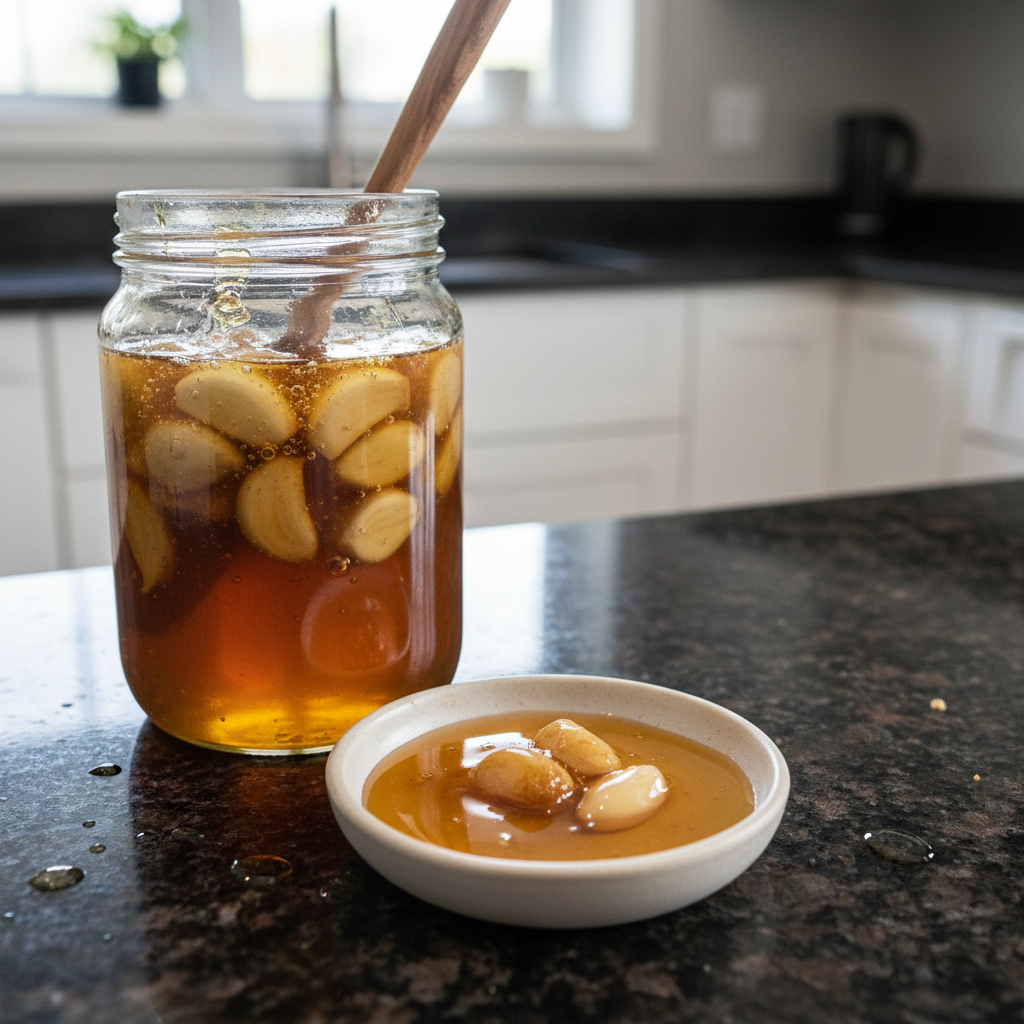
Roasted Fermented Garlic Honey: Sweet, Mellow & Potent
Ingredients
Equipment
Method
- Preheat your oven to 375°F (190°C). Toss the unpeeled whole garlic cloves with just a tiny drizzle of olive oil. Spread them on a baking sheet and roast for 10-15 minutes, or until they are slightly softened, fragrant, and just beginning to show a hint of color. Let them cool completely, then peel and lightly crush each clove to expose more surface area without completely breaking them apart.
- Carefully place your now roasted, peeled, and slightly crushed whole garlic cloves into a clean wide-mouth pint sized mason jar. This size works perfectly for the quantities listed.
- Pour your raw honey over the garlic, ensuring it completely covers the garlic cloves. You'll notice the honey is quite thick at first, slowly enveloping the cloves in its golden embrace. Add more honey if needed to ensure all garlic is submerged.
- Place the lid loosely on the jar. This is important as gases will build up during fermentation and need to escape. Tuck your jar into a dark place, like a pantry or cupboard, where the temperature is relatively consistent.
- This is a crucial daily ritual! Every day or so, tighten the lid on the jar. Then, flip it upside down to ensure all the garlic cloves are thoroughly coated in honey. This prevents any exposed garlic from molding and promotes even fermentation process. Immediately upon returning it to the upright position, loosen the lid again. This "burping" allows built-up gases to escape, preventing pressure buildup within the jar.
- Patience is a virtue in fermentation! Within a few days to a week, you should start to see small bubbles forming on the surface of the honey. This is a wonderful visual cue that your fermentation process is active and thriving. You might also notice the honey starting to thin out.
- The honey garlic will ferment for about a month to reach its peak flavor, but you can certainly begin to enjoy it at any time. The longer it ferments, the more the flavor will continue to develop, the garlic will mellow further, and the honey will become much runnier, transforming into a syrup-like consistency.
- Once your fermented garlic honey has reached your desired flavor, store it in a cool, dark place. It will last for many months, or even a year, if not longer, becoming a truly shelf stable staple in your pantry.