Skip to content
Looking for a healthy, delicious meal that comes together in a flash? This sheet pan salmon and asparagus recipe is your answer. Featuring tender salmon and crisp asparagus, it’s all coated in a vibrant lemon-garlic-herb butter. This flavorful dish goes from prep to table in just 20 minutes, promising juicy, perfect results every time. It’s ideal for busy weeknights!
Why You’ll Love This Sheet Pan Salmon and Asparagus
- Effortless One-Pan Cooking: Everything bakes on a single sheet, making cleanup incredibly easy.
- Quick Preparation: This meal is ready in just 20 minutes, perfect for busy evenings.
- Healthy & Nutritious: Rich in Omega-3s, protein, and vital nutrients, it’s a wholesome choice. The Heart and Stroke Foundation of Canada provides detailed information on the benefits of omega-3 fats for overall health, including their role in protecting against heart disease.
- Incredibly Flavorful: The vibrant lemon-garlic butter infuses every bite with delicious taste.
- Versatile & Customizable: Easily swap vegetables or herbs to suit your preferences.
- Crowd-Pleaser: Even picky eaters love this dish, making it a fantastic family meal.
Ingredients
Creating this delightful sheet pan salmon and asparagus requires just a few fresh components. You’ll need six 6-oz salmon fillets, about 2 pounds of fresh asparagus with fibrous ends trimmed, and 1 tablespoon of olive oil. Season these simply with salt and black pepper to taste. A small lemon, sliced into rings, serves as a beautiful garnish.
For the star of the show, the Lemon-Garlic-Herb Butter, gather 6 tablespoons of softened unsalted butter. You’ll also need 2 tablespoons of fresh lemon juice, 2 minced garlic cloves, 2 tablespoons of finely chopped fresh parsley, 1 teaspoon of sea salt, and ¼ teaspoon of black pepper.
Notes & Substitutions
You can use either fresh or thawed frozen salmon fillets for this recipe; just ensure frozen salmon is fully thawed and patted dry before cooking. If asparagus isn’t available, broccoli florets or green beans make excellent substitutes. Feel free to experiment with other fresh herbs like dill, thyme, or chives in the butter mixture. For a dairy-free option, substitute the unsalted butter with olive oil, keeping the flavor profile with lemon and garlic. To quickly soften butter, microwave it in 10-second intervals until pliable, not melted.
Equipment
You’ll need minimal equipment for this streamlined meal. A large rimmed baking sheet is essential to hold all your ingredients. Line it with parchment paper for effortless cleanup. A small mixing bowl is perfect for preparing the lemon-garlic butter. You can use a fork to mash the butter mixture or a food processor for an even smoother blend. An instant-read thermometer is optional but highly recommended for perfectly cooked salmon.
Instructions
Follow these simple steps to create a perfect sheet pan salmon and asparagus dinner.
1. Preheat Oven & Prepare Pan: Preheat your oven to 450°F (230°C), positioning the oven rack in the top third. Line a large rimmed baking sheet with parchment paper. Trim the paper so it fits snugly without extending over the pan edges; this prevents charring under the broiler.
2. Arrange Salmon & Asparagus: Place the salmon fillets in a row down the center of your prepared baking pan. Arrange the trimmed asparagus stalks on both sides of the salmon. Lightly drizzle the asparagus with olive oil and roll to coat thoroughly. Sprinkle both the asparagus and salmon generously with salt and pepper to taste.
3. Make Lemon-Garlic-Herb Butter: In a medium bowl, combine the softened unsalted butter, fresh lemon juice, minced garlic, chopped parsley, sea salt, and black pepper. Use a fork to mash all the ingredients together until they are well blended and creamy. This may take a couple of minutes of mashing, or you can use a food processor for a quicker, smoother result.
4. Butter and Bake: Spoon about three-quarters of your freshly made lemon-garlic-herb butter over the salmon fillets, spreading it evenly across the tops. Dab the remaining butter mixture over the asparagus stalks. Place a thin slice of lemon on top of each salmon fillet. Bake the assembled sheet pan in the preheated oven for 10-12 minutes. Adjust the baking time based on the thickness of your salmon; thinner fillets will be ready in 10 minutes, while thicker ones might need 12 minutes.
5. Broil (Optional): For an extra golden finish and slightly crispy texture, set your oven to BROIL after the initial baking time. Broil for an additional 2-3 minutes, carefully watching to prevent burning. The salmon should be flaky and cooked through. For food safety, the U.S. Department of Agriculture recommends cooking fish to a safe minimum internal temperature of 145°F (63°C). Use an instant-read thermometer to confirm the internal temperature reaches 145°F (63°C) for perfect doneness.
Pro Tips & Troubleshooting
Achieving Flaky Salmon: The key to perfectly flaky salmon is avoiding overcooking. Use an instant-read thermometer to ensure the internal temperature reaches 145°F (63°C). Adjust baking time based on the thickness of your fillets; thinner pieces cook faster.
Crisp-Tender Asparagus: For best results, ensure your asparagus is crisp-tender, not mushy. Thinner asparagus stalks cook more quickly, so consider adding them a few minutes later than very thick ones. Always trim the woody ends for the best texture and flavor.
Maximize Flavor: Always use fresh ingredients for your lemon-garlic-herb butter; fresh garlic and parsley make a big difference. Don’t discard the flavorful pan juices left on the sheet pan after baking; they are delicious drizzled over the salmon and asparagus.
Serving, Storage, & Variations
Serving Suggestions: Serve your sheet pan salmon and asparagus hot, straight from the oven. This vibrant dish pairs wonderfully with a simple side like fluffy rice, creamy mashed potatoes, or protein-rich quinoa. For a complete meal, add a fresh green salad with a light vinaigrette.
Storage Instructions: Store any leftover salmon and asparagus in an airtight container in the refrigerator. Consume them within 3-4 days to ensure freshness and best taste.
Reheating Tips: To reheat leftovers, gently warm them in a preheated oven at 275°F (135°C) or in an air fryer at 300°F (150°C) until just heated through. Avoid high heat or extended reheating times, as this can dry out the salmon.
Flavor Variations: Get creative with your sheet pan! For a spicy kick, sprinkle red pepper flakes over the salmon and asparagus before baking. Create a Mediterranean twist by adding cherry tomatoes and Kalamata olives to the pan. You can also experiment with different fresh herbs like dill or chives in the butter mixture for a unique aroma.
Nutrition
This sheet pan salmon and asparagus provides a remarkably wholesome and balanced meal. It’s packed with lean protein from the salmon, promoting satiety and muscle health. Salmon is also an excellent source of Omega-3 fatty acids, crucial for heart and brain health. Asparagus adds essential vitamins, minerals, and dietary fiber. This dish is naturally low in carbohydrates and offers a good balance of healthy fats, making it a nutritious option for any dinner table.
| Nutrient | Per Serving (approx.) |
| :————- | :——————– |
| Calories | 420 kcal |
| Protein | 39 g |
| Fat | 27 g |
| Carbs | 6 g |
| Fiber | 2 g |
| Omega-3s | High |
FAQ
Can I use frozen salmon for this recipe?
Yes, you can! Just ensure the frozen salmon is fully thawed in the refrigerator overnight and patted very dry before seasoning and baking.
How do I know when the salmon is fully cooked?
The best way is to use an instant-read thermometer; salmon is cooked through when it reaches an internal temperature of 145°F (63°C). It will also flake easily with a fork.
What other vegetables can I use on the sheet pan?
Great alternatives include broccoli florets, green beans, bell pepper strips, or thinly sliced zucchini. Ensure they are cut into similar sizes for even cooking.
Can I prepare the lemon-garlic butter ahead of time?
Absolutely! You can make the flavored butter up to 2-3 days in advance and store it in an airtight container in the refrigerator. Soften it slightly before spreading.
Why did my salmon turn out dry?
The most common reason for dry salmon is overcooking. Use a thermometer to prevent this, and keep a close eye on your baking time, especially if your fillets are thin.
Conclusion
This easy sheet pan salmon and asparagus recipe truly simplifies weeknight cooking without sacrificing flavor or nutrition. It’s a testament to how simple ingredients, combined with a quick technique, can create an incredibly satisfying meal. You’ll love the tender salmon, crisp asparagus, and bright lemon-garlic butter that makes this dish shine. Give this healthy, delicious, and beginner-friendly recipe a try tonight; your family will thank you! Let us know what you think and share your experience!
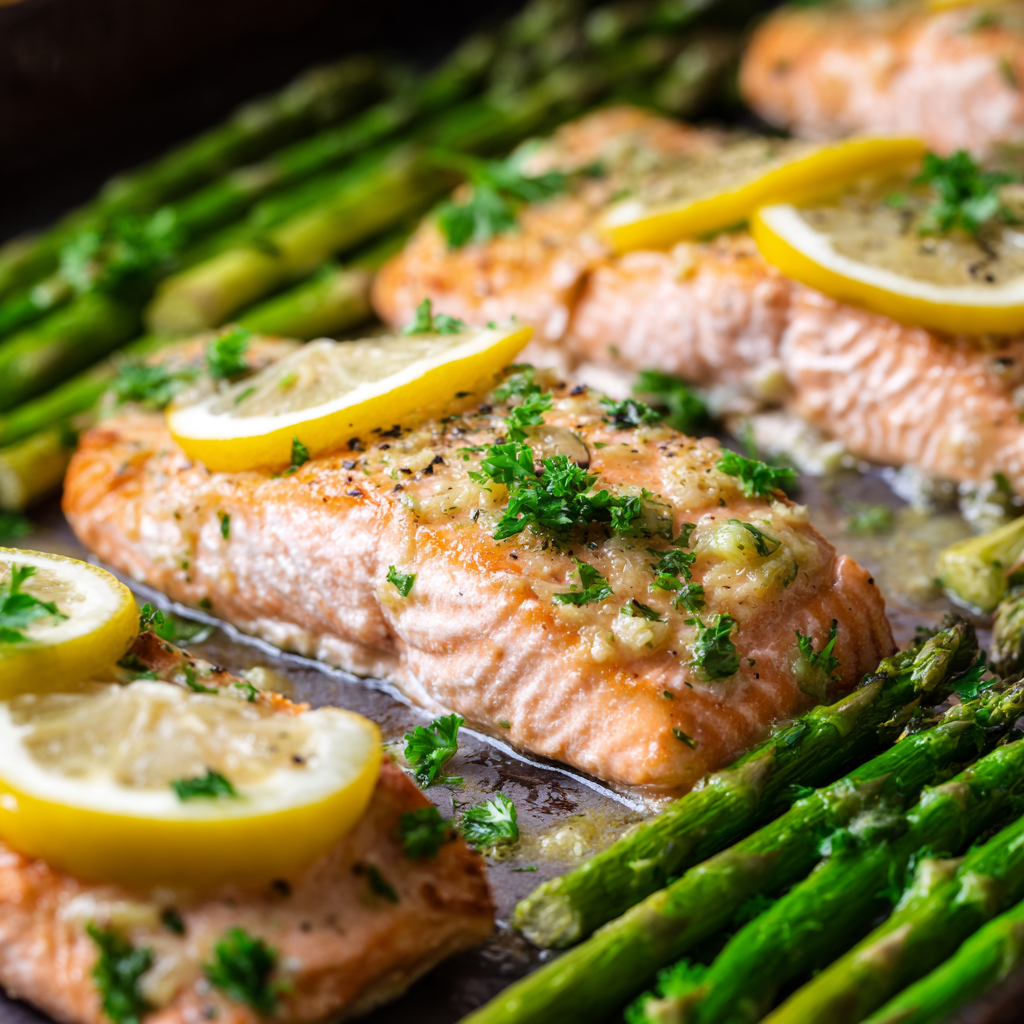
Easy Sheet Pan Salmon and Asparagus with Lemon-Garlic Butter
Ingredients
Equipment
Method
- Preheat your oven to 450°F (230°C), positioning the oven rack in the top third. Line a large rimmed baking sheet with parchment paper. Trim the paper so it fits snugly without extending over the pan edges; this prevents charring under the broiler.
- Place the salmon fillets in a row down the center of your prepared baking pan. Arrange the trimmed asparagus stalks on both sides of the salmon. Lightly drizzle the asparagus with olive oil and roll to coat thoroughly. Sprinkle both the asparagus and salmon generously with salt and pepper to taste.
- In a medium bowl, combine the softened unsalted butter, fresh lemon juice, minced garlic, chopped parsley, sea salt, and black pepper. Use a fork to mash all the ingredients together until they are well blended and creamy. This may take a couple of minutes of mashing, or you can use a food processor for a quicker, smoother result.
- Spoon about three-quarters of your freshly made lemon-garlic-herb butter over the salmon fillets, spreading it evenly across the tops. Dab the remaining butter mixture over the asparagus stalks. Place a thin slice of lemon on top of each salmon fillet. Bake the assembled sheet pan in the preheated oven for 10-12 minutes. Adjust the baking time based on the thickness of your salmon; thinner fillets will be ready in 10 minutes, while thicker ones might need 12 minutes.
- For an extra golden finish and slightly crispy texture, set your oven to BROIL after the initial baking time. Broil for an additional 2-3 minutes, carefully watching to prevent burning. The salmon should be flaky and cooked through. For food safety, the U.S. Department of Agriculture recommends cooking fish to a safe minimum internal temperature of 145°F (63°C). Use an instant-read thermometer to confirm the internal temperature reaches 145°F (63°C) for perfect doneness.