Skip to content
There’s nothing quite like a homemade rice bowl for a satisfying and healthy meal, and today, I’m sharing my absolute favorite: a Healthy Ground Beef Rice Bowl that will revolutionize your weeknight dinners. I’ve spent countless hours in my kitchen perfecting this recipe, focusing on techniques that maximize flavor and texture without compromising on health. This isn’t just another ground beef recipe; it’s a culinary journey designed for busy home cooks who crave vibrant, delicious food. Get ready to transform simple ingredients into a dish bursting with umami and a delightful crunch!
Why You’ll Love This Recipe
I know what you’re thinking: another ground beef recipe? But trust me, this one is different. The star of the show here is my unique ‘smash and sear’ technique, which creates an incredible crispy texture and deep umami flavor in the ground beef. By letting the beef truly brown in a single layer, we’re tapping into the Maillard reaction, developing those irresistible browned bits that are packed with savory goodness.
Beyond the beef, we’re elevating this Healthy Ground Beef Rice Bowl with a vibrant homemade quick chili crisp. This isn’t just a condiment; it’s a textural and flavor powerhouse, adding a contrasting crunch, a subtle heat, and another layer of savory depth that truly elevates the entire sensory experience. The combination is simply irresistible.
What I love most about this recipe, besides the incredible taste, is its practicality. It’s a fantastic healthy dinner option that comes together quickly, making it perfect for those busy weeknights. It’s also excellent for meal prep, allowing you to enjoy delicious, healthy meals throughout the week. Plus, it’s highly customizable, easily adapted for various diets, including gluten-free and low-carb options, making it a versatile staple in my kitchen.
Ingredients Needed

Here’s everything you’ll need to create this amazing Healthy Ground Beef Rice Bowl in your own kitchen:
- 1 pound lean ground beef ((I used 93% lean))
- 3 tablespoons low sodium soy sauce (plus additional to taste, divided)
- 1 1/4 cups minced scallions (both green and white parts (from about 1 small bundle), divided)
- 1 tablespoon minced garlic (about 3 cloves)
- 2 tablespoons rice vinegar
- 2 tablespoons honey
- 2 tablespoons minced or finely grated fresh ginger
- 1/4 teaspoon red pepper flakes (plus additional to taste)
- 1 tablespoon sesame oil (plus additional to tase)
- Cooked brown rice (quinoa, or cauliflower rice)
- 1 1/2 cups shredded carrots (see recipe notes to pickle them for an upgrade)
- Thinly sliced seedless cucumbers (Persian-style or English/hot house)
- Toasted sesame seeds
Ingredient Notes & Substitutions
When I’m making my Healthy Ground Beef Rice Bowl, I pay close attention to my ingredients for the best flavor and texture.
Ground Beef: I always opt for lean ground beef, around 90-93% lean. This percentage is ideal because it provides enough fat for flavor and to get that beautiful Maillard reaction (the browning that creates deep umami), without making the dish greasy. If your beef is fattier, you might need to drain some excess fat after browning.
Soy Sauce: I recommend low sodium soy sauce to control the overall saltiness of the dish. Regular soy sauce can be quite potent, and we want to build layers of flavor without overwhelming the palate. For those following a gluten-free diet, gluten free tamari is an excellent 1:1 substitute that offers the same rich umami depth without the gluten.
Heat: This recipe uses red pepper flakes for a gentle warmth, but you can absolutely adjust the spice level to your preference. For a milder bowl, reduce the flakes or omit them entirely. If you like more kick, you can increase the red pepper flakes or stir in 1-2 teaspoons of gochujang (Korean chili paste) with the sauce for a richer, more complex heat.
Vinegar: Rice vinegar provides a subtle, balanced acidity that brightens the entire dish. If you don’t have it on hand, apple cider vinegar or white wine vinegar can work as a substitute, though they will impart a slightly different flavor profile.
Base Options: While cooked brown rice is my go-to for its nutty flavor and fiber, this bowl is incredibly versatile. Quinoa offers a protein-rich alternative, and cauliflower rice is fantastic for a low-carb option. For noodle lovers, cooked soba noodles, rice noodles, or udon noodles also make excellent bases.
Freshness: Don’t underestimate the power of fresh aromatics like scallions, minced garlic, and fresh ginger. They are crucial for building the vibrant, authentic flavor profile of this Healthy Ground Beef Rice Bowl.

How to Make Your Healthy Ground Beef Rice Bowl
Let’s get cooking! Follow these steps to create your perfect Healthy Ground Beef Rice Bowl.
Step 1: Prep & Pickle (Optional but Recommended)
I highly recommend starting by pickling your shredded carrots and/or thinly sliced cucumbers. This quick step adds a fantastic tangy crunch that brightens the entire bowl. It’s a simple process that yields big flavor rewards.
Step 2: Smash & Sear the Beef
Now for my secret weapon: the smash and sear! In a large skillet, heat a tablespoon of oil over medium-high heat until it’s sizzling hot, almost smoking (around 375-400°F). Add your lean ground beef, breaking it into small, thin pieces. Resist the urge to constantly stir! Instead, smash the beef down into a single layer and let it sear undisturbed for a few minutes until a deep brown crust forms. This is the Maillard reaction doing its magic, creating incredible umami flavor. Cook the beef in batches if necessary to avoid overcrowding the pan, which would steam the beef instead of browning it.
When the beef is about halfway finished cooking and you see those beautiful browned edges, add 1 tablespoon of the low sodium soy sauce and 2/3 of the minced scallions. Continue to sear until the beef is completely browned and cooked through, usually about 5-7 minutes total per batch. Once browned, stir in the minced garlic and cook for just 30 seconds until fragrant.
Step 3: Whisk the Sauce
While your beef is browning, in a small bowl, whisk together the rice vinegar, honey, minced or grated fresh ginger, red pepper flakes, and the remaining low sodium soy sauce. This creates our perfectly balanced sweet, savory, and tangy sauce.
Step 4: Combine & Simmer
Once your beef is beautifully browned and the garlic is fragrant, remove the beef from the pan and set aside. Deglaze the pan with a splash of broth or water, scraping up all those delicious browned bits (the “fond”) from the bottom – this is pure umami flavor you don’t want to waste! Return the beef to the pan, then pour the whisked sauce over the browned beef. Stir everything together and cook for 2 minutes, allowing the sauce to thicken slightly and coat the beef beautifully. Remove the skillet from the heat, then stir in the sesame oil.
Step 5: Garnish & Serve
Now for the finishing touches! Sprinkle the remaining green onion over the top of the beef mixture. Taste and adjust the seasoning as desired – I often find I like a bit more soy sauce or a pinch more red pepper flakes for that perfect balance. Serve the beef hot over your choice of cooked brown rice, quinoa, or cauliflower rice. Top generously with your prepared shredded carrots, thinly sliced cucumbers, and a sprinkle of toasted sesame seeds for extra crunch and visual appeal.
Beyond the Bowl: Perfecting Your Base & Veggies
To truly master your Healthy Ground Beef Rice Bowl, let’s talk about the unsung heroes: the base and the vegetables.
Mastering Your Healthy Base
The base is the foundation of any good bowl, and choosing the right one can make all the difference for your Healthy Ground Beef Rice Bowl. Here are my go-to options:
- Brown Rice: My personal favorite. For perfectly fluffy brown rice, combine 1 cup of brown rice with 1.75 cups of water in a pot. Bring to a boil, then reduce heat to low, cover, and simmer for 40-45 minutes until the water is absorbed. Let it rest, covered, for 10 minutes before fluffing with a fork.
- Quinoa: A quick and protein-packed alternative. Rinse 1 cup of quinoa thoroughly, then combine with 2 cups of water or broth in a saucepan. Bring to a boil, reduce to a simmer, cover, and cook for 15 minutes. Remove from heat, let stand for 5 minutes, then fluff.
- Cauliflower Rice: For a low-carb option, cauliflower rice is excellent. You can buy it pre-riced or make your own by pulsing florets in a food processor until rice-like. Sauté in a hot skillet with a tiny bit of oil for 5-7 minutes until tender-crisp.
- Noodle Alternatives: For a twist, consider soba noodles, rice noodles, or udon noodles. They cook quickly according to package directions and offer a different texture profile.
Quick Pickled Veggies & Other Fresh Additions
These fresh additions add crucial contrasting crunch and brightness to your Healthy Ground Beef Rice Bowl.
Quick Pickled Carrots and Cucumbers: To make them, simply combine ½ cup rice vinegar, ½ cup warm water, 1 tablespoon sugar, and ½ teaspoon salt in a jar or bowl. Add your shredded carrots and thinly sliced cucumbers and let them sit for at least 15-20 minutes while you cook the beef. This simple step adds an incredible tangy crunch!
Other Recommended Vegetables: For more variety, consider adding steamed broccoli or roasted frozen broccoli. For steamed broccoli, florets cook in about 5-7 minutes. If roasting frozen broccoli, toss with a little oil, salt, and pepper, then roast at 400°F (200°C) for 15-20 minutes until tender and slightly crispy.
Don’t stop there! Fresh cilantro, mint, or even crispy fried shallots make fantastic garnishes, adding layers of flavor and texture to your bowl.
Customizing Your Flavor & Health
One of the best things about this Healthy Ground Beef Rice Bowl is how easily you can customize it to fit your taste and dietary needs.
Understanding Soy Sauce & Tamari Options
When I’m building Asian-inspired flavors, I always think about my soy sauce. There are different types, each with its own character.
- Low Sodium Soy Sauce: This is my choice for this recipe, allowing us to build flavor without making the dish overly salty. It still delivers that essential umami.
- Regular Soy Sauce: If you use regular, be mindful of the salt content and taste as you go, as it’s much saltier.
- Dark Soy Sauce: Thicker and darker, used more for color and a slightly sweeter, richer flavor rather than primary seasoning.
- Gluten-Free Tamari: For anyone needing a gluten-free option, tamari is a perfect substitute for soy sauce. It offers a very similar umami depth and savory profile without the wheat.
The rice vinegar also plays a vital role here, providing acidity that cuts through the richness of the beef and balances the sweetness of the honey, creating a harmonious flavor.
Adding a Kick: Gochujang and Spice Level
If you’re like me and love a bit more heat, integrating gochujang (Korean chili paste) is a fantastic way to do it, adding a fermented, savory-sweet spice that’s truly unique.
- For a mild kick, I’d suggest starting with 1-2 teaspoons of gochujang, whisked into the sauce along with the other ingredients.
- For spicier bowls, you can gradually increase to 1 tablespoon or more, always tasting as you go.
You can also easily adjust the spice level using red pepper flakes. Add more than the recipe calls for if you like it fiery, or reduce it for a milder experience. It’s all about finding your perfect balance!
Pro Tips & Troubleshooting
Even the best recipes can benefit from a few expert insights. Here are my pro tips and common mistakes to avoid for your Healthy Ground Beef Rice Bowl.
Pro Tips for Success
- Master the Smash & Sear: This is perhaps the most crucial technique for maximum flavor. When you add the ground beef to the hot pan, smash it down into a single layer and let it sit undisturbed. Don’t touch it! This allows the Maillard reaction to work its magic, creating those deeply browned, crispy bits that are packed with umami. Flip it only once a crust has formed.
- Don’t Skip the Deglazing: After searing the beef, add a splash of broth or water to the hot pan and scrape up any browned bits (the “fond”). This step captures all that incredible umami flavor and incorporates it into your sauce.
- Quick Pickle Your Veggies: Seriously, this easy step takes minutes and transforms your carrots and cucumbers, adding a vibrant tang and crunchy texture that elevates the entire bowl.
- Control Sodium: Always use low sodium soy sauce and taste the sauce before adding more. It’s much easier to add more salt than to fix an overly salty dish.
- Gochujang Integration: If you’re using gochujang, stir it into the sauce with the other liquid ingredients. Start with 1-2 teaspoons for a mild heat, and increase if you prefer it spicier.
- Garnish for Impact: Beyond sesame seeds, consider garnishing with fresh cilantro, mint, or even crispy fried garlic or shallots. These additions bring extra layers of flavor and textural contrast.
Common Mistakes to Avoid
- Overcrowding the Pan: This is a classic mistake. If you put too much ground beef in the skillet at once, the temperature drops, and the beef steams instead of browns. This prevents the Maillard reaction, meaning you lose out on deep umami flavor. Cook in batches if necessary!
- Not Seasoning to Taste: Recipes are a guide, but your taste buds are the final judge. Always taste the finished beef mixture and adjust the soy sauce and red pepper flakes as needed for your perfect balance.
- Ignoring the Pickles: Skipping the quick pickling of your carrots and cucumbers means missing out on an easy yet significant flavor and texture upgrade. It takes minimal effort for maximum payoff.
- Skipping Fresh Aromatics: The minced garlic and fresh ginger are non-negotiable for the authentic, vibrant taste of this bowl. Don’t substitute with powders if you can help it!
Serving & Storage
Once your Healthy Ground Beef Rice Bowl is ready, it’s time to enjoy! Here’s how I like to serve it and how to ensure any leftovers are just as delicious.
Serving Ideas
This Healthy Ground Beef Rice Bowl is incredibly versatile. Here are my favorite ways to enjoy it:
- Base Choices: Serve it hot over fluffy brown rice, protein-packed quinoa, or a light cauliflower rice. For a fresh twist, use crisp lettuce wraps, or try it with soba noodles, rice noodles, or udon noodles.
- Top with a Fried Egg: For an extra rich and decadent touch, crown your bowl with a perfectly fried or sunny-side-up egg. The runny yolk adds a creamy sauce that’s simply divine.
- Pair with Sides: Complement your bowl with sides like Roasted Frozen Broccoli (tossed with a little sesame oil!), Crispy Tofu or Air Fryer Tofu for more protein, or a refreshing Asian Cucumber Salad or Asian Cabbage Salad.
- Garnishing: Always garnish generously! The shredded carrots, thinly sliced cucumbers, extra scallions, and toasted sesame seeds add both visual appeal and essential contrasting textures.
Storage and Make-Ahead
This recipe is fantastic for meal prep, making healthy eating throughout the week incredibly easy.
- Refrigeration: Store the cooked ground beef mixture separately from your cooked grains (rice, quinoa) and fresh vegetables in airtight storage containers in the fridge for up to 3-4 days. This keeps everything fresh and prevents the components from getting soggy.
- Freezing: This Healthy Ground Beef Rice Bowl is freezer-friendly! To freeze for meal prep, allow the beef mixture to cool completely, then transfer it to freezer-safe storage containers. It will keep well for up to 2-3 months. I recommend freezing the beef mixture separately from cooked grains and fresh vegetables.
- Reheating: Reheat the beef mixture on the stovetop over medium heat until warmed through, or in the microwave. Reheat cooked grains separately. Assemble your bowls with fresh vegetables just before serving for the best texture and flavor.
- Meal Prep Tips: You can cook a large batch of the ground beef and your chosen grain (brown rice or quinoa) at the beginning of the week. Have your quick-pickled veggies ready to go, and simply assemble your bowls each day for a quick and satisfying lunch or dinner.
Conclusion
And there you have it—my absolute favorite Healthy Ground Beef Rice Bowl! With its incredible umami flavor, satisfying crunch from the ‘smash and sear’ beef, and the vibrant kick of quick chili crisp, this recipe proves that healthy eating can be truly delicious and exciting. I truly believe that even beginner cooks can achieve restaurant-quality results with the techniques I’ve shared.
I encourage you to make this recipe your own—customize it with your favorite vegetables, adjust the spice, or experiment with different proteins. If you loved this, you might also enjoy our Healthy Garlic Chicken Rice Bowl for another quick and flavorful meal. Don’t forget to share your creations! This bowl is more than just a meal; it’s a testament to how simple ingredients, thoughtfully prepared, can create something truly special. So go ahead, save this recipe, and dive into a world of healthy, flavorful dinners!
FAQ
Here are some common questions I hear about making delicious and healthy rice bowls:
What are the best protein and carb substitutions for a healthy ground beef rice bowl?
For protein, ground turkey or ground chicken are excellent lean alternatives to ground beef. You could also use crispy tofu or Air Fryer Tofu for a vegetarian option. For another delicious and high-protein alternative, consider our High-Protein Low-Carb Turkey Taco Bowl. For carbs, instead of brown rice, consider quinoa, cauliflower rice, soba noodles, or rice noodles.
How do I make this Korean Beef Bowl gluten-free or low-carb?
To make it gluten-free, simply substitute low sodium soy sauce with gluten free tamari. For a low-carb version, serve the beef mixture over cauliflower rice or use crisp lettuce wraps instead of traditional rice.
What vegetables pair best with Korean beef bowls, and how should I prepare them?
Shredded carrots and thinly sliced cucumbers (especially quick-pickled) are fantastic for crunch and tang. Steamed or roasted broccoli also works wonderfully. I often steam broccoli florets for 5-7 minutes or roast frozen broccoli at 400°F (200°C) for 15-20 minutes. Fresh scallions, cilantro, or mint also make great garnishes.
How can I adjust the spice level and flavor of my Korean Beef Bowl?
You can easily adjust the spice using red pepper flakes; add more for heat, or less for a milder flavor. For a richer, more complex heat, integrate 1-2 teaspoons of gochujang (Korean chili paste) into the sauce. Adjust the low sodium soy sauce and honey at the end to balance the sweet and savory notes to your preference.
What are the best tips for storing, reheating, and freezing Korean Beef Bowls?
Store the beef mixture and cooked grains separately in airtight containers in the fridge for 3-4 days. Fresh vegetables should be stored separately. For meal prep, the beef mixture freezes well in freezer-safe containers for 2-3 months. Reheat the beef and grains on the stovetop or in the microwave, then assemble with fresh veggies.
Can I substitute rice vinegar with other types of vinegar?
Yes, if you don’t have rice vinegar, you can substitute it with apple cider vinegar or white wine vinegar. Be aware that these might impart a slightly stronger or fruitier flavor than the more mellow rice vinegar.
What are the nutritional facts for this Korean beef bowl recipe?
A full nutrition panel with precise serving size information is typically provided in the recipe card itself, accounting for all ingredients and quantities. Always refer to that for the most accurate nutritional breakdown.
Why is sodium information not included in the nutrition facts?
Sodium content can vary significantly based on the specific brands of ingredients used (especially soy sauce) and any additional salt or seasonings added to taste. I recommend using low sodium soy sauce and tasting before adding extra salt to control the sodium level in your dish.
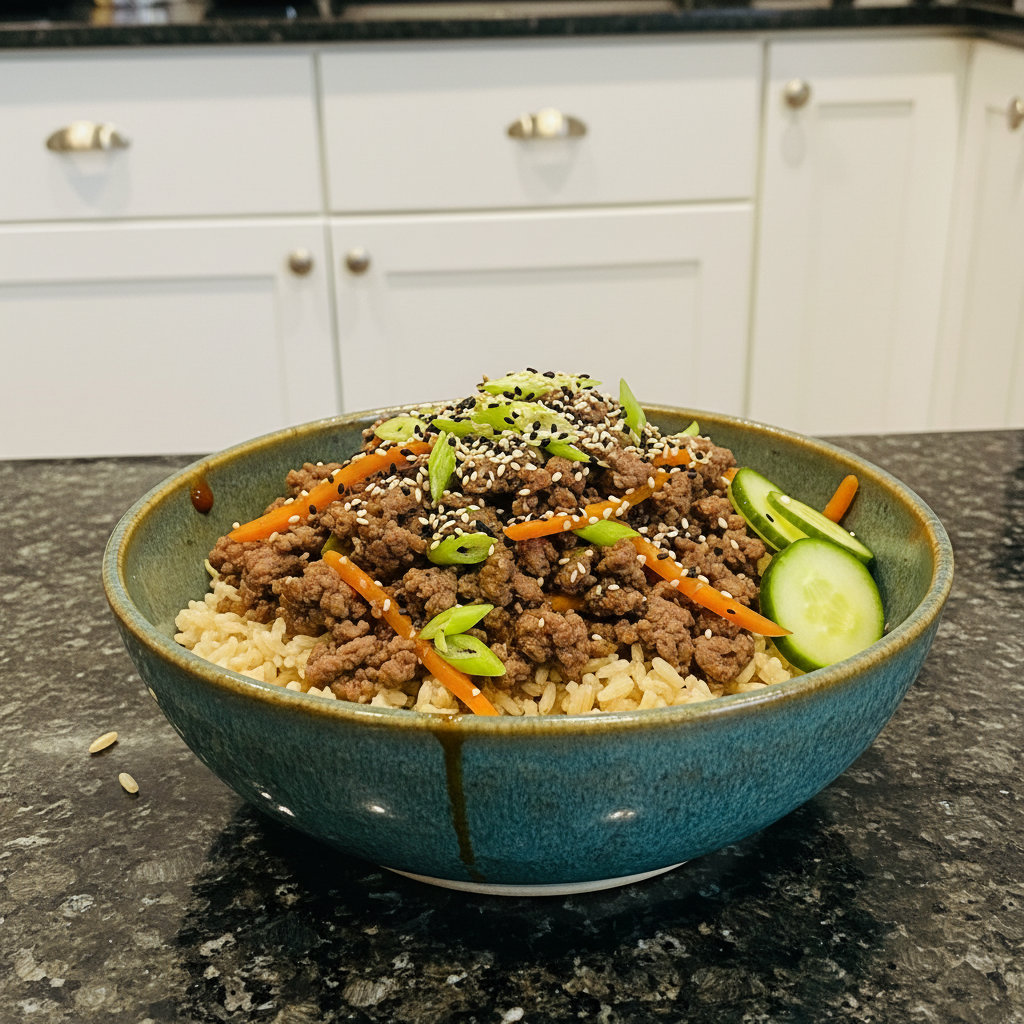
Healthy Ground Beef Rice Bowl: Crispy Umami & Quick Chili Crisp
Ingredients
Equipment
Method
- To quick pickle the carrots and cucumbers (optional but recommended), combine ½ cup rice vinegar, ½ cup warm water, 1 tablespoon sugar, and ½ teaspoon salt in a jar or bowl. Add the shredded carrots and thinly sliced cucumbers and let them sit for at least 15-20 minutes while you prepare the rest of the meal.
- In a large skillet, heat 1 tablespoon of oil over medium-high heat until sizzling hot (around 375-400°F). Add the lean ground beef, breaking it into small, thin pieces. Smash the beef down into a single layer and sear undisturbed for a few minutes until a deep brown crust forms. Cook in batches if necessary to avoid overcrowding.
- When the beef is about halfway cooked, add 1 tablespoon of the low sodium soy sauce and 2/3 of the minced scallions. Continue to sear until the beef is completely browned and cooked through (5-7 minutes total per batch). Once browned, stir in the minced garlic and cook for 30 seconds until fragrant.
- While the beef is browning, whisk together the rice vinegar, honey, minced or grated fresh ginger, red pepper flakes, and the remaining low sodium soy sauce in a small bowl. Set aside.
- Once the beef is browned and garlic fragrant, remove the beef from the pan and set aside. Deglaze the pan with a splash of broth or water, scraping up any browned bits from the bottom. Return the beef to the pan, pour the whisked sauce over, and stir. Cook for 2 minutes, allowing the sauce to thicken and coat the beef. Remove from heat and stir in the sesame oil.
- Sprinkle the remaining scallions over the beef mixture. Taste and adjust seasoning with additional soy sauce or red pepper flakes as desired. Serve the hot beef over cooked brown rice, quinoa, or cauliflower rice. Top generously with quick-pickled shredded carrots, thinly sliced cucumbers, and a sprinkle of toasted sesame seeds.