Skip to content
Oh, the quest for the perfect scrambled eggs! We’ve all been there, hoping for a breakfast that’s not just quick and easy, but also genuinely satisfying and packed with protein. If you’re looking for a breakfast that keeps you full and energized without feeling heavy, then these High Protein Scrambled Eggs are about to become your new go-to. I know the struggle of dry, rubbery eggs, but I’m here to tell you that perfectly fluffy and creamy scrambled eggs are not a myth. My unique method, combining a clever cottage cheese blend with a secret ingredient, guarantees an unbelievably light and luxurious texture every single time. Get ready to transform your mornings with this game-changing recipe and all my best tips for success!
Why You’ll Love This Recipe
My kitchen has seen countless experiments in pursuit of the perfect breakfast, and let me tell you, this recipe is a true revelation. The magic lies in a unique twist that sets these High Protein Scrambled Eggs apart from any you’ve had before.
- The Secret Twist: I blend half of the 2% cottage cheese until it’s completely smooth, then combine it with the remaining curds, the large eggs, and a tiny pinch (just 1/16 tsp!) of baking soda. This creates a beautifully silken base while retaining some textural variety from the unblended curds.
- Unrivaled Fluffiness & Creaminess: The baking soda reacts with the slight acidity in the eggs and cottage cheese, creating micro carbon dioxide bubbles that make the eggs incredibly light and airy. Blending part of the cottage cheese ensures a smooth, integrated mixture that emulsifies perfectly, preventing any watery separation and delivering a luxurious, creamy texture.
- Protein-Packed & Filling: With the significant addition of cottage cheese, these aren’t just delicious; they’re a powerhouse high protein breakfast. This recipe is fantastic for anyone seeking a low carb breakfast or a satisfying keto breakfast, keeping you feeling full and focused all morning long.
- Quick & Easy: Despite its gourmet taste and texture, this recipe is surprisingly simple and comes together in minutes, making it an ideal healthy breakfast solution for even the busiest mornings.
- Versatile & Customizable: This recipe provides a fantastic base that welcomes customization. Feel free to stir in cooked spinach, sautéed mushrooms, or diced bell peppers. You can also experiment with various seasonings like garlic powder or chili powder to create endless flavor combinations.
Ingredients Needed

To create these incredibly fluffy and satisfying high-protein scrambled eggs, you’ll need just a few simple ingredients. I always advocate for quality ingredients, as they truly make a difference in the final taste and texture.
- 4 large eggs
- 1/2 cup 2% cottage cheese (I like Good Culture)
- 1/8 teaspoon kosher salt
- fresh ground black pepper
- olive oil spray
Ingredient Notes & Substitutions
Here are a few notes on the ingredients to help you achieve the best results in your kitchen:
- Eggs: I always recommend using the freshest large eggs you can find. A simple trick to check for freshness is the water test: if an egg sinks and lies flat, it’s very fresh; if it stands on its end, it’s still good but older; if it floats, it’s best to discard it. Large eggs are the standard size for this recipe, offering a consistent protein and moisture balance.
- Cottage Cheese: I specifically call for 2% cottage cheese because it strikes the perfect balance between creaminess and a lighter fat content. My personal favorite is Good Culture, as it has a fantastic texture and flavor. While you can use full-fat or non-fat varieties, be aware that full-fat will yield a richer, perhaps slightly heavier texture, while non-fat might be a bit less creamy.
- Olive Oil Spray: This is my choice for a light coating, but you can certainly substitute with a small pat of butter or a teaspoon of your favorite cooking oil, such as avocado oil, for pan preparation.
- Salt & Pepper: Kosher salt and freshly ground black pepper are the foundation of good seasoning. Remember that these are to taste, so feel free to adjust the quantities based on your preference.
- Dietary Adaptations: You’ll be pleased to know that this recipe is naturally a vegetarian breakfast, low carb breakfast, and keto breakfast friendly, making it a versatile option for various dietary needs without needing any specific substitutions.

How to Make Fluffy High Protein Scrambled Eggs
This method truly transforms the humble scrambled egg into something extraordinary. Follow these steps carefully, and you’ll achieve perfectly fluffy, creamy High Protein Scrambled Eggs every time.
Step 1: Prepare the Egg Mixture with the Unique Twist
In a medium bowl, take half of your 2% cottage cheese and blend it with a stick blender or in a small food processor until it’s completely smooth and silken. Now, add the blended cottage cheese back into the bowl with the remaining curds of cottage cheese. Crack your 4 large eggs into this mixture. Add the 1/8 teaspoon kosher salt, a generous grind of fresh ground black pepper, and that crucial 1/16 teaspoon of baking soda. Using a fork or a whisking technique, gently combine everything until just incorporated. The goal is to mix thoroughly but gently, avoiding over-aeration, which can make eggs tough.
Step 2: Heat the Skillet
Place a medium nonstick skillet over medium-low heat. This gentle heat is key to preventing rubbery eggs. Once the skillet is warm (a drop of water should sizzle gently and evaporate), spray it lightly with olive oil spray, ensuring the entire cooking surface is coated.
Step 3: Cook to Perfection
Pour the egg mixture into the warm skillet. Allow the eggs to sit undisturbed for about 30 seconds as the bottom just begins to set. Then, using a rubber spatula, slowly and gently scrape sections of the eggs from the edges to the center of the pan. Continue this folding eggs technique, creating beautiful, soft folds. Cook for approximately 1 ½ to 2 minutes total, or until the eggs are just set. They should still look slightly moist and custardy, not dry.
Step 4: Serve Immediately
As soon as the eggs are just set eggs to your liking—still gloriously soft and creamy—remove from the heat immediately. Do not let them linger in the hot pan. Serve your fluffy, delicious High Protein Scrambled Eggs right away for the best texture and flavor.
The Science of Fluffy, High-Protein Eggs
There’s a bit of food science magic happening in this recipe, transforming everyday ingredients into an extraordinary dish. Understanding the ‘why’ behind the ‘how’ will make you an even more confident cook!
Why Cottage Cheese Works Wonders
You might wonder, “Does cottage cheese make eggs watery?” The answer is, not with my unique twist! Normally, cottage cheese can release a bit of liquid. However, by blending half of the 2% cottage cheese until completely smooth, we create a fine protein emulsion that integrates seamlessly with the large eggs. This smoother base helps to prevent any watery separation and actually contributes to a more cohesive, creamy texture. The remaining curds provide a lovely textural contrast, adding interest without compromising the creaminess. Beyond texture, the high protein content in cottage cheese significantly boosts the nutritional value, making these scrambled eggs incredibly filling and structurally sound, which helps them hold their fluffy, soft form.
The Role of Baking Soda
That tiny pinch of baking soda is our secret weapon for ultimate fluffiness. When baking soda comes into contact with the slight acidity present in the eggs and cottage cheese, it creates minute carbon dioxide bubbles. These bubbles become trapped within the egg mixture as it cooks, gently aerating the eggs from within. The result is a noticeably lighter, more voluminous, and wonderfully fluffy scrambled egg without any discernible flavor change. It’s a subtle but powerful enhancement!
Benefits of High-Protein Breakfasts
Starting your day with a high protein breakfast, like these High Protein Scrambled Eggs, offers numerous benefits. Protein is essential for satiety, meaning it helps you feel full and satisfied for longer, reducing the urge for mid-morning snacks. It also plays a crucial role in muscle maintenance and repair, and provides sustained energy, helping to avoid those dreaded sugar crashes later in the morning. This recipe is a fantastic way to fuel your body effectively and deliciously.
Pro Tips & Troubleshooting
Mastering scrambled eggs is all about technique. Here are my top tips and ways to avoid common pitfalls to ensure your High Protein Scrambled Eggs are perfect every time.
Pro Tips
- Temperature Control is King: Always cook your eggs over medium-low heat. This gentle temperature prevents the proteins from tightening up too quickly, which leads to rubbery eggs. Aim for a pan surface temperature of around 250-280°F (120-138°C) for slow, even cooking that results in custardy, just set eggs.
- Choose the Freshest Eggs: The quality of your large eggs impacts both flavor and texture. To check for freshness, gently place an egg in a bowl of water. If it sinks to the bottom and lies on its side, it’s very fresh. If it stands on one end, it’s older but still good. If it floats, it’s past its prime. Also, always check the sell-by date.
- Gear Up for Success: A good quality medium nonstick skillet is essential to prevent sticking and ensure easy release of the delicate eggs. Pair it with a flexible rubber spatula, which allows you to gently scrape and create those beautiful, soft folds without scratching your pan.
- Master the Gentle Folding Technique: When the eggs begin to set, use your rubber spatula to gently push the cooked portions from the edges towards the center of the pan. This creates those signature folding eggs and ensures even cooking without over-scrambling, maintaining the light, fluffy texture.
- Don’t Overmix the Twist: When incorporating the blended cottage cheese, remaining curds, eggs, and baking soda, a light hand is best. Use a fork and mix just until combined. Over-aerating at this stage can introduce too much air, leading to a tougher texture rather than fluffy.
- Seasoning Strategy: Always season your eggs *before* cooking. Adding kosher salt and fresh ground black pepper to the raw mixture ensures that the flavors are evenly distributed throughout every bite, rather than just sprinkled on top.
Common Mistakes to Avoid
- Overcooking is the Enemy: This is the most common mistake with scrambled eggs. Overcooked eggs become dry, tough, and rubbery. As soon as the eggs are just set eggs and still look slightly moist, remove from the heat immediately. The residual heat in the pan will continue to cook them slightly.
- High Heat Hysteria: Cooking eggs on high heat is a recipe for disaster. It causes the egg proteins to seize up rapidly, resulting in tough, browned, and unevenly cooked eggs. Stick to that crucial medium-low heat for soft, tender results.
- Eggs Sticking to the Pan: If your eggs are sticking, it’s likely due to one of three reasons: your pan isn’t truly nonstick, it wasn’t sufficiently preheated, or you didn’t use enough fat. Ensure your medium nonstick skillet is in good condition, allow it to warm up properly over medium-low heat, and use a light but adequate spray of olive oil spray or a small amount of butter.
- Ignoring the Unique Twist: Don’t skip the step of blending half the cottage cheese and adding the baking soda! This unique combination is what gives these eggs their unparalleled fluffy and silken texture. Without it, you’ll miss out on the signature creamy consistency and lightness.
- Overcrowding the Pan: Cooking too many eggs at once in a small pan can drastically lower the pan’s temperature. This can lead to the eggs steaming rather than scrambling evenly, resulting in a less desirable texture. If you’re making a large batch, cook them in smaller portions.
Serving & Storage
Once you’ve mastered these fluffy High Protein Scrambled Eggs, the possibilities for serving are endless! They are truly delicious on their own, but can also be the star of a more elaborate meal.
Serving Ideas
- Classic Pairings: For a simple yet satisfying meal, serve your eggs alongside a slice of toasted whole grain toast and a vibrant bowl of fresh berries. The combination of textures and flavors is delightful.
- Creative Meal Builds: These eggs are incredibly versatile for building heartier meals. Use them as the protein-packed base for savory breakfast tacos, hearty breakfast burritos, or adorable breakfast sliders (my favorite on small potato buns!). You can also add some cooked breakfast sausage or crispy bacon for an extra boost of protein content.
- Savory Breakfast Bowl: Create a personalized breakfast bowl by layering fresh spinach, sautéed mushrooms, or diced bell peppers. Top with your scrambled eggs and finish with your favorite additions like a sprinkle of cheese, a dollop of salsa, or a dash of hot sauce.
- Flavor Boosters: Don’t be shy about enhancing the flavor profile. A pinch of garlic powder, onion powder, dried basil, oregano, chili powder, or cumin can transform your eggs from classic to Italian-inspired, Mexican, or whatever your palate desires!
Storage and Make-Ahead
These High Protein Scrambled Eggs are excellent for meal prep, making busy mornings a breeze!
- Refrigeration: Cooked scrambled eggs can be stored in an airtight container in the refrigerator for up to 3-4 days. Allow them to cool completely before transferring them to the container to prevent condensation.
- Freezing (Optional): While freezing scrambled eggs is possible, I generally don’t recommend it for the best texture, as they can become a bit rubbery upon thawing and reheating. However, if you absolutely must, store them in a single layer in an airtight freezer-safe bag or container for up to 1-2 months.
- Reheating:
- Microwave: This is the quickest method. Reheat on a low power setting, stirring frequently, until just warmed through. Adding a tiny splash of milk or water before reheating can help retain some moisture.
- Stovetop: For the best texture retention, reheat on the stovetop. Place a small amount of butter or oil in a nonstick skillet over low heat. Add the eggs and gently stir until warmed through. Be careful not to overcook them.
- Oven: If you’re reheating a larger batch, spread the eggs in an oven-safe dish, cover loosely with foil, and warm in a low oven (around 250°F or 120°C) until heated through, stirring occasionally.
- Meal Prep Integration: Whip up a larger batch on Sunday, portion them into individual containers, and you’ll have a delicious, high-protein, grab-and-go breakfast ready for the entire week!
Conclusion
I truly hope you’re excited to try this game-changing recipe for High Protein Scrambled Eggs. Thanks to our unique twist of blending a portion of the cottage cheese and adding that tiny pinch of baking soda, you’ll unlock an incredibly fluffy, remarkably creamy, and absolutely delicious breakfast experience. Say goodbye to dry, mediocre eggs forever!
This recipe is designed to be easy to master, guaranteeing superior results that will elevate your breakfast routine. Don’t be afraid to experiment with the suggested variations and serving ideas to truly make these eggs your own. Whether you’re looking for a quick weekday meal or a satisfying weekend brunch, these eggs deliver. I encourage you to save or print this recipe, share your amazing creations, and explore other healthy breakfast ideas right here on my blog!
FAQ
Q: Why add cottage cheese to scrambled eggs?
A: Adding cottage cheese to scrambled eggs significantly boosts the protein content, keeping you feeling full and satisfied longer. Our unique twist, which involves partially blending the 2% cottage cheese, also creates a wonderfully creamy, silken texture, preventing the eggs from becoming dry without making them watery.
Q: How do you make scrambled eggs fluffy with cottage cheese?
A: My secret involves two steps: first, blend half of the 2% cottage cheese until it’s completely smooth before combining it with the remaining curds and large eggs. Second, add a tiny pinch (1/16 tsp) of baking soda to the egg mixture. The baking soda creates small carbon dioxide bubbles during cooking, resulting in extra airy and fluffy scrambled eggs, while the blended cottage cheese ensures a smooth, silken base.
Q: What are the best tips for perfectly fluffy high-protein scrambled eggs?
A: For perfectly fluffy high-protein scrambled eggs, always use medium-low heat, a quality nonstick skillet, and a rubber spatula. Employ a gentle folding eggs technique as they cook, and most importantly, remember to stop cooking when the eggs are just set eggs—still slightly moist—to avoid overcooking.
Q: Can I customize my high-protein scrambled eggs?
A: Absolutely! These eggs are a fantastic base for customization. Feel free to stir in cooked spinach, sautéed mushrooms, or diced bell peppers for extra nutrients and flavor. You can also experiment with spices like garlic powder, onion powder, chili powder, or cumin to create different flavor profiles.
Q: What are some healthy serving ideas for high-protein scrambled eggs?
A: You can serve these high-protein scrambled eggs in many healthy ways! Enjoy them with a slice of whole grain toast and fresh berries, or use them to fill breakfast tacos or breakfast burritos. They’re also perfect as the protein component in a vibrant breakfast bowl with extra veggies.
Q: How long can I store leftover high-protein scrambled eggs?
A: Leftover high-protein scrambled eggs can be stored in an airtight container in the refrigerator for 3-4 days. For best results when reheating, use a low temperature on the stovetop with a little butter, or gently microwave on low power, adding a splash of milk or water to maintain moisture.
Q: What is the nutritional breakdown of high-protein scrambled eggs?
A: These high-protein scrambled eggs offer a balanced nutritional profile. The large eggs provide high-quality protein and essential vitamins, while the 2% cottage cheese adds even more protein content with fewer calories and less fat content compared to whole milk varieties. This combination creates a satisfying meal rich in protein, making it an excellent choice for a balanced breakfast.
Q: What kind of cottage cheese is best for scrambled eggs?
A: I recommend using 2% cottage cheese, such as Good Culture, for the best balance of creaminess and a slightly reduced fat content. While full-fat will be richer and non-fat lighter, 2% offers the ideal consistency and flavor that melds beautifully with the eggs without being too heavy.
Q: Does cottage cheese make eggs watery?
A: This is a common concern, but with our unique twist, no! If you just stir in regular cottage cheese, some brands might release a bit of liquid. However, by blending half of the cottage cheese until smooth before combining it with the eggs, we create an improved emulsion that prevents watery separation and ensures a consistently creamy, integrated texture.
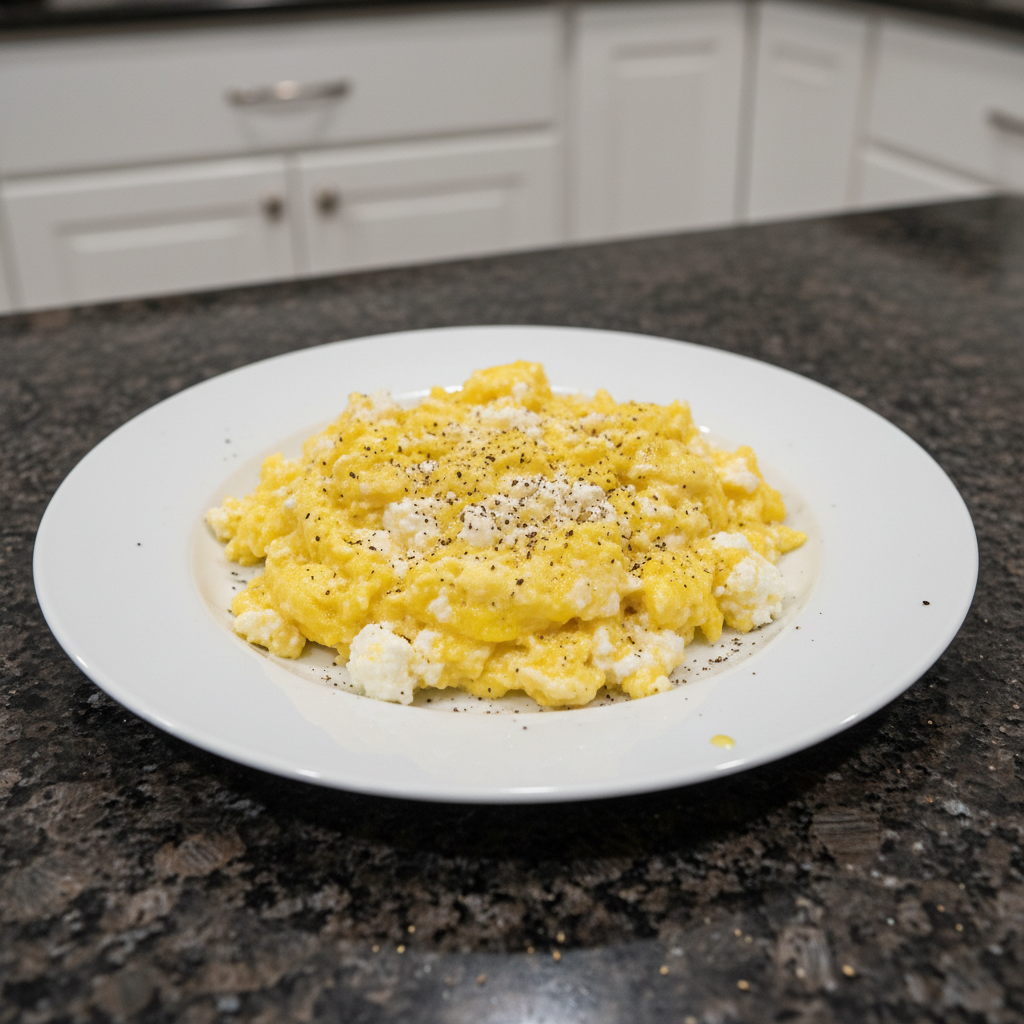
Fluffy High-Protein Scrambled Eggs
Ingredients
Equipment
Method
- In a medium bowl, take half of your 2% cottage cheese and blend it with a stick blender or in a small food processor until it’s completely smooth and silken. Now, add the blended cottage cheese back into the bowl with the remaining curds of cottage cheese. Crack your 4 large eggs into this mixture. Add the 1/8 teaspoon kosher salt, a generous grind of fresh ground black pepper, and that crucial 1/16 teaspoon of baking soda. Using a fork or a whisking technique, gently combine everything until just incorporated. The goal is to mix thoroughly but gently, avoiding over-aeration.
- Place a medium nonstick skillet over medium-low heat. This gentle heat is key to preventing rubbery eggs. Once the skillet is warm (a drop of water should sizzle gently and evaporate), spray it lightly with olive oil spray, ensuring the entire cooking surface is coated.
- Pour the egg mixture into the warm skillet. Allow the eggs to sit undisturbed for about 30 seconds as the bottom just begins to set. Then, using a rubber spatula, slowly and gently scrape sections of the eggs from the edges to the center of the pan. Continue this folding eggs technique, creating beautiful, soft folds. Cook for approximately 1 ½ to 2 minutes total, or until the eggs are just set. They should still look slightly moist and custardy, not dry.
- As soon as the eggs are just set to your liking—still gloriously soft and creamy—remove from the heat immediately. Do not let them linger in the hot pan. Serve your fluffy, delicious High Protein Scrambled Eggs right away for the best texture and flavor.