Skip to content
There’s something uniquely comforting about a warm bowl of soup, especially when you’re feeling a little under the weather or simply craving a hug in a bowl. For generations, cultures around the world have turned to their own versions of this soothing elixir. In Italian households, that remedy is often a beautiful, brothy concoction affectionately known as Italian Penicillin Soup. If you enjoy this, you might also like a classic Italian wedding soup. It’s a simple dish, yet deeply nourishing and packed with a flavor that truly revitalizes the soul. Today, I’m going to show you how to make the most incredible Italian Penicillin Soup, including my special technique for enhanced taste and all my practical tips for success. Get ready to discover your new go-to comfort food.
Why You’ll Love This Recipe
My version of Italian Penicillin Soup stands out because of one crucial step I never skip: before adding any liquid, I gently sauté the roughly chopped carrots, celery, and either an onion or shallot in a drizzle of extra virgin olive oil. This simple act transforms the foundation of your soup.
This pre-browning step isn’t just about softening vegetables; it’s about harnessing the magic of the Maillard reaction. As these humble vegetables lightly caramelize, they develop complex, savory, and subtly sweet flavor compounds. These flavors wouldn’t form if you just boiled them. This process builds an incredibly rich and nuanced base for your broth, creating a significantly more satisfying and delicious Italian Penicillin Soup without adding extra ingredients.
Beyond this flavor-building technique, you’ll love this recipe because it results in a deeply brothy soup that is the epitome of comfort food. For another hearty, creamy option, try our creamy broccoli cheddar soup. It’s a truly nourishing soup, perfect when you need a boost, and our method ensures a consistently flavorful result every time. It’s also a naturally gluten-free recipe, making it a wonderful, easy meal for the whole family to enjoy.
Ingredients Needed

- 8 cups chicken stock or bone broth
- 2 small-medium sized carrots, peeled then roughly chopped
- 2 ribs celery, roughly chopped
- 1 large shallot OR small yellow onion, peeled then roughly chopped
- 2 cloves garlic, peeled then smashed
- 2-3 sprigs fresh thyme
- 1 bay leaf
- 1 parmesan cheese rind
- drizzle extra virgin olive oil
- salt and pepper
- 1/2 lemon
- 8 oz gluten free stelline pasta, Jovial brand recommended, see notes
- freshly grated parmesan cheese, for serving
Ingredient Notes & Substitutions
Broth: I always recommend a good quality chicken stock or bone broth for this Italian Penicillin Soup. Bone broth adds an extra layer of richness and nutritional benefits, while a good chicken stock provides a clean, comforting base.
Mirepoix: The combination of carrots, celery, and shallot or yellow onion forms the classic mirepoix, which is the aromatic flavor base of so many wonderful soups. Sautéing them first, as we do in this recipe, allows for that crucial Maillard reaction, deepening their natural sweetness and savory notes.
Aromatics: Garlic, fresh thyme, and a bay leaf are indispensable for adding depth and a fragrant herbaceousness to the broth. They infuse the liquid with subtle, comforting aromas.
Parmesan Rind: This is my secret ingredient! Adding a parmesan cheese rind to the simmering soup releases incredible umami and a deep, savory flavor, transforming the broth without you having to do anything extra. It’s also a fantastic zero-waste expert tip.
Pastina: For this gluten-free recipe, I highly recommend gluten free stelline pasta, with Jovial brand pasta being a fantastic choice. However, if gluten isn’t an issue, or if you prefer a different texture, traditional acini di pepe or orzo are also wonderful options. The key is small pasta that cooks quickly and gently.
Finishing Touches: A squeeze of fresh lemon juice at the end brightens the entire soup, lifting all the flavors without making it taste overtly lemony. And, of course, a good quality extra virgin olive oil, along with salt and pepper, are essential for proper seasoning and bringing everything into balance.

How to Make Italian Penicillin Soup
Prepare Your Flavor Base
To a large soup pot or Dutch oven, drizzle a little extra virgin olive oil over medium heat. Add your roughly chopped carrots, celery, and shallot or yellow onion. Gently sauté these vegetables, stirring occasionally, until they soften and begin to lightly caramelize, about 7-10 minutes. You’ll notice them becoming tender and taking on a beautiful golden hue, and a sweet, savory aroma will fill your kitchen—this is where the flavor magic happens. Now, add the chicken stock or bone broth, smashed garlic, fresh thyme sprigs, bay leaf, parmesan cheese rind, a pinch of salt, and a grind of pepper. Place a lid on top, then turn the heat to high to bring the liquid to a boil. Once boiling, turn the heat down to low then simmer with the lid on for 20-30 minutes or until the vegetables are very tender. You want a gentle simmer here, where small bubbles occasionally break the surface, allowing the flavors to meld beautifully without over-reducing the broth.
Blend for Velvety Smoothness
Once the vegetables are very tender, carefully remove the thyme stems, bay leaf, and the parmesan cheese rind from the pot. Transfer the cooked vegetables into a blender. Add about a ladleful of the hot broth to the blender. Blend the mixture until the vegetables are very, very smooth, creating a creamy, velvety puree. Remember to crack the lid of the blender open slightly to allow steam to escape and prevent pressure buildup when blending hot liquids. This expert tip ensures safety. Pour some or all of the pureed vegetables back into the soup, depending on your desired consistency, then stir to combine. Alternatively, for ease, you can use an immersion blender directly in the pot to puree the vegetables until smooth.
Season and Hold
Add a squeeze of fresh lemon juice—the soup shouldn’t taste lemony, just brightened and more vibrant. Taste the soup and add additional salt and pepper as needed. I always taste before and after the lemon and blending to ensure perfect seasoning. Place a lid on top to keep the soup warm while you prepare your pasta.
Cook Pasta and Serve
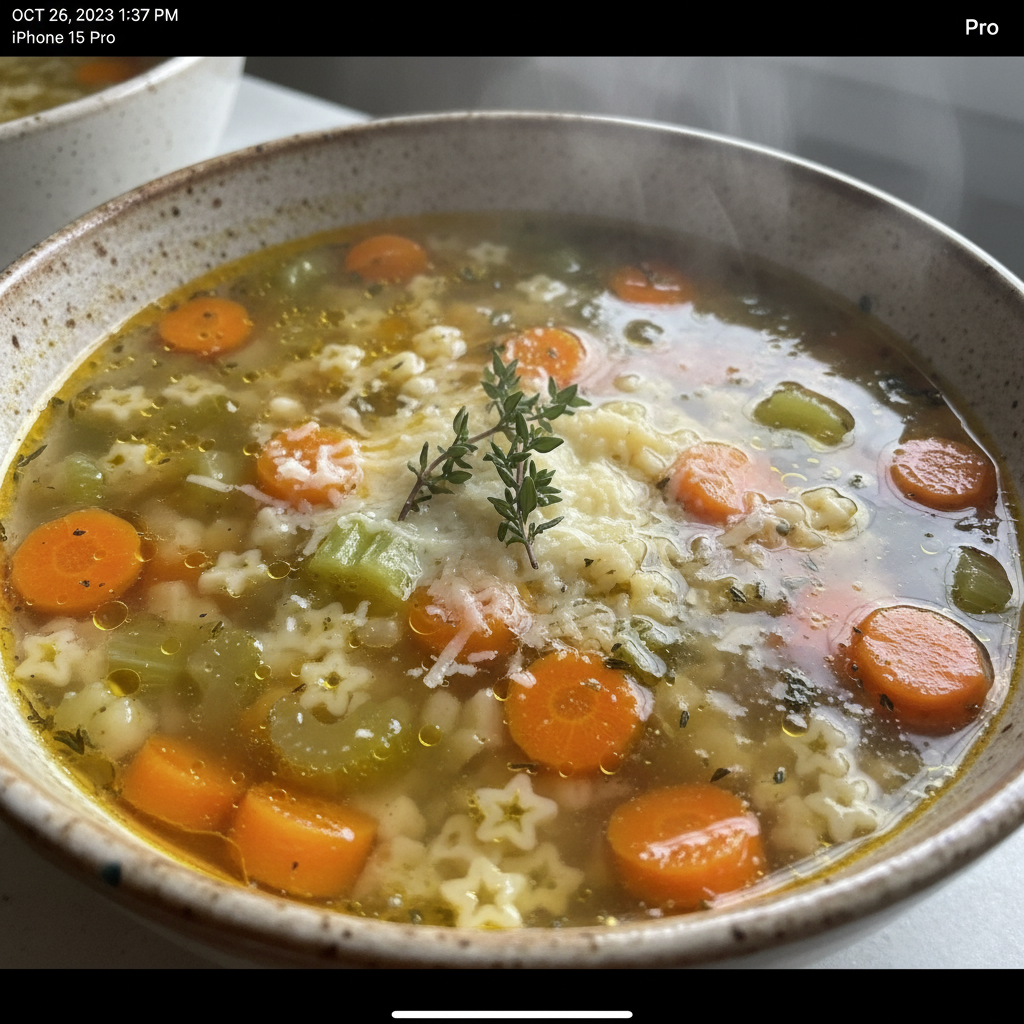
In a separate pot, cook the gluten free stelline pasta in a pot of salted, boiling water according to package directions. You want it cooked al dente, firm to the bite, to prevent it from becoming mushy. Drain the pasta and divide it between individual serving bowls. Scoop the warm, flavorful soup over the cooked pasta. Serve immediately with a generous sprinkle of freshly grated parmesan cheese and freshly cracked black pepper. Enjoy your comforting bowl of Italian Penicillin Soup!
Mastering Your Pastina Soup: Broth, Pasta, and Flavor Secrets
Achieving the Perfect Broth
The secret to a truly outstanding Italian Penicillin Soup lies in its broth. When simmering your soup, it’s crucial to maintain a gentle simmer, not a rolling boil. A gentle simmer, characterized by small, occasional bubbles, allows for maximum flavor extraction from your mirepoix, garlic, thyme, and bay leaf. This slow infusion ensures a deeply flavorful broth, especially with the addition of the parmesan cheese rind, which imparts a wonderful umami richness. A rolling boil, on the other hand, can over-reduce your liquid and lead to a less nuanced flavor.
Adjusting seasoning is also vital. Always taste your soup before and after blending and before and after adding the lemon juice. Flavors can intensify as the soup simmers and can change once you’ve blended the vegetables into the broth. Don’t be shy about adding more salt and pepper until it tastes just right to you.
Perfecting Your Pastina
The choice of pasta makes a difference in your Italian Penicillin Soup. While I recommend gluten free stelline pasta, like Jovial brand pasta, for its classic small star shape and excellent texture, other pastina shapes offer unique variations. Acini di pepe, tiny peppercorn-shaped pasta, creates a denser, chewy mouthfeel, while orzo, resembling grains of rice, adds a slightly larger, yet still comforting, bite. Experiment to find your favorite!
A common mistake that leads to mushy pasta is boiling it directly in the soup broth. This is a big no-no, especially if you plan on having leftovers! To prevent your pastina from becoming mushy and absorbing too much of your precious broth, always cook it separately in salted water until al dente. Then, add it to individual bowls just before serving your Italian Penicillin Soup.
Pro Tips & Troubleshooting
Pro Tips
Safe Blending: When blending hot liquids, always crack the lid of the blender open slightly to allow steam to escape and prevent pressure buildup. Alternatively, for ease and safety, an immersion blender can be used directly in the pot.
Umami Boost: Don’t discard those parmesan cheese rinds! Freeze them and add them to future soups or stews for an incredible umami boost and deep, savory flavor.
Flavor Foundation: Remember the unique twist of this recipe: always start by gently sautéing your mirepoix (carrots, celery, onion/shallot) in extra virgin olive oil. This simple step helps develop the Maillard reaction, creating a richer, more complex broth foundation that truly elevates your soup.
Brighten, Don’t Lemon: The lemon juice is for brightening the flavors of your soup, not for making it taste sour or overtly lemony. Add just a 1/2 lemon squeeze and then taste. You can always add more if you like, but it’s hard to take it out!
Optimal Serving Temperature: Serve your Italian Penicillin Soup hot, but not scalding. Allowing it to cool slightly to a comfortably warm temperature allows the complex flavors to be fully perceived and enjoyed.
Common Mistakes to Avoid
Pasta in Broth: Never boil pasta directly in the soup broth. This is the surest way to end up with mushy pasta and a significantly thickened broth, especially for leftovers. Cook it separately and add to individual bowls.
Over-Lemons: Adding too much lemon juice can make your soup overly tart. Remember, it’s meant to brighten, not dominate, the flavor profile.
Bland Broth: If your broth lacks flavor, it might be due to not properly sautéing the mirepoix, not simmering long enough, or skipping the parmesan rind. Ensure you build that flavor foundation from the start and season adequately throughout the cooking process.
Not Blending Enough: For the smoothest, most velvety texture that characterizes this Italian Penicillin Soup, ensure you blend the cooked vegetables until they are very, very smooth. Any lumps will detract from the luxurious mouthfeel.
Serving & Storage
Serving Ideas
This Italian Penicillin Soup is fantastic on its own, but here are some ways to make it even better. I love serving it with a generous sprinkle of freshly grated parmesan cheese and freshly cracked black pepper. For dipping, warm Gluten Free Focaccia, Gluten Free Biscuits, or Gluten Free Flatbreads are perfect.
For a subtle kick, try adding a pinch of red chili pepper flakes to individual bowls. If you’re feeling fancy, a tiny drizzle of truffle oil over each serving can elevate the experience. To make it a more substantial meal, add diced or shredded cooked chicken. Rotisserie chicken, baked chicken, or air-fried chicken all work wonderfully.
Storage and Make-Ahead
To truly maintain the quality of your Italian Penicillin Soup, especially the pasta, I highly recommend storing the broth and cooked pasta separately. Cooked pasta will continue to absorb liquid, which can lead to it becoming mushy and soaking up too much of your delicious broth over time.
Store the pureed broth in an airtight container in the refrigerator for 3-4 days. Store any leftover cooked pasta separately in its own airtight container for up to 2-3 days.
For longer storage, the broth freezes beautifully. Let the broth cool completely, then transfer it to freezer-safe containers or bags. I like to freeze it in individual portions for easy reheating. The broth can be frozen for up to 3 months. While you can freeze cooked pasta, its texture can change upon thawing, so I generally recommend cooking fresh pasta when you reheat the broth.
To reheat, gently warm the broth on the stovetop over medium-low heat until heated through. If you stored cooked pasta separately, you can warm it with a little bit of the broth or a splash of water, or simply cook a fresh batch of pastina.
Conclusion
There you have it—my recipe for Italian Penicillin Soup, a truly comforting, nourishing, and deeply flavorful brothy soup that I turn to again and again. The simple yet powerful technique of gently sautéing the mirepoix before simmering is what truly elevates this classic comfort food to new heights, creating a depth of flavor that’s both satisfying and restorative.
I encourage you to confidently try this recipe in your own kitchen. With these clear steps and my expert tips, even beginners can achieve fantastic results. Feel free to experiment with the recommended variations or serving ideas to make it your own. I’d love to hear how your Italian Penicillin Soup turns out, so please share your creations or leave a comment below. And if you’re looking for more delicious gluten-free recipes, be sure to explore the other offerings on my site!
FAQ
What is Pastina Soup and why is it called Italian Penicillin?
Pastina Soup is a simple, nourishing brothy soup traditionally made with tiny pasta shapes, often given to those feeling unwell or as a comforting meal. It earned its endearing nickname, “Italian Penicillin,” due to its reputation as a healing, soothing remedy, especially when made with a rich, flavorful chicken stock or bone broth.
What kind of pasta should I use for Italian Penicillin Soup?
For this recipe, I recommend gluten free stelline pasta, with Jovial brand pasta being an excellent choice. Other small pasta shapes like acini di pepe or orzo also work well. Using gluten-free options ensures that this comforting soup is accessible to everyone.
Can I add protein or other vegetables to Italian Penicillin Soup?
Absolutely! You can easily enhance your Italian Penicillin Soup. I often suggest adding diced or shredded cooked chicken, such as rotisserie chicken, baked chicken, or air-fried chicken, for a more substantial meal. If you enjoy chicken soups with pasta, you might also like our easy chicken gnocchi soup. You can also incorporate other soft-cooked vegetables like spinach or peas at the very end of cooking.
How do you store and reheat leftover Italian Penicillin Soup?
To maintain the best quality and prevent the pasta from becoming mushy, it’s crucial to store the broth and cooked pasta separately. Store the broth in an airtight container in the fridge for 3-4 days, and the cooked pasta separately for 2-3 days. The broth also freezes well for up to 3 months. When reheating, gently warm the broth and cook fresh pasta, or reheat separately stored pasta with a little broth or water.
What is the best way to get a smooth, flavorful broth?
The best way to achieve a smooth, flavorful broth is by gently sautéing the carrots, celery, and onion or shallot first. This crucial step helps build deep umami and complex flavors through the Maillard reaction. Also, including a parmesan cheese rind during simmering and blending the cooked vegetables until very smooth contributes to an incredibly rich and velvety broth.
What are the benefits of adding a parmesan cheese rind to soup?
Adding a parmesan cheese rind to your soup as it simmers is a fantastic expert tip. It imparts incredible umami and a deep, salty, savory depth to the broth, significantly enhancing the overall flavor without needing extra ingredients. It’s also a wonderful way to utilize a part of the cheese rind that might otherwise be discarded.
Do I have to blend the vegetables in Pastina Soup?
Blending the vegetables in Pastina Soup is optional, but I highly recommend it for this recipe. It creates the classic smooth, velvety texture that makes this soup so comforting and luxurious. If you prefer, an immersion blender can be used directly in the pot for convenience.
How do I prevent my pasta from becoming mushy in soup?
The key to preventing mushy pasta in your Italian Penicillin Soup is to cook it separately, al dente, in salted boiling water. Only add the cooked pasta to individual bowls of soup just before serving. Never boil the pasta directly in the soup broth, as it will continue to absorb liquid and become overcooked.
Italian Penicillin Soup: The Ultimate Flavor-Packed Comfort Recipe
Ingredients
Equipment
Method
- To a large soup pot or Dutch oven, drizzle a little extra virgin olive oil over medium heat. Add your roughly chopped carrots, celery, and shallot or yellow onion. Gently sauté these vegetables, stirring occasionally, until they soften and begin to lightly caramelize, about 7-10 minutes.
- Now, add the chicken stock or bone broth, smashed garlic, fresh thyme sprigs, bay leaf, parmesan cheese rind, a pinch of salt, and a grind of pepper. Place a lid on top, then turn the heat to high to bring the liquid to a boil. Once boiling, turn the heat down to low then simmer with the lid on for 20-30 minutes or until the vegetables are very tender, maintaining a gentle simmer.
- Once the vegetables are very tender, carefully remove the thyme stems, bay leaf, and the parmesan cheese rind from the pot. Transfer the cooked vegetables into a blender. Add about a ladleful of the hot broth to the blender. Blend the mixture until the vegetables are very smooth, remembering to crack the lid slightly open to allow steam to escape.
- Pour some or all of the pureed vegetables back into the soup, depending on your desired consistency, then stir to combine. Alternatively, use an immersion blender directly in the pot to puree the vegetables until smooth.
- Add a squeeze of fresh lemon juice—the soup shouldn’t taste lemony, just brightened and more vibrant. Taste the soup and add additional salt and pepper as needed. Place a lid on top to keep the soup warm while you prepare your pasta.
- In a separate pot, cook the gluten free stelline pasta in a pot of salted, boiling water according to package directions until al dente. Drain the pasta and divide it between individual serving bowls.
- Scoop the warm, flavorful soup over the cooked pasta. Serve immediately with a generous sprinkle of freshly grated parmesan cheese and freshly cracked black pepper. Enjoy your comforting bowl of Italian Penicillin Soup!