Skip to content
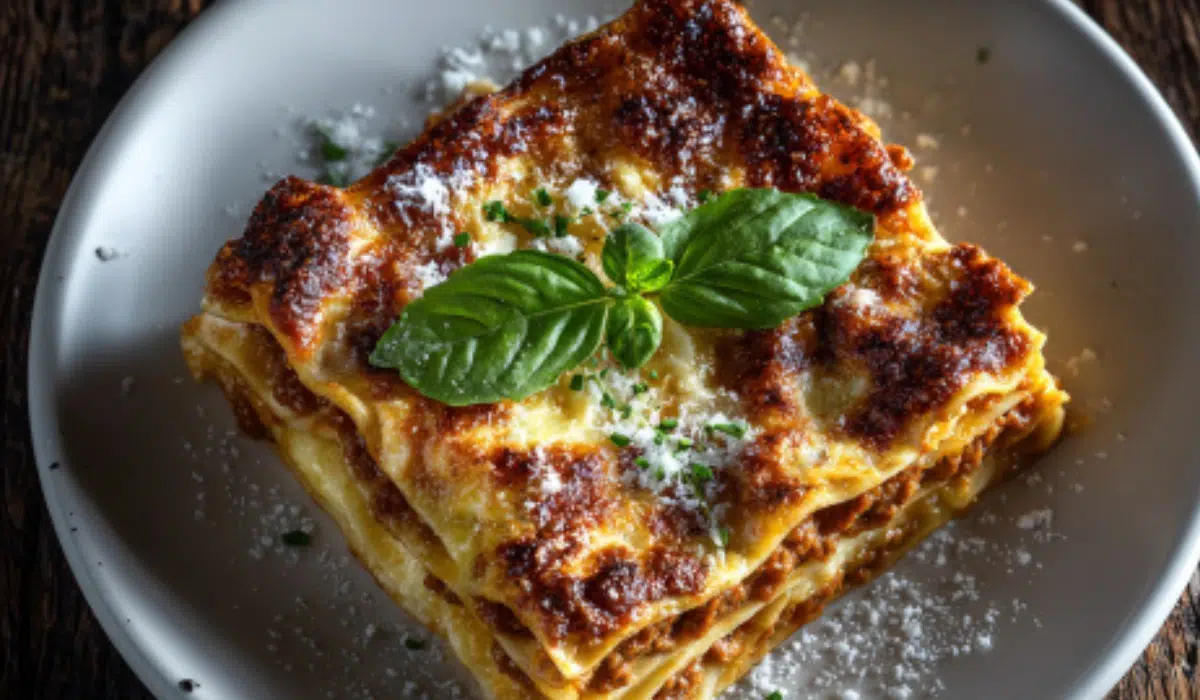
Few dishes say comfort like a bubbling tray of lasagna bolognese fresh from the oven. This version stays true to the Italian classic, layering a slow-simmered ragù, silky béchamel, and delicate pasta sheets for the perfect balance of richness and texture. Every bite melts together into something cozy yet deeply flavorful. Whether you’re cooking for Sunday dinner or a special occasion, this lasagna rewards a little patience with pure satisfaction golden edges, creamy layers, and that unmistakable aroma that fills the kitchen.
Table of Contents
Why You’ll Love Lasagna
This lasagna bolognese isn’t your average layered pasta it’s a masterpiece of flavor, texture, and tradition. Here’s why you’ll fall in love with it:
- Authentic Italian flavor: Authentic lasagne alla Bolognese use béchamel with ragù and Parmigiano, not ricotta, as shown by Bologna’s official recipe for lasagne verdi alla bolognese.
- Perfectly balanced layers: Thin pasta sheets and just enough sauce create a clean, sliceable piece every time.
- Make-ahead friendly: Both sauces can be prepared in advance, making assembly effortless on busy days, or try our Crockpot ravioli lasagna when you need a no-fuss option.
- Comfort food, elevated: Warm, cheesy, and deeply satisfying ideal for family dinners or impressing guests.
- Consistent results: Follow the method once, and you’ll have a foolproof classic for life.
Ingredients Needed

Every component of this lasagna bolognese contributes to its rich layers and classic flavor. Organize your ingredients before you start it’ll make the process smoother and more enjoyable.
For the Ragù alla Bolognese
- 2 tablespoons olive oil
- 4 ounces pancetta, finely diced
- 1 medium onion, finely chopped
- 1 carrot, finely chopped
- 1 celery stalk, finely chopped
- 1 pound ground beef (80/20 blend)
- ½ pound ground pork
- ½ cup dry white wine
- 1 cup whole milk
- 1 ½ cups crushed tomatoes or tomato puree
- 2 tablespoons tomato paste
- 1 bay leaf
- Kosher salt and freshly ground black pepper, to taste
For the Béchamel Sauce
- 4 tablespoons unsalted butter
- 4 tablespoons all-purpose flour
- 3 cups whole milk, warmed
- Pinch of freshly grated nutmeg
- Kosher salt and pepper, to taste
For the Pasta Sheets
- 1 ½ to 2 pounds fresh egg pasta sheets or
- 1 box (about 12 ounces) no-boil lasagna noodles
- 1 tablespoon vegetable oil (for greasing, if pre-cooking)
For Assembly
- 1 ½ quarts warm ragù Bolognese
- 3 cups béchamel sauce
- 3 ounces freshly grated Parmigiano-Reggiano
- Butter, for greasing the baking dish
Notes & Substitutions
- Pasta choice: Fresh egg pasta gives the most authentic texture, but no-boil sheets work with slightly thinner sauce layers.
- Meat options: Swap pork for Italian sausage for extra depth, or use all beef for a lighter flavor.
- Milk: Whole milk adds creaminess; for a dairy-free option, try unsweetened oat milk with vegan butter in the béchamel.
- Cheese: Parmigiano-Reggiano delivers a sharp, nutty finish, but Pecorino Romano adds a bolder edge.
- Gluten-free option: Use gluten-free lasagna noodles and substitute a 1:1 gluten-free flour blend in the béchamel.
How to Make Lasagna Bolognese
Before you begin, set aside some time great lasagna is built in layers of care and flavor. Here’s how to make it step by step for flawless results.
Timing Overview
- Ragù: 2½–3 hours simmer time
- Béchamel: 15 minutes
- Assembly & baking: 45–50 minutes
- Resting: 10–15 minutes before slicing
Step 1: Build the Ragù alla Bolognese
- Start the flavor base: Warm olive oil in a large heavy pot over medium heat. Add pancetta and cook until the fat renders and edges crisp slightly this lays down the smoky foundation of the sauce.
- Sweat the vegetables: Add onion, carrot, and celery. Cook slowly until translucent and aromatic, about 8 minutes. This gentle cooking builds sweetness that balances the meat later.
- Brown the meat: Add ground beef and pork. Break up with a wooden spoon and cook until all moisture evaporates and the meat begins to brown this browning is key to flavor depth.
- Deglaze and enrich: Stir in wine and let it reduce by half, scraping the pan bottom to collect browned bits. Add tomato paste, crushed tomatoes, and bay leaf.
- Add milk and simmer: Simmer the ragù gently for a few hours until it turns rich, thick, and glossy, adding milk partway through as outlined by the Accademia Italiana della Cucina.
Step 2: Make the Béchamel Sauce
- Start the roux: Melt butter in a saucepan over medium heat. Whisk in flour until smooth and foamy, about 1 minute.
- Add milk gradually: Slowly pour in warm milk, whisking constantly to avoid lumps. Keep whisking until it thickens enough to coat the back of a spoon about 5 minutes.
- Season: Add a pinch of nutmeg, salt, and pepper. Cover with plastic wrap touching the surface to prevent a skin from forming.
Step 3: Prep the Pasta Sheets
- If using fresh pasta: Cut sheets to fit your pan. Blanch briefly in salted water, then cool in ice water. Drain and lightly oil each sheet so they don’t stick.
- If using no-boil pasta: Soak the sheets in warm water for 30 minutes until pliable, then pat dry.
Step 4: Assemble and Bake
- Preheat oven to 375°F (190°C). Butter a 9×13-inch baking dish.
- Layer in this order:
- Thin layer of ragù on the bottom.
- Pasta sheet.
- Spoonful of ragù.
- Drizzle of béchamel.
- Sprinkle of Parmigiano-Reggiano.
Repeat about six layers, ending with béchamel and cheese on top.
- Bake: Place the dish on the center rack and bake until bubbling at the edges and golden brown on top, about 35–40 minutes.
- Rest: Let it sit for 10–15 minutes before slicing. This resting time allows the layers to firm up for clean, picture-perfect slices.
Pro Tips & Troubleshooting
Even the best cooks can face a few bumps when making lasagna bolognese. These tips and quick fixes will keep your layers perfect every time.
Expert Tips for Texture and Flavor
- Take your time with the ragù. A slow simmer (at least two hours) deepens flavor and builds that signature richness. Don’t rush it the sauce tells you when it’s ready by turning thick and glossy.
- Don’t overfill each layer. Thin, even spreads of ragù and béchamel create balanced bites and prevent sogginess.
- Rest before serving. This is the secret to clean slices. Ten to fifteen minutes lets the sauces set without drying out.
- Use fresh nutmeg. Grate it directly into the béchamel for a subtle warmth that ties the whole dish together.
- Taste and season as you go. The sauce, béchamel, and even pasta water need salt for the final flavor to shine.
Common Mistakes to Avoid
- Watery lasagna: Happens when sauces are too thin. Simmer ragù longer and make sure béchamel coats the spoon before layering.
- Burned top: Cover loosely with foil for the first 20 minutes, then uncover to brown beautifully.
- Tough noodles: Overbaked pasta dries out. Check doneness at 35 minutes and pull when edges are golden but not crisp.
- Uneven layers: Spread sauces all the way to the edges to keep the corners moist.
- Broken béchamel: If it looks grainy, whisk in a splash of warm milk to bring it back together.
Creative Trick
For an unbeatable golden top, mix a tablespoon of béchamel with grated Parmigiano and a drop of cream, then spread it across the final layer. It bakes into a glossy, lightly crisp crust that looks straight out of Bologna.
Serving, Storage & Variations
The beauty of lasagna bolognese lies not only in its flavor but in how well it fits every occasion from casual dinners to elegant gatherings. Here’s how to serve it right, keep it fresh, and tweak it to your liking.
Serving Ideas
- Serve warm with a crisp green salad dressed in olive oil and lemon it cuts through the richness perfectly, or add stuffed mushrooms to round out the meal.
- A glass of dry red wine, like Chianti or Sangiovese, complements the sauce’s depth, and baked chicken Parmesan makes a hearty partner for big dinners.
- Garnish with a light sprinkle of grated Parmigiano-Reggiano or fresh basil leaves just before serving.
Storage & Reheating
- Refrigerate: Store cooked leftovers in the refrigerator for up to 3 to 4 days and freeze for quality up to about 3 months, following FoodSafety.gov guidelines.
- Freeze: Cool completely, wrap in foil and plastic wrap, and freeze for up to 3 months.
- Reheat: Thaw overnight in the fridge, then warm in a 350°F oven for 25–30 minutes, covered loosely with foil to prevent drying. Reheat leftovers to an internal temperature of 165°F, and if using the oven keep it at 325°F or higher, per FoodSafety.gov and USDA guidance.
- Single portions: Microwave on medium power for 2–3 minutes, adding a spoonful of water to maintain moisture.
Make-Ahead & Freezer Schedule
- Day 1: Prepare ragù and béchamel, then refrigerate overnight.
- Day 2: Assemble and bake.
- For future meals: Assemble but don’t bake, wrap tightly, and freeze. Bake directly from frozen at 375°F for about 1 hour, covering halfway through.
Variations
- Vegan: Replace milk and butter in the béchamel with plant-based versions, and use lentils instead of meat in the ragù.
- Gluten-Free: Use gluten-free noodles and substitute rice flour for the béchamel roux.
- Spicy Kick: Add a pinch of red pepper flakes to the ragù for gentle heat.
- Extra-Cheesy: Layer thin slices of mozzarella between the ragù and béchamel for more melt and stretch, or try our speedy Alfredo sauce when you crave an ultra-creamy pasta night.
Nutritional Information
A good lasagna bolognese isn’t just satisfying it’s also nourishing when portioned sensibly. Below is an approximate nutrition breakdown per serving (based on eight servings).
| Nutrient | Per Serving |
|---|---|
| Calories | 689 kcal |
| Protein | 34 g |
| Total Fat | 37 g |
| Saturated Fat | 17 g |
| Carbohydrates | 55 g |
| Fiber | 3 g |
| Sugars | 8 g |
| Sodium | 780 mg |
| Cholesterol | 135 mg |
| Calcium | 270 mg |
Nutrition values are estimates based on standard ingredient databases. Use online tools like Cronometer or MyFitnessPal to verify if you modify ingredients or portion sizes.
Quick Nutrition Insights
- Protein-rich: Between the meats, milk, and cheese, each slice packs over 30 grams of protein great for keeping you full.
- Balanced fats: Butter and olive oil add flavor but can be moderated by trimming pancetta or using leaner beef.
- Carb-conscious tip: Using fewer pasta layers or switching to fresh egg sheets slightly lowers carb content while maintaining authenticity.
Conclusion
When it comes to comfort food, few dishes can rival the soul-satisfying layers of lasagna bolognese. This version combines a rich, slow-simmered ragù with a smooth béchamel and tender pasta sheets for that perfect blend of creamy, savory, and hearty. It’s a meal that feels like a hug on a plate one that rewards every minute spent making it.
If you try this recipe, let us know how it turned out! Leave a comment and star rating below to share your experience. Don’t forget to pin it or share it on Facebook so friends can enjoy it too.
What’s your favorite twist on this classic extra cheese, spicy ragù, or maybe a homemade spinach pasta? Tell us in the comments we’d love to hear it!
Frequently Asked Questions (FAQ)
Can I use no-boil pasta sheets instead of fresh?
Yes, no-boil sheets work perfectly. Soak them in warm water for about 30 minutes before layering so they soften evenly and don’t draw moisture away from the sauces during baking.
How many layers should a classic lasagna bolognese have?
Traditionally, about five to six layers give the right balance of pasta, ragù, and béchamel, with local guides often suggesting five layers for classic Bologna style, as noted by Travel Emilia Romagna.
Why does this version skip ricotta and use béchamel instead?
Authentic lasagna bolognese from Northern Italy uses béchamel for creaminess and a delicate mouthfeel. Ricotta versions are more common in Southern-style lasagna, which leans heavier and cheesier.
How do I keep lasagna from turning watery?
Let the ragù simmer until thick and glossy, and be sure to rest the lasagna 10–15 minutes after baking. Resting allows excess moisture to absorb, resulting in neat, sliceable portions.
Can I make the ragù and béchamel ahead of time?
Absolutely. Prepare both up to two days in advance. Store each sauce in separate airtight containers in the fridge and reheat gently before assembling your lasagna.
What is the best way to freeze and reheat leftovers?
Cool completely, wrap tightly in foil and plastic wrap, and freeze for up to three months. Reheat covered at 350°F for about 30 minutes, then uncover to crisp the top for the last 10 minutes.
How do I make this gluten free or dairy free?
Use gluten-free noodles and swap all-purpose flour with rice or cornstarch in the béchamel. For dairy-free, choose oat milk and vegan butter, and finish with a sprinkle of nutritional yeast instead of cheese.
Lasagna Bolognese
A traditional Italian lasagna bolognese layered with rich ragù, creamy béchamel, and tender pasta sheets. Comforting, flavorful, and beautifully golden, this dish is the ultimate homemade crowd-pleaser.
8
servings35
minutes3
hours30
minutes689
kcalIngredients
- For the Ragù alla Bolognese
2 tbsp olive oil
4 oz pancetta, finely diced
1 medium onion, finely chopped
1 carrot, finely chopped
1 celery stalk, finely chopped
1 lb ground beef (80/20)
½ lb ground pork
½ cup dry white wine
1 cup whole milk
1 ½ cups crushed tomatoes
2 tbsp tomato paste
1 bay leaf
Salt and pepper, to taste
- For the Béchamel Sauce
4 tbsp unsalted butter
4 tbsp all-purpose flour
3 cups whole milk, warmed
Pinch nutmeg
Salt and pepper, to taste
- For the Pasta Sheets
1 ½–2 lb fresh egg pasta sheets, or 1 box no-boil lasagna noodles
1 tbsp vegetable oil (for greasing)
- For Assembly
1 ½ quarts warm ragù
3 cups béchamel
3 oz grated Parmigiano-Reggiano
Butter, for greasing the dish
Directions
- Prepare the Ragù:
In a large pot, cook pancetta in olive oil until fat renders. Add onion, carrot, and celery; sauté until soft. Stir in meats and brown thoroughly. Deglaze with wine, then add tomato paste, tomatoes, bay leaf, and milk. Simmer 2½–3 hours, stirring occasionally, until thick and rich. - Make the Béchamel:
Melt butter in a saucepan over medium heat. Whisk in flour and cook 1 minute. Gradually whisk in warm milk until smooth and thickened. Season with salt, pepper, and nutmeg. - Prepare the Pasta Sheets:
If using fresh sheets, blanch briefly in salted water, cool, and oil lightly. For no-boil pasta, soak 30 minutes in warm water, then drain. - Assemble the Lasagna:
Preheat oven to 375°F (190°C). Butter a 9×13-inch dish. Layer ragù, pasta, béchamel, and Parmigiano, repeating for about six layers. Finish with béchamel and cheese on top. - Bake and Rest:
Bake 35–40 minutes until bubbling and golden. Let rest 10–15 minutes before slicing to allow layers to set.
Nutrition Facts
- Calories: 689kcal
- Fat: 37g
- Saturated Fat: 17g
- Cholesterol: 135mg
- Sodium: 780mg
- Carbohydrates: 55g
- Fiber: 3g
- Sugar: 8g
- Protein: 34g
- Calcium: 270mg