Skip to content
There’s something incredibly comforting about the smell of a homemade loaf baking in the oven. It fills the kitchen with warmth and promise, often bringing back cherished memories of simpler times. For me, few things evoke that feeling quite like a classic carrot cake. But today, I’m sharing a recipe that takes that beloved flavor to a whole new level: my incredible Carrot Cake Loaf with a unique, tangy cream cheese swirl baked right in. This isn’t just another quick bread; it’s a tender, spiced delight, and I promise you’ll gain all the confidence and expert tips needed to bake a perfectly moist loaf, every single time.
Why You’ll Love This Recipe
I know you’ve probably had many carrot cakes and quick breads, but this Carrot Cake Loaf recipe has a secret weapon that truly sets it apart: a tangy, subtly sweet Cream Cheese Swirl baked directly into the carrot cake loaf. This isn’t just a gimmick; it’s a game-changer for taste and texture.
Taste & Texture: Imagine biting into a slice of perfectly spiced carrot cake, only to discover luscious, velvety pockets of tangy cream cheese. This swirl adds a rich, creamy texture and that classic tangy flavor that perfectly complements the warm spices of the carrot cake, creating bursts of flavor with every bite.
Moisture Enhancement: Beyond the incredible flavor, the cream cheese swirl actively contributes to the loaf’s moisture. It helps distribute moisture throughout the cake, ensuring a consistently moist loaf and actively addressing any concerns about dryness. It’s a clever way to keep the cake tender from edge to center.
Convenience & Versatility: Another fantastic benefit of this twist is that you get the beloved cream cheese element without the need for a separate, full frosting. This makes the carrot cake loaf ideal for breakfast, brunch, or casual snacking. It’s less messy and quicker to prepare than a heavily frosted cake, making it incredibly versatile.
Effortless Elegance: Despite its incredible flavor and texture, this loaf looks impressive with minimal extra effort, thanks to that beautiful swirl. It truly elevates the presentation.
Family-Friendly Favorite: This Carrot Cake Loaf is a guaranteed crowd-plaser that satisfies sweet cravings without being overly decadent, making it perfect for all ages.
Perfect for Any Occasion: Whether you enjoy it with your morning coffee, as an afternoon treat, or for a simple dessert, this versatile loaf fits seamlessly into any occasion.
Ingredients Needed
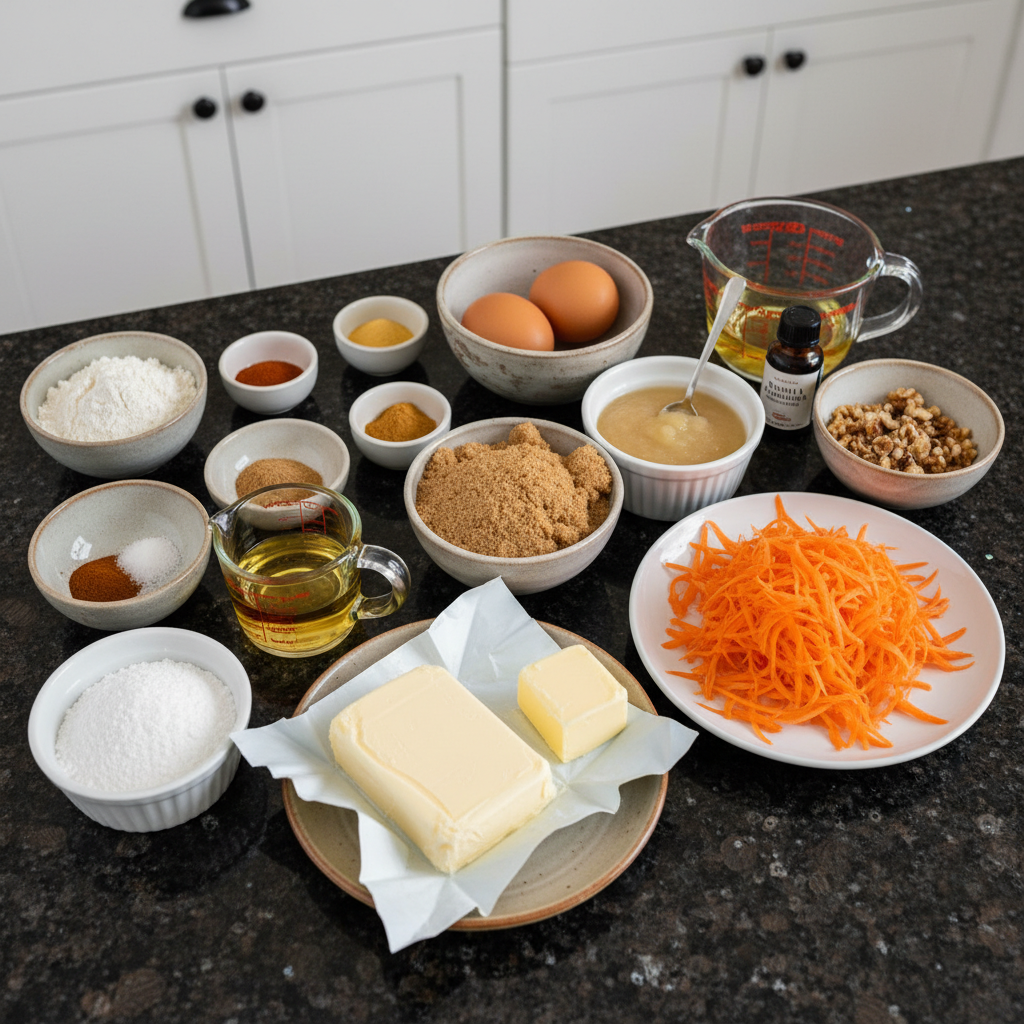
Here are the simple ingredients you will need to bake this delightful Carrot Cake Loaf:
- 190 g (1 cup and 5 tablespoons) all-purpose flour (dip and sweep)
- 1 teaspoon ground cinnamon
- 1/8 teaspoon ground nutmeg*
- 1/8 teaspoon salt (optional)
- 2 and 1/2 teaspoons baking powder
- 2 large eggs (room temperature)
- 155 g (3/4 cup) granulated sugar
- 110 g (1/2 cup) olive oil
- 1 teaspoon vanilla extract*
- 230 g (2 cups) grated carrots
- 60 g (1/2 cup) walnuts (roughly cut into small pieces)
For the Cream Cheese Swirl:
- 113 g (4 ounces) cream cheese (room temperature, softened)
- 30 g (2 tablespoons) granulated sugar
- 1 large egg yolk
- 1/2 teaspoon vanilla extract
Ingredient Notes & Substitutions
Carrots: The grate size of your carrots makes a difference! Finely grated carrots tend to melt into the loaf, providing a uniform texture and distributing moisture evenly. Coarser grates will give you more distinct bits of carrot and a more rustic feel. Always wash your carrots thoroughly and peel them before grating for the best results.
Olive Oil: I love using olive oil in this carrot cake loaf because it contributes wonderfully to a moist texture and adds a subtle, complementary flavor profile that really enhances the spices. It’s definitely superior to bland vegetable oils for this recipe. If you need a substitution, vegetable oil or melted butter will work, though the flavor will be slightly different. For a healthier or lower-fat option, you can try substituting some of the oil with applesauce or plain yogurt, but be prepared that you might need to adjust baking times slightly or reduce other wet ingredients to maintain the right consistency.
Eggs: Using room temperature eggs is crucial for baking success. They emulsify better with the fats and sugars, leading to a smoother batter and a more even, tender crumb in your finished loaf. Take them out of the fridge at least 30 minutes before you start baking.
Sweeteners: While granulated sugar is called for, you can experiment with brown sugar for a deeper, more molasses-like flavor and added moisture. Sugar-free alternatives can also be used, but note that they might impact the loaf’s moisture and sweetness levels, so adjust to your preference.
Spices: Ground cinnamon and nutmeg are the stars here, creating that signature warm, inviting carrot cake flavor. For an extra layer of brightness, I sometimes add 1/4 to 1/2 teaspoon of finely grated orange zest. It really enhances the spiced flavor beautifully, offering a similar zestiness you’d find in a delightful lemon blueberry bread.
Walnuts: Walnuts add a lovely crunch and earthy flavor to this carrot cake loaf. If you’re not a fan, pecans are a fantastic alternative. You could also try raisins for a touch of sweetness and chewiness, or even oatmeal for a different texture. Feel free to omit nuts entirely if you prefer a nut-free loaf.
Crushed Pineapple: Many people ask about adding crushed pineapple to carrot cake. While it can add moisture, in my experience, with the olive oil and cream cheese swirl, you don’t really need it for additional moisture. If you absolutely love the flavor, you could add about 1/2 cup of well-drained crushed pineapple, but I would slightly reduce the amount of grated carrots to maintain the right batter consistency.
Flour: For accurate flour measurement, always use the “dip and sweep” method. Dip your measuring cup into the flour, then level it off with a straight edge like a knife. This prevents you from adding too much flour, which can lead to a dry, dense loaf. You can also experiment with using whole wheat flour for a nuttier flavor and denser texture, or a 50/50 mix with all-purpose flour.
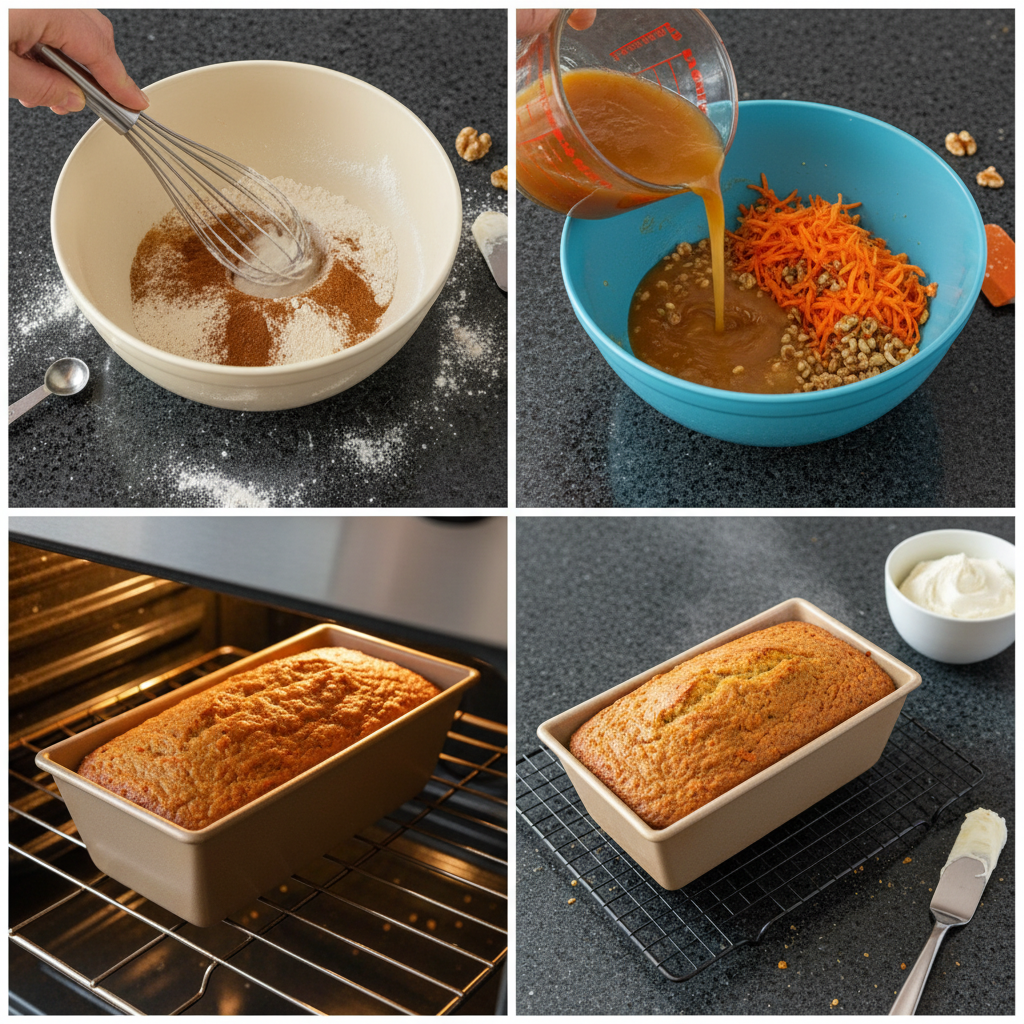
How to Make Your Carrot Cake Loaf with Cream Cheese Swirl
Baking this Carrot Cake Loaf is a joyful process, and with my detailed instructions, you’ll be enjoying a perfectly moist and flavorful treat in no time. The aroma of spices filling your kitchen as it bakes is simply heavenly!
Prepare Your Pan and Preheat Oven
Preheat your oven to 350°F (177°C). Take an 8 1/2 x 4 1/2 inch (21.5 x 10.5 cm) loaf pan. Grease it well and line the bottom and sides with parchment paper. Leave about 2 inches (5 cm) of overhang on each side; this will make it incredibly easy to lift the baked loaf out later. If you prefer, you can grease and flour the pan instead of using parchment paper.
Combine Dry Ingredients
In a medium bowl, combine your all-purpose flour, ground cinnamon, ground nutmeg, and baking powder. If you’re using salt, add it now too. Whisk these ingredients together thoroughly until they are well combined. Set this bowl aside for now.
Prepare Carrots and Walnuts
Using a sharp knife, roughly chop the walnuts into small, bite-sized pieces and set them aside. Next, wash and peel your carrots. Using a box grater or a food processor, grate the carrots to your desired texture. Set them aside as well.
Prepare the Cream Cheese Swirl
In a separate small bowl, combine the softened room temperature cream cheese, granulated sugar, egg yolk, and vanilla extract for the swirl. Beat with a whisk or an electric mixer on low speed until the mixture is smooth and creamy with no lumps. This ensures a beautiful, velvety swirl.
Combine Wet Ingredients
In a large mixing bowl, add the granulated sugar and the room temperature eggs. Whisk them together until they are just combined, for about 45 seconds. The mixture should be light in color and slightly frothy. Now, whisk in the olive oil and vanilla extract until everything is fully incorporated and smooth.
Mix Wet and Dry Ingredients
Add half of your dry flour mixture to the wet ingredients. Gently stir with a whisk until it’s just combined. Don’t overmix! Then, add the remaining flour mixture and switch to a spoon or spatula. Stir just until no dry streaks of flour remain. Overmixing can develop the gluten too much, leading to a dense loaf. Aim for a gently combined batter.
Fold in Carrots and Walnuts
Finally, add your grated carrots to the batter. Gently fold them in with your spoon or spatula. Then, add the chopped walnuts and fold them in as well until they are evenly distributed throughout the batter. The batter will be thick and rich with color.
Assemble the Loaf
Pour about two-thirds of the carrot cake batter into your prepared loaf pan. Smooth the top gently with your spatula. Now, take your cream cheese swirl mixture and dollop spoonfuls evenly over the carrot cake batter in the pan. Don’t spread it too much. Pour the remaining one-third of the carrot cake batter over the cream cheese dollops. Gently smooth the top. Using a knife or a skewer, gently swirl through the layers about 2-3 times to create a beautiful marbled pattern. Avoid overmixing the swirl into the batter.
Bake to Perfection
Place the loaf pan in your preheated oven. Bake for 50-55 minutes. Every oven is different, so watch your carrot cake loaf carefully. The aroma of spices usually starts to fill the kitchen beautifully after about 35-38 minutes. Continue baking until a toothpick inserted into the center of the carrot cake portion comes out clean, and the top is golden brown. An additional 2 minutes can help achieve a perfect golden hue.
Cooling is Key
Once you remove the pan from the oven, resist the urge to immediately slice into it. It’s tempting, I know! Leave the loaf in the pan to cool completely, for at least 1 hour. This is a critical step because it allows the loaf to firm up properly, preventing it from crumbling or having an improper, fragile texture when sliced. Once cooled, use the parchment paper overhang to lift the Carrot Cake Loaf out of the pan and transfer it to a wire rack to cool completely before slicing and enjoying.
`
Mastering Your Carrot Cake: Essential Prep & Batter Secrets
Creating a truly exceptional Carrot Cake Loaf goes beyond just following the steps; it involves understanding a few key techniques. Let me share some of my secrets for achieving that perfect, moist, and tender result every time.
Perfecting Your Carrot Prep
The star of our show, the carrots, deserve a little attention. Start by washing them thoroughly to remove any dirt, and then peel them. For grating, you have a couple of options. A box grater works perfectly well, giving you control over the texture. For speed and efficiency, especially if you’re making a larger batch, a food processor with a grating attachment is a lifesaver! As for the grate size, it’s really about preference. Finely grated carrots will almost melt into the loaf, providing a uniform texture and contributing to an incredibly moist crumb. If you prefer more distinct bits of carrot and a rustic feel, a coarser grate is the way to go.
The Science of a Moist Loaf
You might wonder why I stress room temperature eggs. It’s a small detail that makes a big difference! Room temperature eggs emulsify much better with other ingredients like fats and sugars. This creates a smoother, more homogenous batter. A well-emulsified batter traps air more effectively, leading to a better rise and a lighter, more even, and tender crumb in your finished carrot cake loaf.
Now, let’s talk about the olive oil. I specifically call for olive oil in this recipe because it does wonders for moisture and flavor. While other oils simply add fat, olive oil contributes to a wonderfully moist texture and imparts a subtle, complementary flavor profile that really enhances the warm spices. It’s far superior to bland vegetable oils and helps keep the carrot cake loaf tender for days.
Tips for Avoiding a Dense Loaf
Nobody wants a dry or dense carrot cake loaf, and thankfully, there are simple ways to prevent it. It all comes down to two main things: how you measure your flour and how you mix your batter.
Flour Measuring: Always use the “dip and sweep” method for all-purpose flour. Dip your measuring cup into the flour, then use a straight edge (like the back of a knife) to level off the excess. Never pack the flour into the cup. Adding too much flour is a common culprit for a dry and dense loaf.
Gentle Mixing: When combining your wet and dry ingredients, the golden rule is to mix only until they are *just combined*. As soon as you see no more dry streaks of flour, stop mixing. Overmixing develops the gluten in the flour, which leads to a tough, chewy, and dense texture. I often switch to a spatula or spoon for the final folds after the flour is mostly incorporated, as it encourages a lighter hand. This gentle approach ensures a tender, airy crumb.
Finally, if you’re ever tempted to adjust pan sizes and find yourself with a very full loaf pan, remember not to overcrowd it. This allows for proper rise and even baking, preventing a dense middle.
Pro Tips & Troubleshooting
Even seasoned bakers have moments where things don’t go exactly as planned. Here are my top tips and common pitfalls to help you achieve carrot cake loaf perfection every single time.
Pro Tips for Carrot Cake Loaf Success
- Oven Monitoring: Every oven is unique, so watching yours carefully is crucial. Baking times can vary. Removing the loaf too early can prevent proper slicing and result in a gummy center, while overbaking is the quickest route to a dry loaf. Trust your instincts and the toothpick test.
- The Aroma Test: This is one of my favorite sensory cues! Your carrot cake loaf will usually start to fill your kitchen with its beautiful spiced smell after about 35-38 minutes. This is a good sign that it’s well on its way. Continue baking for about 12 minutes after this point, then check with a toothpick. You want the toothpick to come out clean, and an additional 2 minutes often helps achieve that perfect golden-brown top.
- Cooling Patience: I can’t stress this enough: let your loaf cool completely in the pan for at least an hour before attempting to slice it. This allows the internal structure to set properly, preventing it from crumbling and ensuring a perfect, firm texture.
- Room Temperature Ingredients: Reiterate the importance of using room temperature eggs for optimal emulsification and a smooth batter. For the cream cheese swirl, softened room temperature cream cheese is essential for a lump-free, velvety mixture.
- Preheat Fully: Always allow your oven to fully preheat to the specified temperature before putting your loaf in. A cold oven can lead to uneven baking and a poor rise.
- Pan Preparation: Don’t skimp on pan preparation. Proper greasing and parchment paper lining with an overhang ensures an easy release for your beautiful Carrot Cake Loaf.
- Perfect Swirl: To create a distinct cream cheese swirl, dollop the cream cheese mixture onto the batter, then use a knife or skewer to gently swirl it 2-3 times. Avoid overmixing, as you want clear pockets of cream cheese, not a uniform blend.
Common Mistakes to Avoid
- Overbaking: This is the number one culprit for a dry carrot cake loaf. Keep an eye on the clock and use the toothpick test. Once the toothpick comes out clean, it’s done!
- Premature Slicing: Removing the loaf from the pan or slicing it before it cools completely can result in improper slices and a fragile, crumbly texture. Resist the urge and be patient.
- Overmixing the Batter: As I mentioned earlier, overmixing develops gluten, which leads to a tough, dense loaf instead of the tender crumb we’re aiming for. Mix only until just combined.
- Incorrect Flour Measurement: Scooping flour directly from the bag without leveling can add too much flour, making your loaf dry and dense. Always use the “dip and sweep” method.
- Uneven Baking/Sunken Middle: If you notice uneven baking or a sunken middle, first check your oven calibration with an oven thermometer. Also, try rotating your pan halfway through baking. Ensure your baking powder is fresh and active, as expired leavening can cause a sunken center.
- Too Many Add-ins: While nuts and carrots are delicious, adding excessive amounts of these or other wet ingredients can make the loaf too heavy or wet, affecting its rise and texture. Stick to the recipe’s specified quantities.
Serving & Storage
Once your beautiful Carrot Cake Loaf is baked and cooled, the enjoyment truly begins! Here’s how I love to serve it and keep it fresh.
Serving Ideas
Plain Perfection: Honestly, with that delightful cream cheese swirl baked right in, this Carrot Cake Loaf is absolutely perfect on its own. It’s ideal for a simple breakfast alongside your coffee or tea, or as a lovely treat for an afternoon tea. The built-in swirl provides plenty of tang and sweetness without needing anything extra.
Garnishing: If you want to elevate the presentation with minimal effort, a light dusting of powdered sugar adds a beautiful touch. You could also sprinkle a few extra chopped walnuts or pecans on top, or even drizzle a little caramel sauce for an extra indulgent treat.
Pairings: This spiced loaf pairs wonderfully with a warm cup of coffee, a soothing herbal tea, or simply a cold glass of milk. It’s comforting and satisfying.
Optional Frosting: For those who desire a more traditional dessert experience, feel free to top a slice with a dollop of classic cream cheese frosting. It adds another layer of decadence, though I find it perfectly satisfying without.
Storage and Make-Ahead Tips
Room Temperature Storage: If your kitchen is cool and dry, you can store the Carrot Cake Loaf in an airtight container for up to 3 days at room temperature. Because of the cream cheese swirl, I generally prefer to refrigerate it after a day, especially in warmer climates.
Refrigerated Storage: To maximize freshness and due to the cream cheese swirl, I recommend storing your loaf in an airtight container in the fridge for up to 7 days. This keeps it wonderfully moist and delicious.
Freezing Instructions: This Carrot Cake Loaf freezes beautifully, making it perfect for meal prep or enjoying later! You can freeze the entire loaf or individual slices. Wrap the cooled loaf or slices tightly in plastic wrap, then again in aluminum foil, or place them in a freezer-safe bag. It will keep well for up to 3 months, preventing any freezer burn.
Thawing & Reheating: To thaw, simply unwrap and let it sit at room temperature for a few hours. For individual slices, you can gently reheat them in the microwave for 15-30 seconds for a fresh-baked warmth, or in a toaster oven. Whole loaves can be gently warmed in a low oven (around 250°F/120°C) until heated through.
Make-Ahead: This recipe is fantastic for making ahead of time! Bake a loaf or two when you have a free afternoon, and you’ll have a delicious breakfast, snack, or dessert ready for the week or even months ahead. It truly tastes just as good after thawing.
Conclusion
And there you have it! My absolute favorite Carrot Cake Loaf recipe, a true game-changer thanks to that incredible, moist crumb, rich spiced flavor, and the delightful surprise of the baked-in cream cheese swirl. I genuinely believe that with these detailed instructions and my expert tips, you can confidently bake a perfect loaf, whether you’re a seasoned baker or just starting your journey.
I encourage you to give this recipe a try, experiment with any suggested variations like adding orange zest or different nuts, and savor it as a comforting breakfast, a satisfying snack, or a sweet ending to any meal. Don’t forget to print the recipe, share it with your loved ones, and explore other delicious quick bread recipes here on my site. Happy baking!
Frequently Asked Questions
What makes this carrot cake loaf incredibly moist and flavorful?
This carrot cake loaf gets its incredible moistness and flavor from several key elements. The olive oil contributes significantly to a tender crumb, alongside a generous amount of freshly grated carrots. The unique baked-in cream cheese swirl is also a huge factor, adding tangy richness and extra moisture that keeps the loaf tender for days. Finally, the blend of warm spices like cinnamon and nutmeg ensures a deeply flavorful experience.
Can I make substitutions for ingredients like oil, sugar, or nuts?
Yes, you can! For the olive oil, vegetable oil or melted butter can be used, though the flavor profile will subtly change. You can experiment with brown sugar instead of granulated sugar for a deeper molasses note, or sugar-free alternatives if preferred, noting potential impacts on moisture. For nuts, pecans, raisins, or oatmeal are great substitutes for walnuts, or you can omit them entirely. Always refer back to my Ingredient Notes section for more detailed guidance on these swaps.
How do I know if my carrot cake loaf is perfectly baked and avoid dryness?
You’ll know your carrot cake loaf is perfectly baked when a toothpick inserted into the center comes out clean or with just a few moist crumbs attached. Visually, the top should be golden brown, and the edges might start to pull away slightly from the pan. You’ll also notice a wonderful, fragrant aroma filling your kitchen. The key to avoiding dryness is to prevent overbaking; once it passes the toothpick test, it’s generally done. Also, remember to let it cool completely in the pan to set properly.
What’s the best way to store and freeze carrot cake loaf?
Due to the cream cheese swirl, I recommend storing your carrot cake loaf in an airtight container in the fridge for up to 7 days for optimal freshness. You can also store it at room temperature for up to 3 days in a cool, dry place. For longer storage, this loaf freezes beautifully for up to 3 months. Wrap it tightly in plastic wrap and then aluminum foil, or place it in a freezer-safe bag. Thaw individual slices at room temperature or gently reheat.
Can I adapt this recipe for other pan sizes like mini loaves or a layer cake?
This recipe can certainly be adapted for other pan sizes. For mini loaves, you’ll need to significantly reduce the baking time, likely to 20-30 minutes, keeping a close eye on them and using the toothpick test. If using a larger 9×5 inch loaf pan, the baking time might be similar to the recipe, or possibly a few minutes longer, but again, always rely on the toothpick test for doneness. Converting to a layer cake would involve dividing the batter between two round cake pans and adjusting baking time and temperature accordingly (typically lower temperature and shorter time).
What kind of frosting or topping pairs well with this carrot cake loaf?
With its delightful baked-in cream cheese swirl, this carrot cake loaf is wonderfully satisfying on its own, requiring no additional topping. However, if you desire extra indulgence, a classic homemade vanilla bean cream cheese frosting would be a perfect pairing. A simple dusting of powdered sugar also adds an elegant touch without overpowering the loaf’s natural flavors.
Why are room temperature eggs important for baking?
Room temperature eggs are crucial because they emulsify much more effectively with fats and sugars in the batter. This creates a smoother, more uniform batter that traps air better, leading to a better rise and a lighter, more tender crumb in your baked goods. Cold eggs can make the batter lumpy and result in a denser loaf.
What’s the best way to easily grate carrots for this recipe?
For speed and convenience, especially with 2 cups of carrots, a food processor with a grating attachment is the easiest way to grate carrots. Simply wash and peel them, then feed them through the chute. If you don’t have a food processor, a standard box grater works perfectly well, allowing you to control whether you prefer a fine or coarse texture for your carrots.
How can I prevent my carrot cake loaf from being dense or sinking in the middle?
To prevent a dense loaf, focus on gentle mixing. Mix the wet and dry ingredients only until they are *just combined*, avoiding overmixing which develops gluten and leads to toughness. Also, ensure accurate flour measurement using the “dip and sweep” method. To prevent sinking in the middle, ensure your baking powder is fresh and active. Avoid opening the oven door too early during baking, as sudden temperature changes can cause a collapse. Always bake until a toothpick comes out clean, indicating the center is fully cooked.
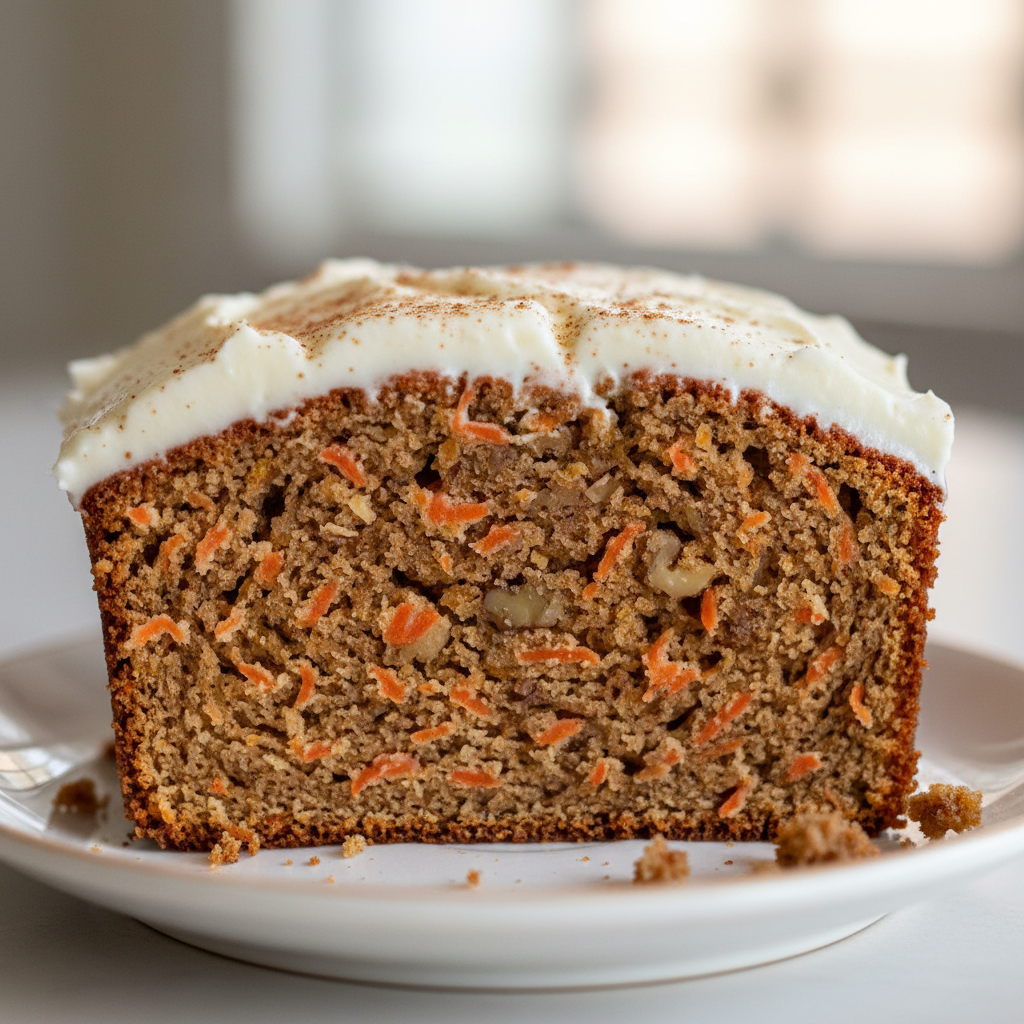
Moist Carrot Cake Loaf with Cream Cheese Swirl (Easy Recipe)
Ingredients
Equipment
Method
- Preheat your oven to 350°F (177°C). Grease an 8 1/2 x 4 1/2 inch (21.5 x 10.5 cm) loaf pan and line the bottom and sides with parchment paper, leaving about 2 inches (5 cm) of overhang on each side.
- In a medium bowl, combine the all-purpose flour, ground cinnamon, ground nutmeg, and baking powder. If using salt, add it now. Whisk these ingredients together thoroughly until well combined. Set aside.
- Roughly chop the walnuts into small, bite-sized pieces and set aside. Wash and peel the carrots, then grate them using a box grater or food processor. Set aside.
- In a separate small bowl, combine the softened room temperature cream cheese, granulated sugar, egg yolk, and vanilla extract for the swirl. Beat with a whisk or an electric mixer on low speed until the mixture is smooth and creamy with no lumps.
- In a large mixing bowl, add the granulated sugar and room temperature eggs. Whisk them together for about 45 seconds until light in color and slightly frothy. Whisk in the olive oil and vanilla extract until fully incorporated and smooth.
- Add half of the dry flour mixture to the wet ingredients. Gently stir with a whisk until just combined. Then, add the remaining flour mixture and switch to a spoon or spatula. Stir just until no dry streaks of flour remain, avoiding overmixing.
- Add the grated carrots to the batter. Gently fold them in with your spoon or spatula. Then, add the chopped walnuts and fold them in as well until evenly distributed throughout the batter.
- Pour about two-thirds of the carrot cake batter into your prepared loaf pan. Smooth the top gently with your spatula. Dollop spoonfuls of the cream cheese swirl mixture evenly over the carrot cake batter. Pour the remaining one-third of the carrot cake batter over the cream cheese dollops and gently smooth the top. Using a knife or skewer, gently swirl through the layers 2-3 times to create a marbled pattern, avoiding overmixing.
- Place the loaf pan in your preheated oven. Bake for 50-55 minutes, or until a toothpick inserted into the center of the carrot cake portion comes out clean and the top is golden brown.
- Remove the pan from the oven and let the loaf cool completely in the pan for at least 1 hour. Once cooled, use the parchment paper overhang to lift the Carrot Cake Loaf out of the pan and transfer it to a wire rack to cool completely before slicing and enjoying.