Skip to content
There’s something incredibly comforting about a warm slice of banana bread, isn’t there? It’s a classic for a reason, but in my kitchen, we’re taking it up a notch. This isn’t just any banana bread; this is elevated Sourdough Banana Bread, made extra special with nutty browned butter and an optional, aromatic streusel topping. Whether you’re a seasoned baker or new to the magic of sourdough, my recipe is designed to guide you to a loaf that’s utterly delicious and surprisingly easy to achieve. Get ready for a treat that promises deep caramel flavors and a wonderfully satisfying texture.
Why You’ll Love This Recipe
I genuinely believe this is the best banana bread you’ll ever make, and it’s all thanks to a few clever twists that truly make it shine.
Deepened Caramel Notes with Browned Butter: My secret weapon for this sourdough banana bread is swapping out neutral oil for rich, nutty browned butter. This simple change brings a whole new dimension of flavor. As butter browns, it undergoes the Maillard reaction, developing complex, toasted notes that perfectly complement the natural sweetness of the bananas and the caramel depth of the brown sugar. It’s a subtle yet transformative addition that will have everyone asking for your secret.
Optional Spiced Streusel for Texture and Aroma: For an extra layer of indulgence, I’ve included an optional spiced streusel topping. This crumbly mix of brown sugar, cinnamon, and chopped nuts creates a delightful textural contrast—crisp and crumbly on top, yielding to the bread’s soft, velvety crumb below. It adds a lovely aromatic warmth without overpowering the banana and caramel flavors within the bread itself.
Superior Flavor and Texture: The combination of browned butter and sourdough starter gives this banana bread an incredibly sophisticated flavor profile. It’s moist, tender, and intensely flavorful, with a complexity that store-bought versions can only dream of. Plus, the streusel adds that satisfying crunch everyone loves.
Gourmet Result, Easy Preparation: Despite its gourmet taste, this recipe is incredibly straightforward to follow. I’ve broken down each step to ensure success, whether you’re baking for a quiet morning or impressing guests. It’s the ultimate comfort food that feels special enough for any occasion.
Ingredients Needed

- Butter, for coating the pan
- 375 g overripe bananas (appx. 1 1/2 cups lightly smashed)
- 225 g (1 1/4 cups lightly packed) light or dark brown sugar
- 1½ tsp pure vanilla extract
- 2 large eggs
- 100 g (appx. 1/2 cup) active sourdough starter or or sourdough discard
- 250g (2 cups) all-purpose flour
- 1½ tsp baking soda
- 1/4 tsp fine sea salt
- 60ml (1/4 cup) milk
- 125ml (½ cup) neutral flavored oil
- Powdered sugar, butter, and mascarpone cheese for serving, optional
Ingredient Notes & Substitutions
Overripe Bananas: The key to truly flavorful and moist banana bread lies in perfectly overripe bananas. Look for bananas with skins that are deeply speckled with brown or even almost entirely black. They should be soft to the touch. This ripeness means the starches have converted to sugars, maximizing sweetness and ensuring a moist crumb. Green or firm yellow bananas simply won’t yield the same delicious results.
Sourdough Starter/Discard: This recipe is wonderfully flexible; you can use either active sourdough starter or unfed sourdough discard. Both will contribute to the unique flavor and tender texture without needing a strong rise.
Brown Sugar: I’m a firm believer in using all brown sugar in this recipe. Its molasses content not only adds moisture but also enhances those exquisite caramel notes that are so essential to a truly remarkable banana bread.
Neutral Flavored Oil: For the best results, I recommend a truly neutral flavored oil. Canola oil, grapeseed oil, or avocado oil are excellent choices. They contribute moisture without imparting any distinct flavor, allowing the banana and browned butter to truly shine.
Dairy-Free Options: To make this recipe dairy-free, you can easily substitute the regular milk with unsweetened almond milk. For the butter used in coating the pan and for serving, coconut oil can be a good alternative if you are making a fully dairy-free version.
Vegan Egg Substitutes: If you’re looking for vegan options, you can replace the eggs with flax seeds powder (1 tablespoon of flaxseed meal mixed with 3 tablespoons of water per egg) or even aqua faba (3 tablespoons per egg).
Optional Mix-Ins: Feel free to customize your loaf! Popular additions include chocolate chips, chopped walnuts, or pecans. I usually fold them in during the final mixing stage.

How to Make Sourdough Banana Bread
Making this incredible sourdough banana bread is a journey, and I’m here to guide you through each step to ensure a perfect loaf.
Preparation
First things first, preheat your oven to 360 F. Then, generously coat three 7x3x2 mini loaf pans or one standard 9×5-inch loaf pan with butter. This ensures easy release later!
Mixing the Wet Ingredients
In a large mixing bowl, add your perfectly overripe bananas, the rich brown sugar, and fragrant pure vanilla extract. Using a hand-held mixer or a stand mixer fitted with the paddle attachment, cream these ingredients together for about 30 seconds to 1 minute. You want a creamy and fragrant mixture, and don’t worry, a few small lumps of banana are perfectly fine and add to the texture!
Next, add the large eggs, one at a time, mixing until each is fully incorporated before adding the next. This step is crucial for proper emulsification, leading to a smooth batter. Finally, stir in your active sourdough starter or sourdough discard.
Combining Wet and Dry
In a separate bowl, sift together the all-purpose flour, baking soda, and fine sea salt. This ensures an even distribution of the leavening agents and prevents lumps. Working in batches, gradually add this dry mixture to your banana mixture, mixing gently until just combined. Overmixing at this stage can lead to a tough bread, so a light hand is best.
Finally, pour in the milk and neutral flavored oil. Mix until just combined – and I really mean *just* combined! Do not overdo it here; mixing too much can develop the gluten in the flour too much, making your sourdough banana bread tough rather than velvety soft.
Baking and Cooling
Pour your beautifully mixed batter into the prepared pan(s). If you’re using mini loaf pans, place them onto a baking sheet for easier handling before transferring to the oven.
Bake for 45 minutes if using the mini loaf pans, or 60-65 minutes for a standard 9×5-inch pan. You’re looking for a rich golden brown crust, and when you insert a toothpick into the center, it should come out clean. If the loaf starts to brown too quickly, simply tent it loosely with aluminum foil.
Once baked, let your sourdough banana bread cool in the pan for 20 minutes. This allows it to set properly. Then, gently transfer it to a wire rack to cool completely. This prevents the bottom from becoming soggy.
When ready to serve, a dusting of powdered sugar adds a nice, elegant touch!
Mastering Your Sourdough Banana Bread Ingredients
Understanding the science behind your ingredients is key to becoming a truly masterful baker. Let’s dive deeper into what makes this sourdough banana bread so special.
The Magic of Overripe Bananas
When I say “overripe bananas,” I mean bananas that have truly transformed. Visually, look for skins that are generously covered in deep brown or even black spots. They should feel soft to the touch, almost mushy inside. This isn’t just a preference; it’s crucial. As bananas ripen, the starches convert into natural sugars, intensifying their sweetness and flavor. This also increases their moisture content, which contributes significantly to the incredibly moist texture of your banana bread. Using less ripe bananas will result in a less flavorful and potentially drier loaf, so embrace the brown spots!
Sourdough Starter vs. Sourdough Discard: What’s the Difference?
In the world of sourdough, you’ll often hear about both active sourdough starter and sourdough discard. An active starter is one that has been recently fed and is bubbly and vigorous, ready to leaven bread. Sourdough discard, on the other hand, is the portion of your starter that you remove before feeding; it’s less active but still full of flavor. For a quick bread like banana bread, either works beautifully. An active starter might offer a slightly lighter crumb due to its leavening power, while discard will contribute a wonderful tangy depth without adding significant lift, making it perfect for those “no-wait” recipes. Both impart that signature sourdough flavor that makes this banana bread truly unique.
Choosing the Right Oil for Flavor and Texture
While I love the addition of browned butter for its caramel notes, the neutral flavored oil in this recipe plays an equally important role in achieving a wonderfully moist crumb. For a perfect balance, I recommend oils like canola oil, grapeseed oil, or avocado oil. These oils are truly “neutral,” meaning they don’t have a strong flavor that would compete with the bananas, brown sugar, or browned butter. They also contribute a tenderness and richness to the crumb that can be harder to achieve with just butter alone, making your banana bread incredibly appealing. Unlike butter, which contains water, oils are 100% fat, making them excellent at retaining moisture in baked goods.
Pro Tips & Troubleshooting
Even the most experienced bakers run into questions, and I’ve gathered my best advice to ensure your sourdough banana bread turns out perfectly every time.
Pro Tips for Perfect Sourdough Banana Bread
- Embrace the Browned Butter: Don’t skip the browned butter step! The Maillard reaction creates incredible nutty, toasted notes that deepen the caramel flavor of the bananas and brown sugar. It’s a simple upgrade that yields gourmet results.
- The Power of Brown Sugar: My recipe calls for all brown sugar, and for good reason. The molasses in brown sugar is key to that exquisite, rich caramel taste and contributes to a wonderfully moist texture.
- Optimal Mixing Technique: Follow the specific mixing order: cream the wet ingredients (bananas, sugar, vanilla), then incorporate the eggs and sourdough starter, gently fold in the dry ingredients, and finally add the milk and oil. This creaming method is crucial for a velvety soft texture and prevents over-developing the gluten.
- No Cinnamon in the Bread (The Secret): You might notice there’s no cinnamon in the bread batter itself. This isn’t an oversight! By omitting it, the pure, deep caramel and banana flavors truly get to shine, especially with the browned butter. If you love cinnamon, add it to the optional streusel.
- Baking Temperature for Lift: I recommend baking at 360F, which is slightly higher than the standard 350F. This temperature provides a better initial lift for the loaf and helps create a superior golden brown crust.
- Doneness Check: Your sourdough banana bread is perfectly baked when a toothpick inserted into the center comes out clean, and the internal temperature reaches approximately 200-205F (93-96C). This ensures it’s cooked through without being dry.
- Flavor Deepens with Time: While delicious warm, this banana bread’s flavors actually deepen and meld beautifully a day or two after baking. If you can resist, it’s even richer the next day!
- High-Altitude Adjustments: For those baking at high altitudes, you might need to make slight adjustments. Consider reducing the leavening agents (like baking soda) by about 1/4 teaspoon, increasing liquid slightly (1-2 tablespoons milk), and potentially increasing the baking temperature by 15-25 degrees F to compensate for lower atmospheric pressure.
Common Mistakes to Avoid
- Overmixing the Batter: This is the most common culprit for tough banana bread. Overmixing develops the gluten too much, resulting in a dense, chewy texture. Mix until just combined—a few streaks of flour are okay.
- Overbaking: An overbaked loaf will have a hard exterior and a dry, crumbly interior. Always rely on the toothpick test and internal temperature to ensure perfect doneness, and tent with foil if it’s browning too quickly.
- Undercooking: Issues like a gummy or wet center, a flat top, or a sunken middle are all signs of undercooking. Always ensure your toothpick comes out clean from the very center. If the top is browning too much before the center is done, cover it loosely with aluminum foil.
- Ignoring Cooling Time: Don’t rush the cooling process! Allowing the bread to cool in the pan for 20 minutes, then completely on a wire rack, is essential. This allows the internal structure to set fully and prevents a gummy texture.
Serving & Storage
Once your sourdough banana bread is baked to perfection, the possibilities for enjoyment are endless! Here are my favorite ways to serve and store it.
Creative Serving Ideas
My go-to way to serve this Sourdough Banana Bread is simply with a dusting of powdered sugar—it’s elegant and highlights the bread’s natural beauty. For classic enhancements, a dollop of good quality salted butter or a generous spread of creamy mascarpone cheese is divine. If you’re feeling indulgent, a homemade caramel drizzle or a crunchy caramel pecan topping elevates it to dessert status. Pair a slice with your morning coffee or afternoon tea for a comforting treat, or even alongside a scoop of vanilla ice cream for a truly decadent dessert.
Storage and Make-Ahead Tips
Proper storage is key to enjoying your delicious bread for days.
- Room Temperature: Once completely cooled, wrap your loaf tightly in plastic wrap or place it in an airtight container. It will stay fresh and moist at room temperature for up to 3 days.
- Refrigeration: If you live in a particularly warm or humid climate, or want to extend its freshness, you can refrigerate the bread. Store it wrapped tightly in plastic wrap and then in an airtight container or a freezer bag. It will last up to a week in the fridge, though the texture might become slightly firmer.
- Freezing: This sourdough banana bread freezes beautifully! To prevent freezer burn and maintain freshness, allow the loaf to cool completely. Then, wrap it tightly in a layer of plastic wrap, followed by a layer of aluminum foil. Place the wrapped loaf in a freezer-safe bag. It will freeze well for up to 3 months.
Reheating Instructions:
To enjoy frozen slices, simply thaw them at room temperature. For warm slices, gently reheat them. In the oven, wrap slices in foil and warm at 300F (150C) for 10-15 minutes until heated through. For a quicker option, microwave individual slices for 15-30 seconds until warm and slightly softened.
Gifting Sourdough Banana Bread
Homemade sourdough banana bread makes a wonderful gift! I love using mini loaf pans to create delightful individual loaves. Once cooled, wrap them beautifully in parchment paper and tie with twine for a rustic, charming presentation. It’s a heartfelt gift that everyone appreciates.
Conclusion
There you have it—my absolute favorite recipe for Sourdough Banana Bread, made even more special with the addition of nutty browned butter and an optional spiced streusel. This recipe isn’t just about using sourdough; it’s about elevating a beloved classic to new heights of flavor and texture. With the detailed tips and clear instructions I’ve shared, I’m confident you can achieve a perfect loaf, whether you’re a seasoned baker or just starting your sourdough journey.
I encourage you to give this recipe a try, experiment with your favorite add-ins, and savor the incredible results. There’s nothing quite like the smell and taste of a freshly baked loaf. Enjoy your baking, and feel free to share your creations—I love seeing what you make!
FAQ
How long does sourdough banana bread last and can it be frozen?
Once completely cooled, your sourdough banana bread will last at room temperature in an airtight container for up to 3 days. For longer storage, you can refrigerate it for up to a week. Yes, it also freezes beautifully! Wrap the cooled loaf tightly in plastic wrap and then foil, and store it in a freezer bag for up to 3 months to prevent freezer burn.
Can I make this sourdough banana bread without sourdough starter, or what kind of starter should I use?
While the sourdough starter adds a unique depth of flavor, you can technically omit it by increasing the flour and liquid slightly to maintain consistency, though you will lose the sourdough tang. This recipe works perfectly with either an active, fed sourdough starter or unfed sourdough discard; both will contribute to the flavor and texture without needing a strong rise.
What are common substitutes for eggs or milk in this sourdough banana bread recipe?
For a dairy-free option, you can substitute regular milk with unsweetened almond milk. If you need egg replacers, 1 tablespoon of flax seeds powder mixed with 3 tablespoons of water can substitute one egg, or you can use 3 tablespoons of aqua faba per egg.
How can I prevent my sourdough banana bread from being gummy, dense, or undercooked in the middle?
To prevent a gummy, dense, or undercooked loaf, ensure you do not overmix the batter, as this develops too much gluten. Always bake at the recommended temperature (360F for optimal lift) and rely on the toothpick test: a toothpick inserted into the center should come out clean. For ultimate accuracy, aim for an internal temperature of 200-205F (93-96C). If the top browns too quickly, tent it with aluminum foil to allow the middle to cook through.
Can I add extra mix-ins like chocolate chips, nuts, or fruit to the batter?
Absolutely! This recipe is wonderful for customization. Popular additions include chocolate chips, chopped walnuts, or pecans. I recommend adding about ½ to 1 cup of your chosen mix-ins during the final stages of mixing, just before pouring the batter into the pan.
What makes this Sourdough Banana Bread recipe so unique?
This sourdough banana bread stands out thanks to its unique twist: the use of nutty browned butter, which deepens the caramel notes through the Maillard reaction, and an optional spiced streusel topping. The streusel adds a delightful crunch and aromatic layer, creating a sophisticated balance of rich flavors and satisfying textures that sets it apart from traditional recipes.
Can I substitute maple syrup for brown sugar?
While you can substitute maple syrup for brown sugar, it will impact the final flavor and texture. Maple syrup is sweeter and adds more liquid, which might require a slight adjustment to other liquid ingredients. It will also yield a less pronounced caramel flavor and a denser crumb, as brown sugar contributes significantly to both the caramelization and moist texture of the bread.
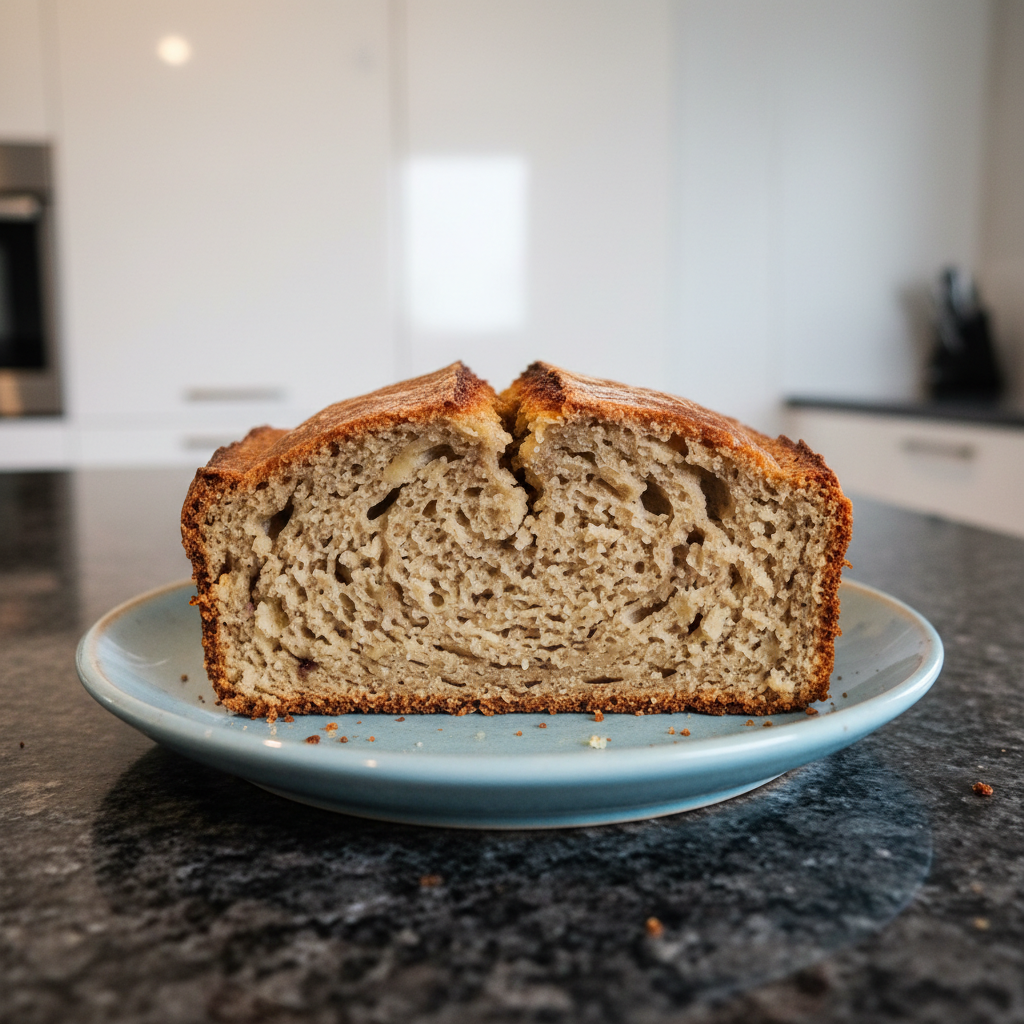
Sourdough Banana Bread: Browned Butter & Streusel Twist
Ingredients
Equipment
Method
- Preheat your oven to 360 F. Generously coat three 7x3x2 mini loaf pans or one standard 9x5-inch loaf pan with butter.
- In a large mixing bowl, combine the overripe bananas, brown sugar, and pure vanilla extract.
- Using a hand-held mixer or a stand mixer fitted with the paddle attachment, cream these ingredients together for about 30 seconds to 1 minute until creamy and fragrant, allowing for a few small lumps of banana.
- Add the large eggs one at a time, mixing until each is fully incorporated before adding the next.
- Stir in your active sourdough starter or sourdough discard.
- In a separate bowl, sift together the all-purpose flour, baking soda, and fine sea salt.
- Gradually add this dry mixture to your banana mixture in batches, mixing gently until just combined. Avoid overmixing.
- Pour in the milk and neutral flavored oil, mixing until *just* combined. Do not overmix.
- Pour the batter into the prepared pan(s). If using mini loaf pans, place them onto a baking sheet for easier handling.
- Bake for 45 minutes if using mini loaf pans, or 60-65 minutes for a standard 9x5-inch pan, until a rich golden brown crust forms and a toothpick inserted into the center comes out clean. If the loaf browns too quickly, tent it loosely with aluminum foil.
- Once baked, let your sourdough banana bread cool in the pan for 20 minutes.
- Gently transfer it to a wire rack to cool completely, preventing the bottom from becoming soggy.
- Serve with a dusting of powdered sugar, if desired.