Skip to content
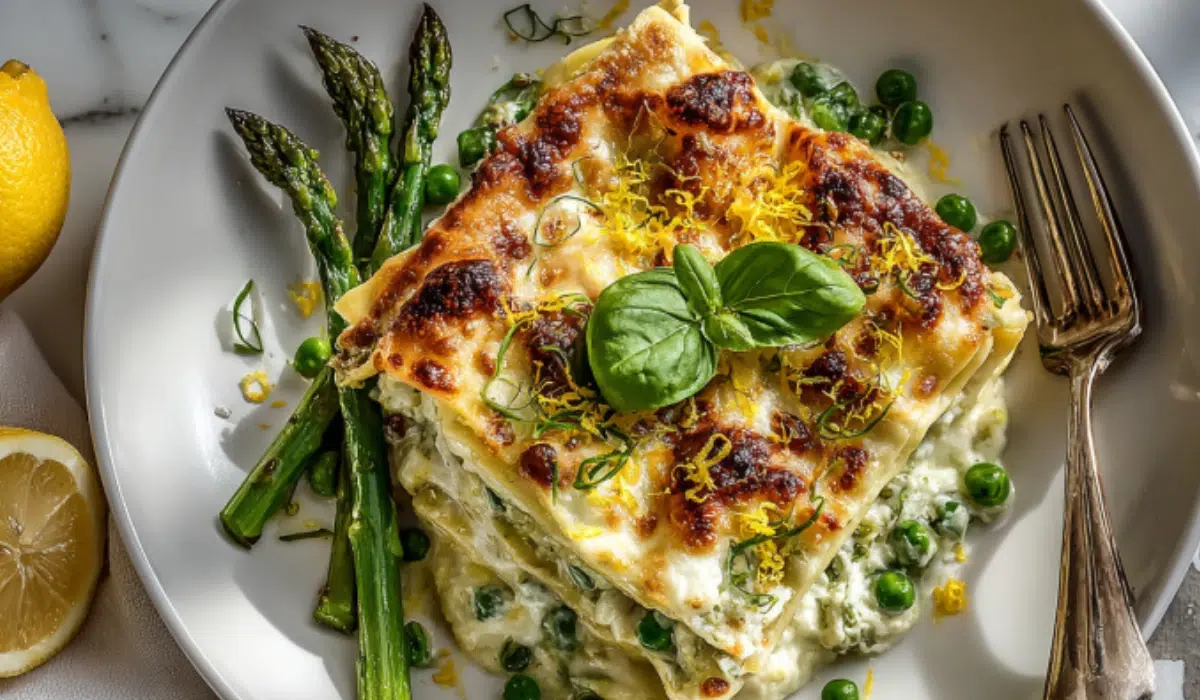
Light, creamy, and full of color, this spring vegetable white lasagna captures everything fresh about the season. Layers of tender asparagus, peas, and leeks melt into a silky béchamel and ricotta filling that tastes both elegant and comforting. Unlike heavy red-sauce versions, this one keeps things bright and balanced with a subtle hint of lemon and herbs. It’s easy to prepare ahead, perfect for a weekend dinner, and guaranteed to impress anyone who loves rich flavor without the weight.
Table of Contents
Why You’ll Love This Recipe
This spring vegetable white lasagna isn’t just another layered pasta dish, it’s a fresh, flavor-packed twist that celebrates everything green and bright about the season.
Highlights:
- Simple ingredients, big flavor: Uses everyday vegetables like asparagus, peas, and spinach for a fresh spring bite.
- Creamy yet light: The white béchamel sauce gives richness without feeling heavy.
- Make-ahead friendly: Perfect for prepping the day before Easter brunch or a spring dinner party.
- Crowd-pleaser: It serves a crowd and reheats beautifully.
- Versatile: Works just as well with gluten-free pasta or dairy-free swaps.
Every bite feels like comfort food with a seasonal twist, creamy, golden, and layered with bright spring flavor.
Ingredients Needed
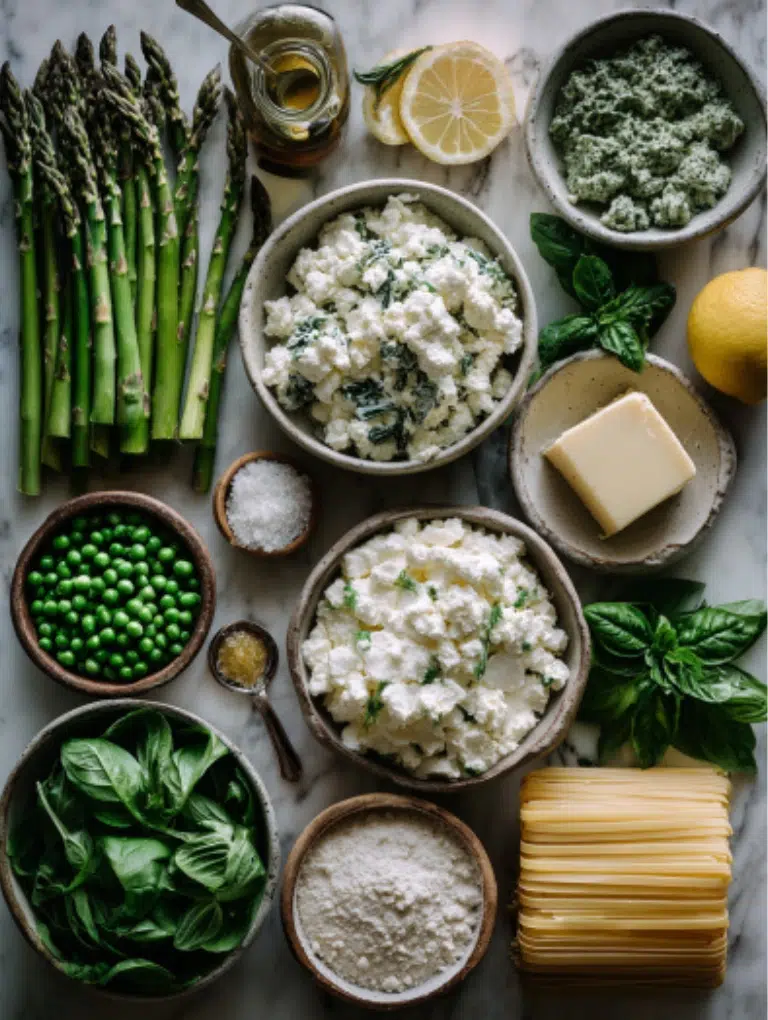
Before you start layering, gather all the ingredients and prep your vegetables. Grouping them by component keeps things simple when it’s time to cook.
For the Béchamel Sauce
- 4 tablespoons unsalted butter
- 4 tablespoons all-purpose flour
- 4 cups whole milk, warmed
- 1 clove garlic, minced (optional, for flavor)
- 1/4 teaspoon ground nutmeg
- Salt and black pepper, to taste
Tip: Warm milk blends faster with the roux, giving a smooth, lump-free sauce.
For the Ricotta Layer
- 2 cups whole milk ricotta
- 1 large egg, room temperature
- 1/2 cup grated Parmesan cheese
- 1 teaspoon lemon zest
- 1 tablespoon chopped fresh basil or mint
- Salt, to taste
Tip: Lemon zest lifts the creamy layers with a subtle brightness that pairs beautifully with spring veggies.
For the Vegetables & Assembly
- 1 bunch asparagus, trimmed and cut into 1-inch pieces
- 1 cup fresh or frozen peas, thawed
- 1 small leek, sliced thin
- 2 cups fresh spinach, chopped
- 9–12 no-boil lasagna noodles (or fresh sheets)
- 2 cups shredded mozzarella
- 1/4 cup grated Pecorino Romano (optional, for salty depth)
- 1 tablespoon olive oil
- 1 tablespoon butter, for greasing the dish
Notes & Substitutions
- Gluten-Free Option: Use gluten-free lasagna noodles and replace flour with cornstarch (2½ tbsp) to thicken the béchamel.
- Dairy-Free Option: Swap butter for olive oil, milk for oat or almond milk, and use almond ricotta with vegan mozzarella.
- Budget-Friendly Tips: Substitute half the ricotta with cottage cheese for similar creaminess.
- Flavor Upgrade: Add sautéed mushrooms or caramelized shallots for deeper flavor.
How to Make Spring Vegetable White Lasagna
This recipe comes together easily once everything’s prepped. Follow these steps for perfect layers, silky sauce, and bright spring flavor in every bite.
Before You Start
- Preheat your oven to 375°F (190°C).
- Grease a 9×13-inch baking dish lightly with butter or olive oil.
- Warm the milk for your béchamel, it helps prevent lumps.
- Bring a small pot of salted water to boil for blanching vegetables.
Step 1: Make the Béchamel Sauce
- Melt butter in a medium saucepan over medium heat.
- Whisk in flour and cook for about 1 minute until it forms a smooth paste (roux).
- Slowly add warm milk, whisking constantly to avoid lumps, using this classic béchamel method.
- Simmer for 5–7 minutes until it thickens slightly and coats the back of a spoon.
- Season with salt, pepper, garlic, and nutmeg.
Tip: The sauce should be creamy but pourable, it will thicken as it bakes.*
Step 2: Prep the Vegetables
- Blanch asparagus in boiling water for 2 minutes and peas for 1 minute, matching blanch-time guidance from the National Center for Home Food Preservation, then transfer to an ice bath.
- Sauté leeks in olive oil for 3–4 minutes until soft.
- Wilt spinach briefly in the same pan, then drain excess liquid.
Tip: Keep vegetables slightly crisp, they’ll finish cooking in the oven.*
Step 3: Mix the Ricotta Layer
In a bowl, combine ricotta, egg, Parmesan, lemon zest, herbs, and a pinch of salt. Stir until smooth.
This mixture adds lightness and helps hold each layer together.
Step 4: Assemble the Lasagna
- Spread a thin layer of béchamel on the bottom of the dish.
- Add a layer of no-boil noodles, slightly overlapping.
- Spoon over ricotta mixture, then scatter asparagus, peas, leeks, and spinach.
- Drizzle lightly with béchamel and sprinkle mozzarella.
- Repeat layers, about 3 to 4 total, finishing with béchamel and cheese on top.
Tip: Gently press each layer down to remove air pockets for even slices later.*
Step 5: Bake
- Cover with foil and bake for 25 minutes.
- Remove foil and bake another 10–15 minutes until bubbly and golden on top.
- Rest for 10 minutes before cutting. This lets layers set and prevents sliding.
Step 6: Optional Finishing Touch
Sprinkle a little lemon zest and fresh herbs over the top before serving for a fresh, aromatic finish.
Pro Tips & Troubleshooting
Take your spring vegetable white lasagna from good to unforgettable with these expert-tested tips.
Expert Tips for Best Results
- Keep the béchamel silky: Warm milk and steady whisking prevent lumps. If it thickens too much, whisk in a splash of milk before layering.
- Season each component: Lightly salt the vegetables and ricotta mix. Balanced layers keep the flavor consistent from top to bottom.
- Don’t overbake: Once the top turns golden and bubbly, pull it out. Overbaking can make noodles tough and sauce dry.
- Rest before slicing: A 10–15 minute rest allows layers to set for clean, professional slices.
- Roast instead of blanch (optional): Roasting the veggies on one sheet pan intensifies flavor and saves cleanup time.
Common Mistakes to Avoid
- Watery lasagna: Always drain spinach and pat dry vegetables before layering. Too much moisture will thin the sauce.
- Grainy béchamel: This happens when milk is added cold or too quickly. Warm milk and gentle whisking fix it.
- Overstuffed layers: Too much filling makes lasagna collapse. Aim for even, modest layers.
- Rushing the rest time: Skipping the resting step is the fastest way to ruin perfect layers, patience pays off here.
Creative Shortcut
Short on time? Use oven-ready roasted vegetables from your local market and layer them directly with the sauce. The slightly charred edges add smoky flavor that feels gourmet with zero effort.
Serving, Storage & Variations
This spring vegetable white lasagna is one of those dishes that looks restaurant-level but fits effortlessly into everyday life. Here’s how to serve, store, and reinvent it.
Serving Suggestions
- Pair it with a crisp green salad or roasted carrots for balance.
- Add a light lemon vinaigrette to echo the freshness of the lasagna.
- Sprinkle fresh basil or mint on top just before serving.
- For a little contrast, serve with garlic bread or grilled sourdough slices.
- Perfect for spring gatherings, Easter brunch, or Mother’s Day dinners.
Storage Guidelines
- Refrigerator: Store cooled leftovers in an airtight container for up to 4 days, as advised by the USDA.
- Freezer (unbaked): Assemble, cover tightly, and freeze; frozen leftovers remain safe indefinitely, though quality is best within a few months, per FoodSafety.gov. Plan to enjoy within 2–3 months for peak texture.
- Freezer (baked): Let it cool completely before freezing. Wrap well to avoid freezer burn.
- Thawing: Move frozen lasagna to the fridge overnight before baking or reheating.
Reheating for Best Texture
- Oven: Cover with foil and bake at 350°F (175°C) until the center reaches 165°F, the USDA’s safe reheating temperature for leftovers.
- Microwave (single servings): Cover loosely and heat in 1-minute bursts, checking often.
- Add a spoonful of milk or cream before reheating to keep the sauce creamy.
Variations to Try
- Vegan Version: Use oat milk béchamel, vegan cheese, and tofu ricotta.
- Gluten-Free Option: Substitute gluten-free noodles and use cornstarch to thicken the sauce.
- Add Protein: Fold in shredded chicken or white beans for extra heartiness.
- Zesty Upgrade: Mix a spoonful of pesto or lemon zest into the béchamel for a fragrant twist.
- Spice It Up: Add crushed red pepper flakes or roasted poblano for gentle heat.
Pro tip: Link related recipes like “Vegan Ricotta Alternatives” or “How to Freeze Pasta Dishes” in your FAQ or related post section to keep readers browsing longer.
Nutritional Information
Here’s a detailed look at what you’re getting in each serving of this spring vegetable white lasagna. It’s a wholesome balance of fresh produce, dairy, and comforting carbs, rich enough to satisfy yet light compared to a meat-based lasagna.
| Nutrient | Per Serving (1 of 8 portions) |
|---|---|
| Calories | ~320 kcal |
| Protein | 17 g |
| Total Fat | 15 g |
| Saturated Fat | 8 g |
| Carbohydrates | 28 g |
| Fiber | 3 g |
| Sugars | 6 g |
| Sodium | 410 mg |
| Calcium | 280 mg |
Values are approximate and may vary depending on ingredient brands and substitutions.
Nutritional Highlights
- High in protein from ricotta, mozzarella, and milk-based béchamel, helps keep you full.
- Rich in calcium from ricotta, mozzarella, and milk-based béchamel, for example ½ cup whole-milk ricotta provides about 255 mg calcium, per USDA data.
- Vegetable-forward: Asparagus, peas, and spinach provide fiber, vitamin K, and folate.
- Lighter fat profile: Contains less saturated fat than classic meat lasagna, yet remains satisfying.
- Balanced macros: A moderate carb base with protein and fat makes it a complete meal on its own.
Use tools like MyFitnessPal or Cronometer to recalculate nutrition if you swap ingredients or modify serving sizes.
Conclusion
This spring vegetable white lasagna proves that comfort food can still feel light, bright, and full of seasonal freshness. Each bite layers creamy béchamel, tender vegetables, and soft noodles into something that tastes like spring on a plate. Whether you serve it for a holiday brunch or a cozy Sunday dinner, it’s a dish that always gets compliments.
If you try this recipe, leave a comment and a star rating below your feedback helps others find and enjoy it too.
Share your creations on Pinterest or Facebook, and tag your favorite twist.
Did you use different vegetables or a gluten-free version? Tell us what you tried we might feature your variation next time!
Frequently Asked Questions (FAQ)
Can I use no-boil noodles for spring vegetable white lasagna?
Yes. No-boil noodles work perfectly here because the béchamel provides enough moisture to soften them during baking. Just make sure each layer is well-coated with sauce, and cover the lasagna with foil for the first 25 minutes to trap steam.
How do I keep white lasagna from turning watery?
Drain all vegetables thoroughly before layering, especially spinach and leeks. Let sautéed veggies cool slightly and release excess moisture. Also, avoid adding too much sauce between layers, just enough to coat the noodles evenly.
What is the best blanch time for asparagus and peas before layering?
Blanch asparagus for 2 minutes and peas for 1 minute in boiling water, then plunge them into ice water. This locks in color and keeps their crisp texture once baked.
Can I freeze this white lasagna baked or unbaked, and for how long?
Yes. You can freeze it either way.
Unbaked: Wrap tightly and freeze up to 2 months. Bake from frozen at 375°F, adding about 20 minutes to cook time.
Baked: Cool fully, wrap well, and freeze up to 3 months. Reheat covered at 350°F until hot throughout.
Why did my béchamel turn grainy or split, and how do I fix it?
That usually happens when milk is added too quickly or the sauce overheats. To fix it, remove from heat and whisk in a splash of warm milk or a knob of butter to smooth the texture. Keep your burner on medium-low for best results.
How can I make this gluten-free or dairy-free without losing texture?
For gluten-free, use GF noodles and swap flour for cornstarch or rice flour in the béchamel. For dairy-free, make the sauce with oat milk and olive oil, and use almond ricotta with vegan mozzarella. The texture stays creamy while keeping the flavor mild and balanced.
How long should I rest lasagna before slicing for clean layers?
Let it rest for 10 to 15 minutes before cutting. The sauce thickens slightly as it cools, giving you neat, defined layers instead of sliding portions
Spring Vegetable White Lasagna
A light, creamy lasagna layered with fresh asparagus, peas, leeks, and spinach in a velvety white béchamel sauce a perfect spring comfort dish that feels elegant yet easy.
8
servings30
minutes40
minutes320
kcalIngredients
- For the Béchamel Sauce
4 tbsp unsalted butter
4 tbsp all-purpose flour
4 cups whole milk, warmed
1 clove garlic, minced (optional)
¼ tsp ground nutmeg
Salt and black pepper, to taste
- For the Ricotta Layer
2 cups whole milk ricotta
1 large egg
½ cup grated Parmesan cheese
1 tsp lemon zest
1 tbsp chopped fresh basil or mint
Salt, to taste
- For the Vegetables & Assembly
1 bunch asparagus, trimmed and cut into 1-inch pieces
1 cup peas (fresh or frozen)
1 small leek, sliced thin
2 cups fresh spinach, chopped
9–12 no-boil lasagna noodles
2 cups shredded mozzarella
¼ cup grated Pecorino Romano (optional)
1 tbsp olive oil
1 tbsp butter (for greasing the dish)
Directions
- Preheat oven to 375°F (190°C). Grease a 9×13-inch baking dish with butter or olive oil.
- Make the Béchamel: In a saucepan, melt butter over medium heat. Add flour and whisk for 1 minute. Gradually pour in warm milk while whisking until smooth. Simmer 5–7 minutes until thickened. Season with salt, pepper, nutmeg, and garlic.
- Prepare Vegetables: Blanch asparagus for 2 minutes and peas for 1 minute. Sauté leeks until soft and wilt spinach briefly. Drain all moisture.
- Mix Ricotta Layer: In a bowl, combine ricotta, egg, Parmesan, lemon zest, herbs, and salt until smooth.
- Assemble: Spread a thin layer of béchamel in the dish. Add noodles, ricotta mixture, and vegetables. Drizzle with béchamel and sprinkle mozzarella. Repeat 3–4 layers, finishing with béchamel and cheese.
- Bake: Cover with foil and bake 25 minutes. Uncover and bake another 10–15 minutes until golden and bubbly.
- Rest & Serve: Let rest for 10 minutes before slicing. Garnish with fresh herbs or lemon zest.
Notes
- Gluten-Free Option: Use GF noodles and replace flour with 2½ tbsp cornstarch.
- Dairy-Free Option: Use oat milk béchamel, almond ricotta, and vegan mozzarella.
- Flavor Upgrade: Add roasted mushrooms or caramelized shallots.
- Make-Ahead Tip: Assemble and refrigerate up to 24 hours before baking.
Nutrition Facts
- Calories: 320kcal
- Fat: 15g
- Saturated Fat: 8g
- Sodium: 410mg
- Carbohydrates: 28g
- Fiber: 3g
- Sugar: 6g
- Protein: 17g
- Calcium: 280mg