Skip to content
There is nothing quite like a warm bowl of homemade chicken noodle soup to soothe the soul. Whether you’re feeling under the weather or simply craving a taste of comfort, this is the chicken noodle soup recipe you’ll turn to again and again. It’s more than just a meal; it’s a hug in a bowl. But this isn’t just any recipe. I’m going to share a simple, foolproof method using rotisserie chicken for speed, plus one secret restaurant-quality trick for the most deeply savory broth you’ve ever made at home. We’ll cover everything, from the ingredients to tips for preventing soggy noodles.
Why You’ll Love This Recipe
The secret to this soup’s incredible flavor is something you might normally throw away: a Parmesan cheese rind. Simmering it in the broth is a classic Italian chef’s trick that creates an unbelievably rich, savory, umami-packed soup without making it taste cheesy. The rind slowly releases glutamates, which are natural flavor enhancers, elevating even a simple store-bought chicken stock into something truly special.
Quick & Easy: Using pre-cooked rotisserie chicken is a fantastic shortcut that makes this hearty soup perfect for a busy weeknight, much like our easy rotisserie chicken soup recipe.
Incredibly Flavorful: The combination of the Parmesan rind, classic herbs, and a flavor booster like Better than Bouillon creates a broth with remarkable depth.
Perfectly Textured: I’ll show you exactly how to cook the noodles so they are perfectly al dente and never turn to mush, even in leftovers.
Comfort in a Bowl: This is the definition of comfort food. The aromatic broth, tender chicken, and soft vegetables make for a savory and hearty meal.
Ingredients Needed

- 1/2 Tablespoon butter
- 2 ribs celery, diced
- 3-4 large carrots, diced
- 1 clove garlic, minced
- 10 cups chicken stock, or broth*
- 1 Parmesan cheese rind (optional, but highly recommended for flavor)
- 1 teaspoon salt, to taste
- ½ teaspoon freshly ground black pepper, to taste
- 1/8 teaspoon dried rosemary, or more, to taste
- 1/8 teaspoon dried thyme
- 1/8 teaspoon crushed red pepper flakes
- 1 batch homemade egg noodles, or 4 cups dry egg noodles, farfalle or other bite-size pasta
- 3 cups rotisserie chicken*
- 1 teaspoon better than bouillon chicken flavor, (or more, as needed), or chicken bouillon granules
Ingredient Notes & Substitutions
Chicken Stock vs. Broth: You can use either! For a deeper dive into the distinctions, chicken stock is typically made from simmering bones and has a richer body, while broth is made from meat and is a bit lighter. For the absolute best flavor, simmer your leftover rotisserie chicken carcass with some water and vegetable scraps for an hour to make a quick homemade stock.
The Chicken: I love the convenience of rotisserie chicken. Simply shred the meat and you’re ready to go. If you prefer to use raw chicken, you can simmer bite-sized pieces of chicken thighs or breasts directly in the broth until cooked through before adding the noodles, or even make a warming crock pot chicken soup.
Noodles: Classic wide egg noodles are traditional and my personal favorite. However, other pasta shapes like farfalle (bowties), rotini, or small shells work beautifully. For a gluten-free option, use your favorite gluten-free pasta.
Flavor Boosters: Better than Bouillon is a concentrated paste that adds a deep, roasted chicken flavor to your broth. It’s my secret weapon for making store-bought stock taste homemade.
Aromatics: This recipe uses the classic combination of carrots and celery. For an even deeper flavor base, feel free to sauté one diced yellow onion along with them.

How to Make The Best Chicken Noodle Soup
This recipe comes together quickly in one large stock pot, making it perfect for any night of the week.
Step 1: Sauté the Aromatics
Add the butter to a large stock pot or Dutch oven over medium-high heat. Once it’s melted, add the diced celery and carrots. Sauté for about 3 minutes until they begin to soften. Then, add the minced garlic and cook for another 30 seconds until it becomes wonderfully fragrant.
Step 2: Build and Simmer the Broth
Pour in the chicken stock and add your seasonings: rosemary, thyme, crushed red pepper flakes, salt, and pepper. Now for the secret weapon: drop in the Parmesan rind. This is the perfect time to taste the broth. If it needs a little more savory depth, stir in a spoonful of Better than Bouillon. Remember to TASTE the broth before adding more salt, as both stock and bouillon can be quite salty.
Step 3: Cook the Noodles
Bring the broth to a rolling boil. Add your chosen noodles and cook according to package directions, but only until they are just al dente. This is the most important step to avoid mushy noodles! They will continue to soften in the hot broth even after you take the pot off the heat. I always pull it from the heat when the noodles still have a slight bite.
Step 4: Finish the Soup
Using tongs, find and remove the Parmesan cheese rind from the pot; discard it. Stir in the shredded rotisserie chicken. Give the soup one final taste and adjust the seasonings if needed. A little more salt or a crack of black pepper can make all the difference.
How to Get a Perfectly Clear Broth
While some prefer a slightly heartier, cloudier soup, a crystal-clear broth is a sign of a truly refined chicken soup. Here’s how to achieve it.
- Simmer, Don’t Boil: Once your ingredients are combined, maintain a gentle simmer. A vigorous boil can cause vegetables and proteins to break down, releasing particles that cloud the broth.
- Sautéing First: The first step of sautéing the vegetables isn’t just for flavor. It helps them develop structure so they are less likely to fall apart during simmering.
- Starch from Noodles: Cooking noodles directly in the soup is convenient and releases starches that slightly thicken the broth. If you want a perfectly clear broth, cook your noodles in a separate pot of salted water and add them to individual bowls just before serving.
Pro Tips & Troubleshooting
Over the years, I’ve learned a few tricks that take this classic comfort food from good to great.
Pro Tips for the Best Soup
- Boost Your Broth: Don’t skip the Parmesan rind or the Better than Bouillon. These two ingredients are the fastest way to achieve a broth that tastes like it simmered for hours.
- Use a Rotisserie Carcass: Don’t throw away that chicken carcass! Cover it with water in a pot, add an onion, carrot, and celery stalk, and simmer for an hour. Strain it, and you’ll have a rich, gelatinous homemade chicken stock.
- Finish with Freshness: A sprinkle of fresh chopped parsley or a small squeeze of fresh lemon juice stirred in just before serving can brighten all the savory flavors and make the soup taste even more vibrant.
- Don’t Salt Too Early: Always taste at the end before adding more salt. Between the chicken stock, bouillon, and Parmesan rind, your soup might already be perfectly seasoned.
Common Mistakes to Avoid
- Mushy Noodles: This is the number one mistake! Cook the noodles just to al dente and remember they will keep cooking off the heat. If you see they’re done, pull the pot from the stove immediately.
- Bland Broth: This is usually caused by under-seasoning. Be brave with your salt, pepper, and herbs, and don’t forget the flavor boosters. Taste as you go!
- Boiling Vigorously: A hard boil will make your broth cloudy and can turn your vegetables into mush. A gentle, steady simmer is all you need.
- Troubleshooting: Soup is Too Salty: If you accidentally over-salt, don’t panic. You can dilute it by adding more unsalted broth or water. Another old chef’s trick is to add a whole, peeled raw potato to the pot and simmer for 15-20 minutes; it will absorb some of the excess salt. Just remember to remove it before serving.
Serving & Storage Instructions
Serving Ideas
This soup is a complete meal in a bowl, but it’s always better with something to dip into that delicious broth. I love serving it with a side of crusty artisan bread or warm, buttery dinner rolls. For a finishing touch, garnish each bowl with fresh parsley, chives, or an extra crack of black pepper. A simple green salad with a light vinaigrette makes it a perfectly balanced meal.
Storage, Freezing, and Make-Ahead
Refrigerating: Store leftover soup in an airtight container in the refrigerator for up to 4-5 days. Be aware that the noodles will continue to absorb liquid and soften over time.
Freezing: This soup is wonderfully freezer-friendly! For the best results, I recommend one of two methods:
- Method 1 (Best Texture): Freeze the soup base (broth, vegetables, and chicken) *without* the noodles. When you’re ready to serve, thaw the base, bring it to a simmer, and cook a fresh batch of noodles directly in the broth.
- Method 2 (Easier): You can freeze the entire soup, noodles and all. The noodles will be very soft upon reheating, but it will still be delicious and comforting.
Reheating: For best results, reheat the soup gently in a pot on the stovetop over medium-low heat until warmed through. This prevents the chicken and vegetables from becoming overcooked.
Conclusion
This truly is the ultimate chicken noodle soup recipe. It’s fast enough for a weeknight thanks to rotisserie chicken, but it boasts a deeply complex, savory broth that tastes like it took all day to make—all thanks to our secret Parmesan rind trick. I know that once you try it, this will become your go-to method for making this classic comfort food. I hope you love it as much as my family does. If you make this recipe, please leave a rating or a comment below!
Frequently Asked Questions (FAQ)
What is the secret to a really good chicken noodle soup?
The secret lies in the broth! Starting with a quality chicken stock and then boosting its flavor with a Parmesan cheese rind and a touch of Better than Bouillon creates an incredibly savory base. The second secret is to cook your noodles just to al dente so they don’t become mushy.
How do you keep noodles from getting soggy in chicken soup?
Cook them just until they are al dente, with a slight bite remaining. They will continue to soften in the hot broth after you remove the pot from the heat. For perfect leftovers, you can cook and store the noodles separately, adding them to the soup as you reheat it.
Can you put raw chicken directly into soup to cook?
Absolutely. Cut raw chicken breast or thighs into bite-sized pieces and add them to the simmering broth. Let them cook for about 10-15 minutes, or until cooked through, before you add the noodles.
What can I add to my chicken soup to make it better?
A Parmesan rind is my number one recommendation for adding savory depth. Other great additions include a spoonful of Better Than Bouillon, a bay leaf during simmering, a sprinkle of fresh herbs like parsley or thyme at the end, and a final squeeze of lemon juice to brighten the flavor. For a different take on a hearty chicken soup, consider our creamy chicken tortilla soup recipe.
Is it better to cook noodles separately for soup?
It’s a matter of preference. Cooking noodles in the soup allows their starch to slightly thicken the broth, which many people enjoy. Cooking them separately results in a clearer broth and is the best way to prevent mushy noodles in leftovers.
Can I freeze chicken noodle soup?
Yes! For the best texture upon reheating, it’s best to freeze the soup base (chicken, broth, and veggies) without the noodles. Then, simply cook fresh noodles in the soup when you’re ready to eat it.
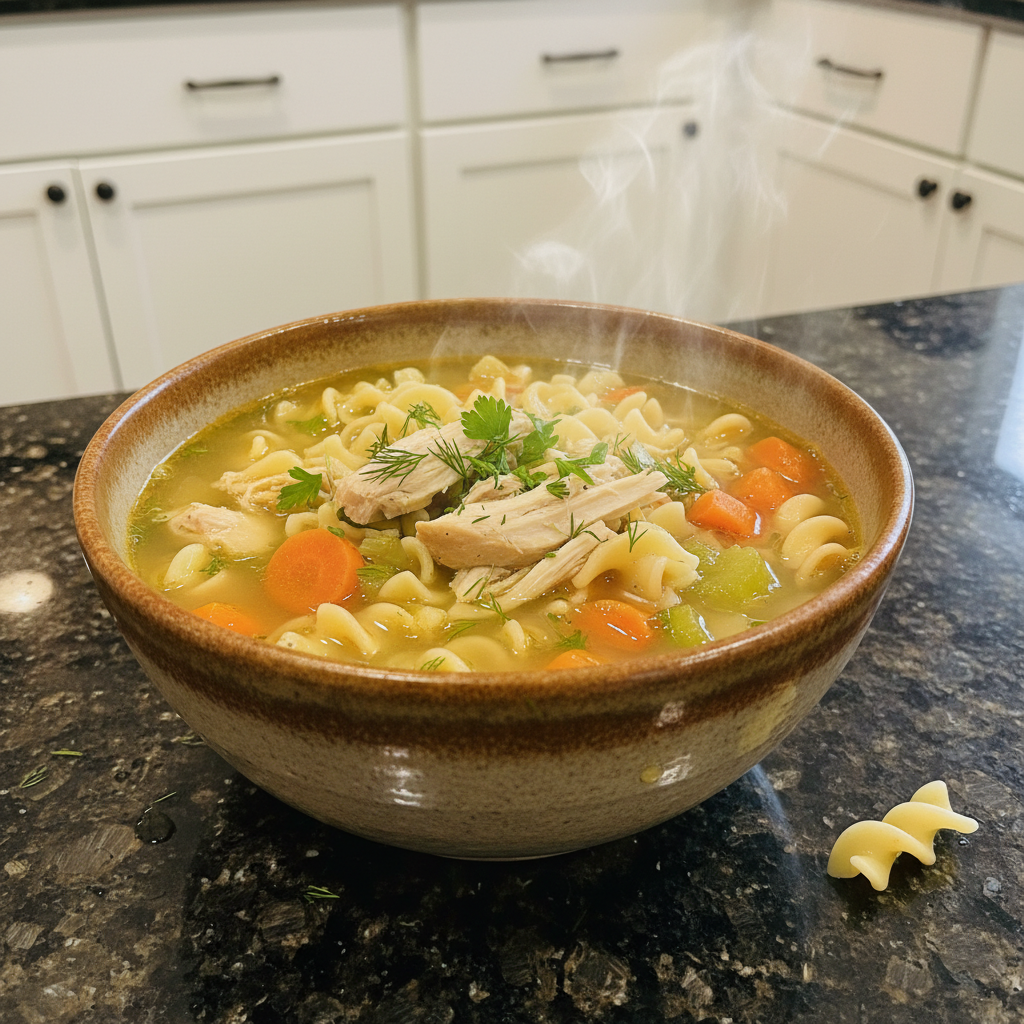
The Ultimate Chicken Noodle Soup Recipe
Ingredients
Equipment
Method
- Add the butter to a large stock pot or Dutch oven over medium-high heat. Once it’s melted, add the diced celery and carrots. Sauté for about 3 minutes until they begin to soften. Then, add the minced garlic and cook for another 30 seconds until it becomes wonderfully fragrant.
- Pour in the chicken stock and add your seasonings: rosemary, thyme, crushed red pepper flakes, salt, and pepper. Now for the secret weapon: drop in the Parmesan rind. This is the perfect time to taste the broth. If it needs a little more savory depth, stir in a spoonful of Better than Bouillon. Remember to TASTE the broth before adding more salt, as both stock and bouillon can be quite salty.
- Bring the broth to a rolling boil. Add your chosen noodles and cook according to package directions, but only until they are just al dente. This is the most important step to avoid mushy noodles! They will continue to soften in the hot broth even after you take the pot off the heat. I always pull it from the heat when the noodles still have a slight bite.
- Using tongs, find and remove the Parmesan cheese rind from the pot; discard it. Stir in the shredded rotisserie chicken. Give the soup one final taste and adjust the seasonings if needed. A little more salt or a crack of black pepper can make all the difference.