Skip to content
There’s nothing quite like a mountain of shockingly good, whipped, velvety, and fluffy creamy mashed potatoes. One spoonful instantly transports me to the comfort of family dinners and the joyous warmth of the holiday season. In my kitchen, creamy mashed potatoes are more than just a side dish; they are the ultimate comfort food, a cherished staple, especially for holiday meals here in the US. This recipe isn’t just about making good mashed potatoes; it’s about making *unforgettable* creamy mashed potatoes. I am going to share not only how to achieve that superior texture and flavor but also the crucial “why” behind each step. Get ready to discover the simple, unique twist that will solve all your mashed potato frustrations and elevate your plate with unparalleled depth and aroma.
Why You’ll Love This Recipe
My secret to truly superior creamy mashed potatoes lies in a simple, yet transformative technique: infusing the milk with aromatics. While heating the milk, I gently simmer it with crushed garlic cloves, a bay leaf, or fresh thyme sprigs. Then, before adding it to the potatoes, I strain the milk through a fine-mesh sieve. This step is a game-changer.
The scientific logic is beautifully simple: infusing the milk allows the fat-soluble and water-soluble compounds from the aromatics to subtly permeate the liquid. This introduces complex, background flavors and aromas that enhance the potatoes without them tasting overtly like “garlic mashed potatoes.” The result is a nuanced richness that elevates every bite. Plus, using hot, infused milk aids in better emulsification with the butter and starches, leading to a smoother, richer, and more velvety texture with an incredibly enhanced buttery flavor.
Unforgettable Flavor Depth: This easy trick transforms your mashed potatoes from good to truly holiday-worthy, imparting a sophisticated richness and aroma that will have everyone asking for your secret. It’s a subtle yet profound difference.
Consistently Perfect Texture: Say goodbye to gummy mashed potatoes or water-logged potatoes. My method ensures a consistently whipped, fluffy, and velvety texture every single time, making each spoonful a dream.
Impressive Yet Easy: This technique feels gourmet but is incredibly simple to implement. It’s an easy recipe that yields impressive results, perfect for a special holiday side dish like Thanksgiving or Christmas, or simply to elevate a weeknight family dinner.
Ingredients Needed

- 4 lbs russet potatoes ((12 medium) peeled)
- 1 1/4 cups hot milk ((use 1 to 1/4 cups) we used whole milk)
- 16 Tbsp unsalted butter (2 sticks) (at room temperature (not melted))
- 1 1/2 tsp salt (or to taste (we used sea salt))
- 1 Tbsp fresh parsley or chives (finely chopped for garnish (optional))
Ingredient Notes & Substitutions
Potatoes: For that signature fluffy texture, I always reach for russet potatoes. Their high starch content makes them ideal for mashing. A pro tip from my kitchen: for the fluffiest results and to prevent waterlogging, I try to cook russet potatoes whole, especially larger ones.
Yukon Gold potatoes are another fantastic alternative. While they have a lower starch content, they offer a naturally buttery flavor and a slightly denser, yet still creamy texture.
Milk: I always use whole milk for its incredible contribution to a creamy texture and richness. Remember, this is where our unique twist comes in! Don’t forget to heat and infuse your whole milk with aromatics like crushed garlic, a bay leaf, or fresh thyme before adding it to the potatoes.
For dairy-free or vegan alternatives, unsweetened plant-based milks like oat, soy, or almond milk work well. Just note that the flavor and creamy texture might vary slightly, but they are great for Vegetarian or Gluten Free diets.
Butter: Unsalted butter is my preference because it gives me full control over the seasoning. If you’re using salted butter, remember to adjust the amount of added salt accordingly.
It’s crucial that your unsalted butter is at room temperature and softened, not melted. From a food science perspective, softened butter emulsifies far better with the potatoes and hot milk, creating that silky texture and retaining a superior buttery flavor. Melted butter will separate and can make your mashed potatoes greasy.
For dairy-free options, high-quality vegan butter sticks are an excellent substitute.
Salt: I’ve specified sea salt in this recipe. Fine sea salt dissolves evenly throughout the mashed potatoes, ensuring consistent seasoning in every bite. If you’re using coarse kosher salt, you may need a slightly different quantity, so always season to taste.
Garnish: Fresh parsley or chives are optional, but I love how they add a pop of color and a hint of fresh flavor to finish off your creamy mashed potatoes beautifully.

How to Make Creamy Mashed Potatoes (Step-by-Step)
Prepare and Boil the Potatoes
1. First, peel your russet potatoes and give them a good rinse under cold water. If you have any very large potatoes, cut them in half to ensure even cooking. For the absolutely smoothest potatoes possible, take a moment to remove any small “knots” or imperfections with the tip of a potato peeler or a small spoon.
2. Place the peeled potatoes in a large pot (a 5-quart or larger works best) and cover them completely with cold water. This helps the potatoes cook evenly.
3. Bring the water to a boil, then reduce the heat slightly and cook the potatoes, partially covered, until they are easily pierced with a knife. This usually takes about 20-25 minutes, depending on the size of your potatoes. Mine typically take around 22 minutes. It’s important not to overcook them, as this can lead to water-logged potatoes and ultimately gummy mashed potatoes.
Infuse the Milk, Drain, and Mash
1. While your potatoes are boiling, prepare your infused milk. In a small saucepan, gently heat your 1 to 1 1/4 cups of whole milk with your chosen aromatics. I like to add 2-3 crushed garlic cloves, 1-2 bay leaves, or a few sprigs of fresh thyme. Heat the milk until it just begins to simmer, then remove it from the heat and let it infuse for 5-10 minutes. This allows those incredible flavors to develop. Once infused, pour the milk through a fine-mesh sieve into a clean bowl, discarding the aromatics. Your milk should now be fragrant and subtly aromatic.
2. Once your potatoes are perfectly cooked, drain them very well. This is a critical step to avoid water-logged potatoes. Immediately transfer the hot, drained potatoes to the bowl of your stand mixer. Grab the whisk attachment and lightly mash the potatoes by hand just to break them up a bit.
3. Fit your mixer with the whisk attachment and start on low speed for about 30 seconds. Then, increase the speed to medium and slowly, gradually drizzle in 1 to 1 1/4 cups of the HOT, infused milk. Always use hot milk; it helps incorporate easily and keeps your potatoes warm, preventing gummy mashed potatoes. Continue mixing until you reach your desired creamy texture.
Add Butter and Season
1. With the mixer still on, add your softened butter, one tablespoon at a time. Wait a few seconds between each addition to allow the butter to fully incorporate. As you add the butter, you’ll see your potatoes transform, becoming wonderfully whipped and fluffy.
2. Finally, add 1 1/2 teaspoons of sea salt, or add to taste. Remember to consider if you used salted butter in your initial salt adjustment. Taste and adjust as needed.
3. Be careful not to overmix your mashed potatoes, as this is the most common cause of gummy mashed potatoes. Stop mixing once they reach a creamy, fluffy texture.
Mastering Your Mash: Potato Science, Tools & Dietary Adaptations
The Science Behind the Perfect Texture: Potato Starch Explained
Understanding potato starch is key to achieving that perfect texture. Potatoes can generally be categorized by their starch content: starchy or waxy.
Starchy potatoes, like our chosen russet potatoes, are high in starch and relatively low in moisture. This composition makes them ideal for mashed potatoes because their cells separate easily when cooked, creating a fluffy texture. They also readily absorb liquids like milk and butter, contributing to richness.
Waxy potatoes, such as red or new potatoes, have a lower starch content and higher moisture. They hold their shape well when cooked, which is great for potato salads, but when mashed vigorously, their starch molecules can become sticky and gluey, leading to gummy mashed potatoes.
The main takeaway: overworking cooked potatoes, especially with high-starch varieties, breaks down too many starch molecules, releasing excess starch and resulting in an unpleasantly gummy texture. Gentle mashing and careful mixing are crucial!
Choosing Your Tool: Equipment for Ultimate Smoothness
The right tool can make all the difference in achieving ultimate smoothness for your creamy mashed potatoes.
A stand mixer or electric hand mixer will yield the smoothest results, perfect for whipping potatoes to a light, airy consistency. However, a strong caution here: these tools also increase the risk of overmixing, which can quickly lead to gummy mashed potatoes. Use them on low to medium speed and stop as soon as the desired fluffy texture is achieved.
A potato ricer is another excellent option. It forces the cooked potatoes through small holes, creating fine, fluffy strands without overworking them. This is my preferred method for a truly smooth texture by hand.
If you’re using a potato masher, focus on gentle, consistent mashing. Press down firmly but avoid beating the potatoes. Work in sections, slowly breaking them down to achieve a creamy texture without activating too much starch and making them gummy.
Adapting Your Mashed Potatoes: Dietary Needs & Flavor Variations
Dairy-Free/Vegan: It’s entirely possible to make delicious dairy-free or vegan creamy mashed potatoes! Simply swap the whole milk for an unsweetened plant-based milk like oat, soy, or almond milk. For the butter, use high-quality vegan butter sticks. You might notice a slight difference in the creamy texture or buttery flavor, but the results are still wonderfully satisfying.
Enrichments: For an even richer experience, after mastering this recipe, you can experiment with optional dairy additions. A swirl of heavy cream or a dollop of sour cream can add extra richness or a pleasant tang, respectively. These are best incorporated at the very end, just before serving.
Seasoning Adjustments: As I mentioned, adjusting salt is key. If you opt for salted butter instead of unsalted butter, you’ll need to reduce the amount of sea salt you add. Also, remember that fine sea salt dissolves more readily and provides consistent seasoning compared to coarse kosher salt, which might require a different quantity to achieve the same taste intensity.
Pro Tips & Troubleshooting for Perfect Mashed Potatoes
Pro Tips for Success
- Always Use Hot Liquids: This is crucial! Ensure your milk, especially the infused milk from our unique twist, is hot when you add it. Hot liquids help the softened butter emulsify beautifully, ensuring a creamy texture, and also keep your potatoes warm.
- Softened Butter is Key: Your unsalted butter absolutely must be at room temperature and softened, not melted. This ensures that silky texture and superior buttery flavor we’re after. Melted butter will separate and can make your mashed potatoes greasy.
- Season Gradually: It’s always best to season to taste at the very end. Start with the recommended amount, taste, and then adjust. Remember to account for whether you used salted butter or unsalted butter.
- Don’t Overwork: This is perhaps the most important rule to prevent gummy mashed potatoes. Whether you’re mashing potatoes by hand or whipping potatoes with a stand mixer, be gentle and stop as soon as they reach your desired creamy and fluffy texture. A potato ricer is fantastic for achieving smoothness without overmixing.
- Cook Russets Whole (If Possible): For the best fluffy texture, I recommend cooking russet potatoes whole, especially larger ones. This prevents waterlogging, which can make your mashed potatoes watery and bland.
- Taste and Adjust: Before serving, always give your mashed potatoes a final taste. Adjust the salt if needed, or stir in a touch more milk or butter for that perfect richness and creamy texture.
Common Mistakes to Avoid
- Overcooking Potatoes: This is a fast track to water-logged potatoes and, eventually, gummy mashed potatoes. Cook them just until they are easily pierced with a knife, then drain immediately.
- Not Draining Well: Another major culprit for water-logged potatoes and gummy results. Ensure your potatoes are thoroughly drained after boiling. A few minutes in the hot pot off the heat can help residual moisture evaporate.
- Using Cold Milk: Adding cold milk will quickly cool down your potatoes, making it much harder to achieve that desired creamy texture. Always use hot milk.
- Overmixing: The number one cause of gummy mashed potatoes. Overmixing breaks down the starches, turning your fluffy potatoes into a gluey mess. Mix quickly and gently once liquids and butter are added.
- Underseasoning: This is how you end up with bland mashed potatoes. Don’t be shy with the seasoning, especially with salt, and always taste before serving.
- Using Melted Butter: As discussed, melted butter will not yield the same silky texture and rich buttery flavor as softened butter. Stick to softened butter for the best results.
Serving & Storage
Serving Ideas
Creamy mashed potatoes are the quintessential side dish, pairing perfectly with so many main courses. I love serving them with a classic Roast Turkey, a hearty Meatloaf, an impressive Prime Rib, or a simple Pan-Seared Steak. They’re also fantastic alongside Roast Beef, Roast Chicken, a beautiful Baked Ham, a tender Roasted Pork Tenderloin, or even crispy Pork Schnitzel.
For a complete meal, I often serve them with complementary sides like Turkey Gravy or an Easy Mushroom Gravy, and other roasted or sautéed vegetables such as Roasted Cauliflower, Roasted Broccoli, or Sautéed Mushrooms. Don’t forget the Stuffing for those big holiday meal spreads!
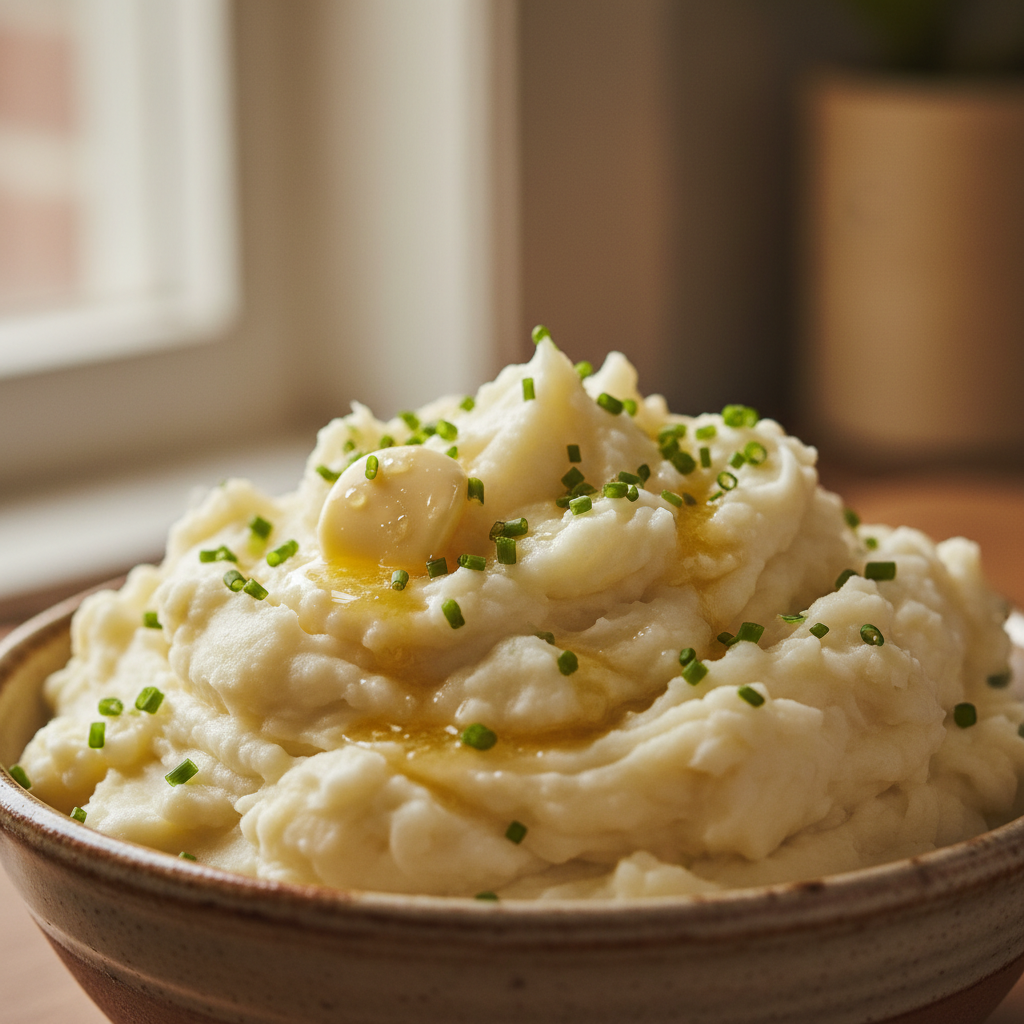
To really make them shine, I like to garnish my creamy mashed potatoes with a drizzle of extra melted butter and a sprinkle of fresh parsley or chives right before serving. It adds a beautiful touch and a hint of fresh flavor. If you have any leftovers, they are fabulous in creative dishes like Shepherd’s Pie, Mashed Potato Pancakes, or a comforting Mashed Potato Casserole.
Storage and Make-Ahead
Make-Ahead Tips: Absolutely! Creamy mashed potatoes can be made ahead of time, which is a lifesaver for a busy holiday meal. You can prepare them up to 1-2 days in advance. Transfer them to a casserole dish, cover tightly with plastic wrap or foil, and refrigerate.
Keeping Warm: What are the best ways to keep mashed potatoes warm without drying them out? For a party or gathering, I have a few go-to methods. You can keep them in a slow cooker on the “warm” or lowest setting, stirring occasionally. A double boiler over simmering water also works wonders. Alternatively, you can hold them in a covered oven at a very low temperature, around 150-200°F.
Refrigeration: How should I store leftover mashed potatoes? Store them in an airtight container in the refrigerator for 3-4 days.
Freezing: Yes, creamy mashed potatoes are freezer friendly! Portion them into airtight containers or heavy-duty freezer bags and freeze for up to 1-2 months. Be aware that the texture may change slightly upon thawing, sometimes becoming a little softer.
Reheating Leftovers: How should I reheat leftover mashed potatoes? For the stovetop, transfer them to a saucepan over low heat, adding a splash of milk or heavy cream and stirring frequently until heated through and creamy again. You can also reheat them in the microwave, stirring every minute or so, or in the oven in a covered casserole dish at 300°F until warmed through, adding a little liquid if needed.
Adaptations for Holiday Feasts
This recipe scales beautifully for large Thanksgiving or Christmas gatherings. Don’t hesitate to double or even triple the recipe. Utilizing the make-ahead tips is a fantastic strategy to reduce holiday cooking stress, allowing you more time to enjoy your guests.
Conclusion
There you have it – the secret to achieving truly holiday-worthy, velvety creamy mashed potatoes that will impress everyone at your table. My unique twist of infusing the milk with aromatics is a simple step that yields unparalleled flavor and texture, setting this recipe apart from the rest. With the detailed instructions, pro tips, and troubleshooting advice I’ve shared, you can confidently succeed, whether you’re a beginner cook or an experienced chef.
I encourage you to try this recipe, experiment with different garnish ideas, and explore the suggested serving ideas to create memorable meals. Print out this easy recipe and let these creamy mashed potatoes become a new favorite holiday side dish in your home. I can’t wait for you to experience the difference!
FAQ (Frequently Asked Questions)
What kind of potatoes are best for creamy mashed potatoes?
For the best creamy and fluffy mashed potatoes, I recommend using starchy varieties like russet potatoes. Their high starch content breaks down easily, creating a light, airy texture that readily absorbs butter and milk. Yukon Gold potatoes are also a good choice, offering a naturally buttery flavor and a slightly denser, yet still creamy, consistency.
How do you prevent mashed potatoes from becoming gummy?
Gummy mashed potatoes are typically caused by overworking them. To prevent this, cook your potatoes just until they are tender and easily pierced with a knife, then drain them very well. Avoid using a food processor or blender, and mash gently with a potato ricer or masher, or whip briefly with a stand mixer on low speed. Stop as soon as the desired creamy texture is achieved.
Can creamy mashed potatoes be made ahead of time for a holiday meal?
Yes, absolutely! Creamy mashed potatoes are excellent for make-ahead meal planning. You can prepare them up to 1-2 days in advance. After cooking, let them cool slightly, then transfer to a casserole dish, cover tightly, and refrigerate. When ready to serve, reheat gently with a splash of milk or cream.
What are the best ways to keep mashed potatoes warm without drying them out?
To keep mashed potatoes warm, I recommend using a slow cooker set to its “warm” or lowest setting, stirring occasionally. A double boiler over simmering water also works well. Alternatively, you can place them in an oven-safe dish, covered tightly with foil, and hold them in a very low oven (around 150-200°F) until ready to serve.
How should I store and reheat leftover mashed potatoes?
Store leftover mashed potatoes in an airtight container in the refrigerator for 3-4 days. To reheat, you can warm them on the stovetop over low heat with a splash of milk or heavy cream, stirring frequently. They can also be reheated in the microwave, stirring every minute, or in a covered oven-safe dish at 300°F, adding liquid as needed to restore creaminess.
What are some good main dishes and sides to serve with mashed potatoes?
Creamy mashed potatoes pair wonderfully with classic main dishes like roast turkey, meatloaf, prime rib, pan-seared steak, roast beef, and roast chicken. For sides, consider turkey gravy, easy mushroom gravy, roasted cauliflower, roasted broccoli, or sautéed mushrooms. Don’t forget stuffing for holiday meals!
Can I use different types of milk, like skim or almond milk?
Yes, you can use different types of milk, but be aware of the impact on texture and flavor. While I prefer whole milk for its richness and creamy texture, you can use skim milk for a lighter version, though it may be less decadent. For dairy-free or vegan options, unsweetened plant-based milks like oat, soy, or almond milk are excellent substitutes. Just ensure they are hot when added to the potatoes.
What equipment is best for mashing potatoes to get them smooth?
For the smoothest mashed potatoes, a potato ricer or a stand mixer (with the whisk attachment on low to medium speed) are your best bets. A potato ricer creates fine, fluffy strands without overworking the starch. If mashing by hand with a potato masher, focus on gentle, consistent pressing rather than beating, to avoid a gummy texture.
Velvety Creamy Mashed Potatoes: The Secret Ingredient Twist
Ingredients
Equipment
Method
- First, peel your russet potatoes and give them a good rinse under cold water. If you have any very large potatoes, cut them in half to ensure even cooking. For the absolutely smoothest potatoes possible, take a moment to remove any small "knots" or imperfections with the tip of a potato peeler or a small spoon.
- Place the peeled potatoes in a large pot (a 5-quart or larger works best) and cover them completely with cold water. This helps the potatoes cook evenly.
- Bring the water to a boil, then reduce the heat slightly and cook the potatoes, partially covered, until they are easily pierced with a knife. This usually takes about 20-25 minutes, depending on the size of your potatoes. It's important not to overcook them.
- While your potatoes are boiling, prepare your infused milk. In a small saucepan, gently heat your 1 to 1 1/4 cups of whole milk with your chosen aromatics (like 2-3 crushed garlic cloves, 1-2 bay leaves, or a few sprigs of fresh thyme). Heat the milk until it just begins to simmer, then remove it from the heat and let it infuse for 5-10 minutes. Once infused, pour the milk through a fine-mesh sieve into a clean bowl, discarding the aromatics.
- Once your potatoes are perfectly cooked, drain them very well. Immediately transfer the hot, drained potatoes to the bowl of your stand mixer. Grab the whisk attachment and lightly mash the potatoes by hand just to break them up a bit.
- Fit your mixer with the whisk attachment and start on low speed for about 30 seconds. Then, increase the speed to medium and slowly, gradually drizzle in 1 to 1 1/4 cups of the HOT, infused milk. Continue mixing until you reach your desired creamy texture.
- With the mixer still on, add your softened butter, one tablespoon at a time. Wait a few seconds between each addition to allow the butter to fully incorporate. You'll see your potatoes transform, becoming wonderfully whipped and fluffy.
- Finally, add 1 1/2 teaspoons of sea salt, or add to taste. Remember to consider if you used salted butter in your initial salt adjustment. Taste and adjust as needed.
- Be careful not to overmix your mashed potatoes, as this is the most common cause of gummy mashed potatoes. Stop mixing once they reach a creamy, fluffy texture.