Skip to content
There’s something truly magical about fresh-baked bread, especially when it carries a touch of festive charm. In my kitchen, few things bring as much joy and aroma as a loaf of homemade Green Irish Soda Bread. This isn’t just any quick bread; it’s a vibrant, easy-to-make masterpiece that’s perfect for St. Patrick’s Day or any occasion when you want to add a pop of color and fresh flavor to your table. Get ready to discover a simple yet stunning recipe that will make you feel like a baking pro, complete with unique twists and helpful tips for perfect results every time.
Why You’ll Love This Recipe
When I set out to create this Green Irish Soda Bread, I wanted to capture the essence of tradition with a fun, modern twist. You are going to adore this recipe for several reasons.
Vibrant Green Hue: Our unique twist comes from finely chopped fresh spinach or spinach powder, which naturally imparts a beautiful, vibrant green color. This makes it absolutely perfect for St. Patrick’s Day celebrations without changing the beloved classic flavor of Irish soda bread.
Bright Orange Zest: I’ve found that a touch of fresh orange zest truly brightens the bread’s profile. It provides an aromatic lift that complements the buttermilk and adds a delightful layer of freshness.
Mint Honey Butter: To elevate the serving experience, I pair this quick bread with a delightful, mint-infused honey butter. It’s a simple addition that takes the whole dish to another level of deliciousness.
Effortlessly Easy: This Green Irish Soda Bread is incredibly easy to make, suitable for home cooks of all skill levels. It’s a yeast-free bread that comes together quickly, delivering a visually stunning and delicious result with minimal fuss.
Ingredients Needed

Here’s what you’ll need to create this fantastic Green Irish Soda Bread in your own kitchen:
- 4 cups (510 g) all-purpose flour, see notes below for making it whole grain
- 2 teaspoons (12 g) Diamond Crystal kosher salt, see notes above
- 1 tablespoon (13 g) sugar
- 1 teaspoon (5 g) baking soda
- 1 cup dried currants, optional
- 1 egg
- 1¾ cups (410 g) buttermilk, see notes above
- 2 tablespoons melted butter
- room temperature butter
- flour
Ingredient Notes & Substitutions
Buttermilk: Buttermilk is key to this quick bread’s tender crumb. If you don’t have any on hand, you can easily make a homemade substitute. Just add 1 tablespoon of lemon juice or white vinegar to a liquid measuring cup, then fill the rest with regular milk (2% or whole milk works best) until it reaches 1¾ cups. Let it sit for 5-10 minutes until it slightly curdles. For dairy-free alternatives, you can use unsweetened plain non-dairy milk (like almond or soy) with the same lemon juice or vinegar method, though the texture might vary slightly.
Flour: While all-purpose flour yields a classic result, you can make this Green Irish Soda Bread whole grain for added nutrition and a nutty flavor. I like to substitute up to half of the all-purpose flour with whole wheat flour. For an even heartier loaf, you can add a tablespoon or two of wheat germ. For the adventurous baker, some have even adapted Irish soda bread recipes to include sourdough discard, which can add a unique tang, but that’s a more advanced variation.
Salt: Accurate salt measurement is crucial for flavor balance. This recipe calls for Diamond Crystal kosher salt, which has a larger flake size and is less dense than other salts. If you are using Morton kosher salt, you may need to reduce the amount slightly, as it is saltier by volume. For fine sea salt, reduce the quantity by about half. As a general rule, aim for salt to be 2-3% of the flour’s weight for optimal flavor.
Spinach & Orange Zest (Our Unique Twist): For that beautiful green color, I recommend incorporating 1-2 tablespoons of finely chopped fresh spinach or 1 teaspoon of spinach powder into the dry ingredients. The fresh orange zest, 1 tablespoon, adds an aromatic lift and brightens the overall flavor profile. These are optional but highly recommended additions that truly elevate this quick bread.
Currants: Dried currants are a traditional and delicious addition to Irish soda bread, offering little bursts of sweetness. They are an optional ingredient, so feel free to include them or leave them out based on your preference.

How to Make Green Irish Soda Bread
Making this Green Irish Soda Bread is a straightforward process, resulting in a beautiful and delicious loaf.
Step 1: Prep & Dry Ingredients
Before you begin, preheat your oven to 400ºF. In a large bowl, whisk together the all-purpose flour, salt, sugar, and baking soda. This is where we add our unique twist: incorporate 1-2 tablespoons of finely chopped fresh spinach or 1 teaspoon of spinach powder for that vibrant color, along with 1 tablespoon of fresh orange zest. If you’re using dried currants, whisk them in now as well. This ensures all the dry ingredients are evenly distributed.
Step 2: Wet Ingredients & Combining
In a separate medium bowl, beat the egg and buttermilk together until well combined. Then, add the melted butter and stir to incorporate it. Now, pour the liquid ingredients into the dry mixture. Using a rubber spatula, stir just until combined. The mixture will be quite sticky, and that’s perfectly normal for a quick bread. Be careful not to overmix, as this can lead to a tough, dense loaf.
Step 3: Shaping & Scoring
Grease a 9- or 10-inch cast iron skillet or other similarly sized oven-safe vessel with softened butter. Lightly flour your hands and sprinkle a little flour over the sticky dough ball. Use your hands to quickly scrape the dough from the sides of the bowl and gently shape it into a ball, with minimal kneading. Transfer the dough to your prepared skillet. Sprinkle a teensy bit more flour on top. Now, use a sharp knife to make a deep ‘X’ across the top of the dough ball, about ½ to ¾ inch deep. This scoring isn’t just for looks; it helps the bread expand properly in the oven, ensuring an optimal rise and even baking.
Step 4: Baking & Cooling
Place the skillet in the preheated 400ºF oven and bake for 35 to 40 minutes. The bread is done when it’s lightly golden brown on top, feels firm to the touch, and sounds hollow when you tap the bottom of the loaf. Once baked, remove it from the oven and carefully transfer it to a cooling rack. Let it cool for at least 15 minutes before slicing. This cooling period is crucial for the internal structure to set, giving you the best texture.
To store your freshly baked Green Irish Soda Bread, tuck it into an airtight bag, such as a ziplock, or an airtight container. It will keep well at room temperature for about 3-4 days. You can also freeze it for up to 2-3 months.
Here it is:
The Science Behind Perfect Quick Breads: Baking Soda and Buttermilk Explained
The magic behind a perfectly tender Green Irish Soda Bread lies in a simple yet powerful chemical reaction between baking soda and buttermilk. Unlike yeast breads, quick breads rely on these leavening agents to achieve their rise.
Baking soda is a base, and buttermilk is an acid. When these two meet, they react to produce carbon dioxide gas. These tiny gas bubbles get trapped within the dough as it bakes, creating the signature light, airy, and scone-like crumb that we all love in quick breads like our Irish soda bread. This acid-base combination is precisely why baking soda is so effective in buttermilk-based recipes, providing lift and tenderness without the need for yeast or lengthy proofing times.
Pro Tips & Troubleshooting
Pro Tips
Perfect Salt Balance: Always pay close attention to your salt measurements. If you’re using Diamond Crystal kosher salt, stick to the recipe. For other salts like Morton kosher or fine sea salt, adjust accordingly, aiming for about 2-3% of the flour’s weight for optimal flavor balance. This small adjustment makes a big difference in the final taste of your Green Irish Soda Bread.
Minimal Handling for Tenderness: The secret to a truly tender quick bread is minimal mixing. Stir the dough just until the wet and dry ingredients are combined. Overmixing develops gluten, which can lead to a tough, dense bread instead of the desired light and tender crumb.
Mastering the Score: When scoring the ‘X’ on top of your Green Irish Soda Bread, aim for a deep cut, about ½ to ¾ inch. This isn’t just for a rustic appearance; it allows the bread to expand properly and evenly during baking, preventing uncontrolled cracks and ensuring a beautiful, well-risen loaf.
Doneness Cues: To confirm your Green Irish Soda Bread is perfectly baked, look for a beautiful golden-brown crust. You can also tap the bottom of the loaf; it should sound hollow. These cues ensure the interior is cooked through and not doughy.
Common Mistakes to Avoid
Overmixing the Dough: This is perhaps the most common pitfall with quick breads. As mentioned, excessive mixing develops gluten, leading to a tough, chewy texture. Remember, quick breads thrive on minimal handling, so embrace the sticky dough and resist the urge to keep stirring.
Incorrect Leavening Agents: Baking soda and baking powder are not interchangeable without careful consideration. Baking soda requires an acid (like buttermilk) to react. If you don’t have enough acid, the baking soda won’t activate fully, resulting in poor rise. Always use the leavening agent specified in the recipe to ensure proper lift and texture.
Dense or Dry Bread: If your Green Irish Soda Bread turns out dense or dry, several factors could be at play. Too much flour (especially if measuring by volume instead of weight), insufficient liquid, or overbaking are common culprits. Using a kitchen scale for flour accuracy can help immensely. Stick to the recommended baking times and test for doneness to prevent a dry loaf, ensuring a moist and tender result every time.
Serving & Storage
Serving Ideas
This vibrant Green Irish Soda Bread is incredibly versatile and delicious. I love serving it warm, fresh from the oven, with a generous slather of softened butter, my favorite jam, or a tangy marmalade. However, for a truly special treat, I highly recommend serving it with our mint-infused honey butter. To make it, simply combine softened unsalted butter with a tablespoon or two of honey and a teaspoon of finely chopped fresh mint leaves. It’s a refreshing accompaniment that perfectly complements the bread’s flavors.
For a complete meal, this Green Irish Soda Bread pairs wonderfully with savory dishes like a hearty shepherd’s pie or a warm bowl of stew. It’s also delightful enjoyed simply with a cup of tea or coffee for a comforting snack. To enhance its festive presentation, especially for St. Patrick’s Day, you can sprinkle a little extra orange zest on top or even a few fresh mint sprigs. This loaf typically yields 8-10 slices, making it perfect for sharing.
Storage and Make-Ahead
Room Temperature: Once your Green Irish Soda Bread has completely cooled, store it in an airtight bag, like a ziplock, or an airtight container at room temperature. It will stay fresh and delicious for about 3-4 days.
Freezing: For longer storage, this bread freezes beautifully. I recommend slicing the cooled loaf first, then wrapping the slices tightly in plastic wrap and placing them in a freezer-safe bag or container. This way, you can grab just a few slices as needed. It will keep well in the freezer for up to 2-3 months.
Reheating: To restore its fresh-baked taste and texture, you can gently reheat slices from room temperature or frozen. Wrap slices in foil and warm them in a moderate oven (around 300ºF) for 10-15 minutes, or toast them lightly in a toaster. From frozen, you may need a few extra minutes.
Conclusion
I hope you’re as excited as I am to try this vibrant Green Irish Soda Bread! It truly is a delight to bake and even more so to share. With its striking green color from fresh spinach, the bright aroma of orange zest, and the refreshing touch of mint honey butter, it’s a recipe that stands out. Remember, quick breads are forgiving, and even if you’re new to baking, you can achieve fantastic results with this easy recipe. So go ahead, preheat your oven, gather your ingredients, and bring a touch of Irish charm to your table. Don’t hesitate to experiment with different serving ideas, and please, share your beautiful creations!
FAQ
What makes Irish soda bread green?
Our Green Irish Soda Bread gets its vibrant color from the addition of finely chopped fresh spinach or spinach powder, which is incorporated into the dry ingredients. This gives it a festive hue perfect for St. Patrick’s Day without significantly altering the classic flavor.
What is the secret to light and tender Irish soda bread?
The secret lies in minimal mixing and the reaction between baking soda and buttermilk. Overmixing develops gluten, leading to a tough loaf. The acidity of the buttermilk reacts with the baking soda to create carbon dioxide, which leavens the bread and gives it a tender crumb.
Can I make Irish soda bread without buttermilk?
Yes, you can! If you don’t have buttermilk, you can easily make a substitute at home. Add 1 tablespoon of lemon juice or white vinegar to a liquid measuring cup, then fill the rest with regular milk (2% or whole) to the required amount. Let it sit for 5-10 minutes until it slightly curdles before using.
How do I prevent my soda bread from being dry or crumbly?
To prevent dry or crumbly bread, ensure you’re measuring your flour accurately (a kitchen scale is best), avoid overmixing the dough, and don’t overbake. The bread should be golden brown and sound hollow when tapped, but not excessively hard.
What are common variations for Irish soda bread?
Common variations include adding dried fruits like currants or raisins, caraway seeds for a savory note, or orange zest for brightness. Some recipes incorporate different flours like whole wheat, and there are even sourdough variations for those seeking a tangier flavor.
How long does homemade Irish soda bread last, and how should I store it?
Homemade Green Irish Soda Bread lasts about 3-4 days at room temperature when stored in an airtight bag or container. For longer storage, you can freeze it for up to 2-3 months, ideally sliced and tightly wrapped.
Is Irish soda bread a quick bread?
Yes, Irish soda bread is a classic example of a quick bread. It uses baking soda as its primary leavening agent, reacting with an acid like buttermilk, instead of yeast, which allows it to be prepared and baked much more quickly than traditional yeast breads.
What kind of pan should I use for Irish soda bread?
I prefer using a greased 9- or 10-inch cast iron skillet for Irish soda bread, as it helps create a beautifully crisp crust and even baking. However, any similarly sized oven-safe vessel, such as a round cake pan or a baking sheet, will work well.
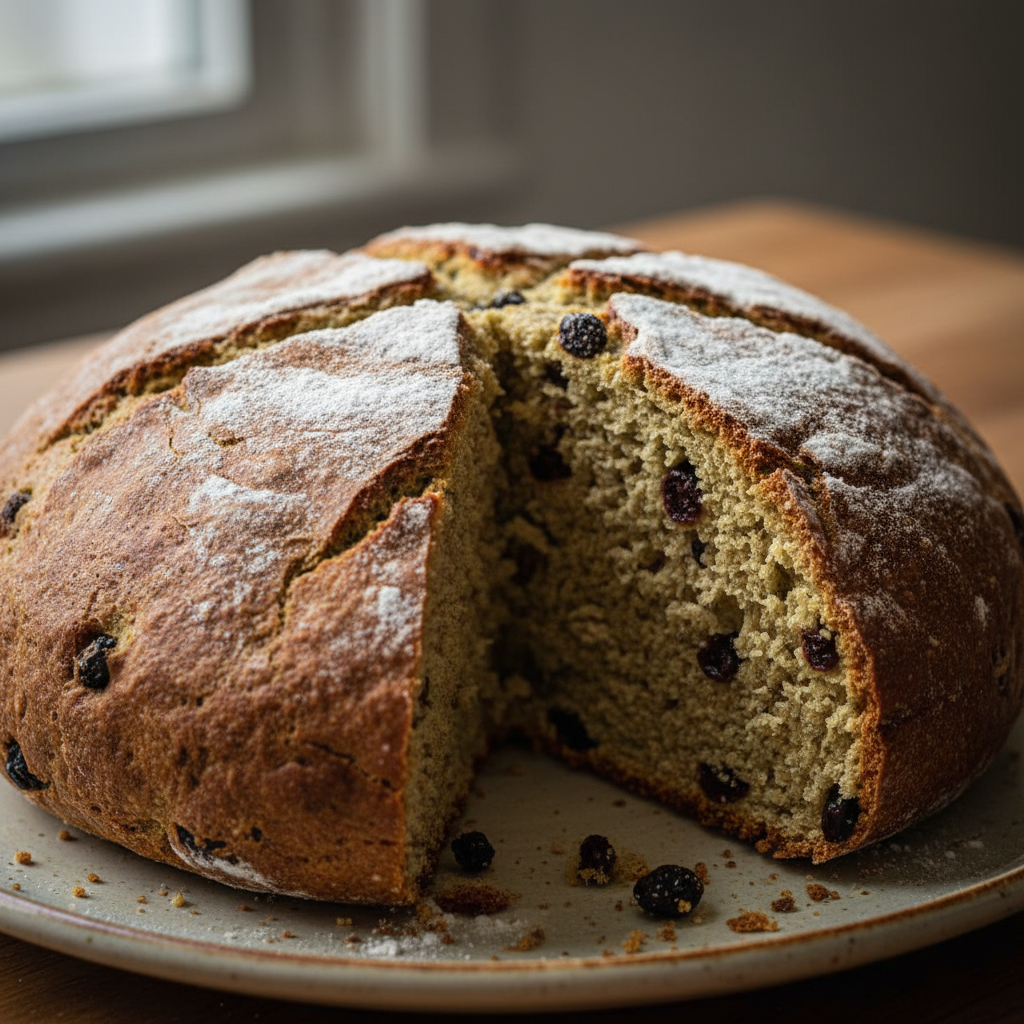
Vibrant Green Irish Soda Bread with Mint Honey Butter
Ingredients
Equipment
Method
- Preheat your oven to 400ºF (200°C).
- In a large bowl, whisk together the all-purpose flour, salt, sugar, and baking soda.
- Incorporate 1-2 tablespoons of finely chopped fresh spinach or 1 teaspoon of spinach powder for that vibrant color, along with 1 tablespoon of fresh orange zest.
- If you're using dried currants, whisk them in now as well. Ensure all dry ingredients are evenly distributed.
- In a separate medium bowl, beat the egg and buttermilk together until well combined.
- Then, add the melted butter and stir to incorporate it.
- Pour the liquid ingredients into the dry mixture. Using a rubber spatula, stir just until combined. The mixture will be quite sticky, which is perfectly normal for a quick bread.
- Be careful not to overmix, as this can lead to a tough, dense loaf.
- Grease a 9- or 10-inch cast iron skillet or other similarly sized oven-safe vessel with softened butter.
- Lightly flour your hands and sprinkle a little flour over the sticky dough ball.
- Use your hands to quickly scrape the dough from the sides of the bowl and gently shape it into a ball, with minimal kneading.
- Transfer the dough to your prepared skillet. Sprinkle a teensy bit more flour on top.
- Now, use a sharp knife to make a deep 'X' across the top of the dough ball, about ½ to ¾ inch deep. This scoring helps the bread expand properly in the oven.
- Place the skillet in the preheated 400ºF oven and bake for 35 to 40 minutes.
- The bread is done when it's lightly golden brown on top, feels firm to the touch, and sounds hollow when you tap the bottom of the loaf.
- Once baked, remove it from the oven and carefully transfer it to a cooling rack.
- Let it cool for at least 15 minutes before slicing. This cooling period is crucial for the internal structure to set, giving you the best texture.