Skip to content
Welcome to the wonderful world of homemade water kefir! If you’re looking for a refreshing, probiotic-rich beverage that’s easy to make and bursting with natural fizziness, you’ve come to the right place. This comprehensive water kefir recipe will guide you through every step, from activating your grains to creating custom flavors. I’ll also share my special technique to ensure robust grains and a consistently bubbly brew, making your home fermenting journey a success.
Why You’ll Love This Water Kefir Recipe
In my kitchen, I’ve discovered a secret weapon for truly exceptional water kefir: a touch of mineral-rich un-sulphured molasses. By adding just 1 teaspoon per liter during primary fermentation, I’ve seen a remarkable difference in grain vitality and brew consistency.
Science-Backed Boost: Water kefir grains don’t just need sugar; they thrive on essential micronutrients. Molasses naturally provides magnesium, potassium, and iron, crucial elements that cane sugar alone can’t always deliver in sufficient quantities. This means your water kefir grains get the complete nutrition they need for optimal vitality and proliferation.
Consistent & Robust Brews: This simple twist leads to more consistent grain growth batch after batch. You’ll notice your grains are more active, resulting in a more robust and reliably fizzy brew every time. This mineral boost truly strengthens their fermentative power.
Health & Enjoyment: This easy method helps you create a delicious, naturally gluten-free probiotic beverage that supports your gut health. It ensures more consistent results for both beginner and experienced brewers, making home fermenting incredibly enjoyable and rewarding.
Ingredients Needed

- 1 liter (1 quart) jar with lid
- Tightly woven cloth with rubber band
- Strainer
- Measuring cup
- Bottles
- 1 liter (1 quart) filtered water
- ¼ cup whole or refined cane sugar
- 120-150 ml (4-5 tablespoons) water kefir grains
- Flavorings (optional, see below)
Ingredient Notes & Substitutions
Filtered Water: I always emphasize using filtered water for your water kefir. Chlorine and chloramines commonly found in tap water can be detrimental to the delicate water kefir grains and hinder their activity. Good quality, filtered water ensures your grains stay happy and healthy.
Cane Sugar: Cane sugar, whether whole or refined, is the gold standard for feeding water kefir grains. It provides the ideal food source for their growth and fermentation. While other sugars like coconut sugar or maple syrup *can* be used, they might alter the flavor and can sometimes be less effective for long-term grain health and consistency. The good news is, the grains consume the sugar, leaving you with a low-sugar, probiotic-rich drink!
Water Kefir Grains: These fascinating translucent, gelatinous live cultures, also known as tibicos, are the heart of your water kefir. They initiate the fermentation process, transforming sugar water into a bubbly, probiotic-rich beverage. For another delicious fermented option, explore how to make your own milk kefir.
Molasses (Our Secret Twist!): Here’s my favorite secret! Adding 1 teaspoon of un-sulphured molasses per liter provides crucial trace minerals that boost your water kefir grains‘ health and fizziness. It’s a small addition with a huge impact on grain vitality and the robustness of your brew. Just make sure it’s un-sulphured!
Flavorings: While optional, flavorings are where you can get creative! I love using fresh or dried fruits like organic raisins, berries, or citrus zest during secondary fermentation to infuse my water kefir with delicious, natural tastes.

How to Make Water Kefir (Step-by-Step Guide)
1. Prepare Your Fermentation Jar
Begin with a meticulously clean 1 liter (1 quart) jar. Cleanliness is paramount when working with live cultures; I always wash my equipment with hot, soapy water and rinse it thoroughly to prevent any contamination. Add ¼ cup whole or refined cane sugar to the jar, then pour in 1 liter (1 quart) filtered water. Secure the lid tightly and shake vigorously until you can no longer see any sugar granules, ensuring it’s completely dissolved.
2. Introduce Your Water Kefir Grains & Mineral Boost
Gently add your 120-150 ml (4-5 tablespoons) water kefir grains to the sugar-water mixture. They look like tiny, translucent crystals, ready to get to work! Now for my unique twist: stir in 1 teaspoon of un-sulphured molasses per liter. This mineral boost will visibly contribute to stronger, more active grains and superior carbonation in your final drink.
If you’re adding fruits or flavorings during this primary fermentation (like a large piece of apple, a whole dried fig, or thick banana chunks), add them now. This can impart subtle flavor and nutrients directly to the grains. For tidier grains and easier straining later, I sometimes opt to add fruit during secondary fermentation instead.
3. Primary Fermentation (The Waiting Game)
Cover your jar. You can either loosen the existing lid slightly to allow gas to escape, or remove it and replace it with a tightly woven cloth secured with a rubber band. This prevents dangerous pressure buildup during fermentation. Place the jar at room temperature, ideally between 68-75°F (20-24°C), for 2-3 days. The ideal fermentation duration can vary based on your ambient temperature, sugar content, and the activity level of your grains.
You might not see much dramatic change, but as the days pass, you may notice small bubbles forming. After 2-3 days, give it a sniff and a tiny taste. You’re looking for a slight acidic but fresh smell, a light lemony, tangy taste, and perhaps a subtle effervescence. While your grains may have noticeably increased in volume, a lack of visible growth doesn’t always mean unsuccessful fermentation—trust your taste buds!
4. Bottling for Secondary Fermentation (Optional Fizz Boost)
If you added fruit or flavorings during primary fermentation, carefully skim them from the top with a clean spoon. I usually compost or eat the fruit. Using a strainer and a funnel, strain the fermented liquid into clean bottles. It’s vital to ensure all your equipment is thoroughly cleaned and sanitized again to avoid any contamination. Place your water kefir grains into a new clean jar, ready for your next batch.
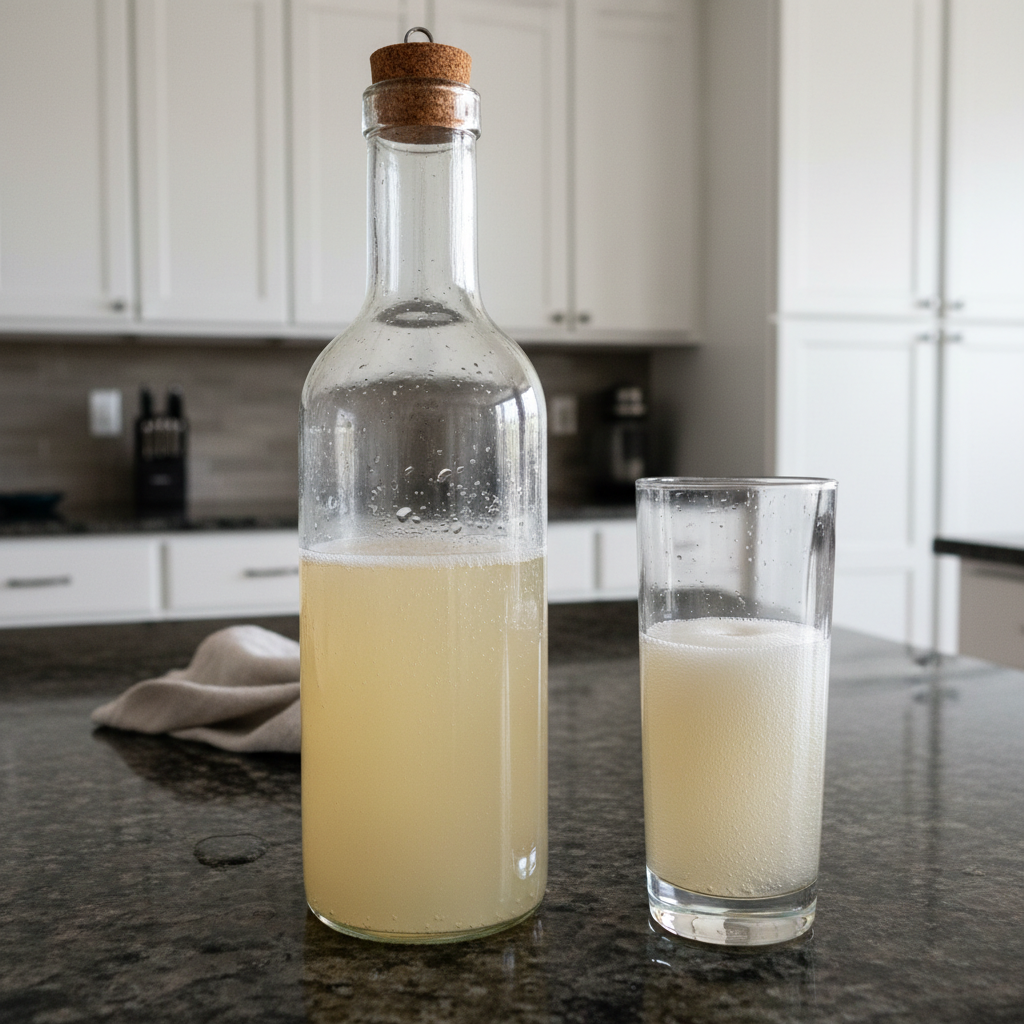
Cap the bottles tightly. Let them sit at room temperature for another 2 days or more. This secondary fermentation step is truly key for building that satisfying fizziness. Gently release pressure from the bottles to check for that exhilarating fizzing sound. Once you’re happy with the carbonation, your water kefir is ready to drink.
5. Enjoy & Repeat!
Drink your freshly brewed water kefir right away or refrigerate for up to a few weeks to preserve its fizziness and slow further fermentation. For more flavor and fizz during secondary fermentation, I love experimenting with fruit purees (like mango!), fruit syrups, or fresh berries directly in the bottle, just as I would with kombucha. Use your strained water kefir grains to start another batch immediately, following these steps again, and enjoy the cycle of delicious, bubbly beverages!
Beyond the Brew: Health Benefits & Sugar Choices
As a chef and fermenter, I’m often asked about the specifics of what makes water kefir so special. It’s more than just a tasty drink; it’s a powerhouse for your well-being, and choosing the right sugar is crucial for its success.
Health Benefits of Water Kefir
Water kefir is a fantastic way to support your gut health. It’s a rich source of diverse live cultures, providing a natural probiotic boost that can contribute to improved digestion, enhanced immune support, and even a subtle, natural energy lift. For more recipes that support overall well-being and energy, try our healthy garlic chicken rice bowl. Plus, it’s a naturally gluten-free beverage, making it accessible to many.
Choosing Your Sugar for Water Kefir
When it comes to feeding your water kefir grains, cane sugar is my preferred choice and the gold standard. It provides the ideal balance of nutrients for grain health and consistent fermentation. While I’ve experimented with other natural sugars like coconut sugar, maple syrup, or brown sugar, they can significantly alter the flavor and color of your water kefir and may not support grain proliferation as effectively over time. For optimal grain health and consistent results, cane sugar is generally my recommendation.
And remember my molasses twist! This reliable mineral supplement enhances grain vitality no matter which primary sugar you choose, ensuring your grains remain robust and active.
Optimizing Your Water Kefir: Fermentation & Grain Health
Achieving consistently delicious water kefir comes down to understanding and controlling a few key environmental factors and practicing good grain care.
Ideal Fermentation Conditions
Temperature is a major player in fermentation. While room temperature is generally sufficient, I’ve found the optimal temperature range for vibrant fermentation to be between 68-75°F (20-24°C). Within this range, your grains are most active, leading to quicker fermentation and excellent flavor development. Avoid direct sunlight, which can overheat your grains and degrade their effectiveness, and strive for a consistent ambient temperature to prevent unpredictable fermentation times.
Caring for Your Water Kefir Grains
To ensure your water kefir grains stay healthy and multiply, consistency is key. I feed mine every 2-3 days with fresh sugar water. Regular feeding keeps them active and robust. Incorporating my molasses twist also significantly enhances grain vitality and promotes faster, more reliable growth.
For long-term storage, if I’m taking a break from brewing, I store my grains in fresh sugar water in the fridge, changing the water weekly. This keeps them dormant for weeks to months. When I’m ready to brew again, I gradually revive them at room temperature, often starting with smaller batches of sugar water until they’re fully active again.
Sanitization Best Practices
Preventing contamination is critical for healthy live cultures. I always stress the importance of thorough sanitization of all equipment. Washing your jars, bottles, and strainers with hot, soapy water and rinsing them meticulously is essential. However, avoid harsh chemicals or antibacterial soaps, as these can harm your delicate water kefir grains.
Pro Tips & Troubleshooting for Perfect Water Kefir
Even seasoned fermenters run into questions now and then. Here are my top tips and solutions for common issues to help you create perfectly bubbly water kefir every time.
Pro Tips for Success
- Quality Water Matters: Always use filtered water free from chlorine and chloramines. It’s the simplest way to ensure your water kefir grains thrive.
- Dissolve Sugar Fully: Make sure your cane sugar is completely dissolved before adding your grains. Shaking the jar vigorously with cold water works wonderfully.
- Feed Your Grains Regularly: Consistent feeding every 2-3 days is vital for active, multiplying water kefir grains. They’re living organisms that need their meals!
- Don’t Over-Ferment: Taste your brew daily after 24 hours. Over-fermentation can lead to overly acidic, less palatable flavors.
- Experiment with Primary Flavorings: Adding large, robust fruit pieces (like dates or figs) during primary fermentation can provide nutrients for your grains and impart subtle flavor, sometimes allowing you to skip secondary flavoring.
- Leverage Molasses: Remember my secret molasses twist! Its trace minerals are a game-changer for grain vitality and promoting consistent fizziness in your beverages.
Common Mistakes to Avoid
- Airtight Lids During Primary: Never, ever use an airtight lid during primary fermentation. The pressure buildup from carbonation can cause jars to explode. Always loosen the lid or use a breathable cloth cover.
- Contamination: Always ensure all equipment is scrupulously clean and sanitized to avoid introducing unwanted molds or bacteria, which can harm your precious live cultures.
- Ignoring Grain Health: If your grains become slimy, discolored, or stop producing fizz, they might be distressed. Try changing your water or sugar source, or giving them a rest in the fridge.
- Weak Fizz: If your water kefir isn’t fizzy, double-check your secondary fermentation conditions. Ensure you’re using proper, strong bottles, there’s enough sugar (from added fruits or a tiny pinch of sugar), and the room temperature is warm enough.
- Off-Flavors: Off-flavors can result from over-fermentation, poor filtered water quality, or contaminated grains. Adjust your fermentation time and ensure you’re using quality ingredients.
- Using Reactive Metals: Avoid prolonged contact with reactive metals like aluminum or non-stainless steel, as they can damage water kefir grains. Stick to plastic, glass, or stainless steel strainers and utensils.
Serving & Storage
Once you’ve lovingly brewed your water kefir, the next step is to enjoy it! Here’s how I like to serve mine and keep both my finished brew and grains in tip-top condition.
Serving Ideas
- Straight Up: There’s nothing quite like a chilled, plain, effervescent water kefir. I love its refreshing, tangy, and lightly lemony notes.
- Flavorful Creations: This is where the fun really begins! I love blending my water kefir with fruit purees like mango or berry, mixing in fruit syrups, or adding fresh fruits such as sliced ginger, berries, or citrus during secondary fermentation. The possibilities for a customized spritzer are endless.
- Mocktails & Smoothies: For a healthy boost, I often incorporate water kefir into my mocktails or use it as the liquid base for smoothies to add a delicious probiotic kick. For another refreshing and beneficial drink, consider making a matcha collagen latte.
Storage and Make-Ahead
- Finished Water Kefir: Once your water kefir is bottled and perfectly carbonated, I recommend moving it to the refrigerator. This significantly slows down fermentation and preserves that wonderful fizziness. It will keep beautifully in the fridge for up to 2-3 weeks.
- Water Kefir Grains: For short breaks of a few days, I store my active grains in a small amount of sugar water in the fridge. For longer breaks (weeks to months), I place them in fresh sugar water (changed weekly) in the fridge, or I dry them for very long-term storage. You can find more detailed instructions on long-term grain storage in the “Optimizing Your Water Kefir” section.
Conclusion: Your Journey to Delicious, Fizzy Water Kefir
You now have all the tools to embark on a delightful journey of home fermenting. This water kefir recipe, with its simple steps and my secret molasses twist, ensures not only vibrant grain health but also consistently fizzy, flavorful probiotic beverages.
Making your own water kefir is incredibly rewarding and achievable, even for beginners. You’re now equipped with the knowledge to maintain healthy grains, troubleshoot common issues, and create a truly personalized brew. Don’t be afraid to experiment with flavorings and let your creativity shine!
I can’t wait for you to enjoy the refreshing taste and health benefits of your homemade water kefir. Don’t forget to share your bubbly creations with us!
Water Kefir FAQ
Q: How long does water kefir fermentation typically take?
Primary fermentation usually takes 2-3 days at room temperature, ideally between 68-75°F (20-24°C). Secondary fermentation for enhanced fizziness typically takes an additional 1-3 days in sealed bottles.
Q: What are the signs of successfully fermented water kefir?
Look for a slightly acidic, fresh, lemony taste, a subtle effervescence (small bubbles), and a pleasant aroma. The grains may or may not increase in volume, but the liquid should taste less sweet than when you started.
Q: What types of sugar and water are best for making water kefir?
Filtered water (chlorine and chloramine-free) is essential. Whole or refined cane sugar is the best food source for water kefir grains. Remember my unique twist – the addition of un-sulphured molasses provides vital minerals for superior grain health and activity.
Q: Can I add fruits or other flavorings to my water kefir, and when is the best time?
Yes! Fruits or other flavorings can be added during primary fermentation for a subtle taste, or, more commonly, during secondary fermentation in bottles for stronger flavors and increased fizziness. Experiment with what you like!
Q: How should I store both water kefir grains and finished water kefir?
Store active water kefir grains in fresh sugar water at room temperature between batches, changing the sugar water every 2-3 days. For longer breaks, store them in fresh sugar water in the fridge, changing weekly. Store finished, bottled water kefir in the refrigerator for up to 2-3 weeks to maintain fizziness and slow further fermentation.
Q: How can I ensure my water kefir grains stay healthy and multiply?
Key practices include using filtered water, consistent feeding with cane sugar every 2-3 days, maintaining an optimal temperature range during fermentation (68-75°F), ensuring proper sanitization of equipment, and crucially, incorporating my unique twist of un-sulphured molasses for essential mineral supplementation.
Q: What if my water kefir is not fizzy?
Fizziness is primarily developed during secondary fermentation. Ensure your bottles are airtight, there’s enough sugar (from added fruits or a tiny pinch of sugar) for the live cultures to consume, and the room temperature is warm enough. Give it another day or two in the bottle at room temperature before refrigerating.
Q: Are there any safety tips for bottling water kefir?
Always use strong, fermentation-grade bottles (e.g., swing-top or soda bottles) designed to withstand pressure from carbonation. Never use thin glass or old jars, as pressure buildup can cause explosions. Don’t overfill, and ‘burp’ bottles daily during secondary fermentation by gently releasing the lid to release excess gas until desired fizziness is reached.
Water Kefir Recipe: Boost Fizz & Grain Health (Mineral Twist!)
Ingredients
Equipment
Method
- Begin with a meticulously clean 1 liter (1 quart) jar. Wash equipment with hot, soapy water and rinse thoroughly. Add ¼ cup whole or refined cane sugar to the jar, then pour in 1 liter (1 quart) filtered water. Secure the lid tightly and shake vigorously until the sugar is completely dissolved.
- Gently add your 120-150 ml (4-5 tablespoons) water kefir grains to the sugar-water mixture. Stir in 1 teaspoon of un-sulphured molasses per liter. If adding large fruit pieces or flavorings during primary fermentation, add them now.
- Cover your jar by loosening the existing lid slightly or replacing it with a tightly woven cloth secured with a rubber band to allow gas to escape. Place the jar at room temperature (ideally 68-75°F / 20-24°C) for 2-3 days. After 2-3 days, sniff and taste for a slight acidic but fresh smell, a light lemony, tangy taste, and subtle effervescence.
- If fruit or flavorings were added during primary fermentation, carefully skim them from the top. Using a strainer and a funnel, strain the fermented liquid into clean bottles. Place your water kefir grains into a new clean jar, ready for your next batch. Cap the bottles tightly and let them sit at room temperature for another 2 days or more for secondary fermentation to build fizziness. Gently release pressure to check for fizzing. Once happy with carbonation, your water kefir is ready.
- Drink your freshly brewed water kefir immediately or refrigerate for up to a few weeks to preserve fizziness and slow further fermentation. Experiment with fruit purees, fruit syrups, or fresh berries directly in the bottle for more flavor and fizz during secondary fermentation. Use your strained water kefir grains to start another batch immediately.