Skip to content
The Celtic salt trick in the shower blew up fast, and the claims sound tempting. Smoother skin, fewer bumps, even better mood. You want the truth, the risks, and a simple way to test it without wrecking your barrier.
I wrote this guide to cut through noise. You will learn what the trend actually is, when it helps, when it backfires, and how to try it on body skin with clear steps.
Bottom line: the Celtic salt trick in the shower can feel nice on rough patches when you use the right grain size, the right ratio, and a strict time limit. It can also leave skin tight or red if you push it.
Ready to see how it works and who should skip it?
What The “Celtic Salt Trick” Actually Means
Where the trend came from
The trend started on social platforms with short clips that show people rubbing Celtic sea salt on wet skin in the shower. Creators claim a quick scrub gives smoother arms and legs. The clips spread fast because the routine looks simple and cheap. Viewers love the idea of a pantry item acting like a spa scrub.
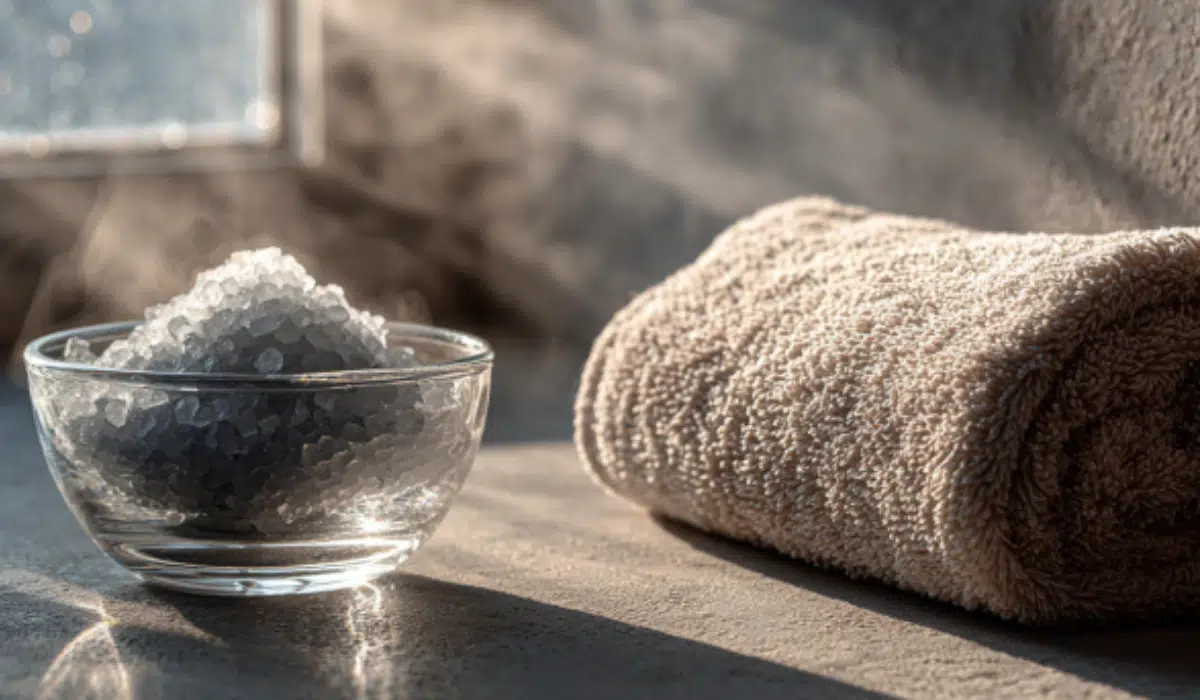
Celtic sea salt stands out because of its gray color and moist texture. Fans say the grains feel less sharp than some salts. The method varies, but most videos show a light paste or damp handful, a 30 to 60 second massage, and a rinse.
What people claim it does for skin and mood
People say the Celtic salt trick in the shower:
- Buffs away rough bumps on arms and thighs
- Leaves skin feeling smoother right after rinsing
- Helps body acne on the back or shoulders
- “Energizes” the body or boosts mood during a morning rinse
These claims mix real exfoliation with big promises. You can get short-term smoothness if you use a gentle touch and the right grain size. You can also irritate skin if you overdo pressure or time. As for mood, warm water, scent, and a quick win can lift spirits. Salt itself does not act like a stimulant.
Does It Work For Skin
Quick science on salt, osmotic effect, and exfoliation
Salt draws water. When you press salt against damp skin, it creates an osmotic pull that can leave the surface a bit drier. The grains also act like a manual exfoliant. Light circles can loosen dull buildup on arms and legs, which makes skin feel smoother right after you rinse, and the Celtic salt trick shows a simple way to do this safely.
Grain size matters. Fine or medium grains feel gentler. Large, jagged crystals scratch. Pressure matters too. A feather-light touch lifts dead cells. Heavy scrubbing makes microtears.
Key idea: light pressure plus finer grains can give a short burst of smoothness on body skin.
Why overuse can raise TEWL and cause dryness
Your skin barrier holds water in and keeps irritants out. Too much salt or scrubbing stresses that barrier. When you scrub for too long or too often, you raise transepidermal water loss. Skin loses moisture faster, so it feels tight, itchy, or stingy after the shower. Scrubbing too long or too often stresses the barrier and leaves skin dry, tight, or stingy, signs Cleveland Clinic lists when the skin barrier takes a hit.
You stack the risk if the water runs hot, the grains feel coarse, or your skin already feels dry. Repeat sessions back to back make things worse. That is why you cap time and frequency and moisturize right away.
Warning: if you see redness, stinging, or rougher texture later that day, you pushed it.
Benefits You Might Notice
Gentle body exfoliation with the right grain size
Fine to medium Celtic sea salt can work as a mild manual exfoliant on body skin. Light circles help loosen dull buildup on arms, legs, and heels. You avoid the sharp scratch you get from large crystals.
Use a small amount. Wet the skin well first. Keep your touch soft. Less pressure gives you smoother results with fewer side effects.
Short-term smoother feel on rough patches
You may feel instant softness on bumpy spots like the backs of arms or thighs. That smooth feel comes from removing surface flakes and polishing uneven texture. Results stay short term. You keep them only if you protect the barrier after the shower.
Lock in the feel with a rich moisturizer within three minutes of toweling off. Look for ceramides, urea, or petrolatum to seal water in.
Risks And Who Should Skip It
Microtears, redness, and barrier stress
Salt crystals can scratch if they feel coarse or if you press too hard. Scratches lead to stinging, redness, and a tight feel after you rinse. Long scrubs raise transepidermal water loss, so skin loses moisture faster. Hot water, fragrance, and harsh soaps add to the stress.
Stop right away if you feel sharp sting or see new red streaks. Switch to lukewarm water and a bland moisturizer. Wait until skin feels calm before you try again.
Extra caution for eczema, psoriasis, active acne, kids
You risk more irritation if you live with eczema or psoriasis. Open patches burn with salt. Active acne can flare when you rub crystals across bumps. Young kids have thinner skin, so they react faster and stronger.
Skip the salt trick if you have:
- Broken skin, open cuts, or sunburn
- A visible flare of eczema or psoriasis
- Freshly shaved areas
- A history of stinging with scrubs or acids
If you still want smoother skin, use gentler options like a soft washcloth, a lactic acid body wash, or a urea lotion on dry skin days.
How To Try It Safely On Body Skin
Patch test steps
- Wet a small spot on the inner forearm.
- Make a tiny pinch of paste and rub with a feather-light circle for 15 seconds.
- Rinse, pat dry, and moisturize.
- Wait 24 hours. If you see stinging, new redness, or rougher texture, skip the trick.
Paste ratio and grain size guidelines
- Start ratio: 1 teaspoon Celtic sea salt to 1–2 teaspoons water. Aim for a loose, sandy paste that spreads without clumps.
- Pick fine or medium grains. Avoid large, jagged crystals.
- Mix fresh each time. Do not store wet salt in the shower.
Massage method, time limit, and rinse
- Work on body skin only, not the face, and see our Celtic salt trick for men notes if you shave body hair.
- Use fingertip circles with the lightest pressure for about 30 seconds per area and rinse with lukewarm water, and skip any area with cuts or sunburn, per AAD guidance.
Frequency caps by skin type
- Oily or very rough body skin: once per week.
- Normal or combo body skin: every 10–14 days.
- Dry or sensitive body skin: once per month at most, or skip.
- If you see redness, sting, or tightness later that day, extend the gap or stop.
Aftercare Matters
Moisturize within 3 minutes with ceramides or urea
Pat skin until it feels damp, not dry. Apply a rich layer within three minutes to trap water, as the American Academy of Dermatology advises moisturizing while skin is still damp after a shower.
Use a thicker ointment on rough zones like heels or elbows. Look for petrolatum or a ceramide balm. Reapply at night if skin still feels tight.
Shower storage hygiene for salt and tools
Mix a fresh paste each session. Do not leave a wet salt jar in the shower. Warm, humid air invites contamination and clumps. Store dry salt in a closed container outside the bathroom.
Rinse tools and fingertips before scooping. Use a clean spoon or a dry scoop. Keep lids closed between uses. If the salt looks damp or smells off, discard it.
Celtic Vs Other Salts
Celtic vs Himalayan vs Epsom vs table salt
Celtic sea salt has moist, gray crystals and a briny scent. The grains often feel softer than sharp rock salt, so light scrubs can feel gentler on body skin.
Himalayan salt comes as pink crystals, and our pink salt vs sea salt guide explains how these salts differ in real use.
Epsom salt is magnesium sulfate, not sodium chloride. The crystals dissolve quickly in warm water. People use it in baths. As a shower scrub, the crystals melt fast and can still sting on broken or sensitive skin.
Table salt has small, uniform grains with additives that help flow. The tiny size can feel harsh in a paste and may sting on nicks. It works in a pinch, but it offers no skincare edge over sea salt.
Quick take: for a body scrub, choose fine or medium sea salt. Skip big, jagged crystals of any kind.
Does mineral content change results
Trace minerals change taste and color, not exfoliation. Scrub feel comes from grain size, shape, and pressure. Skin does not absorb a meaningful amount of minerals from salt during a short shower, and WebMD notes it is hard for magnesium to pass through intact skin during bathing. Focus on gentle grains, short contact time, and fast moisturizing after you rinse.
Myths, Claims, And What We Don’t Know
Mineral absorption through skin
People say skin soaks up magnesium and other minerals from Celtic sea salt. Skin acts like a strong barrier. A short shower scrub does not deliver meaningful mineral absorption. Any benefit you feel comes from exfoliation and the warm water, not trace minerals entering the body.
“Energy” or mood claims
Fans talk about feeling more awake after the salt scrub, and our blue salt trick test shows why simple routines can feel so effective. The burst likely comes from warm water, scent, and a quick result you can feel. Salt does not act like caffeine. If you enjoy the ritual, keep it short and gentle. If you feel sting or tightness, stop.
When a shower filter helps more than salt
Hard water and chlorine can leave skin tight. A basic shower filter can lower that load and help the barrier more than a salt scrub. Hard water can stress the skin barrier, with studies linking hard water exposure to higher eczema prevalence, so a simple shower filter may help more than a salt scrub in some homes (PMC).
Quick Routine You Can Follow
One-page checklist
- Wet body skin with lukewarm water.
- Mix a fresh paste: 1 teaspoon Celtic sea salt with 1–2 teaspoons water.
- Choose fine or medium grains.
- Patch test first if you have sensitive skin.
- Apply a thin film on body skin only.
- Use feather-light circles for up to 30 seconds per area.
- Rinse well. Do not scrub the same spot twice.
- Pat until damp, then moisturize within three minutes.
- Cap frequency based on skin type: weekly for oily or rough, every 10–14 days for normal, monthly or skip for dry or sensitive.
- Stop if you see sting, redness, or tightness later that day.
Decision tree to try or skip
- Do you have open cuts, a fresh shave, or an active flare of eczema or psoriasis
- Yes: skip today.
- No: move to the next question.
- Does your skin feel dry, tight, or sunburned
- Yes: skip and moisturize.
- No: move to the next question.
- Are you new to manual scrubs
- Yes: test a tiny patch first and wait 24 hours.
- No: proceed with a short, gentle session.
- After the rinse, does your skin feel calm
- Yes: moisturize right away and keep frequency low.
- No: stop the routine and switch to gentler care.
Conclusion
The Celtic salt trick in the shower can feel nice on rough body skin when you keep it short and gentle. Grain size, pressure, and timing make the difference between smooth and scratchy.
Use fine or medium grains, cap contact at 30 seconds per area, and moisturize within three minutes. Skip the face and any inflamed or broken skin. If you see sting or tightness later that day, stop and switch to gentler care.
You now have a clear routine, safety checks, and smart alternatives. Try it if your skin can handle a mild manual scrub. Skip it if your skin runs dry or reactive.
FAQs
What is the Celtic salt trick in the shower
People make a loose paste from fine or medium Celtic sea salt and water, as shown in our Celtic sea salt trick guide. They rub it on wet body skin for up to 30 seconds, then rinse and moisturize right away.
Is it safe to use salt on the face
Skip the face. Facial skin runs thinner and more reactive. If you want smoother texture on the face, use a gentle chemical exfoliant made for facial skin.
How often should you do the salt shower trick
Oily or very rough body skin: once per week. Normal or combo: every 10 to 14 days. Dry or sensitive: once per month at most, or skip.
What paste ratio works best for a body scrub
Start with 1 teaspoon Celtic sea salt and 1 to 2 teaspoons water. You want a loose, sandy paste that spreads easily without clumps.
Can Celtic sea salt help with acne or keratosis pilaris
You may see short-term smoothness on rough bumps. Active acne can sting or flare with scrubbing. Keep pressure light and avoid broken or inflamed areas.
Who should avoid the salt shower trick
Avoid it if you have open cuts, a fresh shave, eczema or psoriasis flares, sunburn, or a history of stinging with scrubs.
What should you apply after a salt scrub
Pat until damp, then use a rich moisturizer within three minutes. Look for ceramides or 5 to 10 percent urea. Use a thicker ointment on heels and elbows.