Skip to content
Growing up, fondue wasn’t just a meal; it was an event, a heartwarming ritual that brought everyone around the table, dipping and laughing. There’s something truly magical about a pot of bubbling, velvety cheese, isn’t there? But let’s be honest, many home cooks shy away from attempting a cheese fondue recipe, fearing the dreaded separation or a rubbery mess. I understand those worries, and that’s why I’m so excited to share my foolproof method, honed over years, to achieve a gourmet fondue experience that goes beyond the basic melted pot, ensuring a perfectly smooth, stable, and incredibly flavorful result every single time.
Why You Will Love This Recipe
**An Elevated Alpine Tradition**: This isn’t just any cheese fondue recipe; it’s a sophisticated take on the classic, designed to impress even the most discerning palates. It’s perfect for those festive gatherings where you might also serve delightful potato cheese balls.
**The Secret Herbal Infusion**: My unique twist involves infusing the dry white wine with a sprig of fresh thyme and a single star anise during the initial simmer. This subtle aromatic background enhances the entire dish.
**Scientific Flavor Magic**: The thyme beautifully complements the earthy, almost hay-like notes of the Gruyère, while the anethole in the star anise scientifically amplifies the natural nutty perception of the aged cheeses like Emmentaler without adding a distinct licorice flavor.
**Velvety Smooth Perfection**: You’ll achieve a consistently luxurious and smooth texture that remains perfectly emulsified throughout your entire meal, thanks to a careful balance of ingredients and precise temperature control.
Ingredients Needed

Gathering the right ingredients is the first step towards a spectacular cheese fondue. Each component plays a crucial role, from the zesty garlic to the rich cheeses, ensuring a balanced and irresistible flavor profile.
Ingredients
- 1 medium clove garlic, cut in half
- 1 cup dry white wine
- 1/2 pound Emmentaler cheese, grated
- 1/2 pound Gruyère cheese, grated
- 1 tablespoon cornstarch
- 1 tablespoon fresh juice from 1 lemon
- 1 tablespoon kirsch
- Kosher salt
- Freshly ground white or black pepper
- Toasted bread cubed
- Lightly blanched vegetables
Ingredient Notes and Substitutions
Dry White Wine: Opt for a high-acid, dry white wine like Sauvignon Blanc or Pinot Grigio. The tartaric acid in these wines is crucial for helping to break down the casein proteins in the cheese, ensuring a smooth, cohesive melt rather than a stringy or clumpy one.
Block Cheese: It is absolutely mandatory to use block cheese and grate it yourself. Pre-shredded cheeses often contain cellulose or other anti-caking agents that can prevent a truly smooth melt, leaving your fondue grainy.
Kirsch: This cherry brandy adds a traditional, subtle fruitiness and depth to the fondue. If you prefer to omit alcohol or don’t have kirsch on hand, you can substitute it with an additional tablespoon of dry white wine or a high-quality brandy.
Cheese Blend: While Emmentaler and Gruyère are the classic choices for their balanced flavor and excellent melting properties, feel free to experiment. Appenzeller, for example, can be added for an even sharper, more pungent profile.
How to Make the Perfect Cheese Fondue
Crafting a flawless cheese fondue requires a little patience and attention to detail, but the results are always worth it. Follow these steps for a truly memorable experience.
Prep the Pot and Infuse the Base
- Begin by taking your cut garlic clove and vigorously rubbing its freshly cut faces all around the inside of your fondue pot. This releases its essential oils, imbuing the pot with a delicate garlicky essence. If you don’t have a dedicated fondue pot, a double boiler or a heat-safe stainless steel mixing bowl set over a pot of simmering water works beautifully; just ensure the bowl doesn’t touch the water directly.
- Pour the dry white wine into the prepared pot. Add a sprig of fresh thyme and a single star anise, then gently warm the wine over low heat until it begins to steam, but never boil. Once fragrant and steaming, carefully remove and discard the thyme and star anise, leaving behind a subtle aromatic background.
The Cheese Melting Method
- While the wine warms, grab a large separate bowl and combine your grated Emmentaler and Gruyère cheeses with the cornstarch. Toss them together until every strand of cheese is lightly and evenly coated. This cornstarch acts as a critical emulsifier, helping the cheese melt into a smooth, stable sauce.
- Now, working over very low heat – remember, never let it simmer once cheese is added – begin adding the coated cheese to the warmed wine, a small handful at a time. Stir continuously in a figure-eight motion with a wooden spoon. Wait until each addition is mostly melted into a glossy pool before adding the next handful. This gradual process, taking about 10 minutes, is crucial for achieving a perfectly smooth and unified cheese sauce.
The Final Flavor and Serving
- Once all the cheese has melted into a rich, velvety, and buttery sauce that effortlessly coats the back of your spoon, stir in the fresh lemon juice and kirsch, if you’re using it. The acidity from the lemon juice is key here, helping to stabilize the emulsion and prevent any stringiness.
- Taste your masterpiece and adjust the seasoning with kosher salt and freshly ground white or black pepper as needed.
- If you didn’t melt your fondue directly in its pot, carefully transfer the creamy mixture to a dedicated fondue pot to keep it perfectly warm and melty at the table.
- Serve immediately with your favorite dippers, such as toasted bread cubes and an array of lightly blanched vegetables. If your fondue begins to thicken slightly as you enjoy it, a small splash of additional warm wine whisked in will bring it back to the perfect consistency.
Secrets for Kitchen Success

Achieving that perfect, silky cheese fondue isn’t just about the ingredients; it’s about understanding a few key principles that will make all the difference.
The Golden Temperature: The sweet spot for fondue, where the cheese is perfectly melted and emulsified, is consistently between 150°F and 160°F (66°C and 71°C). Anything much hotter than this range will cause the casein proteins in the cheese to tighten up, leading to a broken, oily, and separated fondue.
The Double Boiler Advantage: If you’re planning to scale this cheese fondue recipe for a large gathering, I highly recommend using a double boiler setup. Direct stovetop heat can be unforgiving with larger volumes of cheese, often leading to scorching at the bottom and an uneven melt. A double boiler provides gentle, indirect heat, making success much more achievable for bigger batches.
Acidity is Your Friend: The acids in your ingredients, particularly the tartaric acid in the dry white wine and the citric acid in the fresh lemon juice, are your fondue’s best allies. They prevent the cheese from becoming annoyingly stringy or clumpy by keeping the calcium in the cheese from bonding too tightly and seizing up.
Pro Tips and Troubleshooting

Even seasoned chefs encounter a hiccup now and then. Here are my best tips to ensure your fondue is always a triumph and how to gracefully recover if things go awry.
Expert Techniques for Smooth Results
Always start with room-temperature cheese rather than cold cheese. This simple step prevents temperature shock when it hits the warm wine, encouraging a more even and gentle melt.
If your fondue becomes a bit too thick while you’re enjoying it, resist the urge to add cold wine. Instead, whisk in a small amount of *heated* wine; cold liquid can cause the delicate emulsion to break.
Common Pitfalls to Avoid
The number one enemy of a perfect cheese fondue is boiling the mixture. Excessive, direct heat is the primary cause of an oily, broken fondue where the fats separate from the solids. Always keep the heat low and gentle.
Don’t fall into the “Swiss Cheese” trap at the supermarket. Many generic brands of pre-shredded “Swiss” lack the rich fat content and complex flavor profile of authentic Emmentaler or Gruyère, often containing cellulose which prevents a smooth melt, as detailed in reports like the USDA’s Technical Evaluation Report on Cellulose. Quality ingredients truly make a difference here.
Serving and Storage Suggestions
Fondue is all about the experience, and the right dippers and pairings elevate it from a simple dish to an unforgettable feast.
The Best Dippers and Pairings
For classic dippers, you can’t go wrong with crusty sourdough cubes and crisp Granny Smith apple slices. However, don’t hesitate to experiment with gourmet options like tangy cornichons, savory crispy bacon strips, roasted fingerling potatoes, or even sliced smoked sausage. If you’re looking for a fun, modern twist, serving alongside crunchy apple chips adds a delightful texture contrast.
To drink, I always recommend serving the same dry white wine you used in the recipe. For a traditional Swiss pairing that aids digestion, a hot, light black tea is also an excellent choice, a practice supported by scientific studies on gastric function with fondue and beverages.
Storage and Creative Reheating
Unfortunately, cheese fondue does not reheat well to its original, velvety state. The emulsion tends to break, and the texture becomes grainy. However, don’t let leftovers go to waste! Instead, transform them into a rich and decadent pasta sauce base or use them as a luxurious topping for roasted vegetables. You could even use similar Alpine cheeses to make a delicious air fryer grilled cheese the next day.
The Tradition of the Golden Crust
At the very end of a fondue feast, after all the dipping has ceased, you’ll discover a culinary treasure known as “La Religieuse,” or “the Grandmother.” This is the delicious, slightly toasted, golden cheese crust that forms at the bottom of the pot. It’s considered a prize, often scraped out and shared among guests, offering a delightful crispy counterpoint to the creamy fondue that preceded it. Embrace this delightful tradition and the communal joy it brings.
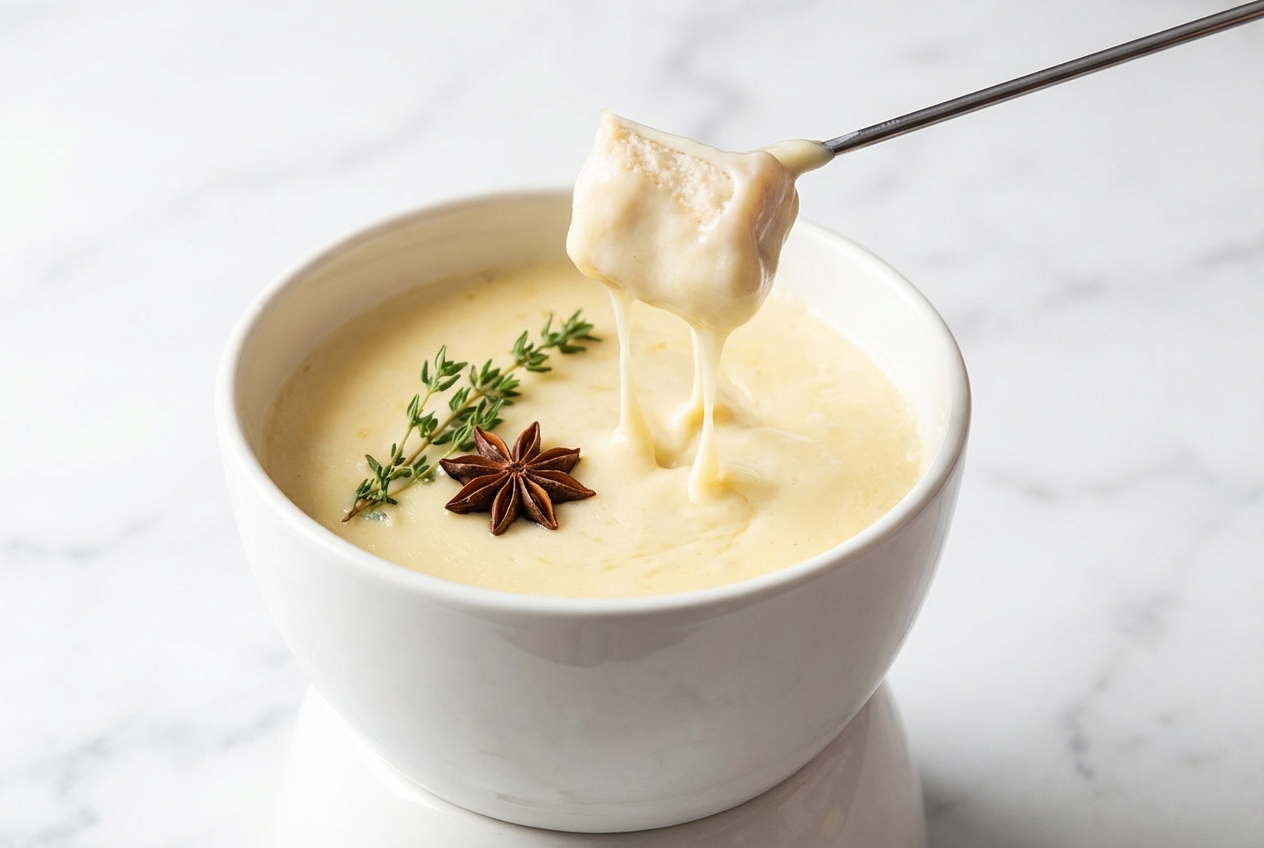

Gourmet Cheese Fondue Recipe
Ingredients
Equipment
Method
- Vigorously rub the cut garlic clove all around the inside of your fondue pot or a heat-safe bowl to release its essential oils and imbue the pot with a delicate essence.
- Pour the dry white wine into the pot and add a sprig of fresh thyme and one star anise. Warm over low heat until steaming but not boiling. Once fragrant, remove and discard the thyme and star anise.
- In a separate large bowl, combine the grated Emmentaler and Gruyère cheeses with the cornstarch. Toss thoroughly until every strand is lightly and evenly coated.
- Add the coated cheese to the warmed wine one small handful at a time over very low heat. Stir continuously in a figure-eight motion with a wooden spoon, waiting until each batch is melted before adding more.
- Once the sauce is velvety and coats the back of a spoon, stir in the fresh lemon juice and kirsch to stabilize the emulsion.
- Taste and adjust seasoning with kosher salt and freshly ground pepper. Serve immediately with toasted bread cubes and blanched vegetables, keeping the pot warm over low heat at the table.
Nutrition
Notes
Tried this recipe?
Let us know how it was!Frequently Asked Questions
Why did my fondue separate and how do I fix it?
Fondue typically separates due to excessive heat or adding cheese too quickly, which causes the proteins to seize and the fat to release. To fix it, remove the pot from the heat. In a separate bowl, whisk 1 teaspoon of cornstarch with 1-2 tablespoons of cold wine to create a slurry. Gradually whisk this slurry into the separated fondue, returning it to very low heat and stirring constantly until it re-emulsifies.
Can I make cheese fondue ahead of time?
While fresh is always best for fondue’s ideal texture, you can certainly prep your ingredients in advance. Grate all your cheese and toss it with the cornstarch, cut your garlic, cube your bread, and blanch your vegetables. Store everything separately in the refrigerator, ready to assemble when your guests arrive.
What are the best cheeses to mix for the perfect melt?
The classic and truly best combination for a smooth melt and balanced flavor is a 50/50 blend of Emmentaler and Gruyère. These Alpine cheeses offer a beautiful creamy texture and nutty, complex notes. For those seeking even more sharpness, incorporating some Appenzeller can add another layer of flavor. If you’re exploring lighter cheese options, you might enjoy these cottage cheese recipes.
Is it safe to make fondue without alcohol?
Absolutely! If you prefer to omit the alcohol, you can substitute the dry white wine and kirsch with an equal amount of unsalted chicken or vegetable stock. Just be sure to add an extra tablespoon of fresh lemon juice to maintain the crucial acidity needed to keep the cheese smooth and emulsified.
What is the ‘Grandmother’ (La Religieuse) in a fondue pot?
“La Religieuse” refers to the prized, crispy, golden-brown crust of toasted cheese that forms at the very bottom of the fondue pot once most of the liquid fondue has been consumed. It’s a delightful, savory reward that’s traditionally scraped off and shared among diners as a final treat.