
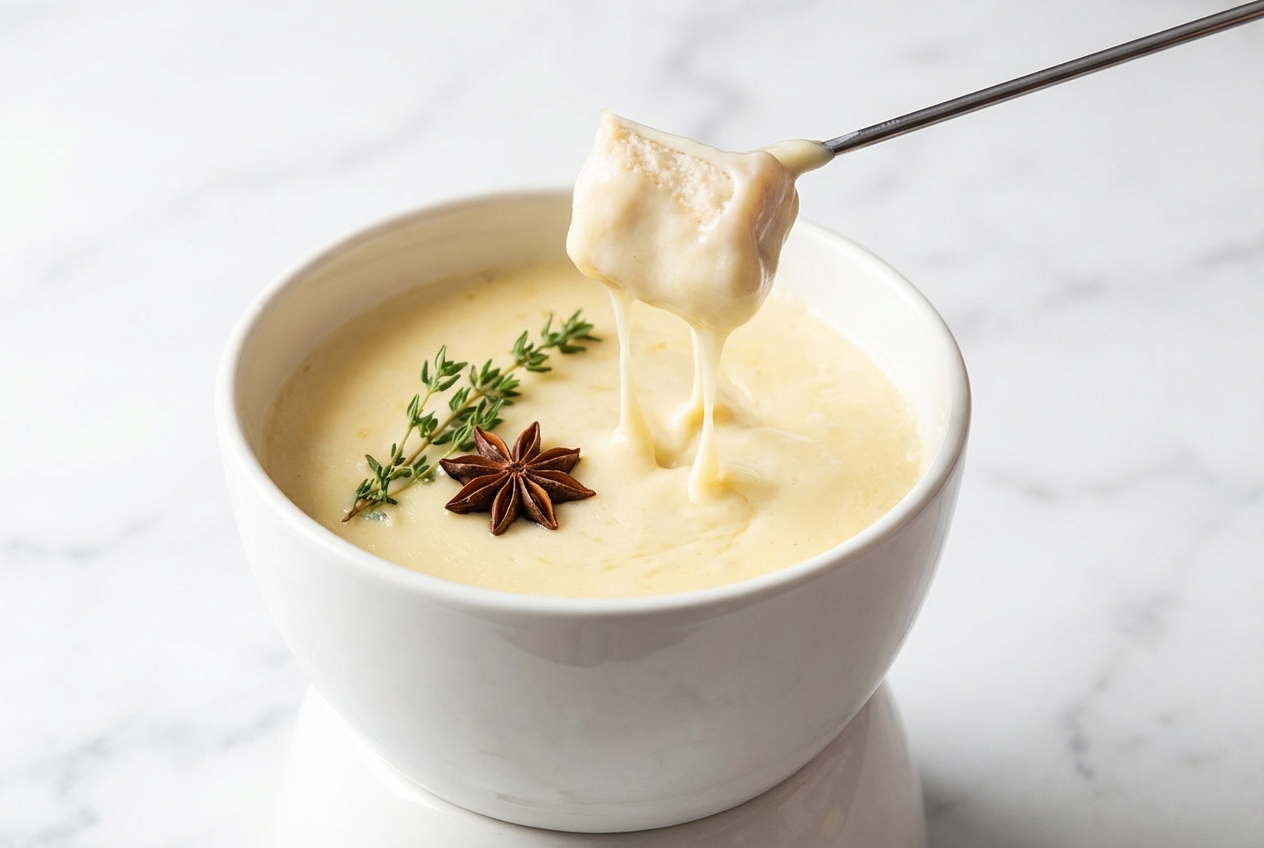

Ingredients
Equipment
Method
Prep the Pot and Infuse the Base
- Vigorously rub the cut garlic clove all around the inside of your fondue pot or a heat-safe bowl to release its essential oils and imbue the pot with a delicate essence.
- Pour the dry white wine into the pot and add a sprig of fresh thyme and one star anise. Warm over low heat until steaming but not boiling. Once fragrant, remove and discard the thyme and star anise.
The Cheese Melting Method
- In a separate large bowl, combine the grated Emmentaler and Gruyère cheeses with the cornstarch. Toss thoroughly until every strand is lightly and evenly coated.
- Add the coated cheese to the warmed wine one small handful at a time over very low heat. Stir continuously in a figure-eight motion with a wooden spoon, waiting until each batch is melted before adding more.
The Final Flavor and Serving
- Once the sauce is velvety and coats the back of a spoon, stir in the fresh lemon juice and kirsch to stabilize the emulsion.
- Taste and adjust seasoning with kosher salt and freshly ground pepper. Serve immediately with toasted bread cubes and blanched vegetables, keeping the pot warm over low heat at the table.
Nutrition
Notes
Temperature Control: Maintain a heat range between 150°F and 160°F (66°C to 71°C) to prevent the cheese proteins from seizing and the fats from separating. Ingredient Selection: Always grate block cheese yourself to avoid anti-caking agents found in pre-shredded varieties, which can lead to a grainy texture. Rescue Method: If the fondue separates, whisk a teaspoon of cornstarch with cold wine into a slurry and stir it back into the pot over very low heat until re-emulsified. Leftover Transformation: Avoid reheating to dip again as the emulsion will break; instead, use leftovers as a rich base for pasta sauce or a topping for roasted vegetables. Nutrition information is estimated based on common ingredients and serving sizes and may vary.