Skip to content
There’s something incredibly satisfying about transforming simple ingredients into a vibrant, probiotic-rich powerhouse right in your own kitchen. If you’ve been curious about the world of fermentation, this easy Fermented Onions Recipe is the perfect place to start. I’m going to guide you through creating a batch of wonderfully tangy and flavorful fermented onions, designed to add a bright, zesty kick to almost any dish. Get ready to discover the magic of lacto-fermentation and elevate your culinary game!
Why You’ll Love This Recipe
I am absolutely thrilled to share this Fermented Onions Recipe with you, not just for its simplicity but for the incredible depth of flavor it brings to your table. We’re going beyond basic with a unique twist that truly sets these fermented onions apart!
The Flavor Revolution: Our Signature Twist
Unveiling the Nuance: My signature twist for this recipe involves introducing a bay leaf, a pinch of mustard seeds, and a few chili flakes (or black peppercorns) into the mix. For an added layer of complexity and to boost the fermentation process, I also include a thin slice of organic carrot. This combination elevates the humble onion into a culinary masterpiece.
The Science of Taste: The bay leaf contributes subtle, herbaceous notes that dance beautifully with the onion. Mustard seeds bring a mild, earthy warmth, while the chili flakes or black peppercorns offer a gentle aromatic kick, creating a more complex and intriguing flavor profile that goes far beyond simple tanginess. The organic carrot isn’t just for flavor; it provides additional natural sugars for the Lactic Acid Bacteria, encouraging a more robust initial fermentation. This also contributes a hint of natural sweetness that expertly rounds out the acidity without making the onions taste sweet, improving the overall flavor balance and ensuring a reliable ferment.
Beyond Flavor: Benefits for the Home Cook
Simple & Rewarding: I truly believe lacto-fermentation should be accessible to everyone. This Fermented Onions Recipe is incredibly easy to follow, making it a perfect project for beginners. The reward of creating something so delicious and beneficial from scratch is truly immense!
Health & Wellness Boost: Fermented foods are celebrated for their incredible health benefits, and these onions are no exception. The Lactic Acid Bacteria working their magic produce beneficial probiotics and enzymes, which are fantastic for your gut health. This process also makes the onions more digestible and enhances their nutrient content.
Versatile Condiment: Once ready, these Fermented Onions become a superb condiment. Their bright, tangy, and sour notes add a fantastic pop of flavor to almost any dish, effortlessly enhancing your meals.
Ingredients Needed

Making delicious Fermented Onions starts with a few simple, high-quality ingredients. Here’s exactly what you’ll need for this recipe:
- 1 large onion
- distilled water (weight to be determined)
- sea salt or pickling salt (weight to be determined)
Ingredient Notes & Substitutions
I find that understanding your ingredients is key to successful fermentation. Let’s talk about each component for our Fermented Onions Recipe.
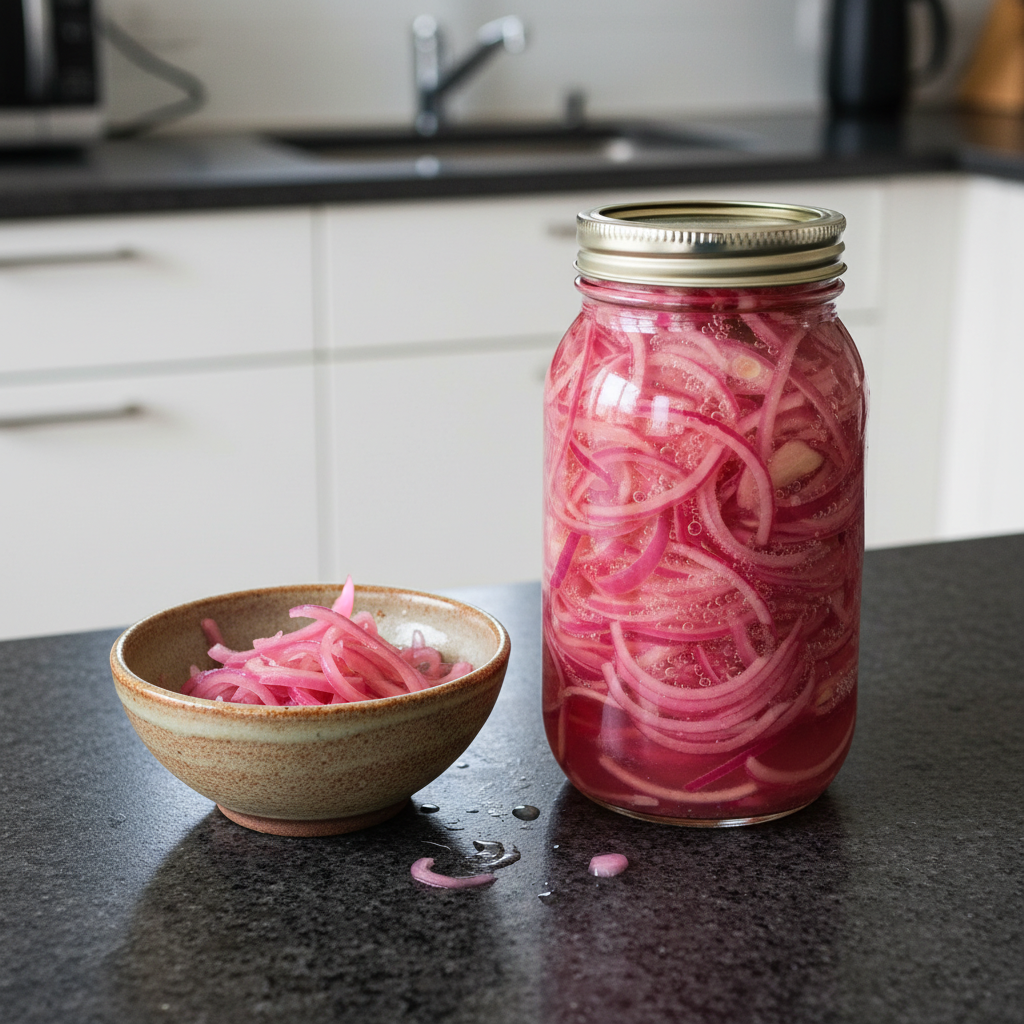
Onions: You have a few choices here! While any Onion variety works, I love using a Red Onion for its beautiful vibrant pink color and slightly fruitier flavor post-fermentation. White Onion and Yellow Onion varieties will offer a milder flavor profile. Rest assured, the fermentation process significantly reduces the raw, pungent flavor of any onion, leaving you with something wonderfully mellow and tangy.
Water Quality: When it comes to fermentation, water quality is paramount. I always emphasize using distilled water. If that’s not available, you can boil tap water and let it cool completely to room temperature. This crucial step removes chlorine, which can inhibit the beneficial Lactic Acid Bacteria we want to thrive. So, to answer your questions: “Does it have to be distilled water for fermenting onions?” — no, but treated tap water is essential. “Is distilled water better for the fermenting process?” — yes, it provides the cleanest slate for your bacteria.
Salt Selection: For this Lacto-Fermentation, I recommend using pure sea salt or pickling salt. It’s critical to avoid iodized or heavily refined salts. Why? Because the additives in these salts can interfere with the delicate fermentation process and lead to undesirable results or even spoilage. “What salt is best for lacto fermentation?” — definitely a pure salt without anti-caking agents or iodine.
Our Unique Twist Additions: Our special additions are what make this recipe truly shine! The Bay Leaf provides wonderful herbaceous depth, while the Mustard Seeds add an earthy warmth. The Chili Flakes (or Black Peppercorns) give a gentle aromatic kick, and that thin slice of Organic Carrot helps kickstart fermentation reliably and adds just a touch of subtle sweetness to balance the tang.

How to Make Fermented Onions (Our Signature Recipe)
Making Fermented Onions is a surprisingly simple and rewarding process. I’ll walk you through each step to ensure your success, from preparing your ingredients to enjoying your tangy creation!
Step 1: Prepare Your Jar & Ingredients
Choose Your Vessel: First things first, select a clean Mason Jar of appropriate size for your onions. I typically use a 16 oz wide-mouth style jar. It’s important that it’s thoroughly clean and preferably sterilized. Take your Onion and slice it uniformly; consistent thickness ensures even fermentation.
Initial Weight Measurement: Place your empty Mason Jar on your Kitchen Scale and press the tare button to zero out its weight. This is a small but mighty step that sets us up for precise salt calculation later.
Step 2: Create the Perfect Brine
Pack & Hydrate: Gently fit the sliced Onion snugly into the Mason Jar. Now, carefully pour in enough distilled water to completely cover the onions, ensuring you leave some headspace at the top of the jar for expansion.
Calculate Salt Precisely: Note down the total combined weight in grams of the onion and water in your jar. To determine the exact amount of sea salt or pickling salt needed, multiply this total weight by 0.02. This gives us a 2% brine, which I find is ideal for beginners and consistently delivers excellent results. For example, if the weight of the onion and water combined is 800 grams, then you will multiply 800 by .02 and get 16. I would add 16 grams of salt to my jar. Using a kitchen scale for accurate salt measurements is absolutely crucial for successful fermentation; it’s one of my top expert tips!
Introduce the Twist: This is where our unique flavor profile comes in! At this stage, add the bay leaf, mustard seeds, chili flakes (or black peppercorns), and that thin slice of organic carrot to the jar.
Dissolve the Salt: Tare your scale again and add the calculated amount of salt directly into the jar. Secure the lid tightly and shake well to ensure the salt thoroughly dissolves into the brine.
Step 3: Ensure Submersion & Seal
Maintain Anaerobic Environment: It’s incredibly important to keep your onions completely submerged under the brine. This creates an anaerobic environment, which is essential for beneficial Lactic Acid Bacteria to thrive and, crucially, prevents unsightly mold growth. You can use various methods for this: dedicated Fermentation Weights, a small pinch bowl, a smaller Mason Jar that fits inside, or even a plastic sandwich bag filled with a little water. As an alternative, a clean cabbage leaf placed over the onions before adding weights can also help keep everything submerged. (See photos for examples of these methods).
Step 4: Ferment at Room Temperature
Ideal Fermentation Conditions: Now for the waiting game! Leave your ferment at Room Temperature, ideally between 68-72°F (20-22°C), and always away from direct sunlight. Direct sunlight can cause undesirable temperature fluctuations. Typically, fermentation takes 4-7 days; warmer rooms will speed up the process. You’ll begin to notice small bubbles appearing, a delightful sign that the Lactic Acid Bacteria are actively working!
Daily Check-in: Make it a habit to check your jar once a day to ensure the onions remain submerged. Also, open the lid slightly daily to “burp” the jar and release any built-up CO2 pressure. This prevents mess and potential jar breakage. Close it tightly again after burping. This allows gases to escape without letting oxygen in.
Step 5: Fridge Storage for Longevity
Halt Fermentation: Once your fermented onions have reached your desired tangy flavor and a pleasant crunchy texture, it’s time to move them to the fridge. The cold temperature will effectively halt the fermentation process, preserving their perfect flavor and extending their shelf life significantly. Your delicious fermented onions will now keep for a very long time. Enjoy!
Mastering Your Ferment: Recognizing Readiness & Common Questions
Understanding the nuances of fermentation is what truly makes you a master in your kitchen. Let’s delve into the incredible health benefits of Fermented Onions and how to know when your batch is perfect.
The Health Power of Fermented Onions: More Than Just Flavor
Deep Dive into Gut Health: Beyond their incredible taste, fermented onions offer a full spectrum of health benefits. During lacto-fermentation, the beneficial Lactic Acid Bacteria produce a wealth of probiotics. These tiny powerhouses contribute to an incredibly improved gut microbiome, which in turn supports overall health and well-being.
Nutrient Boost: Fermentation isn’t just about preservation; it’s a process that actively enhances nutrient availability. It can significantly increase vitamin absorption and make various nutrients within the onions more bioavailable for your body to utilize efficiently.
Digestibility & Enzymes: One of the most common complaints about raw onions is their raw, pungent nature and potential for indigestion. The fermentation process ingeniously breaks down complex carbohydrates in the onions, making them much more digestible. This transformation is thanks to the incredible work of beneficial enzymes produced during fermentation.
Recognizing When Your Ferment Is Ready
Ideal Fermentation Temperature: For optimal activity of our friendly Lactic Acid Bacteria, I always aim for an ideal fermentation temperature range of 68-72°F (20-22°C). This consistent temperature encourages a healthy, predictable ferment.
Taste & Visual Cues: So, how to tell if the fermentation is complete? It’s a combination of taste and visual cues. Initially, you’ll see active bubbling, a clear sign the bacteria are working hard. As fermentation progresses, this bubbling will slow down or stop. The brine might become slightly cloudy brine, which is completely normal and a good sign of activity. Most importantly, taste your onions! They should have a pleasant tangy and sour flavor, with significantly less of that raw onion bite. The texture should still be delightfully crunchy. Trust your senses here!
What to Do with Leftover Brine and Different Onion Types
Uses for Leftover Brine: Never discard that precious liquid! The leftover brine from your Fermented Onions is a goldmine of flavor and probiotics. I love using it as a starter for new ferments, as a tangy base for salad dressings, a flavor boost in marinades, or even as a small, invigorating health shot.
Onion Variety Exploration: While this recipe works beautifully with any Onion, a comparison of different types of onions for fermentation reveals exciting variations. As I mentioned, red onions yield a vibrant pink color and often a slightly sweeter ferment. White onion and yellow onion offer their own unique, milder flavor nuances once fermented. Don’t hesitate to experiment with different varieties to find your favorite!
Pro Tips & Troubleshooting
Over my years in the kitchen, I’ve gathered some invaluable insights into fermentation. Here are my best pro tips to ensure your success, and how to troubleshoot common issues with your Fermented Onions Recipe.
Pro Tips for Fermentation Success
- Precision is Key: I cannot stress this enough – always use a kitchen scale for accurate salt measurements. This is critical for ensuring a safe and successful ferment, and it’s your best defense against spoilage.
- Stay Submerged: This is fundamental for preventing mold. Always keep the fermenting onions completely submerged in brine to prevent mold formation. Utilize weights, a clean cabbage leaf, or a water-filled bag for this.
- Mind the Light: Keep your ferments away from direct sunlight. Consistent temperatures are important, and direct sun can cause undesirable fluctuations and potentially algal growth.
- Chlorine-Free Water: If you’re not using distilled water, make sure to boil tap water and let it cool to room temperature to remove chlorine before use. Chlorine can kill the beneficial bacteria needed for fermentation.
- Airlock Advantage: For those who want a more hands-off approach to managing pressure, consider using airlock lids for hands-free burping. They simplify the daily “burping jar” task and further reduce oxygen exposure.
- Embrace the Twist: Don’t skip the bay leaf, mustard seeds, chili flakes, and organic carrot! They are key to developing the complex, nuanced tangy flavor that truly sets this recipe apart.
Common Mistakes to Avoid
- Incorrect Salt Levels: Not using enough salt is a frequent pitfall that can lead to spoilage or the growth of undesirable bacteria. Conversely, too much salt can inhibit fermentation. Always measure precisely.
- Air Exposure: Allowing onions to be exposed to air is the primary cause of unsightly mold growth. Consistent submersion is your shield against this common mistake.
- Wrong Salt Type: Using iodized or heavily refined salt introduces anti-caking agents or iodine that interfere with the beneficial Lactic Acid Bacteria. Stick to pure sea or pickling salt.
- Untreated Tap Water: Using unchlorinated tap water directly without boiling can kill off the beneficial bacteria, halting or hindering your fermentation process.
- Ignoring Pressure Buildup: Not ‘burping’ the jar daily can cause significant pressure buildup, potentially leading to messy overflows or even jar breakage. Don’t skip this quick daily step!
- Troubleshooting Mushy Onions or Cloudy Brine: If you find yourself with mushy onions, it could be due to overly warm temperatures, too little salt, or simply fermenting for too long. While cloudy brine is usually a normal sign of active fermentation, excessive cloudiness coupled with truly awful smells can indicate spoilage.
- When to Discard: Always trust your senses. Discard your ferment if you observe black or brightly colored molds (white kahm yeast is typically harmless but should be scraped off). Also, discard your ferment if it develops a truly awful smell that goes beyond typical fermentation aromas.
Serving & Storage
Once your Fermented Onions are perfectly tangy and crunchy, it’s time to enjoy them! Here’s how I love to serve and store them for maximum flavor and longevity.
Creative Ways to Enjoy Your Fermented Onions
Versatile Condiment: These Fermented Onions are truly a versatile condiment. I love to top burgers or sausage with them, mixing them into a vibrant Greek salad, or simply using them to add acidity and brightness to almost any dish. They’re fantastic for adding color and nutrition to lunch bowls or plates, and they make an incredible topping for scrambled eggs or an omelette.
Flavor Boost: Don’t just limit them to toppings! I suggest incorporating them into dressings, marinades, or serving them alongside grilled meats and vegetables. Their delightful tangy, sour, and wonderfully fresh taste provides a perfect counterpoint to rich flavors, elevating your meal effortlessly.
Storage & Longevity for Peak Flavor
Refrigeration is Key: Once your Fermented Onions have reached your desired level of fermentation, it’s time to move the Mason Jar to Fridge Storage. The cold temperatures in your refrigerator will significantly slow down the activity of the Lactic Acid Bacteria, effectively halting the fermentation process and preserving their delicious taste and texture.
Shelf Life: “How long can I keep fermented onions?” and “Are fermented onions still good after about a month?” are common questions. When properly stored, your fermented onions will last for several months in the refrigerator often 6 months or even more maintaining their vibrant flavor and satisfying crunch.
Anaerobic Environment in the Fridge: “Is it still critical to use weights to maintain an anaerobic environment in the fridge?” While less critical than during active fermentation at Room Temperature, keeping them submerged is still good practice. It helps prevent any surface spoilage and keeps your onions pristine.
Dark Storage: “Should fermented onions be stored somewhere dark, ideally?” Yes, storing them away from light is always best. This helps preserve their nutrient integrity and prevents any unwanted light-induced reactions that could affect quality.
Shelf-Stable vs. Fridge-Stored: “Is there a way to make fermented onions shelf-stable vs fridge stored?” For safe, long-term storage of home-fermented products, refrigeration is essential. True shelf-stability typically requires professional canning methods or other rigorous food preservation techniques that go beyond simple lacto-fermentation.
Conclusion
I hope you feel inspired and ready to dive into the world of homemade fermentation with this Fermented Onions Recipe! You’ve learned how simple and rewarding it can be to create a batch of vibrant, probiotic-rich onions right in your own kitchen. Our unique twist, featuring bay leaf, mustard seeds, chili flakes, and organic carrot, adds a truly special depth of flavor that elevates these onions beyond a simple condiment.
Fermentation is an achievable and incredibly rewarding culinary skill, even for beginners. I encourage you to try this recipe, experiment with slight variations to make it your own, and explore all the delicious serving ideas we’ve discussed. These tangy, flavorful onions are truly a game-changer for so many dishes. You can easily print this recipe, share it with friends, or explore other Food Preservation recipes right here on the blog. Happy fermenting!
FAQ
I know you might have a few more questions about making your own Fermented Onions, so I’ve compiled answers to the most common queries right here.
Q: What is lacto-fermentation and how does it work?
A: Lacto-Fermentation is an ancient method of Food Preservation that uses beneficial Lactic Acid Bacteria to transform vegetables. These bacteria thrive in an Anaerobic Environment (without oxygen) and convert natural sugars into lactic acid, creating a naturally preserved food rich in Probiotics while enhancing flavor and nutrition.
Q: What is the best type of salt and water to use for fermenting onions?
A: For best results, use pure Sea Salt or Pickling Salt, ensuring it does not contain iodine or anti-caking agents. For water, Distilled Water is ideal. If using tap water, boil it first and let it cool completely to Room Temperature to remove chlorine, which can inhibit beneficial bacteria.
Q: How do you know when fermented onions are ready and if they’ve gone bad?
A: Your Fermented Onions are ready when they have a pleasant tangy, sour taste, less raw onion bite, and a good crunchy texture. Visual cues include initial active bubbling slowing or stopping, and the brine becoming slightly cloudy brine. Signs of spoilage include black or brightly colored mold, or a truly awful, off-putting smell.
Q: How long do fermented onions last, and should they be refrigerated?
A: Properly stored Fermented Onions will last for several months, often 6 months or more, in Fridge Storage. Refrigeration is essential as the cold temperatures halt the fermentation process, preserving their flavor and texture.
Q: Can fermented onions become alcoholic?
A: Lacto-Fermentation primarily produces lactic acid, not significant amounts of alcohol. While trace amounts of alcohol might occur as a byproduct of microbial activity, it’s not enough to be considered an alcoholic product.
Q: What are common troubleshooting tips for fermenting onions?
A: If you encounter mushy onions, it might be due to too warm temperatures, too little salt, or fermenting for too long. Excessive cloudy brine with an unpleasant smell can signal spoilage. Always ensure onions are submerged to prevent mold, use correct salt levels, and avoid air exposure. Refer to the ‘Pro Tips & Troubleshooting’ section for more detailed solutions.
Q: What are the health benefits of fermented onions?
A: Fermented Onions offer numerous health benefits due to Lacto-Fermentation. They contain beneficial probiotics that support gut health, produce enzymes that aid digestion, make the onions more digestible, and can even contribute to increased vitamin absorption.
Q: What is the ideal temperature for fermenting onions?
A: The ideal fermentation temperature range for Fermented Onions is typically between 68-72°F (20-22°C). This range encourages optimal activity of the Lactic Acid Bacteria for a safe and successful ferment.
Fermented Onions Recipe
Ingredients
Equipment
Method
- Select a clean, preferably sterilized Mason Jar of appropriate size, typically a 16 oz wide-mouth style.
- Slice the onion uniformly to ensure consistent thickness and even fermentation.
- Place the empty Mason Jar on your Kitchen Scale and press the tare button to zero out its weight. This is crucial for precise salt calculation.
- Gently fit the sliced onion snugly into the Mason Jar.
- Carefully pour in enough distilled water to completely cover the onions, ensuring you leave some headspace at the top of the jar for expansion.
- Note down the total combined weight in grams of the onion and water in your jar.
- To determine the exact amount of sea salt or pickling salt needed, multiply this total weight by 0.02. This will give you a 2% brine, ideal for beginners.
- Add the bay leaf, mustard seeds, chili flakes (or black peppercorns), and the thin slice of organic carrot to the jar.
- Tare your scale again and add the calculated amount of salt directly into the jar. Secure the lid tightly and shake well to ensure the salt thoroughly dissolves into the brine.
- It is incredibly important to keep your onions completely submerged under the brine to create an anaerobic environment and prevent mold growth. Use dedicated Fermentation Weights, a small pinch bowl, a smaller Mason Jar that fits inside, a plastic sandwich bag filled with a little water, or a clean cabbage leaf placed over the onions to keep them submerged.
- Leave your ferment at room temperature, ideally between 68-72°F (20-22°C), and always away from direct sunlight. Direct sunlight can cause undesirable temperature fluctuations.
- Typically, fermentation takes 4-7 days; warmer rooms will speed up the process. You'll begin to notice small bubbles appearing, which is a sign of active fermentation.
- Make it a habit to check your jar once a day to ensure the onions remain submerged. Also, open the lid slightly daily to 'burp' the jar and release any built-up CO2 pressure. This prevents mess and potential jar breakage. Close it tightly again after burping.
- Once your fermented onions have reached your desired tangy flavor and a pleasant crunchy texture, it's time to move them to the fridge.
- The cold temperature will effectively halt the fermentation process, preserving their perfect flavor and extending their shelf life significantly. Your delicious fermented onions will now keep for several months.