Skip to content
Oh, the pizza craving! We all know it—that irresistible urge for a warm, cheesy slice. But what if you could enjoy all the flavor and satisfaction without the heavy carbs or the guilt? In my kitchen, I’ve found the perfect solution: this incredible Cottage Cheese Pizza Crust recipe. It’s high-protein, surprisingly crispy, and so incredibly easy to make, it’s become a weeknight staple.
This isn’t just another cottage cheese crust; it’s a recipe meticulously designed for ultimate crispness and consistent texture, making it a healthy pizza crust you’ll truly crave. Whether you’re looking for a quick pizza fix, a macro-friendly meal, or just a delicious twist on pizza night, you’ve come to the right place. I’ll walk you through my unique method for achieving a superior, sturdy crust, show you how to customize it with your favorite toppings, and share all my expert tips for storage and troubleshooting. Get ready to transform your pizza experience!
Why You’ll Love This Recipe
What makes this cottage cheese pizza crust truly stand out from the rest? It’s all in a few simple, yet game-changing, twists that guarantee an ultra-crisp, flavorful, and consistent base every single time.
Ultra-Crisp & Consistent Crust: My secret to a perfectly smooth and lump-free batter is blending the cottage cheese and eggs in a food processor. This step creates a uniform foundation that bakes up beautifully, preventing any uneven texture or spreading issues that can plague other recipes.
Enhanced Flavor & Structure: I also incorporate 1 tablespoon of finely grated Parmesan cheese directly into the crust mixture. This isn’t just for an extra savory kick; the Parmesan actively aids in browning, contributing to that desirable Maillard reaction, and adds crucial structural integrity to the crust.
Pizzeria-Style Crispness: For that truly exceptional crispness, I finish the initial crust bake by carefully removing the parchment paper and placing the crust directly onto a preheated pizza stone or pizza steel for 5 minutes. This intense, direct heat rapidly evaporates any remaining moisture, giving you a significantly crispier, sturdier foundation that truly mimics a traditional pizzeria crust.
Beyond these unique techniques, you’ll love this recipe because it’s a high-protein, healthy pizza crust, delivering around 20 grams of protein per serving, making it perfect for those on a diet pizza journey or tracking macros. It’s also incredibly quick and easy, making it ideal for a spontaneous pizza night or when you need a quick pizza solution that feels like a treat. This low-fat option is truly a guilt-free pizza experience.
Ingredients Needed

Gathering your ingredients is the first step to a fantastic cottage cheese pizza crust. Here’s exactly what you’ll need:
- 1 cup cottage cheese, used low-fat, small curd
- 2 large eggs
- 1/4 cup flour of your choice, I used all-purpose
- 1 teaspoon onion powder
- 1 teaspoon Garlic powder
- 1/2 teaspoon Dried Oregano
- 1/2 cup Pizza sauce, or marinara
- 3/4 cup low-fat pizza Cheese blend, or shredded mozzarella
- 2 ounces of Turkey Pepperoni
- 1 tablespoon grated parmesan, optional to garnish
- Black pepper, optional
Ingredient Notes & Substitutions
Let’s dive into some specifics about these ingredients to ensure your cottage cheese pizza crust turns out perfectly every time.
Cottage Cheese: For the best texture, I find that small curd, low-fat or full-fat cottage cheese works wonderfully. If you only have large curd, it’s best to drain any excess water first. You can also pulse it lightly in a food processor with the eggs to help smooth it out. The natural binding properties of cottage cheese are what give this crust its unique structure.
Flour: This recipe is quite adaptable when it comes to flour. While I used all-purpose flour, you can easily substitute it with oat flour, whole wheat flour, spelt flour, or a gluten-free flour blend. Each will offer slightly different texture nuances; for instance, oat flour often results in a slightly denser crust compared to the lighter chew of all-purpose. For a low-carb or keto-friendly option, you can even omit the flour entirely, though this will result in a softer, more delicate crust.
Eggs: Eggs are absolutely crucial here. They act as essential binders, providing the necessary structure and stability to the cottage cheese pizza crust, helping it hold together beautifully when baked.
Seasonings: The onion powder, garlic powder, and dried oregano significantly enhance the savory flavor of the crust. While you can technically skip them, I highly recommend including them for the best taste experience. If you don’t have dried oregano, Italian seasoning makes an excellent swap.
Cheese: For toppings, a low-fat pizza cheese blend or shredded mozzarella works perfectly for that classic melted cheese pull. Remember, we’re also incorporating grated Parmesan directly into the crust mixture for added flavor and that lovely browning. You can also use a little extra grated Parmesan as a garnish when serving.

How to Make Your Ultra-Crisp Cottage Cheese Pizza Crust
Ready to create a truly superior high-protein pizza crust? Follow these steps for an ultra-crispy, flavorful Cottage Cheese Pizza Crust.
Prep the Oven and Pan
First things first, preheat your oven to 350°F (175°C). Line a standard sheet pan with parchment paper. This helps prevent sticking and makes for easy cleanup.
Craft the Superior Crust Mixture
Here’s where our unique twist comes in! In a food processor, combine the 1 cup cottage cheese and 2 large eggs. Process until the mixture is completely smooth and lump-free. This creates a beautifully uniform batter.
Transfer this smooth mixture to a large bowl. Add the 1/4 cup flour of your choice, 1 teaspoon onion powder, 1 teaspoon Garlic powder, 1/2 teaspoon Dried Oregano, and a pinch of Black pepper if you’re using it. Now, stir in 1 tablespoon of finely grated Parmesan cheese directly into the crust mixture. Use a spatula to gently stir until just combined. The batter should be uniform and ready for spreading.
Form the Crust
Transfer the cottage cheese mixture onto the prepared sheet pan. Using a spoon or spatula, spread the mixture evenly to form a circle. I usually aim for about an 8-9 inch circle. Be mindful not to spread it too thin, as this can lead to a crumbly crust, but also not too thick, which can result in a chewier, less crisp base.
Initial Bake
Bake the crust in your preheated oven for 25-30 minutes, or until it’s lightly golden brown and firm to the touch. You should see the edges just starting to crisp up.
Achieve Ultimate Crispness
Remove the sheet pan from the oven. For that ultimate pizzeria-style crispness, carefully slide the parchment paper with the partially baked crust off the sheet pan and directly onto a preheated pizza stone or pizza steel if you have one. If not, you can continue on the parchment paper, but the stone or steel makes a huge difference. Return it to the oven and bake directly on the stone or steel for an additional 5 minutes. This direct, intense heat contact is absolutely crucial for creating that extra crispy base.
Remove the crust from the oven and let it sit on the sheet pan or stone for 1-2 minutes. This brief resting period helps the crust set even further before you add your toppings.
Top Your Pizza
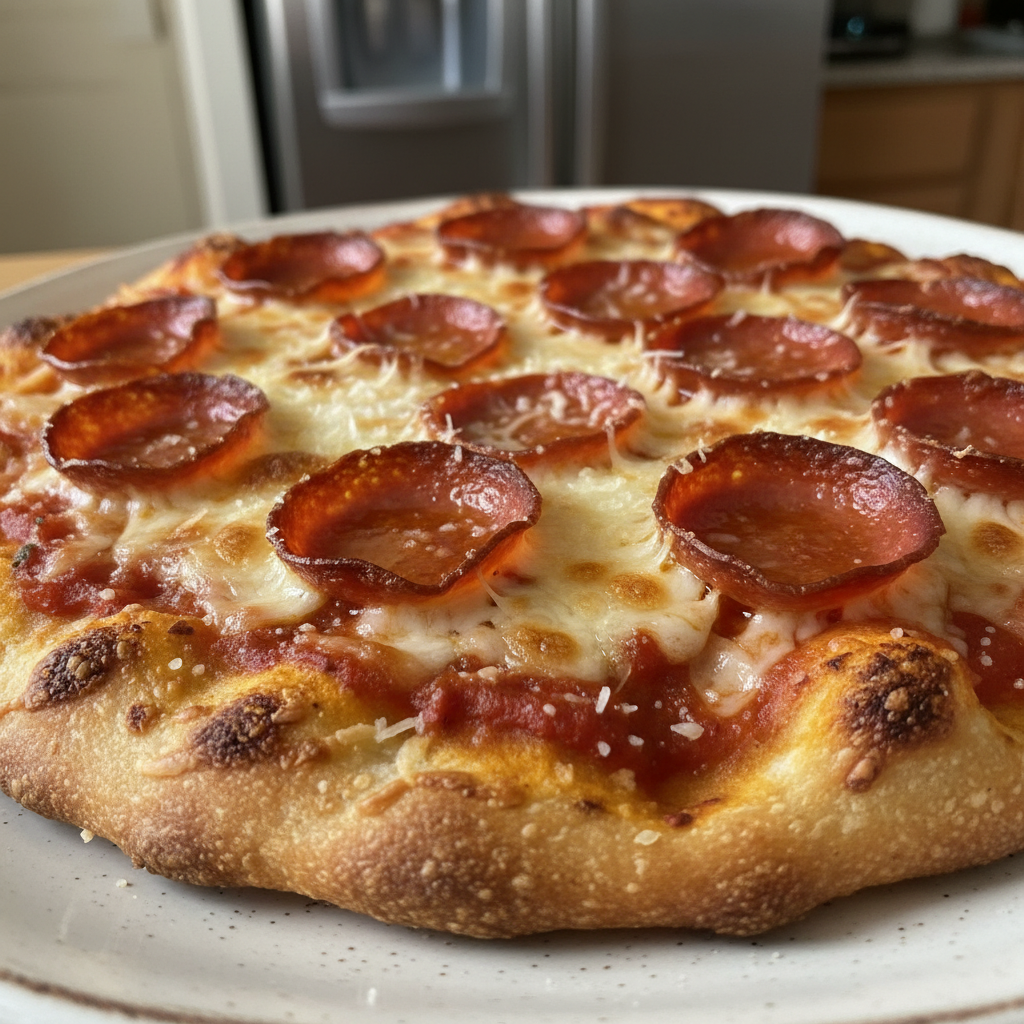
Now for the fun part! Spread 1/2 cup Pizza sauce or marinara evenly over the baked cottage cheese crust. Generously top with 3/4 cup low-fat pizza Cheese blend or shredded mozzarella. Arrange 2 ounces of Turkey Pepperoni, or any of your chosen toppings, over the cheese.
Final Bake & Garnish
Return the pizza to the oven and bake again for 5-7 minutes. You’ll know it’s ready when the cheese is fully melted and bubbly, and the crust edges are nicely browned. For a final flourish, garnish with 1 tablespoon grated parmesan or a sprinkle of chili flakes if you like a little heat.
Serve & Enjoy
Allow the pizza to cool slightly before slicing and serving. You’ll be rewarded with a high-protein, savory, tender-chewy, cheesy pizza crust that satisfies every craving!
Essential Equipment for Your Crispy Crust & Troubleshooting Common Issues
Having the right tools and knowing how to handle common hiccups will set you up for success with your cottage cheese pizza crust.
Essential Equipment
Here’s what I recommend for the best results:
- Oven: Standard for baking any pizza.
- Sheet Pan: A standard half-sheet pan is perfect for baking the crust.
- Parchment Paper: Absolutely essential for preventing sticking and easy transfer.
- Large Bowl: For combining ingredients before blending.
- Spatula/Spoon: For stirring the batter and spreading the crust.
- Food Processor: A must-have for this recipe’s unique twist! It ensures your cottage cheese and eggs blend into a perfectly smooth, lump-free batter. This makes all the difference for a consistent crust.
- Pizza Stone or Pizza Steel: For superior crispness, these are highly recommended for the final direct bake. They transfer intense heat directly to the crust, mimicking a professional pizza oven.
Crust Perfection: Thickness & Troubleshooting
Let’s address some common questions and potential issues to ensure your crust is always a winner.
Ideal Crust Thickness: When spreading your cottage cheese mixture, aim for an approximate 8-9 inch circle. This recipe yields enough for two servings, which typically means four slices of an 8-9 inch pizza. Spreading it too thin can make the crust crumbly or brittle, while spreading it too thick might result in a chewier, less crispy crust. A happy medium ensures both sturdiness and crispness.
Why is my crust watery or spreading? This is often due to excess moisture in your cottage cheese, especially if you’re using a large curd variety that hasn’t been properly drained. Always drain large curd cottage cheese thoroughly, or pulse it briefly with the eggs in the food processor to help break down the curds and distribute moisture more evenly. Uneven spreading on the pan can also contribute to this.
Why is my crust crumbly or too soft? A crumbly crust might mean it was spread too thin, leading to brittleness. If it’s too soft, it could be insufficient baking time or too much moisture. Remember, eggs are a crucial binder; ensure your ratios are correct, especially if you’re experimenting with different flours. Sometimes, a bit more baking time will firm it up.
Crust not browning enough? Ensure your oven temperature is accurate. Using a pizza stone or pizza steel, as outlined in our unique twist, greatly enhances browning and crispness by providing direct, intense heat to the crust’s underside.
Pro Tips & Troubleshooting
I’ve made this cottage cheese pizza crust many times in my kitchen, and these tips will help you achieve perfection every time.
Pro Tips for the Best Cottage Cheese Pizza Crust
- Blend for Smoothness: Don’t skip blending the cottage cheese and eggs in a food processor. This unique twist ensures a perfectly smooth batter, preventing a lumpy or uneven crust.
- Don’t Skip the Parmesan: Adding grated Parmesan directly to the crust mixture is key for enhanced savory flavor and promoting that beautiful Maillard reaction (browning) during baking.
- Preheat Your Pizza Stone/Steel: If you’re using a pizza stone or pizza steel, make sure it’s fully preheated. This is absolutely essential for achieving that ultimate crispy, pizzeria-style crust on the bottom.
- Drain Large Curd: If you opt for large curd cottage cheese, always drain any excess water. This prevents your crust from becoming watery or spreading excessively.
- Rest Before Topping: After the initial bake, allow the crust to sit for 1-2 minutes before adding sauce and toppings. This helps it set further and prevents a soggy base.
- Protein Power: Remember, each serving (typically 2 slices) provides around 20 grams of protein, making this a satisfying, high protein and macro-friendly meal.
Common Mistakes to Avoid
- Spreading Too Thin: Resist the urge to spread the crust mixture too thinly. This can lead to a crumbly or brittle crust that doesn’t hold up well to toppings.
- Not Draining/Pulsing Large Curd: Failing to prepare large curd cottage cheese correctly is a common pitfall. It can result in a soft, watery crust that spreads excessively. Proper draining or pulsing is key.
- Skipping the Stone/Steel Finish: For maximum crispness, the final direct bake on a pizza stone or pizza steel is essential. Skipping this step means missing out on that ultimate crispy texture.
- Overmixing the Batter: While blending the wet ingredients is good, once the flour is added, avoid overmixing. Stir just enough to combine everything.
Serving & Storage
Now that you’ve mastered the ultimate cottage cheese pizza crust, let’s talk about enjoying it and keeping those delicious leftovers fresh.
Serving Ideas
For a classic finish, I love garnishing my slices with a sprinkle of extra grated Parmesan or a pinch of chili flakes for a little kick and visual appeal. To make it a complete and healthy meal, serve your pizza alongside a fresh tomato mozzarella salad or a simple crisp green salad. This crust is also incredibly versatile, especially if you make a flour-free, low-carb or keto-friendly variation. The softer cottage cheese crust can even double as healthy wraps for sandwiches with turkey or chicken, or even for quick tacos!
Storage and Make-Ahead
This recipe is excellent for meal prep and make-ahead convenience!
- Making Crust Ahead of Time: You can par-bake the crust as directed (through the “Achieve Ultimate Crispness” step), let it cool completely, and then store it. Wrap it tightly in plastic wrap and refrigerate for up to 2-3 days, or freeze it for up to 1-2 months before adding your toppings.
- Storing Leftover Pizza: Any leftover pizza should be stored in an airtight container in the refrigerator for 3-4 days. You can also freeze individual slices of leftover pizza by wrapping them well in plastic wrap and then foil, for up to 1-2 months.
Reheating for Crispness: The key to good leftover pizza is reheating it properly to maintain its crispness.
- Oven Method: My preferred method! Preheat your oven to 350-375°F. Place slices directly on the oven rack or on a baking sheet. Reheat for 5-10 minutes, or until the cheese is bubbly and the crust is crisp again.
- Air Fryer Method: For a quick, crispy reheat, the air fryer is fantastic. Preheat your air fryer to 350-375°F. Place slices in a single layer in the basket and air fry for 3-5 minutes, checking often, until hot and crispy.
- Stovetop Method: You can also reheat slices in a covered skillet over medium-low heat. This method helps crisp the bottom of the crust while the lid melts the cheese.
Conclusion
There you have it—my secret to an ultra-crisp, high-protein cottage cheese pizza crust that will completely change your pizza night. This recipe is easy, incredibly satisfying, and thanks to our unique blend-and-bake method, it’s wonderfully crispy without the guilt. Even if you’re a beginner in the kitchen, you can achieve a delicious and healthy Cottage Cheese Pizza Crust.
I encourage you to experiment with various toppings and explore all the possibilities for healthy meals using cottage cheese. Give this recipe a try, and let me know what you think! Feel free to leave a comment below or explore more healthy pizza crust recipes on my blog.
FAQ
Can I skip the seasonings in cottage cheese pizza crust?
Yes, you can skip the seasonings (onion powder, garlic powder, dried oregano) if preferred. However, they add significant savory depth to the crust. You can also swap dried oregano for Italian seasoning.
Can I use large curd cottage cheese for the crust?
While small curd is often preferred for texture, you can use large curd cottage cheese. However, it’s crucial to drain any excess water thoroughly and/or pulse it briefly in a food processor with the eggs to achieve a smoother, less watery batter, preventing a soft or spreading crust.
What flour alternatives can I use, like almond flour?
Our recipe uses all-purpose flour, but it’s versatile! You can substitute with oat flour, whole wheat flour, spelt flour, or a gluten-free flour blend. For a very low-carb or keto-friendly option, you can omit the flour entirely, but expect a softer, more moist, and less sturdy crust, more akin to a wrap.
How do I make my cottage cheese pizza crust crispy?
Our recipe’s unique twist is designed for ultimate crispness! Key steps include: 1) blending cottage cheese and eggs for a uniform batter, 2) adding Parmesan to the crust mixture for browning, and 3) crucially, finishing the initial bake by removing the parchment and baking directly on a preheated pizza stone or pizza steel for 5 minutes.
Can this cottage cheese pizza crust be made ahead or stored?
Yes! You can par-bake the crust ahead of time, let it cool completely, and then refrigerate it for up to 2-3 days or freeze it (well-wrapped) for up to a month before adding toppings. Leftover pizza can be refrigerated for 3-4 days.
Is cottage cheese pizza crust a low-carb option?
Our recipe uses a small amount of flour, making it a lower-carb option compared to traditional pizza. For a truly low-carb or keto-friendly version, you can omit the flour entirely. Be aware that a flour-free crust will be softer and more delicate, suitable for wraps or eating with a fork.
Why is my cottage cheese pizza crust watery or spreading too much?
This is a common issue often caused by not properly draining excess water from the cottage cheese, especially large curd varieties. Ensure you drain it well or pulse it with the eggs in a food processor until very smooth. Also, avoid spreading the crust mixture too thin on the pan.
What is the protein content of cottage cheese pizza crust?
This recipe is a fantastic high-protein choice! Each serving (typically 2 slices of an 8-9 inch pizza) contains approximately 20 grams of protein, making it a very satisfying and macro-friendly meal.
What’s the best way to clean my sheet pan after baking this crust?
Since the crust is baked on parchment paper, cleanup should be minimal. Simply remove the parchment paper. For any residue, soak the sheet pan in warm, soapy water for 15-20 minutes, then scrub with a non-abrasive sponge. For stuck-on bits, a paste of baking soda and a little water can help.
Ultra-Crisp Cottage Cheese Pizza Crust (High-Protein Recipe)
Ingredients
Equipment
Method
- First, preheat your oven to 350°F (175°C). Line a standard sheet pan with parchment paper to prevent sticking and for easy cleanup.
- In a food processor, combine the 1 cup cottage cheese and 2 large eggs. Process until the mixture is completely smooth and lump-free, creating a uniform batter.
- Transfer this smooth mixture to a large bowl. Add the 1/4 cup flour, 1 teaspoon onion powder, 1 teaspoon Garlic powder, 1/2 teaspoon Dried Oregano, and a pinch of Black pepper (if using). Stir in 1 tablespoon of finely grated Parmesan cheese directly into the crust mixture. Use a spatula to gently stir until just combined. The batter should be uniform.
- Transfer the cottage cheese mixture onto the prepared sheet pan. Using a spoon or spatula, spread the mixture evenly to form an 8-9 inch circle. Avoid spreading too thin, which can lead to a crumbly crust, or too thick, resulting in a chewier base.
- Bake the crust in your preheated oven for 25-30 minutes, or until it’s lightly golden brown and firm to the touch. The edges should just begin to crisp up.
- Remove the sheet pan from the oven. Carefully slide the parchment paper with the partially baked crust off the sheet pan and directly onto a preheated pizza stone or pizza steel (if available). Return it to the oven and bake directly on the stone or steel for an additional 5 minutes. This direct, intense heat is crucial for creating an extra crispy base.
- Remove the crust from the oven and let it sit on the sheet pan or stone for 1-2 minutes to help it set further before adding toppings.
- Spread 1/2 cup Pizza sauce or marinara evenly over the baked cottage cheese crust. Generously top with 3/4 cup low-fat pizza Cheese blend or shredded mozzarella. Arrange 2 ounces of Turkey Pepperoni, or any other chosen toppings, over the cheese.
- Return the pizza to the oven and bake again for 5-7 minutes. It’s ready when the cheese is fully melted and bubbly, and the crust edges are nicely browned. Garnish with additional grated parmesan or a sprinkle of chili flakes if desired.
- Allow the pizza to cool slightly before slicing and serving. Enjoy your high-protein, savory, and crispy pizza!