
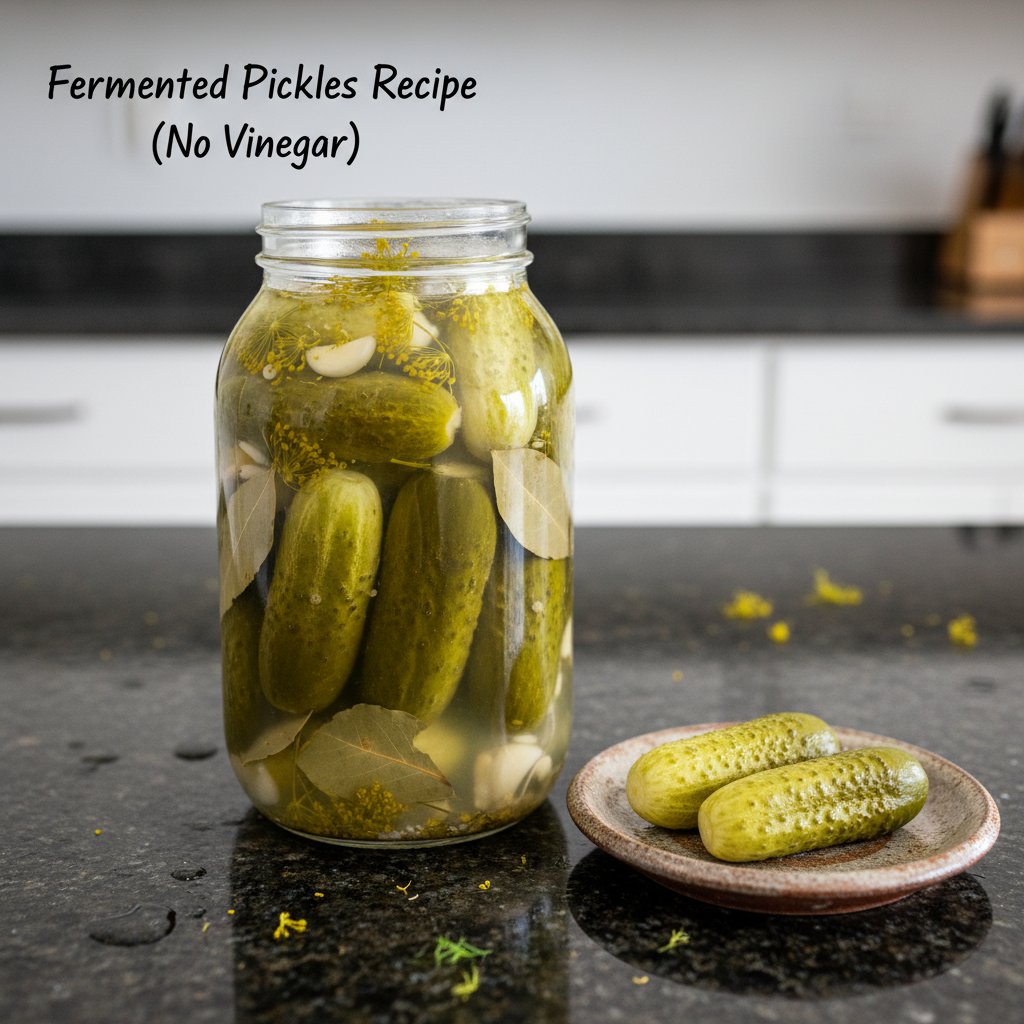
Ingredients
Equipment
Method
Prepare Your Brine
- In a clean bowl, combine your 1 rounded tablespoon of fine salt with 1 quart of water. This creates a 2.25% brine concentration, which is perfect for inhibiting unwanted bacteria while allowing our beneficial Lactobacillus to thrive. Stir thoroughly until the salt is completely dissolved. The brine will shimmer with clarity.
Clean Your Jars (No Sterilization Needed!)
- Simply wash your mason jars in hot, soapy water and rinse well. Unlike canning, sterilization isn't required because the fermentation process itself, creating an acidic environment, handles the preservation.
Select & Prepare Cucumbers for Max Crunch
- Opt for fresh, crisp pickling cucumbers, ideally from a garden or farmer's market, as they retain natural beneficial bacteria on their skin. Lightly rinse them only if they have visible dirt; never use produce soap or power rinse, as this strips away the microbes vital for fermentation. Thoroughly trim both ends of each cucumber, paying special attention to the blossom end. If you're slicing your cucumbers into spears, follow this with a 15-30 minute ice bath—this rapidly firms their cell walls for exceptional crispness!
Layer Aromatics
- To infuse your pickles with incredible flavor, start by adding 1¼ tsp of coriander seeds, 5-10 cloves, some fresh dill (or all of your dill seeds if substituting), and 2 sliced garlic cloves to the bottom of your clean jar. This aromatic base will work its magic as the cucumbers ferment.
Pack Your Jar
- Tightly pack your jar with the prepared cucumbers. Remember, whole cucumbers tend to retain their firmness best. As you fill, tuck the 5 bay leaves (for their crispness-enhancing tannins!), more garlic slices, and extra dill between the cucumbers. Pack them in snugly to minimize floating once the brine is added.
Leave Headspace & Add Weight
- Once your jar is packed, top it off with any remaining dill. Ensure you leave a 2-3 inch (5cm) headspace at the top of the jar. This is crucial because your cucumbers will float, and everything must stay submerged beneath the brine to prevent mold. Place your fermentation weight firmly on top of the cucumbers. Do not skip this step!
Pour the Brine
- Carefully pour your prepared salt brine over the cucumbers and the fermentation weight. Make sure everything is completely submerged beneath the liquid. This brine acts as a protective shield, guarding your food from mold and other undesirable pathogens.
Set Up for Fermentation
- Place a loose lid on your jar. This is a clever trick: a loose lid allows the fermentation gases to escape naturally, so you won’t need to "burp" your jar during the process. This keeps the environment stable for your lacto-fermentation.
Ferment
- Find a spot on your counter, away from direct sunlight, and let your jar sit for 5 to 8 days. Optimal fermentation temperatures are typically between 65-70°F (18-21°C) for firmer pickles. Begin taste-testing daily from day 5 to find your perfect balance of texture and tangy flavor. I don't recommend fermenting longer than 8 days, as this can lead to a loss of firmness.
Post-Fermentation Care
- Once your pickles taste just right, remove the fermentation weight with clean hands. You might notice a thin, white film on the surface; this is likely kahm yeast. It’s harmless, though unattractive, and can be easily skimmed off.
Store for Longevity
- For long-term storage, there's no need to return the weight. Simply secure the lid tightly on your jar and transfer your delicious Fermented Pickles Recipe (No Vinegar) to the refrigerator. This cold storage is vital for fermented foods, significantly slowing the fermentation process and preserving them for many months, just as a root cellar would in the olden days.
Nutrition
Notes
Ensure you use fresh, high-quality cucumbers and pure, additive-free fine salt for the best fermentation. The special blossom end trim and an optional ice bath are key to achieving superior crispness. Always keep pickles submerged under the brine with a fermentation weight to prevent mold. Nutrition information is estimated based on common ingredients and serving sizes and may vary.