
Ingredients
Equipment
Method
Prepare the Cabbage
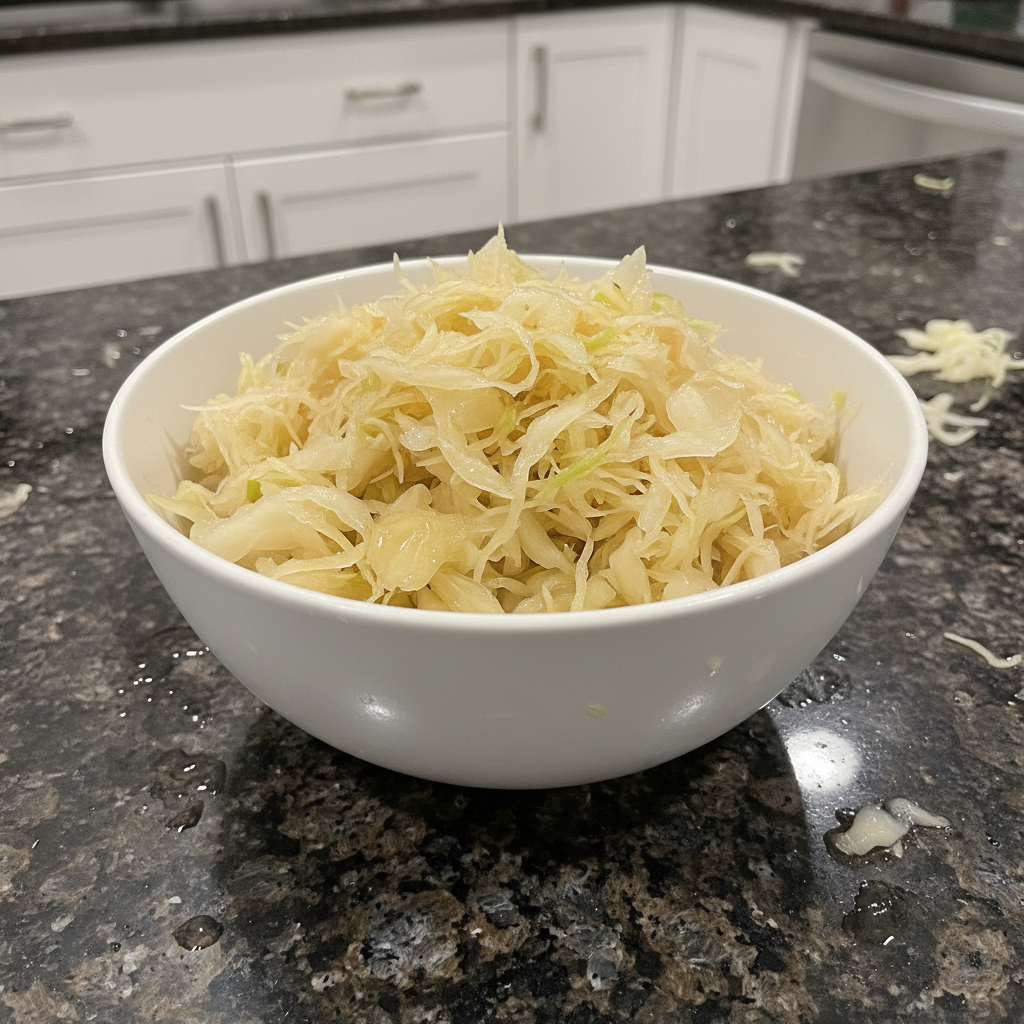
- First, remove any bruised or damaged outer leaves from your large head of green cabbage. Reserve a few of the cleanest, largest outer leaves for later to act as a protective layer. Quarter the cabbage, remove the core, and then finely shred it. Aim for thin, uniform shreds using a mandoline or a food processor with a shredding disc.
Brine and Massage
- Place the shredded cabbage in a very large, sturdy bowl. Sprinkle the 2 tablespoons of non-iodized sea salt evenly over the cabbage. If using optional flavorings like caraway seeds or black peppercorns, add them now. Begin to massage the cabbage vigorously with your clean hands, squeezing and pressing it until it starts to soften and weep liquid. Cover the bowl with a clean kitchen towel and let it rest at room temperature for at least 1 hour. This initial brining step is key to drawing out ample liquid.
Process for Extra Crunch (The Twist!)
- After the hour, you'll notice a significant amount of liquid at the bottom of the bowl. Take about half of the cabbage and pulse it briefly in a food processor – just 2-3 short pulses. This is not meant to make a puree but to break down the cell walls further, enhancing liquid release and leading to an even crunchier final product. Return the pulsed cabbage to the bowl with the un-pulsed portion and mix well. You should have a visibly wet, pliable mixture.
Pack the Fermentation Jar
- Now, pack your clean fermentation jar or crock. Take handfuls of the cabbage mixture and firmly pack them into the jar. Use a tamper, the back of a spoon, or even your fist to press down with significant force, eliminating air pockets and encouraging more liquid to rise. Continue this process until all the cabbage is in the jar, leaving about 2-3 inches of headspace from the rim.
- Once packed, ensure the cabbage is fully submerged under its own brine. If by chance there isn't enough liquid, you can make a simple brine by dissolving 1 teaspoon of sea salt in 1 cup of filtered water and adding just enough to cover.
Weight and Seal
- Place one or two of those reserved whole cabbage leaves on top of the packed cabbage to create a barrier. Then, place a fermentation weight directly on top of the leaves. The weight is critical to keep the shredded cabbage submerged under the brine, creating an anaerobic environment and preventing mold growth. Fit your airlock lid onto the jar, ensuring it's properly sealed.
Ferment
- Place your fermentation jar in a cool, dark place, away from direct sunlight, at room temperature (ideally between 60-75°F or 15-24°C). Ferment for 1-4 weeks. The warmer the temperature, the faster the fermentation. You'll notice bubbles forming as the lactic acid bacteria get to work. Start tasting after about a week; it should be tangy and pleasantly sour. When it reaches your desired flavor and crunch, it's ready!
Store
- Once fermented to your liking, remove the fermentation weight and lid. Transfer the sauerkraut to smaller, clean airtight jars, ensuring it's still submerged in its brine. Store in the refrigerator, where it will keep for several months.
Nutrition
Notes
This recipe requires 1-4 weeks of fermentation at room temperature after initial prep. Maintain cleanliness and use non-iodized salt for best results. Store finished kraut in the refrigerator for several months, submerged in brine. Nutrition information is estimated based on common ingredients and serving sizes and may vary.