
Ingredients
Equipment
Method
Browning the Butter
- Melt 10 tablespoons of salted butter in a 1-quart stainless steel saucepan over medium heat. Watch closely as it melts, then foams, and the crackling subsides. Stir constantly, scraping the bottom to prevent scorching. Golden-brown specks will form at the bottom, and a dense golden foam will appear on the surface, accompanied by a nutty, toasted, caramel-like aroma. This process takes around 8-10 minutes. Immediately remove from heat and pour the brown butter, including all browned bits, into a large mixing bowl.
- Allow the brown butter to cool for 20-30 minutes, or until it reaches 32-34°C (90-93°F) on a digital thermometer. This cooling is critical to prevent excessive spreading and greasiness in your cookies.
Combining Dry Ingredients
- In a medium bowl, combine the all-purpose flour, baking soda, salt, and malted milk powder. Whisk thoroughly to ensure all ingredients are evenly blended for consistent texture.
Mixing Wet Ingredients
- In the large bowl with your cooled brown butter, add both the light brown sugar and granulated sugar. Mix gently with a spatula (or an electric mixer on low speed for about 20 seconds) until combined and the mixture resembles thick, wet sand.
- Add the room temperature egg, milk, and pure vanilla extract. Mix until these wet ingredients are well incorporated and the mixture looks creamy. Avoid vigorous beating, especially if your kitchen is cool, as it can firm up the butterfat and affect texture.
Folding in Flour and Chocolate
- Gradually add the flour mixture to the wet ingredients. Fold it in or mix on low speed just until mostly combined.
- Before all the flour is fully incorporated, add the dark chocolate chunks and semisweet chocolate chips. Continue mixing just until the chocolate is evenly distributed throughout the dough. Avoid overmixing once flour is added, as this can develop gluten too much, leading to tougher cookies.
Chilling the Dough
- Cover the bowl of dough and refrigerate it. Chilling is a non-negotiable step: it allows flour to hydrate, enhances flavor, and firms up the fat to control dough spread. Chill for at least 2 hours, ideally 4 hours, but a minimum of 1 hour will yield good results if time is limited. The dough should be soft, pliable, and hold its shape before chilling.
Baking the Cookies
- When ready to bake, preheat your oven to 375°F (190°C). Line two large cookie sheets with parchment paper.
- Use a 1.35-oz cookie scoop to portion the dough into 14 pieces (each about 2 oz or 56g). Roll each portion into a smooth ball for uniform shape and even spreading.
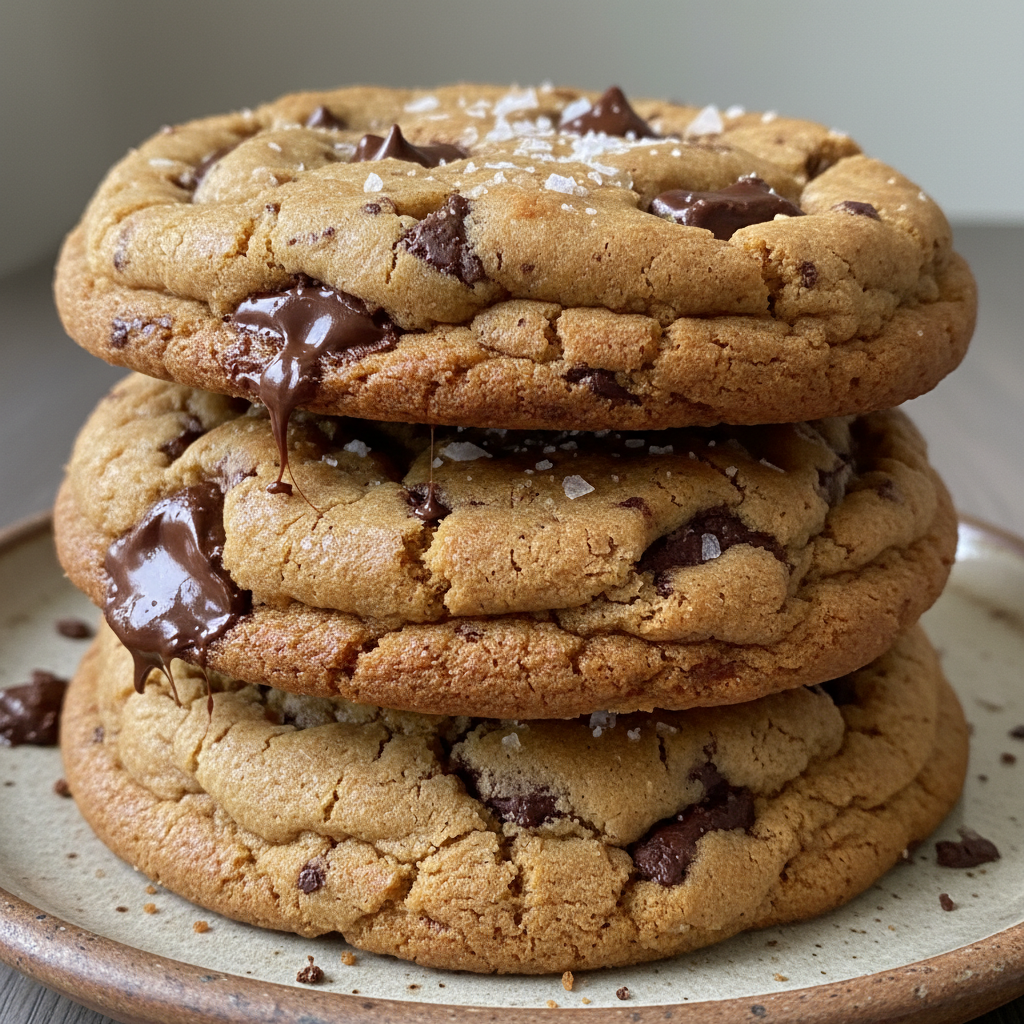
- Place dough balls onto the prepared baking sheets, spacing them about 3 inches apart. For a bakery-style touch, press a few additional chocolate chunks onto the tops of the dough balls (do not flatten).
- Bake for 8-10 minutes, or until the cookies are golden on top, beautifully browned around the edges, and still wonderfully soft in the middle. The higher baking temperature helps set edges quickly and prevents excessive spread.
Cooling and Finishing
- Once baked, let the cookies cool on the baking sheet for 2 minutes to set slightly.
- Carefully transfer them to a wire rack to finish cooling completely. If desired, sprinkle a pinch of flaky sea salt on top of the warm cookies to enhance chocolate and caramel notes.
Nutrition
Notes
Precision in measuring ingredients, especially flour, is crucial. Use a kitchen scale for best results. Browning butter requires vigilance; look for golden-brown specks and a nutty aroma. Cool it to 32-34°C (90-93°F) before mixing to prevent greasy cookies. Chilling the dough for at least 2 hours (ideally 4) is essential for flour hydration, flavor development, fat firming, and controlled spread during baking. For the best melty chocolate puddles, use high-quality dark chocolate chunks (70%+ cocoa solids) in combination with semisweet chips. Baked cookies store in an airtight container at room temperature for 3-5 days. Dough can be frozen for 2-3 months; bake from frozen by adding 2-4 minutes to baking time. Nutrition information is estimated based on common ingredients and serving sizes and may vary.