
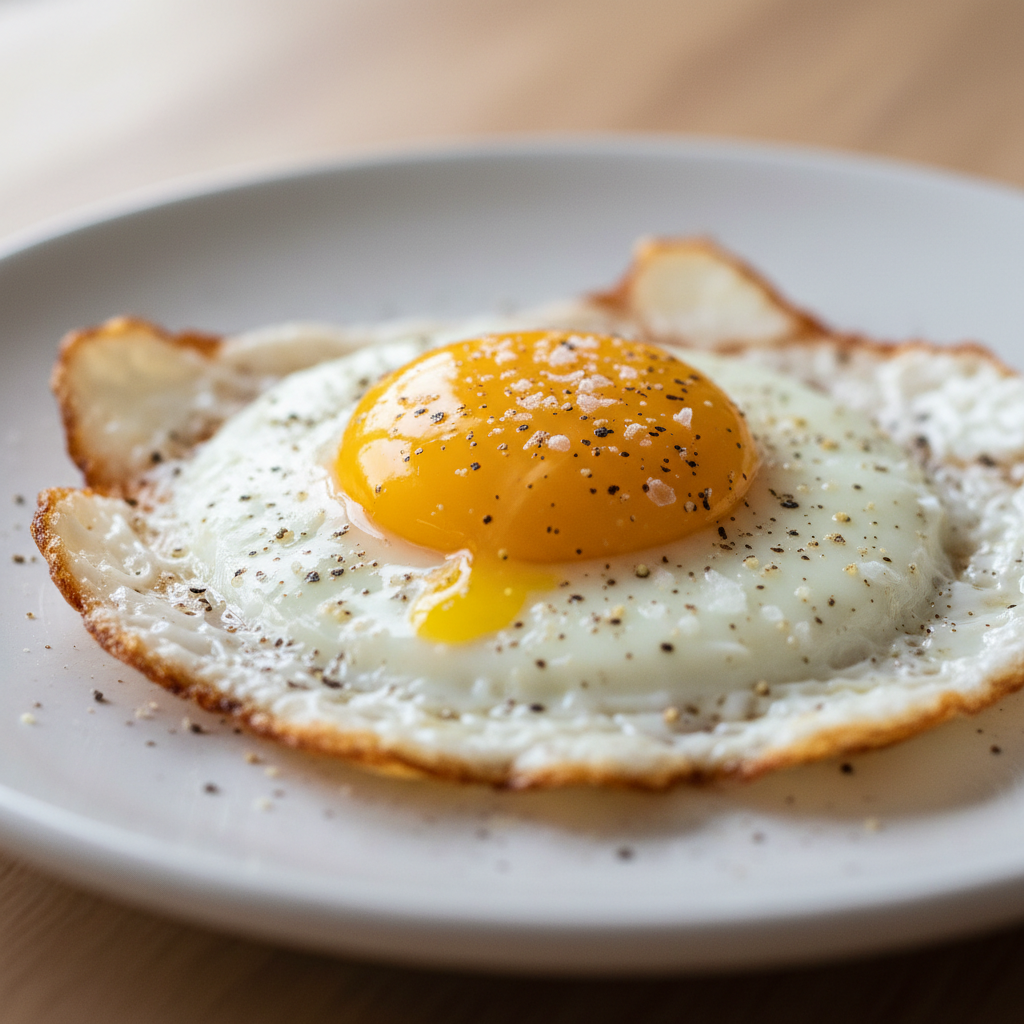
Ingredients
Equipment
Method
Step 1: Prepare Your Egg (and Pan)
- Begin by cracking your large egg into a small pinch bowl. This expert tip ensures no shell bits contaminate your egg and allows for a smooth, controlled transfer to the pan, helping maintain a perfectly rounded shape.
- For the 'Low & Slow Cold Pan Start' method, place your nonstick pan on the stovetop and add 1 tsp. unsalted butter. Only then, turn the heat to medium-low. The butter will gently melt as the pan heats, evenly coating it.
- If you're using a metal skillet for a crispier edge, heat it over medium-high heat until a drop of water sizzles and evaporates immediately upon contact. Then, add 1 tsp. neutral oil and gently swirl it to evenly coat the pan.
Step 2: Introduce the Egg and Season
- Gently slip the egg from your pinch bowl into the center of the pan. You should hear a gentle sizzle, not an aggressive roar. Immediately season the egg with a pinch of kosher salt.
- Optional: For an ultra-even, flat white, especially for sunny-side up eggs, use a fork to gently poke and flatten any very thick parts of the egg white near the yolk. This helps the egg white cook more uniformly.
Step 3: Cook to Your Desired Doneness
- For Sunny-Side Up: Cook, undisturbed, until the egg white is fully set on top but the yolk is still wonderfully runny and warm. This typically takes about 3 minutes. If the very top of the egg white remains slightly translucent, add an additional 1 tsp. butter to the pan, let it melt, then carefully spoon the hot melted butter over the top of the egg white. This basting technique helps finish cooking the top without flipping.
- For Over-Easy Egg: Cook, undisturbed, until the egg white is no longer runny but still not totally set, about 1 to 2 minutes. Use a flexible rubber spatula to gently flip the egg. Cook for just 30 to 60 seconds on the second side until the bottom is set but the yolk remains deliciously runny.
- For Over-Medium Egg: Follow the initial cook and flip method for an over-easy egg. After flipping, continue to cook until the edges of the yolk feel firm when pressed, but the center still jiggles slightly, about 1 to 2 minutes.
- For Over-Hard Egg: Follow the initial cook and flip method for an over-easy egg. Cook until the entire yolk feels solid with only a slight bit of fudginess left in the center, about 2 to 3 minutes.
Step 4: Final Seasoning and Serve
- Season your perfectly fried egg with freshly ground black pepper to taste. Using a flexible rubber spatula, carefully transfer the egg to a plate and enjoy immediately.
Nutrition
Notes
Fried eggs are best enjoyed fresh for optimal taste and texture, especially for a runny yolk. If storing, cool completely and refrigerate in an airtight container for 1-2 days, noting that the yolk will firm up and reheating is not recommended for preserving original texture. Nutrition information is estimated based on common ingredients and serving sizes and may vary.